

Yawn. The headline analyzer on this website gives this post a score of 40 out of 100—apparently, “Updates on Accounting Rules” would be more compelling than four species of laughingthrush at Baihualing.
Which is unfortunate, because the laughingthrushes at Baihualing hardly need better marketing.
As fellow writer Paul once pointed out about my posts, the photos will have to do the heavy lifting. Fortunately, Baihualing is optimized for taking such photos, to the extent that one sometimes wonders whether there are any birds outside of dedicated hides at all.
Despite the name, laughingthrushes are neither particularly funny nor actual thrushes—a taxonomic misunderstanding that stuck. Their calls do resemble laughter, though less sitcom and more slightly unhinged group hysteria.
Many laughingthrushes are highly social, cooperative birds, and their “laughter” serves functions including territorial signaling, group cohesion, and probably coordinating movement through dense undergrowth.
Four species of laughingthrushes can be seen very easily at Baihualing. Two of them, unfortunately, have questionable taste in color.
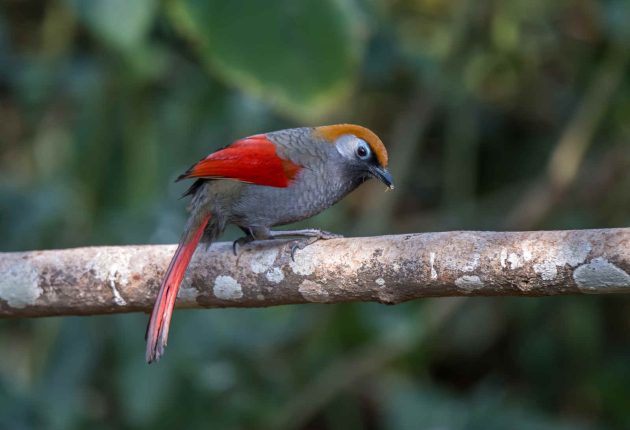
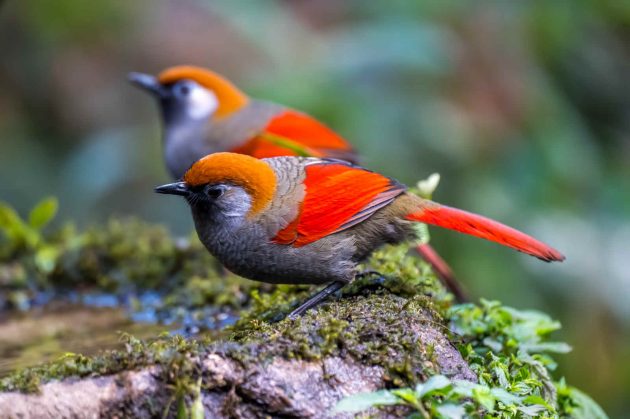
One of these is the Red-tailed Laughingthrush, with the scientific name Trochalopteron milnei. I have already had ChatGPT discuss the potential meaning of Trochalopteron in an earlier post, which leaves me to explain that the milnei stands for Prof. Alphonse Milne-Edwards (1835–1900), a French zoologist.
While overall he was a competent scientist, he was involved in early and vastly incorrect reconstructions of the Dodo, contributing to the Gary Larson-style shape of the bird that still persists in the popular imagination.
A paper on observing the Red-tailed Laughingthrush in Thailand raises some doubts about its vocal presence:
“The Red-tailed Laughingthrushes uttered no audible calls during either day of observation and indeed this species appears to be remarkably silent and unusually unobtrusive among laughingthrushes”, with a potential explanation: “Its extreme vocal reticence might be a response to the presence of the much more common and widespread Silver-eared Laughingthrush in regions where the two are sympatric, perhaps in order to avoid direct conflict or competition with that species.” Why call out loud just to be bullied?
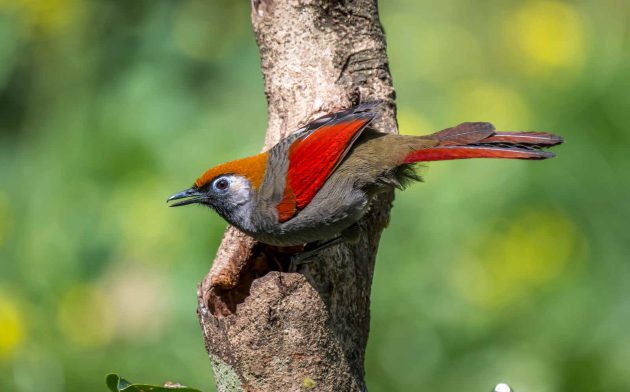
Interestingly, the photo shown in this paper was almost certainly taken at a hide at Baihualing, not in Thailand.
And like any reputable laughingthrush, the Red-tailed one also has its specific species of feather mites just described in 2025 (source).
The Assam Laughingthrush wears another somewhat dubious color combination.
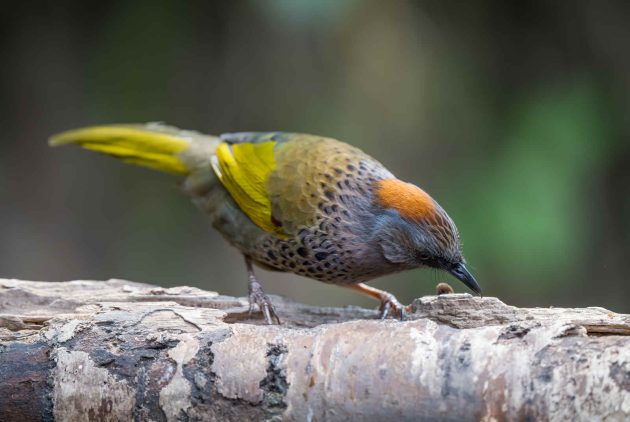
Unfortunately, there is little information on it—it even seems to lack its own specific feather mites.
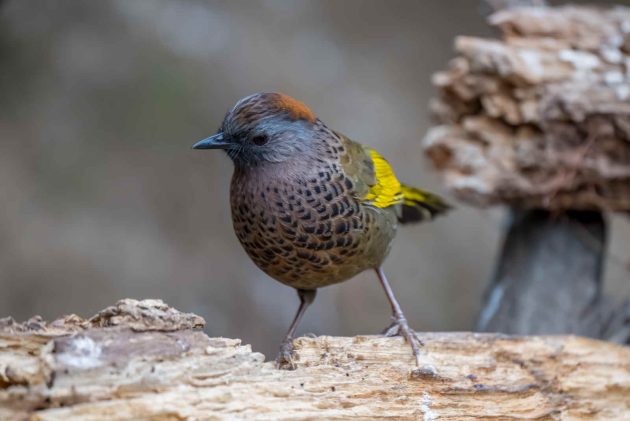
eBird describes its call as including a wolf-whistle-like whi’wi’er-wee!—a sound some readers may associate less with forests and more with urban construction sites.
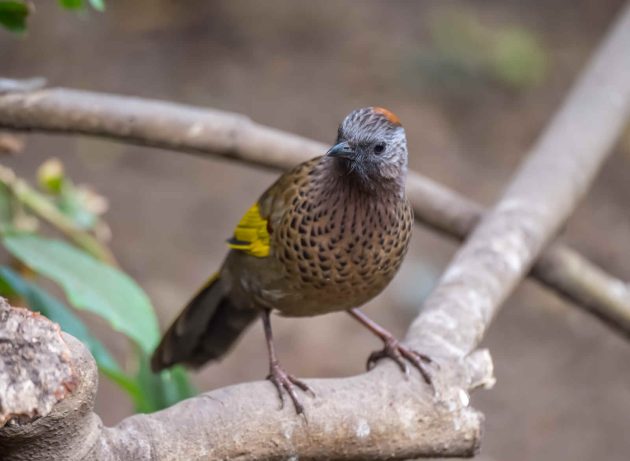
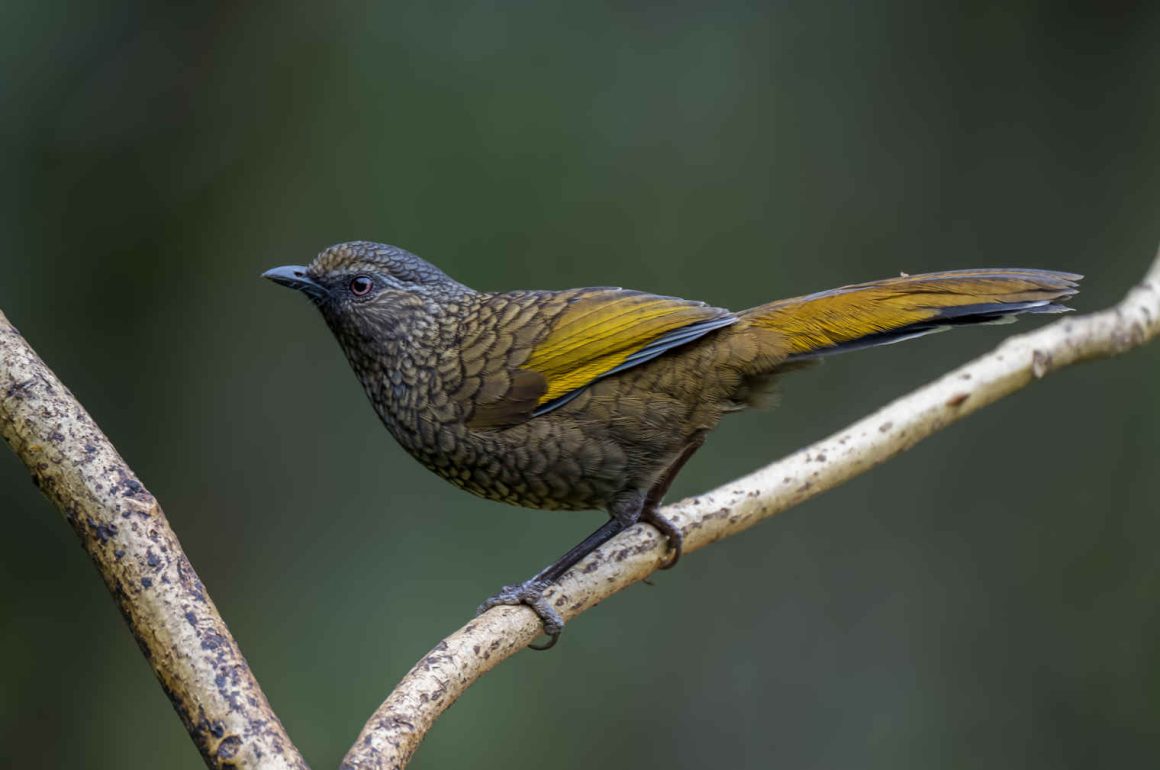
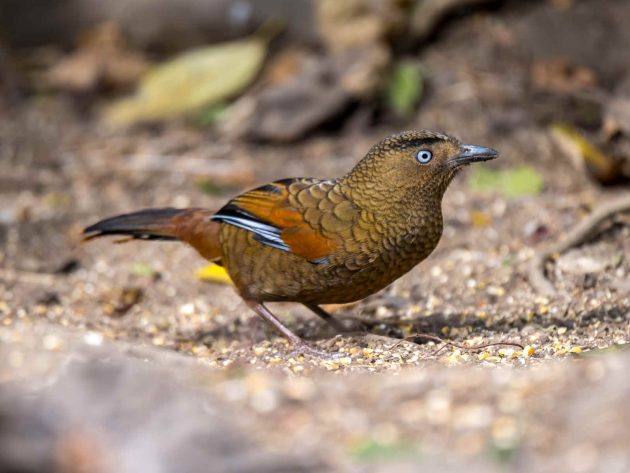
The remaining two redeem the group, at least aesthetically. One is the Blue-winged Laughingthrush, the other the Scaly Laughingthrush. The scientific name of one of them is Trochalopteron squamatum—squamatum means scaly. Guess which of the two this one is?
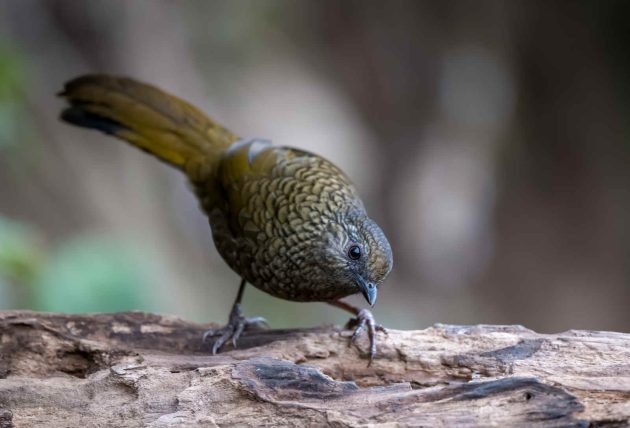
Yes, you guessed right, it is a trick question, and Trochalopteron squamatum is the Blue-winged Laughingthrush. The scientific name of the Scaly Laughingthrush, by contrast, is Trochalopteron subunicolor—“somewhat uniformly colored.” People without a working knowledge of Latin will not be confused.
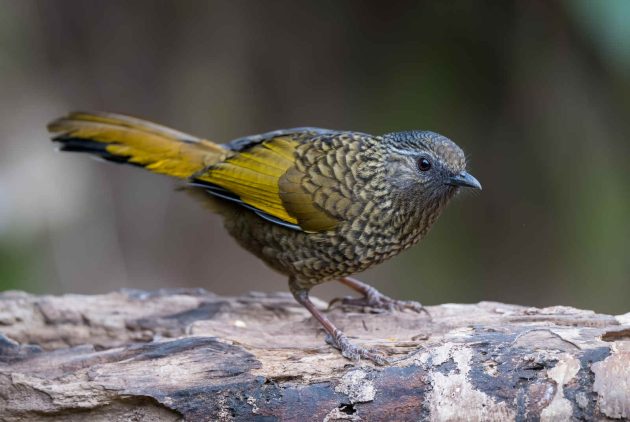
Start with the Scaly Laughingthrush, a rather elegant-looking species that seems largely neglected by ornithological research, though there are some papers describing their chewing lice (source, source).
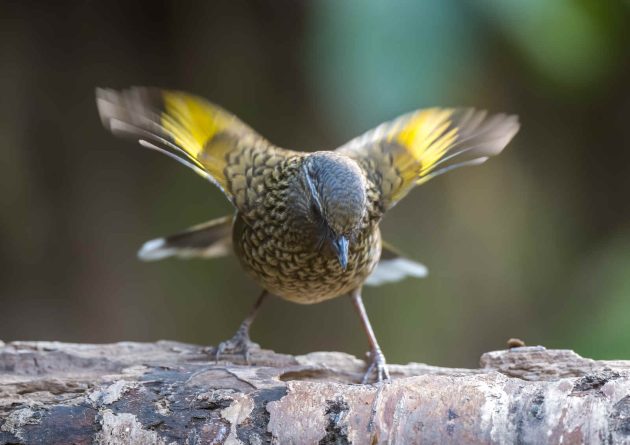
eBird calls it a “dark golden-brown laughingthrush with extensive black-edged scaling all over its body”, which may remind some readers of the song “Golden Brown” by The Stranglers. If not, you are probably younger than the song.
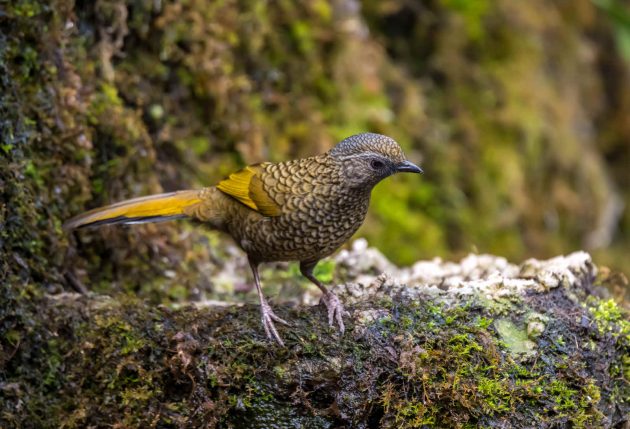
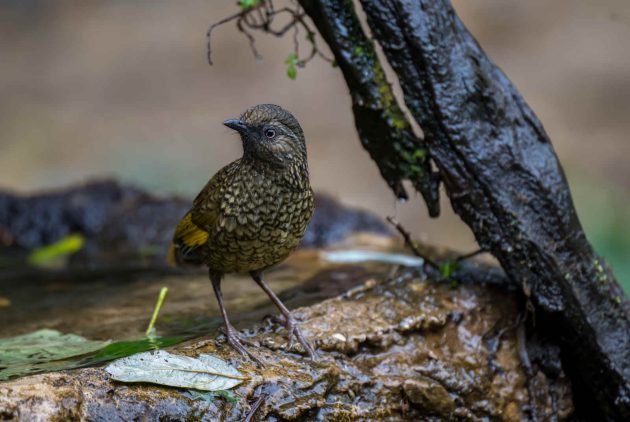
The Blue-winged Laughingthrush also looks very scaly, but is not particularly blue-winged.
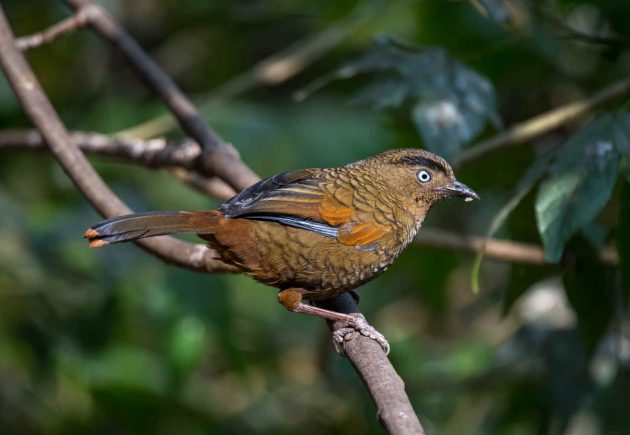
It is one of several host species of the Chestnut-winged Cuckoo.
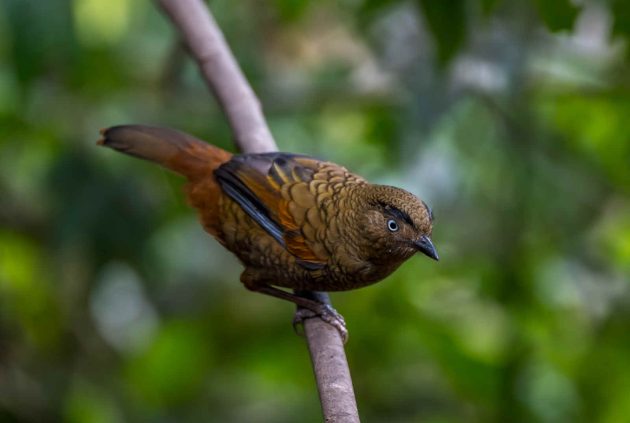
At Baihualing, it can be a bit harder to see than the other three, perhaps because it is less social than most laughingthrushes—something I can sympathize with. Fortunately, even a relatively unsociable bird will show up here soon enough. Observing it from a hide, however, requires rather more social tolerance on the human side.









Leave a Comment