
Ask any international tourist which spots they will visit on their trip to Sri Lanka, and the island’s South Coast will inevitably be on their list. This is understandable as the area has some lovely beaches and an accessible offer of culture and history. In combination with the city of Galle and the surrounding rural areas covered in rice paddies, this tourist frenzy contributes to one of the busiest and most densely populated areas in Sri Lanka. At first I assumed that this would make these areas rather unattractive for anyone at least slightly interested avifauna. When I spent a few months living in the area during the Covid pandemic however, I noticed that this is not the case at all. As soon as you explore the patchwork of rice paddies interspersed by small tangles of tropical vegetation and home gardens, you discover the rich birdlife in this area.
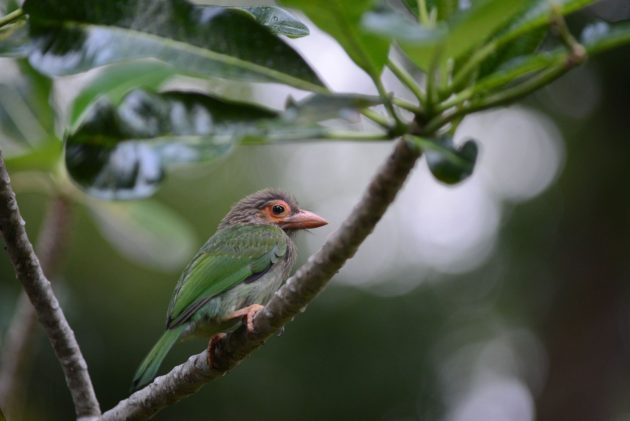
One of the more common garden birds is the Brown-headed Barbet. These birds are normally relatively shy but I once saw a younger individual in front of my kitchen window that seemed very reluctant to take flight, allowing me to get some closer views. The bird already had the extensive bare orange skin on the face and the comical long whisker-like hairs surrounding the bill, so I presume it it hadn’t fledged recently, but it still had a rather scruffy look to it.
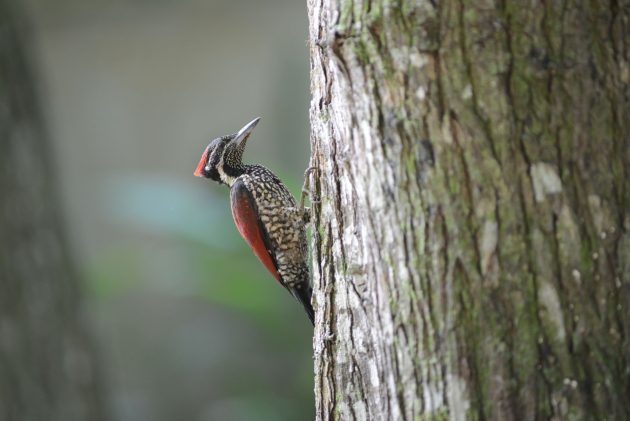
Red-backed Flameback is the newest addition to Sri Lanka’s list of endemic birds, being recently split from Black-rumped Flameback (an endemic subspecies of which also occurs on the island). This bird is easily found in the area and always manages to stop you in your tracks, especially when seen well. The crimson back of this bird is simply stunning, and I tried hard to get good photos of this bird until finally I managed to hide behind a tree while an individual feeding on the ground approached me, allowing me to get pretty good shots.
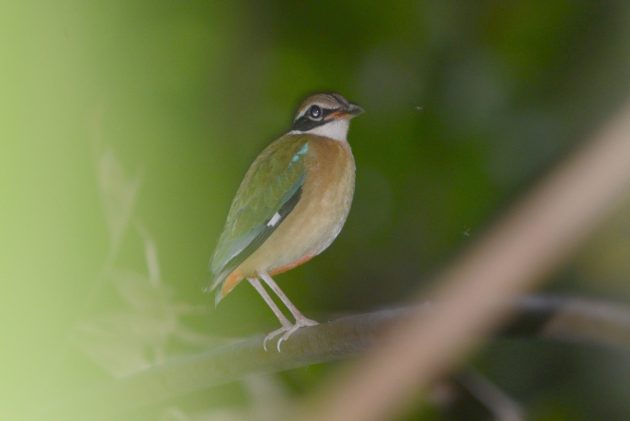
One of my favourite birds in Sri Lanka is the Indian Pitta. I’m aware that my general love for pittas makes me strongly biased here because this species is surprisingly easy to find and not as colourful as some other birds on the island. I always try to locate one when I hear their call, and I’ve been successful a few times. My ultimate goal was to obtain a good photo of this species, which is something I didn’t quite achieve yet.
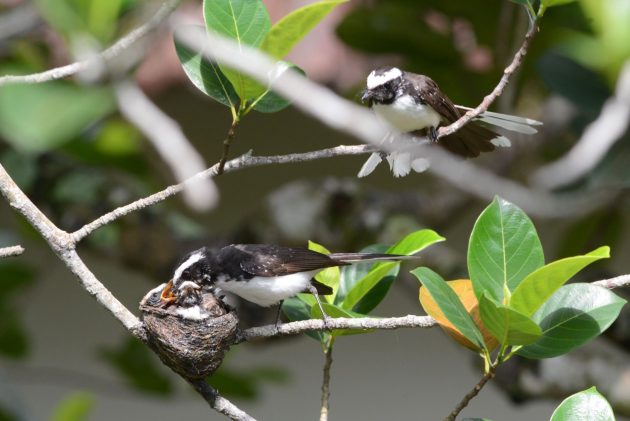
A pair of White-browed Fantails was building their nest on a fork in a branch of a mango tree in fron of my window. This gave me the chance to watch them through the entire process from egg laying to fledging of the young. This was truly impressive to see, although often I also felt bad for the parents who, despite delivering one tasty morsel after another, always arrived at the nest to an explosion of begging calls demanding they collect more food.
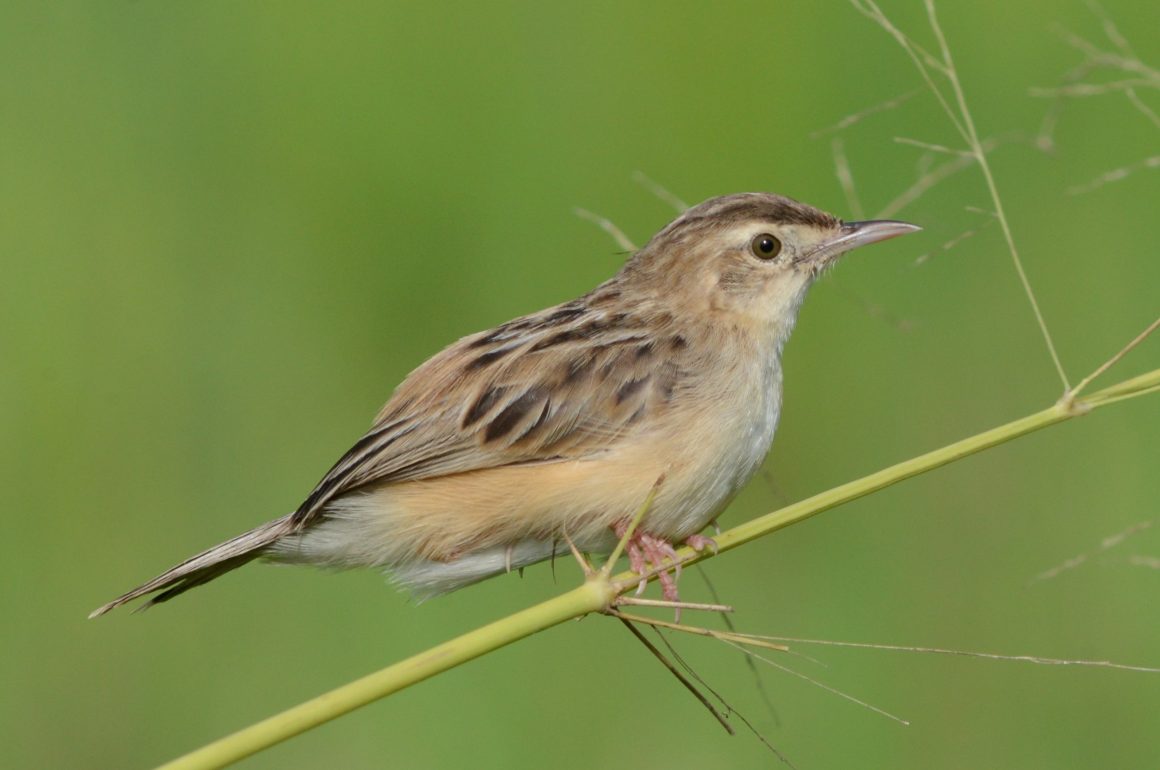
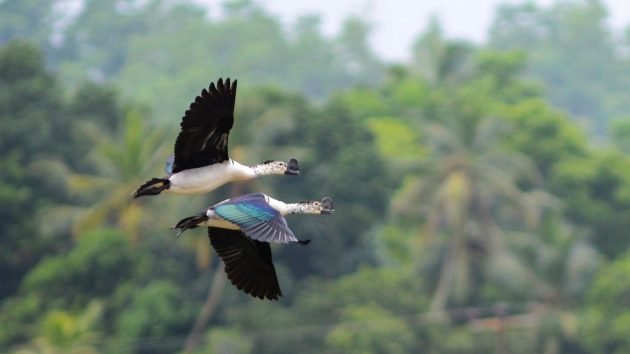
Many birds, like the three above, are found primarily in the tangles of broadleaved vegetation including some of the more densely vegetated home gardens. The rice paddies that appeared to be encroaching on these patches were by no means devoid of birds either. Strolling along paths through the fields produced a great number of birds in fact. Zitting Cisiticolas (featured image) were one of the most common. One of my favourites was a trio of Knob-billed Ducks, an unusual bird that is very rare in Sri Lanka. The species is widespread in both South Asia and sub-Saharan Africa but with a rather big gap in their distribution. The African and Asian populations do not appear to be classed as subspecies, however.
So, if you find yourself relaxing on a beach on the south coast of Sri Lanka and need a change of scenery, I can strongly recommend hailing a tuk-tuk and just go one or two kilometres inland until you find a patchwork of home gardens and rice paddies. You are sure to come across some interesting birds!





Leave a Comment