

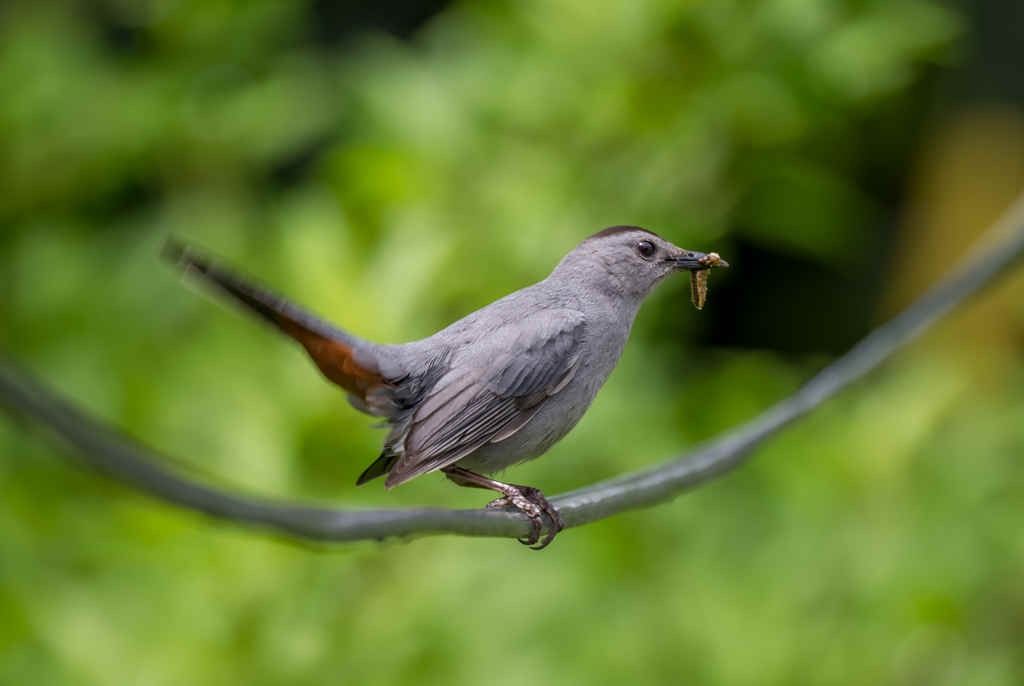
How could I not write a post about a bird with this name?
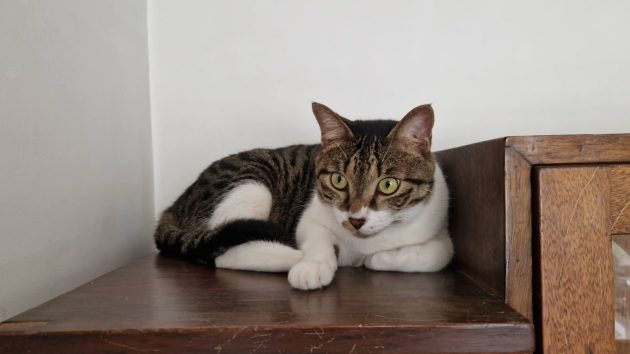
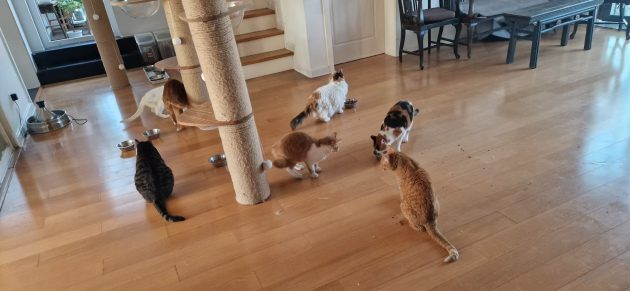
This is a real cat, Wolfie, one of the 13 sharing my apartment with me.
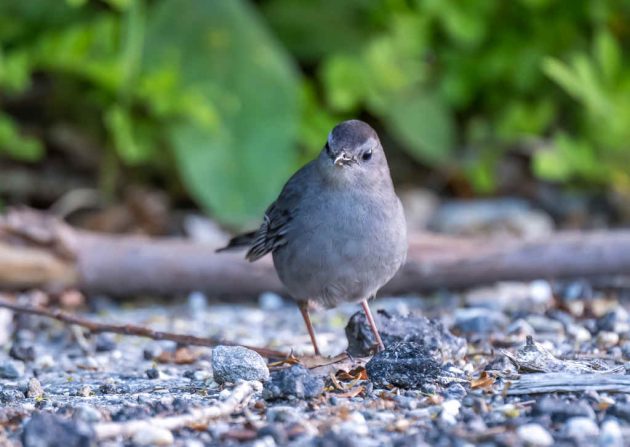
The HBW profile starts promisingly: “The Gray Catbird was named for its mewing call …” but then disappointingly continues “… although few people would mistake the sound of this bird for that of an actual cat.”
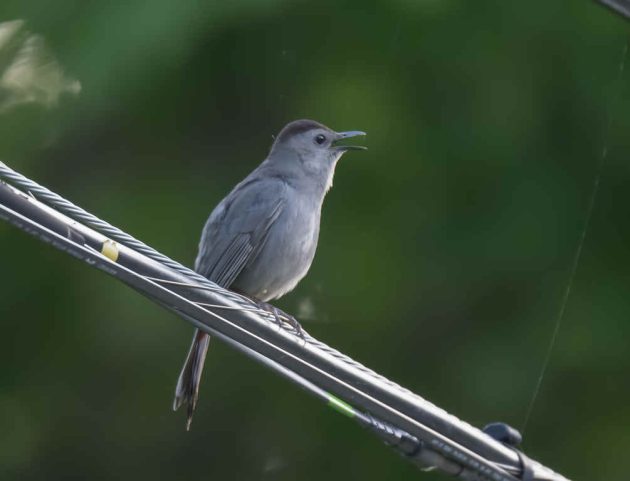
Notice the two spellings of grey/gray? This is also taken from HBW—the profile title is “Grey Catbird,” while the profile text then uses “Gray Catbird.” A small inconsistency, but somehow exactly the kind of thing you don’t want to see in a name-based bird.
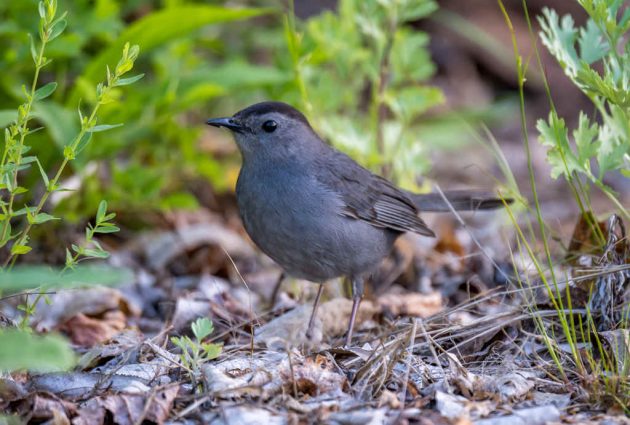
The German common name is more decisive: “Katzendrossel,” which at least commits fully to the feline connection.
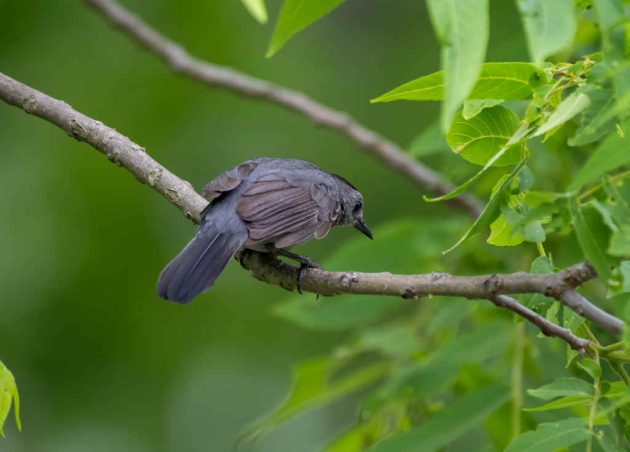
The Grey Catbird (Gray Catbird) apparently doesn’t sound much like a cat, but it does adjust its vocalizations to the environment. In noisier settings, minimum, maximum, and peak frequencies all shift upward (source). In other words, it sings louder to be heard over the background noise—an entirely reasonable strategy, even if it does take some of the romance out of it.
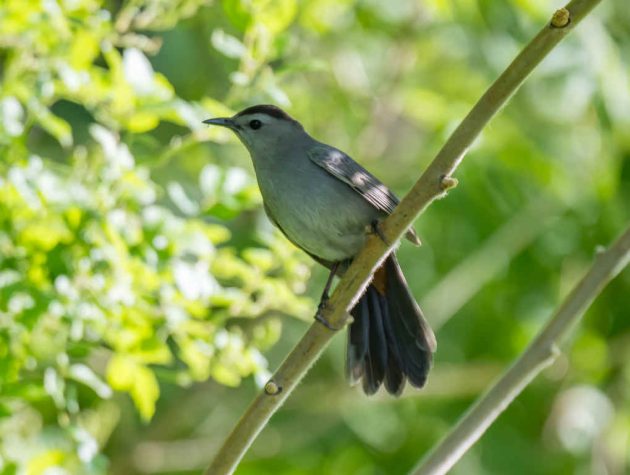
Interestingly, adult catbirds defend early-season young more strongly than those raised later in the season (source). This fits with parental investment theory: when offspring have higher expected survival, parents seem willing to put in more effort. Evolution, economics, and ornithology all start to look oddly similar at that point.
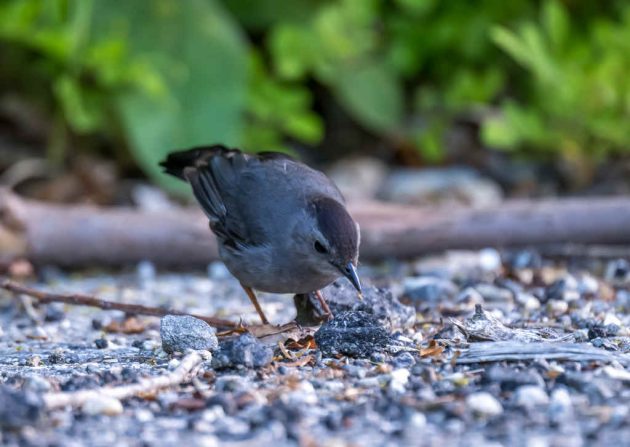
No catbirds here in Shanghai—but we have cats.











Leave a Comment