

July might have started slowly, but it has finished with a satisfactory flourish, at least from a birding point of view. My UK year list has now grown to 192, so I’m only a mere eight species away from the magic 200, while my Western Palearctic total has reached 303, so comfortably past my target of 300 with five months still to go.
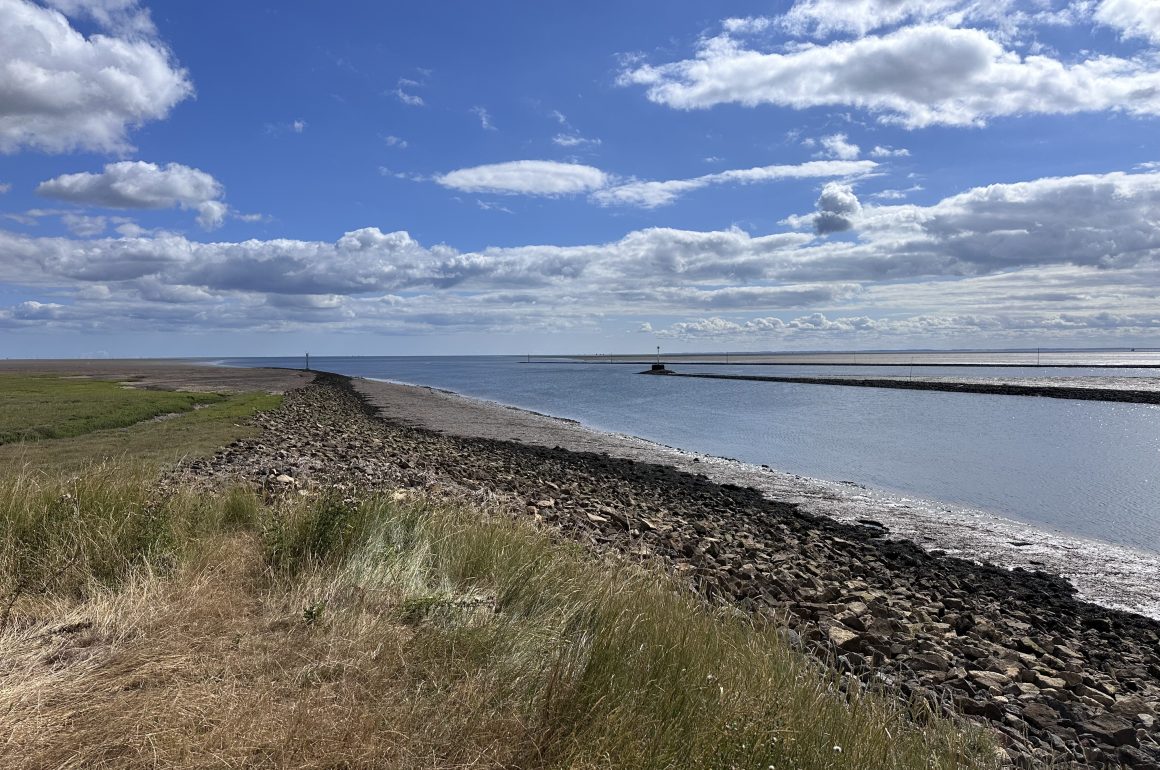
It was a trip to Lincolnshire that proved to be the birding highlight of late July. Here, at a place called Cut Point, I was able to enjoy a spectacular panoramic view of the Wash. Cut Point is to the east of the Lincolnshire town of Boston, and is where two rivers – the Welland and the Haven, drain into the Wash. This is Britain’s largest estuary, and covers thousands of acres of tidal saltmarshes and mud flats. It’s about as close as anywhere you can go in England to find genuine wilderness.
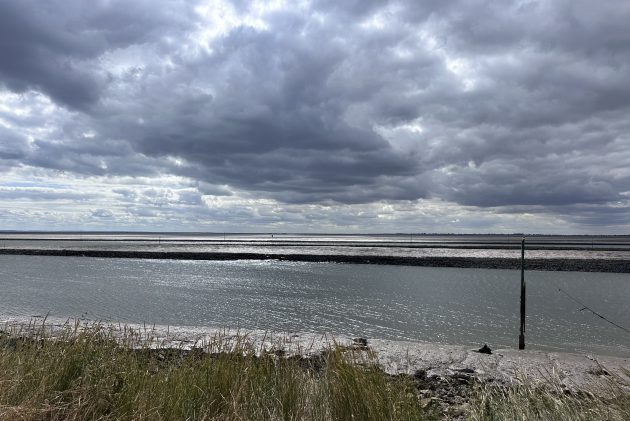
It does, of course, attract birds: hundreds of thousands of them. Many species of waders and wildfowl winter here, while for others it’s a vital refuelling station on their migrations. It was one such bird I had come to find: the Whimbrel. Though a few pairs of Whimbrels nest in the Shetlands, the UK’s northernmost islands, these elegant waders are chiefly passage birds in England, migrating to and from their breeding grounds in Iceland and Scandinavia. They pass through in some numbers in late April and early May, with the return passage starting in mid July.
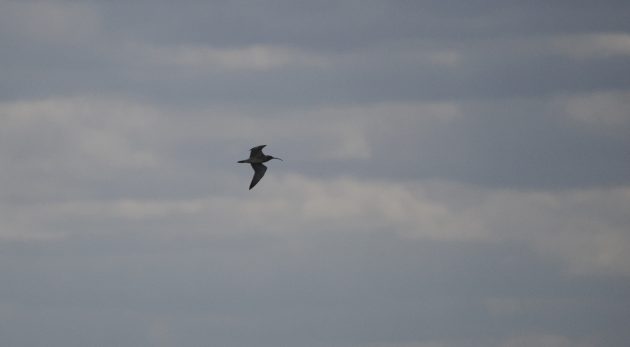
Whimbrel (above and below)
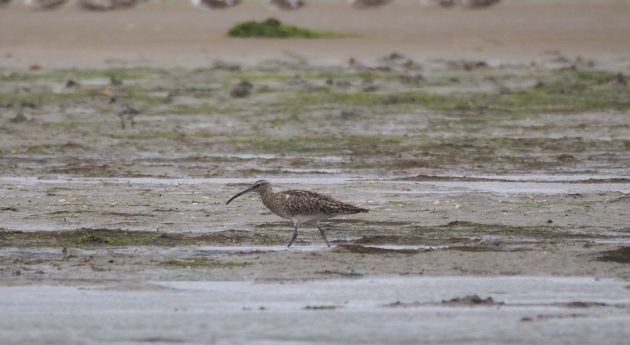
I’d missed seeing any in the spring, but I knew that my chances of seeing one at Cut Point were good, and so it proved. I saw several, and was also able to enjoy watching one feeding alongside a Curlew. Check in a field guide and you will discover that Curlews and Whimbrels appear much the same – big, brown waders with long, decurved beaks. One way to separate them is to look for the latter’s distinctive crown stripe, but in practice the Whimbrel’s smaller size and different proportions make identification relatively easy.
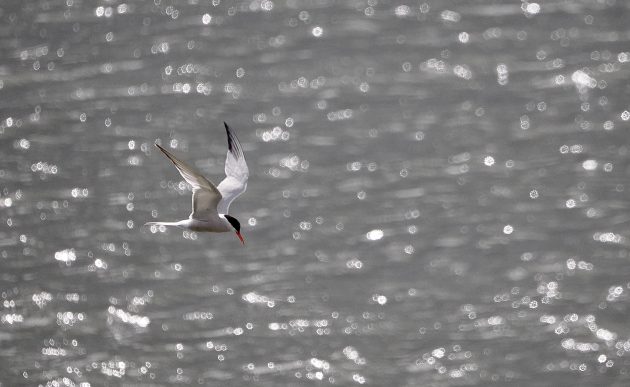
Common Tern fishing the river
Scanning with my scope, there were plenty of other waders to be seen, too. Ringed Plovers, Oystercatchers and Redshanks were the most numerous, while a Bar-tailed Godwit was a pleasing find. (In the winter I would expect to see hundreds here). A surprise was a single Brent Goose. At this time of the year Brent are away on their breeding grounds in arctic Russia, and it’s not until September that the first returning birds appear. A reminder that it was summer was the presence of Common Terns, fishing in the Haven. There was also a single Golden Plover, still in breeding plumage. In a few months time there will be thousands of these plovers here.
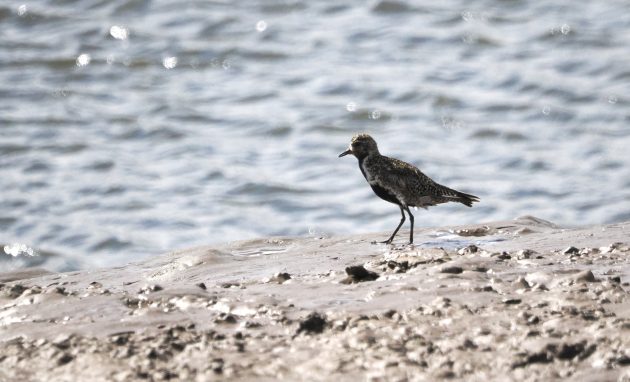
Golden Plover, still in breeding plumage. Its black face indicates that it is a northern breeding bird
Bordering the Wash, just north of Boston, is Freiston Shore, one of the RSPB’s least-known reserves. It’s an interesting site, as 66ha of former farmland have been converted to tidal saltmarsh, while an adjoining fresh marsh has now been surrounded by a fox-proof fence, proving a safe breeding and feeding area for wildfowl and waders. Two new hides have been built, the car park has been surfaced, but though birds may have discovered it, not many people have.
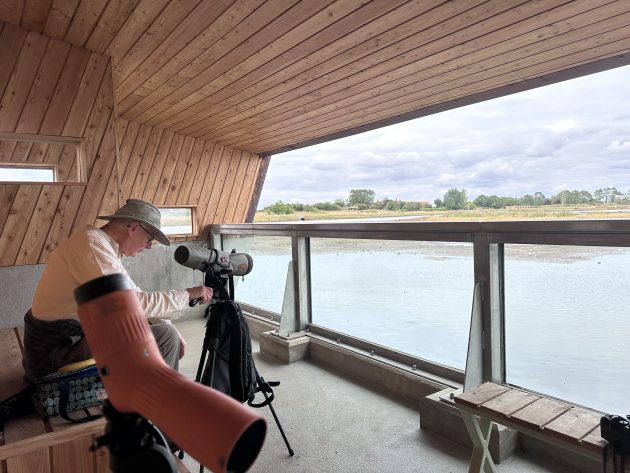
The Sunk, Freiston’s novel new hide. Its design is quite different from any other hide I have been in
From the first of the new hides, curiously named the Sunk (it is a sunken hide, surrounded by mud), there was little to watch apart from a large flock of Starlings. These were 98% juveniles, just acquiring their adult plumage. A few Lapwings, Shelducks and a single Oystercatcher were also to be seen, while passerines included Linnets, Goldfinches, Meadow Pipits and Yellow Wagtails.
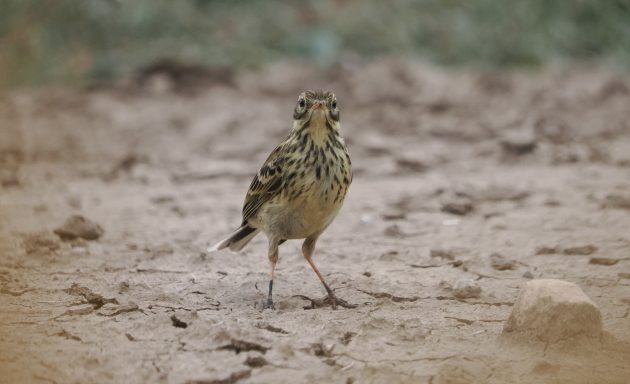
This Meadow Pipit gave me a hard stare
We have had a drought summer, so the second hide which should look out over a marsh revealed just a small muddy pool, but it was big enough to attract an interesting variety of birds. The star was a Pectoral Sandpiper, a wanderer from North America. These sandpipers are the commonest American vagrants in Britain, but common is a misleading term. A few are seen every year, but they remain exciting birds to find. Feeding in the same pool were three juvenile Little Ringed Plovers, a pair of Dunlins that were still in breeding plumage, and a very smart Black-tailed Godwit. Alas, all were just too far to be photographed satisfactorily.
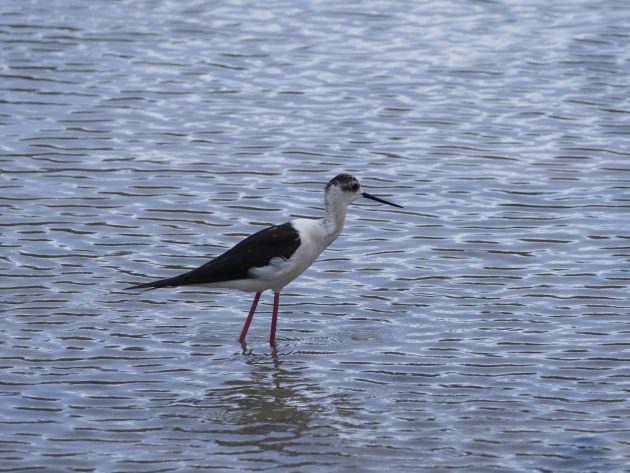
Black-winged stilt. Once a rarity in Britain, it is a species that seems poised to becomes a regular breeding bird here
Another RSPB reserve, Frampton, is just a few miles south of Freiston Shore, and this was my next stop. Here I duly managed to see the pair of Black-winged Stilts that had attempted to nest this spring. Unfortunately their eggs were predated shortly before hatching. Once exceedingly rare birds in Britain, these stilts now appear much more regularly, with annual breeding attempts. While looking for the stilts I was pleased to hear a calling Quail, also a new bird for my English year list, though I’d heard Quail in May in Menorca. This summer is proving to be an exceptional one for Quail in England, with scores of calling birds being reported across the country.
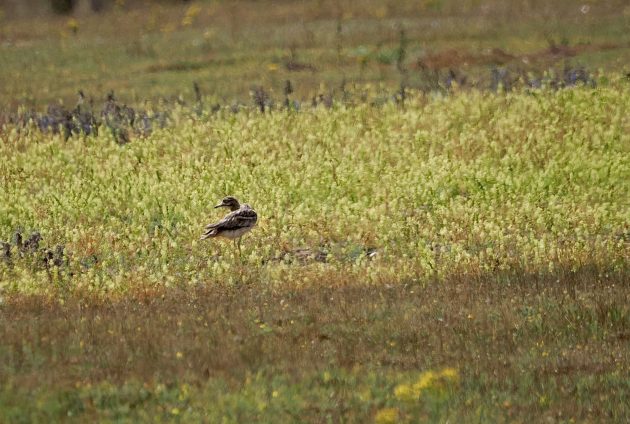
Stone Curlew at Weeting Heath. It was one of a flock of 18
The last addition to my year list came a day later, when I visited Weeting Heath, a Norfolk Wildlife Trust famous for its Stone Curlews. It is much the easiest place in England to see these curious waders, here on the very northern edge of their European breeding range. I counted 18, but I’d already seen these interesting birds several times this past spring. What was new for me was a Spotted Flycatcher, once a common summer visitor to England, but a bird that has declined in the UK by 92% since 1967. Again, I’d seen plenty of these flycatchers in Morocco, Spain and Greece, but this was a UK first for the year. It was a juvenile, so a welcome fresh recruit to the dwindling population. On a very hot summer’s day it came to drink at a small woodland pool, where it was joined by a Yellowhammer.
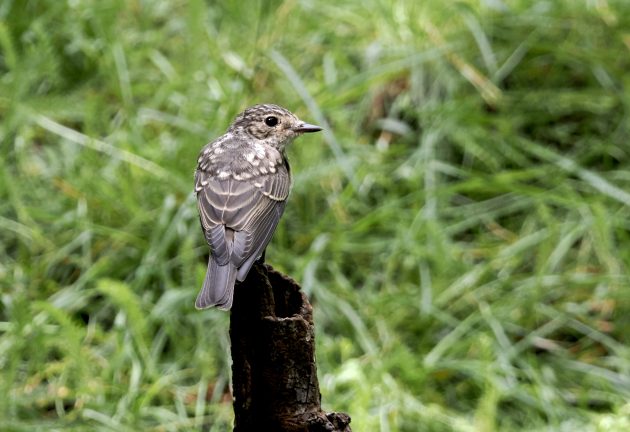
Juvenile Spotted Flycatcher – my first of the year in England
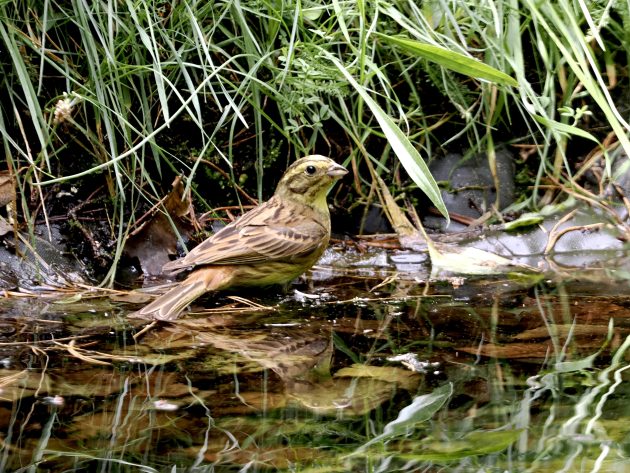
Thirsty Yellowhammer






Wonderful. Wish I’d been there. That Golden Plover alone would’ve made the trip worthwhile.