

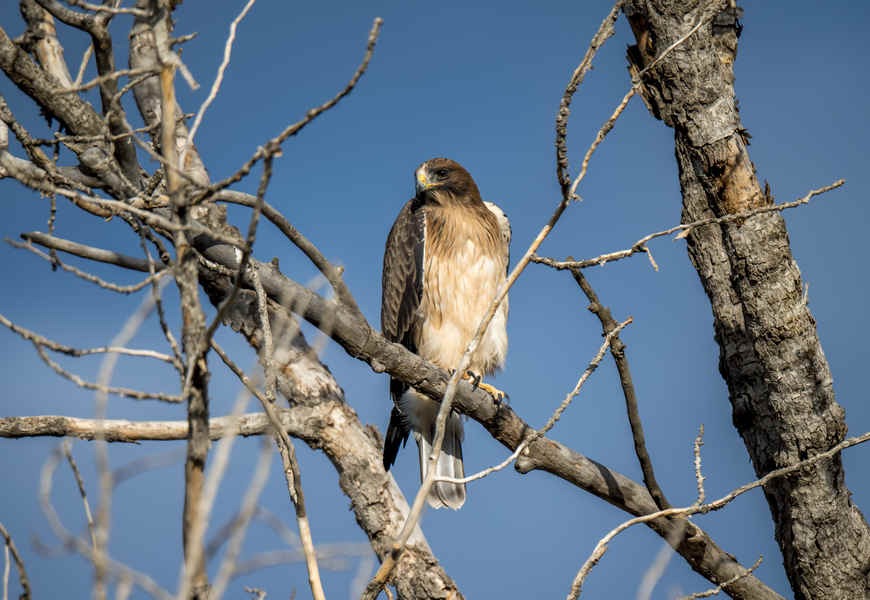
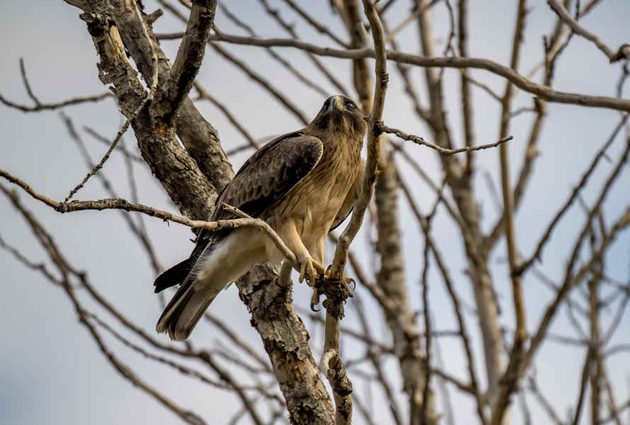
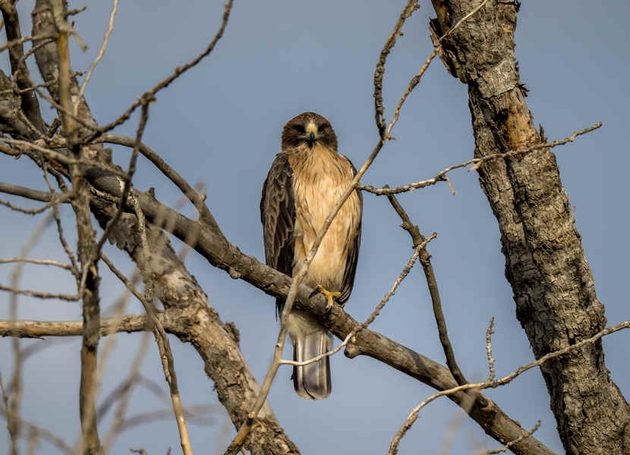
The Booted Eagle indeed wears boots – not branded, but high-quality nevertheless, as this photo shows.
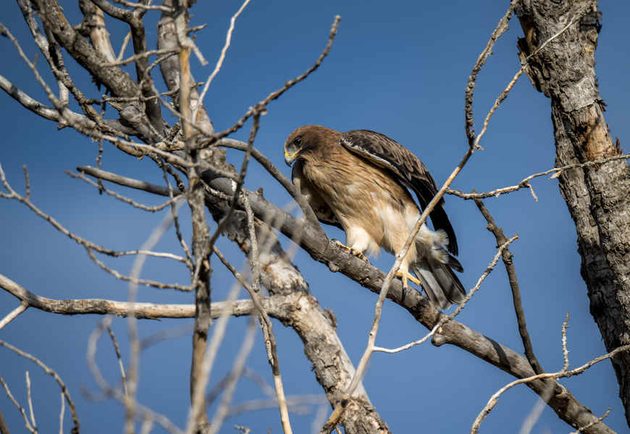
The “boots” also explain the otherwise slightly weird scientific name Hieraaetus pennatus, as pennatus means “feathered”. That would not be a great way to distinguish this eagle from any other eagle, or even any other bird, but the feathered legs are sufficiently conspicuous to have given the species its English name.
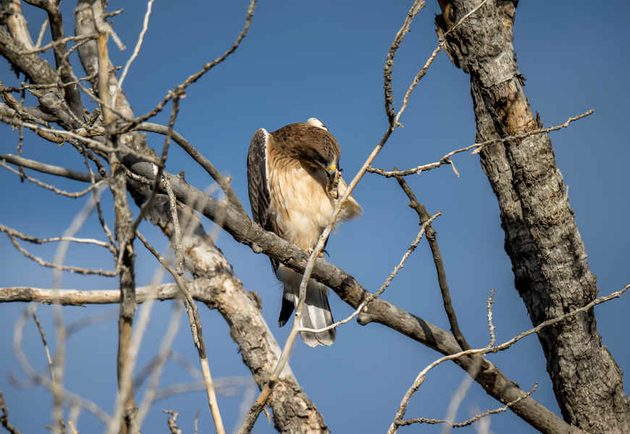
One would think that such snow boots should be particularly useful in cold winters – yet this eagle is migratory and winters in sub-Saharan Africa and the Indian subcontinent. So perhaps the boots are a bit of an overkill.
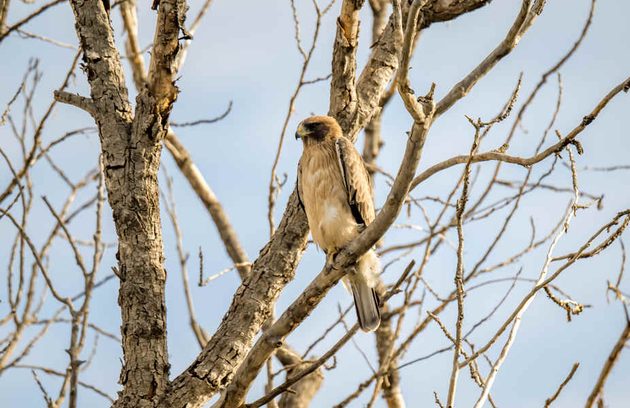
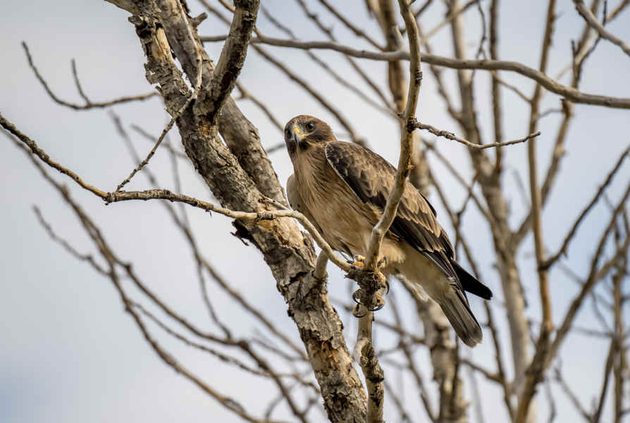
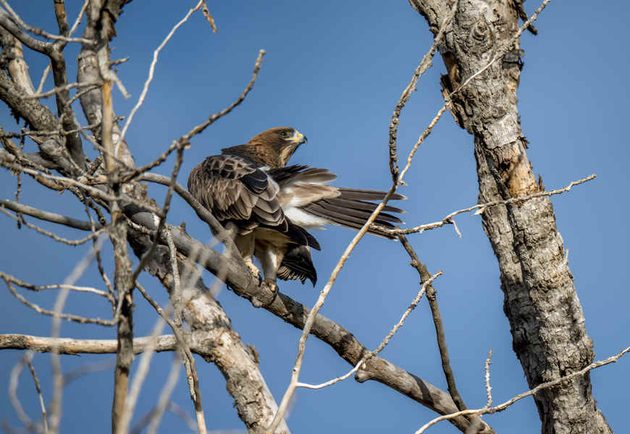
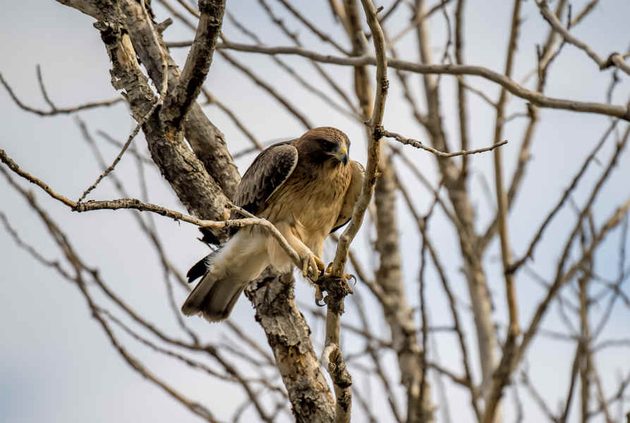
It comes in a dark and a lighter morph – the photos here (taken at Nanshan, Xinjiang, in August 2026) show the lighter morph, which is apparently the more common one.
The Booted Eagle is also rather less conventional about migration than one might expect. Most birds crossing the Sahara presumably regard the desert as an obstacle to be overcome as quickly as possible. Booted Eagles apparently don’t always see things this way. GPS tracking has shown that 35% of their trans-Saharan journeys include periods of slow or non-directional movement, sometimes lasting for weeks. One eagle spent no less than 31 days wandering around a large area of sand dunes. This apparently wasn’t because it had gotten lost or was waiting for better weather. The researchers think that the eagles deliberately forage in the desert, taking advantage of food sources that other predators largely ignore, including migratory songbirds resting in the desert during the day and migratory locusts. As far as the researchers know, no other trans-Saharan raptor has been recorded doing anything similar.
Booted Eagles can get quite old – one ringed one was recovered dead at an age of about 22.5 years. An interesting but somewhat difficult paper links this longevity to a low number of predators and claims that this supports the classical evolutionary theory of ageing. The basic idea is that if an animal is likely to be killed by predators or other random events before it gets old, there is little evolutionary benefit in investing in mechanisms that keep it alive for a very long time. If it is relatively safe from such external causes of death, however, natural selection has more opportunity to favour longevity.
Maybe it is not coincidental that long-lived raptors are also rather ruthless when it comes to raising their young. Brood reduction is what ornithologists euphemistically call the death of one or more chicks through siblicide or starvation. In Booted Eagles, it is more common in territories that do not provide sufficient resources (source).
But there is another way of looking at siblicide: in a long-lived species, the survival of one exceptionally competitive chick may be more valuable than the survival of two weaker ones. Killing your sibling may give you more food and a better chance of surviving until you can breed yourself. One review of Falconiformes suggested that only in long-lived species can these benefits outweigh the cost of losing a sibling.









Leave a Comment