

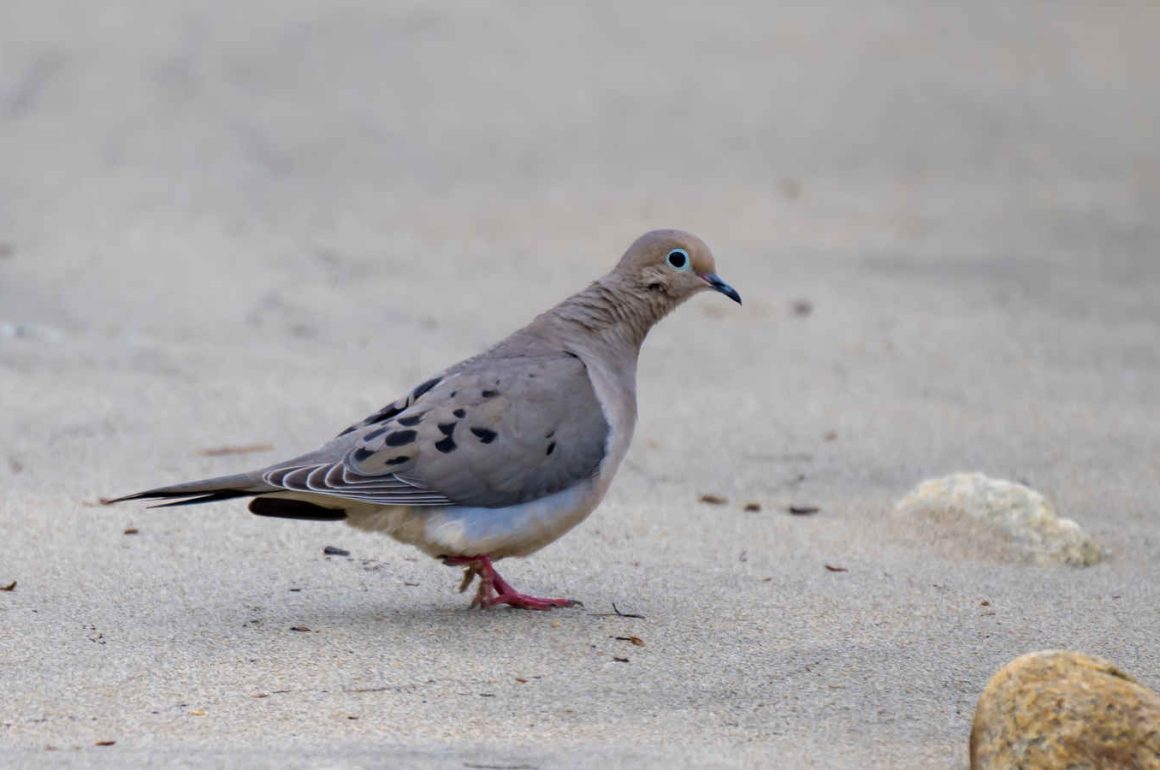
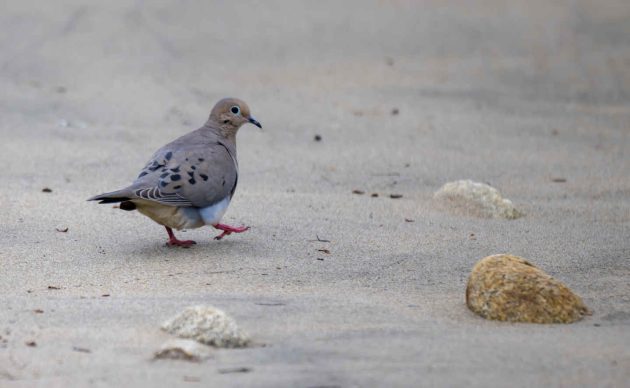
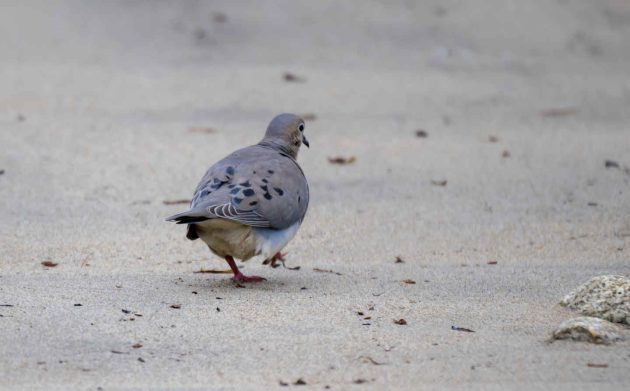
If President Trump were ever to comment on the Mourning Dove, he’d probably explain that not many people know there’s a u in “mourning.”
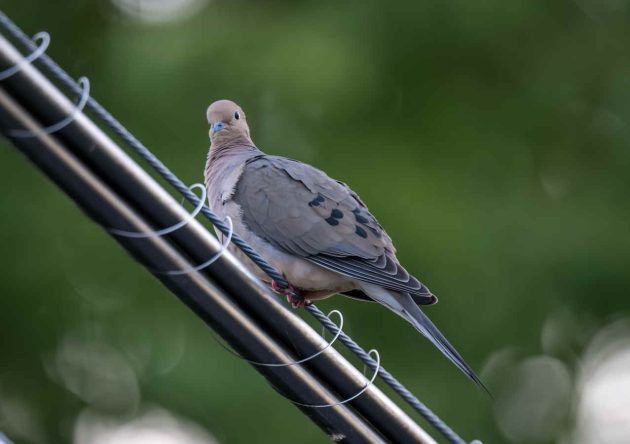
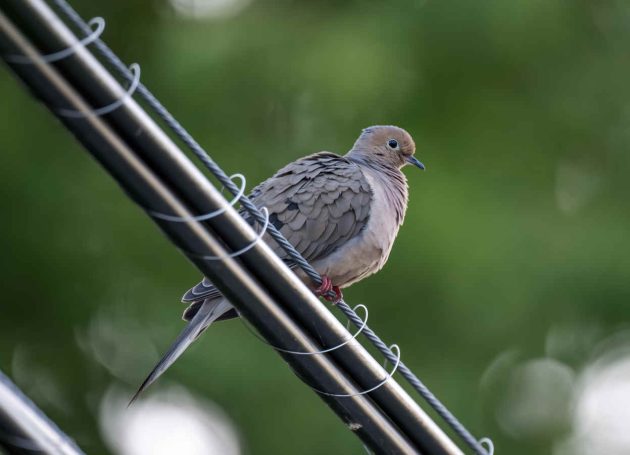
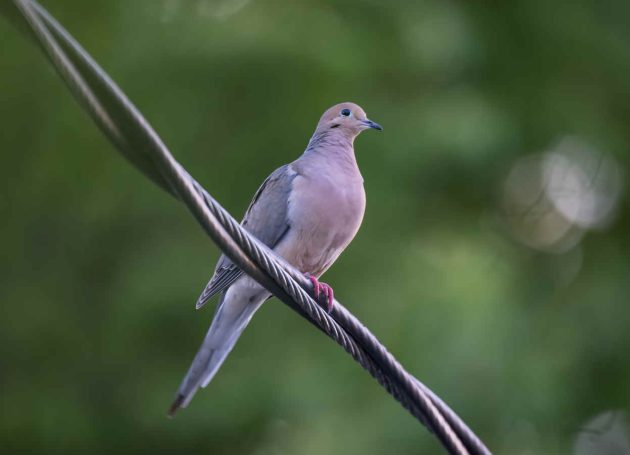
Audubon remarks that “The mournful cooing of the Mourning Dove is one of our most familiar bird sounds”, which, given its population of an estimated 150 million birds, sounds reasonable.
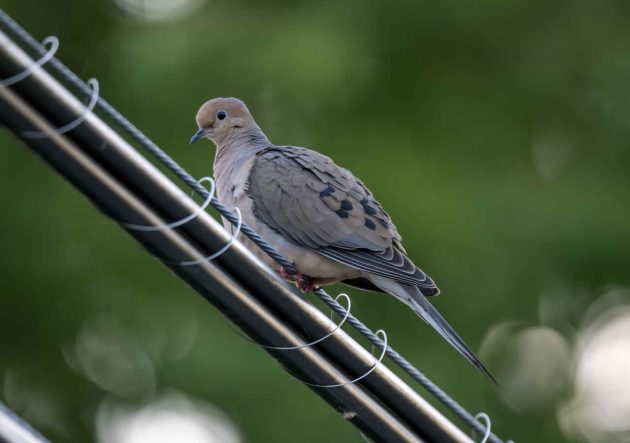
For once, the genus name is more interesting than the species epithet. The macroura in Zenaida macroura just indicates a long-tailed bird.
In contrast, Zenaida commemorates Zénaïde Bonaparte, the elder daughter of Joseph Bonaparte (Napoleon’s older brother), and was apparently named by her husband, the ornithologist Charles Lucien Bonaparte.
Her being thus married had quite a prehistory. According to Wikipedia, when she was 14, her father offered Zénaïde in marriage to King Ferdinand VII of Spain, but the offer was refused. This followed earlier plans to marry Zénaïde to Oscar, the son of then Marshal Jean-Baptiste Bernadotte.
(Separate note: I’m currently reading an excellent history of Babylon in which the author argues that “sex trafficking” is sometimes a more accurate term than the diplomatic euphemism “bride exchange.”)
Finally, she married her cousin Charles Lucien Bonaparte, the ornithologist and son of her uncle Lucien. Apparently, her father had proposed this match when Zénaïde was only five years old. The plan was to preserve the Napoleonic succession by marrying his daughters to the sons of two of his brothers. That seems to have outweighed any concerns about the genetic consequences of first-cousin marriages.
Surprisingly, given those concerns, Zenaida and Philippe had twelve children, of whom eight lived longer than just a few years – probably not a bad result at that period in health care development. Quite a backstory for a bird that many birders probably consider rather boring.
Given the enormous population of the species, it’s perhaps unsurprising that many ornithologists have preferred studying it over trekking halfway around the world in search of rarities. The resulting literature includes papers with titles such as
Seasonal Dynamics of Mourning Dove (Zenaida macroura) Body Mass and Primary Molt
Foraging-patch use and within-patch diet selectivity in mourning doves, Zenaida macroura
Fortunately, ornithologists unwilling to venture far from home need not despair. The HBW section “Priorities for Future Research” still lists 14 unanswered questions, including such pressing issues as the three below.
Develop predictive models for annual recruitment as a function of physiographic region, land use, and climate attributes.
Estimate temporal and spatial variation in the number of individual nesting attempts per season and their relationship to variation in recruitment rates.
Evaluate potential impacts of lead shot toxicosis on population vital rates.











Leave a Comment