

We sent out another list of questions to bird guides who have already been profiled on 10,000 Birds. In the second edition of this second series, we ask
What is the least obvious trick that actually works when finding birds?
Here are the answers.
Knowing their behaviour. Gabor Orban, Hungary/Costa Rica
Throwing rocks. Zhang Lin, China
Sometimes one achieves more by slowing down a bit. Stop, listen and take your time often is more rewarding. Marc Cronje, East and Southern Africa
Making noise. Some birds, like Crested Tits in Scotland, are drawn to you if you encourage your group to chat vociferously. David Lindo, Spain
Not using binoculars (I wrote about that here). Faraaz Abdool, Trinidad & Tobago
Luck… you can do all you want, but sometimes you just get lucky. John Hague, UK
Standing still. Many beginners think that moving equals searching, but often the best trick is to stop, keep quiet, and let the birds reveal themselves. Silence allows calls to be heard and movements to be noticed that would otherwise be missed while walking. Marcelo Carlos De Cruzky, Argentina
Silence and Playing the Bird Sound. Sometimes mimic the same sound the bird makes if you can. Kwame Brown, Ghana
One of the least obvious tricks that truly works is learning to stop and listen before you look. As a guide, I often find birds by sound long before they’re visible. A single call, a rustle, or a change in the forest’s rhythm can reveal far more than scanning with binoculars. Pausing quietly allows the environment to “reset,” and birds begin to move naturally again. Another subtle trick is watching movement, not the bird itself—a flick of a leaf, a slight branch shake, or a silhouette against light often gives away a hidden species. In essence, the real skill is slowing down—letting the habitat speak first, then following its clues. Magada Haily Miriam, Uganda
Clients having a positive attitude and not worrying too much about getting their targets. Works most times. Spyros Skareas, Greece
The cumulative hours, experience, background knowledge, and scouting. There’s no better way to find birds than to know where to look, how to look, and know them intimately, to be at the right place at the right time to have the best chance to find them. It’s why I focus my effort only in my region these days, I want to really know and think like the birds we seek, so my clients have the best experience possible – well, that, and also knowing every outhouse and portable toilet in the state of Maine! Derek Lovich, Maine, USA
To call birds that are considered difficult to approach, I usually put a loudspeaker in the middle of the road and cover it with leaves while keeping a distance and try to play the bird’s sound several times until the bird starts to approach and we can see it with binoculars from a certain distance. Eko Lesomar, Papua New Guinea
Best and least obvious trick in the neotropics is mimicking pygmy-owls! René Santos, Brazil
Using the call of a specific species to attract it, playing the call of the Pacific owl in the coastal region of Ecuador. Sandra María Plúa Alban, Ecuador
Look for the “Sentinels.” In our forests, the Greater Racket-tailed Drongo is the ultimate clue. While they are a relatively common sight, locating one often reveals a hidden treasure trove of rare and obscure species nearby. They act as a nucleus for mixed-species flocks; if you find the Drongo, you’ll often find the “not-so-common” Common Flameback, Lesser Yellownape, Heart-spotted Woodpecker, and even the elusive White-bellied Blue Flycatcher. It’s the birding equivalent of finding the party by following the loudest guest. Savio Fonseca, India
Robins have a part in their song that is inaudible to humans due to its high frequency. If I’ve heard the local robin once or twice and can accurately identify this inaudible part, then I can say to birding guests: “Listen, there’s a robin singing. And now it’s continuing to sing.” Usually, the birding guests are amazed and ask me how I knew the robins would resume singing. Rolf Nessing, Germany
And the usual semi-wise words from the editor:
Bird guides, it turns out, rely on a curious mix of deep knowledge, patience, mild deception, and sheer luck. Many swear by slowing down, standing still, and listening carefully, while others throw rocks, imitate owls, or hide loudspeakers in bushes. The common theme: birds usually reveal themselves when humans stop behaving like humans.
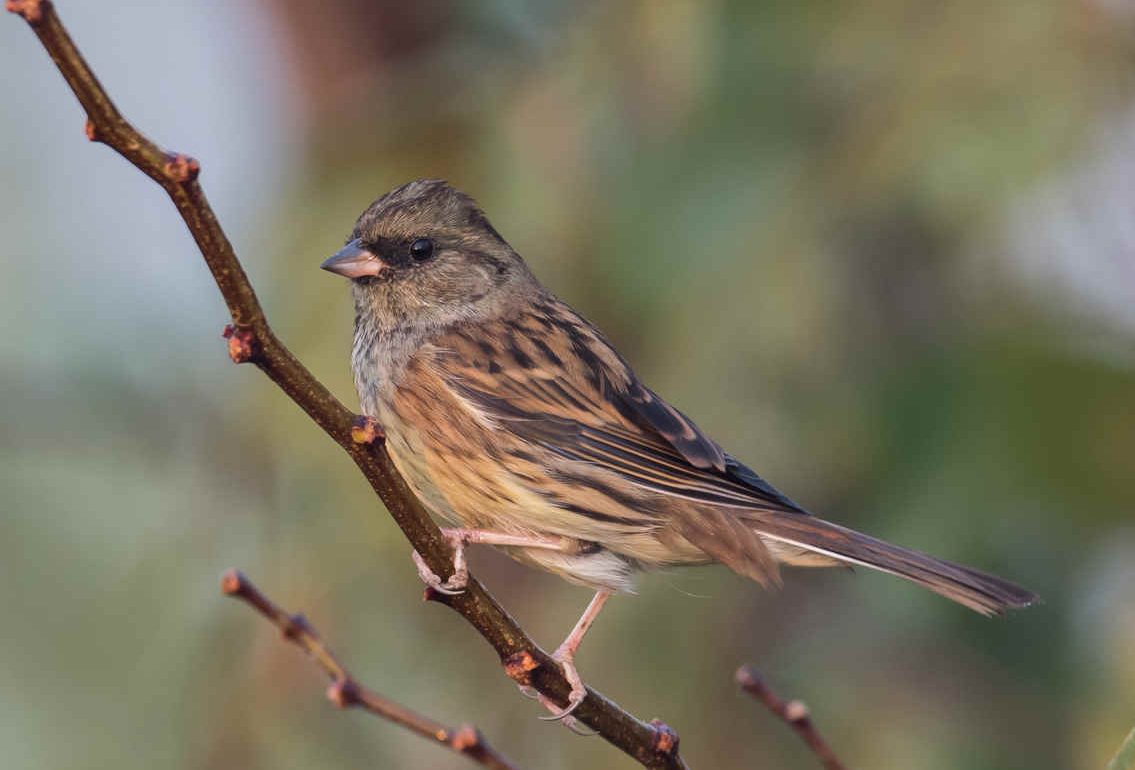
Pnoto: Black-faced Bunting (at least when the photo was taken at Nanhui, Shanghai, in November 2017)








Having a wee – worked on too many cases to call it a coincidence… or this is probably the same as standing still and be quiet?
When searching for a bird that you have heard sing or moving, the best adivice I was given is to “ooze.”
“Throwing rocks” ???
Turn off your camea and put it down, better still leave it at home. This brings birds out every time for me!