

The Global Big Day (GBD) is a beloved tradition for us and I am so glad that 10,000 Birds writers have come together for a team! Our podcast has had a team for 5 or 6 years now and it is so exciting to watch as lists roll in from around the world.
As a small business owner, I work 7-days a week, so GBD falls on a workday for me and I don’t get the opportunity to do a whole lot of birding. But birders well know to make a checklist whenever you get a chance! Our day started off by going down to Haystack Rock in Cannon Beach, Oregon to secure Tufted Puffins for the team list as they are relatively uncommon throughout much of their range. The morning we went out there was a high tide and there was little activity, however we were able to scope a couple just on the other side of the breakers! Common Murres, Surf Scoters, Pelagic Cormorants, and the puffins were added to the list. Stopping by the Cannon Beach Settling Ponds got us some Chestnut-backed Chickadees and Purple Martins before heading off to work. Throughout the day, I completed “incomplete checklists” adding Vaux’s Swifts, Golden-crowned Kinglet, American Goldfinch, Swainson’s Thrush, Bald Eagle to the list. I talked my way into a few hours off so that we could seek out a Snowy Plover in the town north – success!
One thing I love about writing for 10,000 Birds is sharing this instant camaraderie with birders around the world!
– Hannah
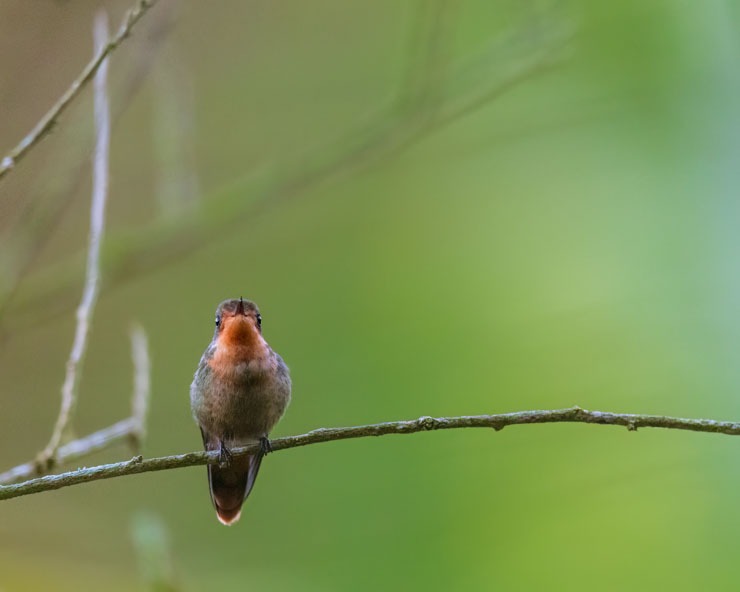
May 9 2026 rolled around before I was able to properly gather my wits after a pair of back to back T&T tours. A few days of extra sleep fixed most of the brain fog, but at least I remembered where the birds were. That morning, I stumbled out of bed at 5am to the sounds of Common Pauraque and Ferruginous Pygmy-Owl – kickstarting the first eBird list of the day. While I was still indoors, the first Great Kiskadees began screaming, and so did the Tropical Mockingbirds that sleep under the eaves of our roof. As I shuffled outside in the faint glow of the pre-dawn, I became acutely aware of eyes on me: a Tufted Coquette sat in one of the shrubs adjoining our walkway.
Before direct light touched any terrestrial life, the species count was already in double figures. I knew from that point that it was going to be a productive day. I would just have to keep my foot on the gas all day. Rest? Tomorrow. That morning session produced 93 species, some of course seen far better than others. A brief view of a hummingbird darting around in the canopy at dawn, for example, was recorded as a Long-billed Starthroat by virtue of, well, its long, straight bill. While scanning the first kettle of vultures that rose into the sky, a few dots turned out to be kites: Plumbeous Kites with pointy wings, and Hook-billed Kites with wide, paddle-shaped wings. The latter is a fairly new sighting here, I had caught a view of one some weeks prior but was only about 90% sure given its novelty.
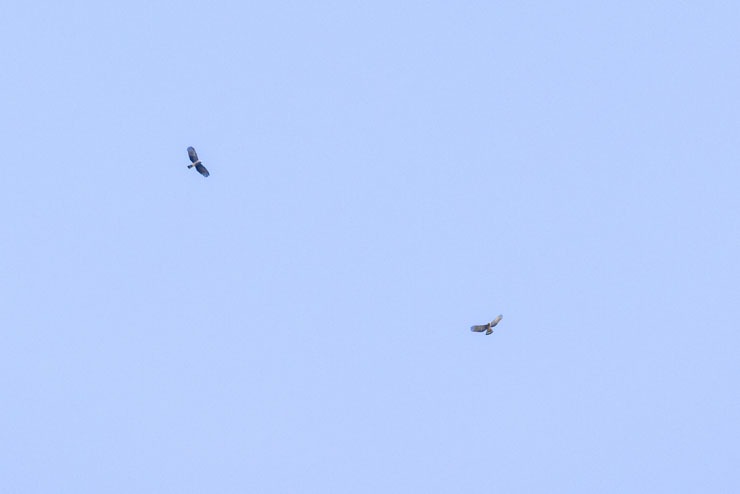
I sat momentarily with a bowl of cereal and freshly brewed coffee, but still managed to catch a pair of White Hawks as they drifted by. After this, the next spot was some open fields to the east. Myself and my birding buddy for the day, Michelle, were ready for the heat. Within a few seconds of arriving at this new location, we picked up two new birds for the day – and lifers for her: Grassland Yellow-Finch and Red-breasted Meadowlark. On the road shortly after leaving this area, she spotted a reddish raptor that flew overhead: Savanna Hawk, another new bird for the day and for her.
From here, we headed into the Northern Range, driving over the highest saddle just to the north-facing slopes of these hills. The first stop yielded nothing much, but our second stop was guided by intuition and proved to be spectacularly productive, with Red-rumped and Golden-olive Woodpeckers, Guianan Violaceous, Green-backed, and Collared Trogons, along with a selection of typical forest birds including a pair of especially confiding Bay-headed Tanagers. We left the hills after a couple hours, but not before stopping to add Bearded Bellbird as a HO (heard-only).
If the heat wasn’t enough at this point, we were then headed to Trinidad’s west coast for an intended quick stop-off at the tidal mudflats. As we walked past the mangroves to a gap where we could get a decent view of the flats, we were truly flabbergasted by the sheer number of birds. Shorebirds, gulls, terns, skimmers, flamingos, and herons as far as the eye could see. I took pictures and counted blobs.
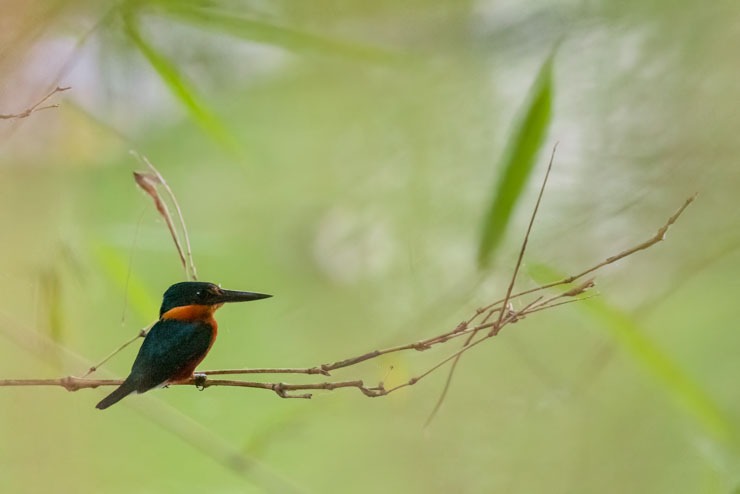
By this time, the sun was threateningly low in the sky. We pushed north again, the sky turning red from all the bushfires in the area. I had one final plan, after getting Michelle onto a small flock of Red Knots at our last coastal site – and we skidded in just after sunset. Darkness had already begun to drift through but there were some birds that were still active. An audible gasp let me know that she had found it: an American Pygmy Kingfisher just where I said it would be. New bird for her, new bird for the day.
Back at home to round things off, I was still waiting on a couple new species for the day. But the night was quiet. I had dinner indoors and resumed my listening as I was digesting. Finally, the booming hoots of a Mottled Owl to round off the day. 148 species, two shy of the total I was silently aiming for.
– Faraaz
One thing about birding that is a challenge, especially when I am planning on listing, is waking up early enough to hear the dawn chorus. My plan for doing that on my Global Big Day, as part of our 10,000 Birds Writers team, faded as I could not wake up that early! Maybe the pre-Global Big Day evening cocktail contributed to that! Next time, I need my game face on and abstain! Thus, my day started about an hour after sunrise counting birds in my yard. The usual suspects showed, giving me eleven species and easily ticking off the Brown Pelicans and Field Sparrows.
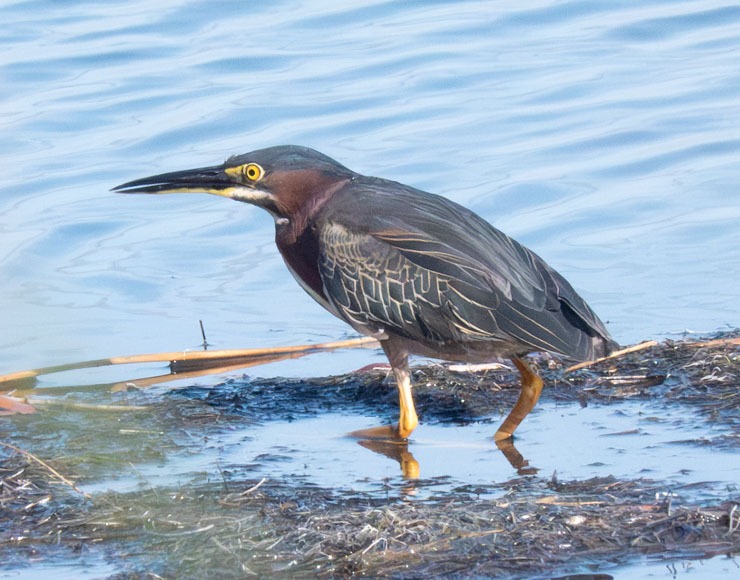
Next, I chugged my decaf coffee down (yeah, I know but I can’t drink the real stuff anymore…pity) and sped down to my patch. Meeting up with my birding gal pals, we settled into focused Global Big Day species hunting. First out of the gate was the ubiquitous American Crow, followed by the Mourning Dove and Fish Crow in unison. We are lucky there is a mix of habitat at my patch so our next couple of gems were migrating Spotted and Solitary Sandpipers, Least Sandpipers, Semipalmated Sandpipers and Plovers. The wind was not blowing in our favor and gusting up, making it hard for me to hear passerines, much less see them. Our list lacked any migrating warblers. It was disappointing. Nevertheless, we kept moving, spotting a Green Heron and our loyal friend, the Snowy Egret as well as Mallards with ducklings, Great-crested Flycatchers, and Eastern Kingbirds. The Purple Martins had also arrived and were noisily building nests in the tall boxes above the boardwalk.
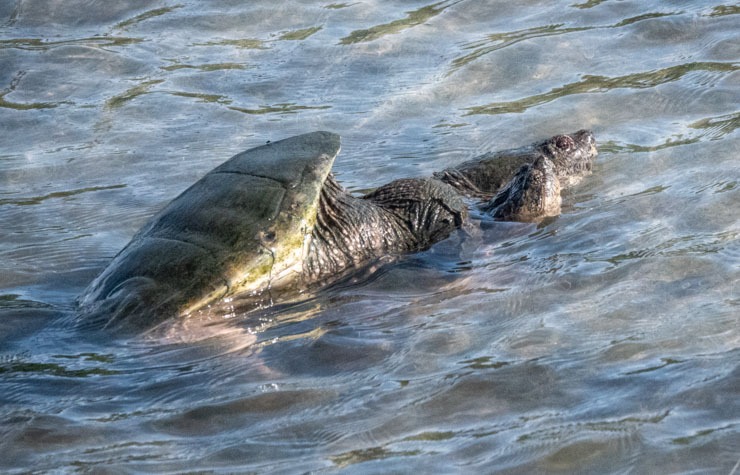
As we kept counting new species, we marveled at spring’s greenery and the mating season around us. For the first time I witnessed enormous snapping turtles mating in the shallows. Well…the photo says it all.
Our morning was fading towards the middle of the day and things were slowing down. Our total tally of 37 species was a decent enough list, but I was still bumming about the absence of warblers as I bid my pals goodbye and went home. After a restorative lunch, I ramped up again in the late afternoon by doing a sea watch. A Red-throated Loon and some Royal Terns were the highlights along with Sanderlings, Double-crested Cormorants, and Osprey. That sea watch gave me an additional seven species for the team. In the end, I had 44 species for our 10,000 Birds Writers Team. I was hoping to break 50 species, but the wind and absence of warblers just didn’t make it happen. Well, there is always next year!
The birding in Costa Rica is always exciting but if you really want to risk “bird overload”, doing a serious Big Day will do the trick. As I have found out on several occasions, there’s no better excuse for being immersed in birds than Global Big Day! This year, once again, I gave myself over to birding on this special day, once again following a carefully devised plan to see how many I could find.
What made this year different was finally being able to complete the main route I have worked on with an electric vehicle. Although my partner Maryllen and I usually start the endeavor in the middle of the night at a shorebird spot, after our last attempt, we realized that was maybe a bit too taxing. Instead, we started closer to home and that worked out fine. In brief, we did a bit of fairly fruitless night birding on the way to the Pacific Coast, greeted dawn in wetland, dry forest and open habitats at the Tarcoles River valley, had productive make it or break it morning birding around and in the rainforests of Carara National Park, charged the car in the busy town of Orotina to the tune of Rock Doves, street hawkers, and other urban noise, and then birded high and middle elevations around Poas Volcano, eventually ending in foothill rainforest when the rains came at 5:30 p.m.
If that sounds like a bunch of habitats, it sure is, enough to identify more than 280 species and attain the highest total for Costa Rica as well as one of the highest in the world. It wasn’t a record breaking total but I would never be unhappy experiencing that many birds in one day! I was also very pleased to finally do my planned Big Day route with an electric car. Highlights are too many to mention but here’s a few:
–Baird’s Trogon, Scaly-throated Leaftosser, and other uncommon birds in the old growth rainforests of Carara National Park.
-Hearing Uniform Crakes at the end of the day in a spot where I have often birded and never heard them before.
-Seeing 24 species of hummingbirds, both species of silky-flycatchers, hearing a dozen species of wrens, and 10 species of thrushes.
-Knowing that while I was birding on May 9th, more than 80,000 other people were also celebrating the avian side of life.
– Patrick
A link to Patrick’s eBird trip report: https://ebird.org/tripreport/518099
After my disappointing Global Big Day outing last October where I got rained out, or more correctly rained on, in Panama, I decided I needed to rethink my GBD geography. So, this year I pointed myself toward the cloud forests of Mindo, Ecuador. A place many birders talk about with near legendary status. This decision proved to be a good one. The bird count was well above what I had anticipated, I believe around 118 species, with a decent number of lifers.
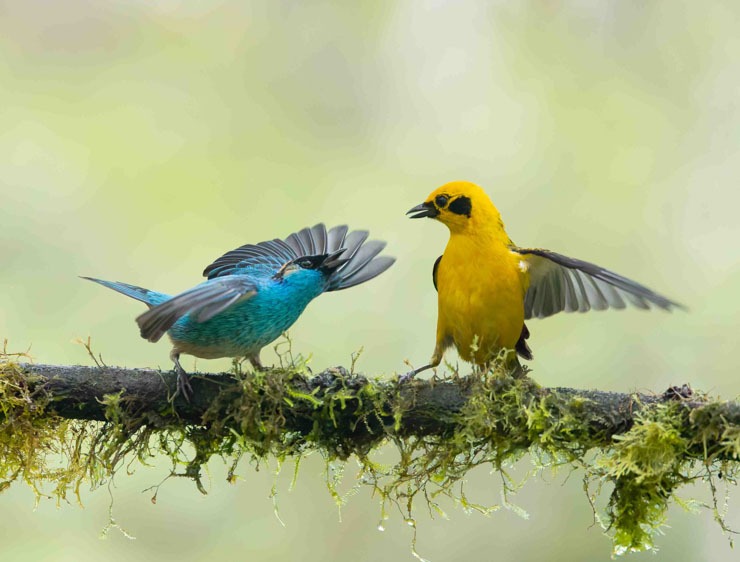
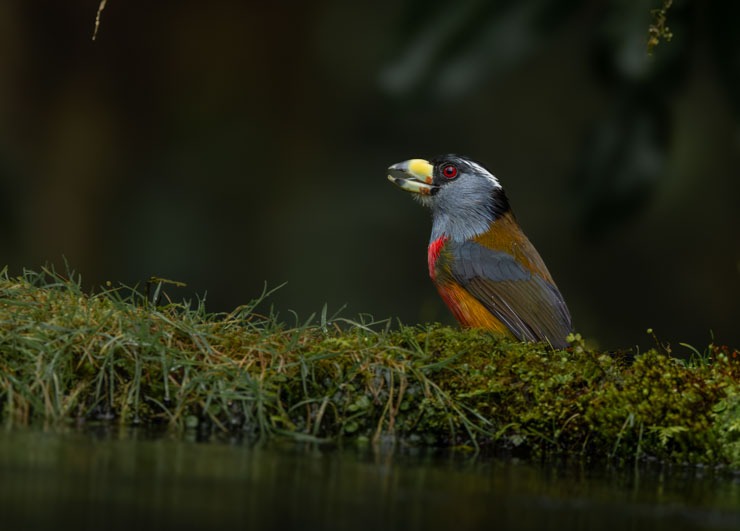
The experience, I must admit, can only be described as lazy birding. Lazy because the birds mostly came to you. It was not necessary to go trekking along cloud forest trails to spot birds. I could sit on the doorstep of my lodge room and photograph a variety of tanagers, or settle into the bird blinds on the compound and see Trogons, Motmots, Jays, Warblers, Flycatchers, Woodcreepers, Barbets etc. The only downside was I still had to get up at 5:30am and make the 100m walk to the blind.
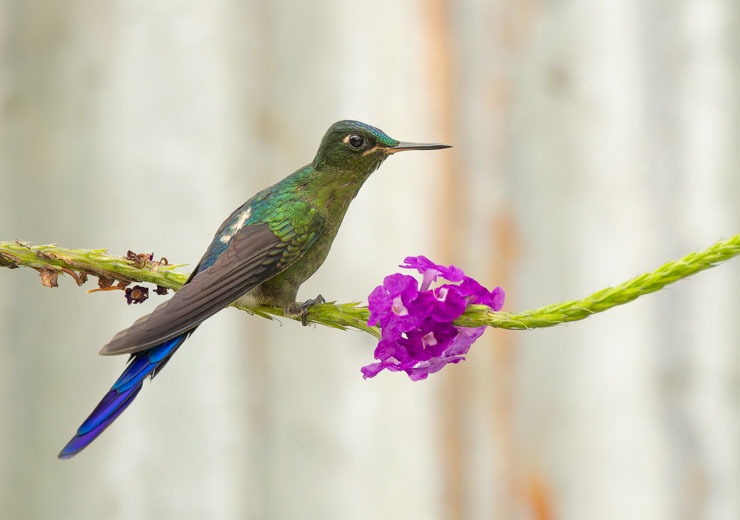
What made this Global Big Day especially memorable was not just the number of birds, but the constant feeling that something exciting could appear at any moment. One minute I was surrounded by hummingbirds flashing greens and violets around the feeders, and the next I was peering into the dark undergrowth hoping for another look at the shy Yellow-breasted Antpitta. By the end of the day, I realised this had turned into the exact kind of Global Big Day I had hoped for, relaxed, exciting, and filled with memorable birds at every turn.
– Fitzroy
Overall, our 10,000 Birds Writers Team landed a collective total of 583 species – landing us at 9th in the final standings globally. While this is impressive for our diverse group, the real winners are the birds, with over 8,000 species recorded worldwide in a single day! More people are birding than ever before, and I couldn’t think of a better outcome.









Really enjoyed reading this Global Big Day roundup. What stood out most was how different each experience was, from coastal Oregon to Trinidad, Costa Rica, and Ecuador, yet all connected by the same excitement that birding brings, not just chasing numbers, but the camaraderie and the memorable sightings along the way. I especially liked how the article showed that birding styles can vary completely depending on location. The contrast between intense species hunting and the more relaxed “lazy birding” made for a very entertaining read.
A fantastic team effort.
Not only am I already looking forward to the next Global Big Day, but my October GBD trip has already been booked.