


This is certainly not the first time I have made this point on this site, but if I had only birded in the U.S. my entire life, the closest I could get to a true discovery would be to go see some vagrant bird that turned up on my Rare Bird Alert chat or e-mail. But in Mexico, you just can’t bird for very long without discovering something new. And I’m not talking about a one-time-only vagrant sighting. No, I’m talking about finding something that was there all along, but nobody knew it.
My ornithologist friend Jonathan Vargas and I went up to Lake Cuitzeo, half an hour north of Morelia, the Monday before the 2026 World Shorebirds Day. With that official day being a Sunday, and my being a pastor, I knew I wouldn’t be able to join the gang then. (In fact, the church we started would be celebrating its 20th anniversary that day. So I REALLY wouldn’t be able to join the gang.) But we could scout out some of our favorite sites along the lake in advance, in order to know which of them would get priority on the big day.
We first stopped at a spot called La Palma, and then moved on to El Salitrillo. This latter site has given us quite a few surprises since Jonathan found it last year. Only a week earlier, I had seen some Forster’s Terns there, not our most common terns on the lake. (Those would be Caspian Terns, although they currently seem to be absent.) But this time, Jonathan’s vast shorebird expertise quickly led to him noticing the short, stubby bills on five terns hanging out on the shore. Gull-billed Terns!
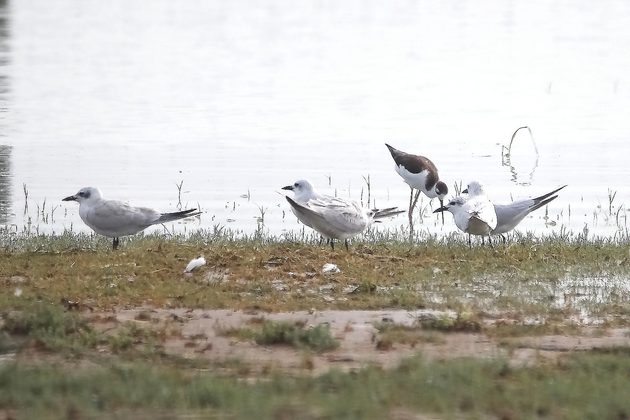
Gull-billed Terns do not seem to be common on the lake. In fact, the particular subspecies probably in question here, Gelochelidon nilotica vanrossemi, may be limited to only some 5,000 breeding pairs total, in spite of the overall species being found throughout the temperate world’s coasts. I have seen Gull-billed Terns only four times on the lake, the same number of sightings as for Jonathan, with two separate sightings each and two which we shared. There are only a handful of other sightings in central Mexico, outside of the lakes around Mexico City itself, where this species seems relatively common and probably breeds.
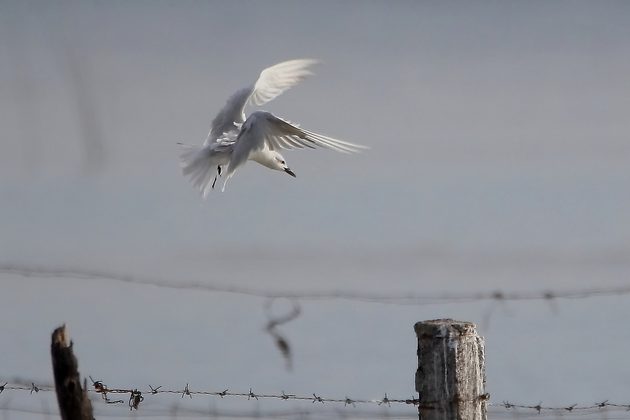
Gull-billed Terns do have a typical tern silhouette when they fly. But their short, stubby bills are unusual for that group.
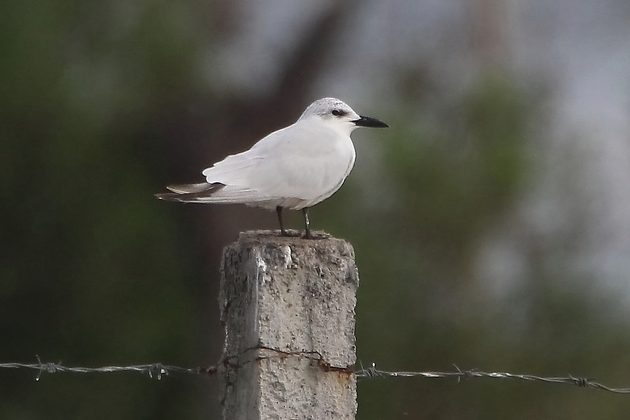
But why do I include this particular sighting in an article about ornithological discoveries? Well, first, we saw five birds, which is more than either of us had seen before, and is a bit unusual for this species which is normally seen in very small numbers. But the real revelation had to do with a very insistent and needy individual:
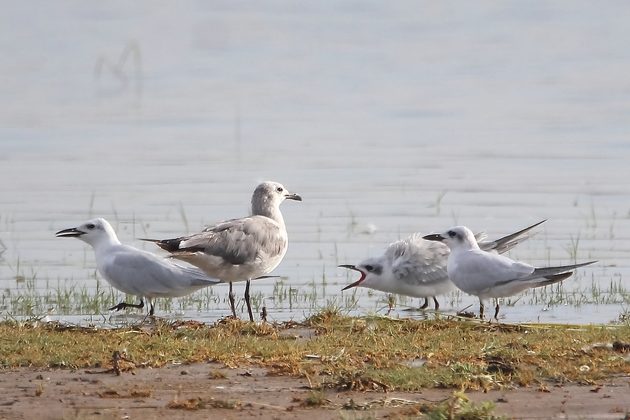
Apparently, the youngster was willing to let any adult feed it. And yet, they did not.
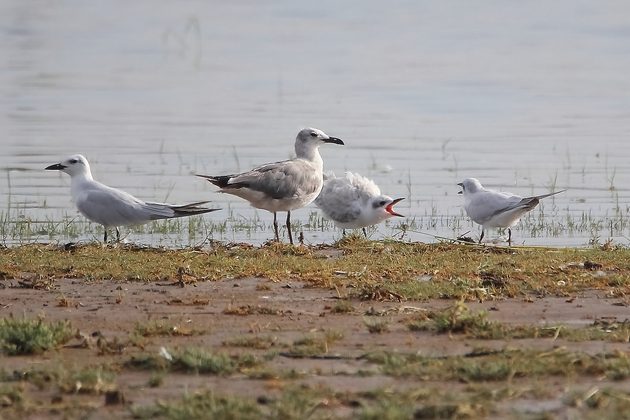
Yes, the bird squawking at the other Terns was clearly a very hungry juvenile. Which leads to the question, are Gull-billed Terns breeding on Lake Cuitzeo? Or do juvenile GBTEs migrate from the Gulf of California before maturing? Since one of our mutual sightings of this species occurred in 2024’s June breeding period, the answer to these questions could go either way.
After a little while our Gull-billed Terns got nervous and flew away, although they did come back later. While we waited, discovery #2 occurred: Jonathan yelled to me, Black Tern! Black Tern!

North America’s Black Terns breed in central Canada and the northern U.S. Plains states. They winter along the coasts of Central and South America. But they fly over the mainland on their way there. Even so, Black Terns had only been seen three times before on Lake Cuitzeo, although there are many sightings near Mexico City, and on Lake Chapala near Guadalajara. All our local sightings have occured between late June and early August, while these birds fly south. This aligns with the many more sightings to our east and west in the same period.
Could it be that Black Terns have been visiting Lake Cuitzeo all along? I imagine they have. This bird (as with two more sightings in the following week) stayed mostly over the center of the lake, so perhaps we had missed them by focusing on the other terns which do land on the shore.

It was, of course, fitting that we should have made two tern-related discoveries in a single day. As everyone knows (and I have said before on 10,000 Birds), one good tern does deserve another.
Sorry. I have no self-control.
Here are a few other images from our outing, of birds typically seen during the early part of our winter migratory season:
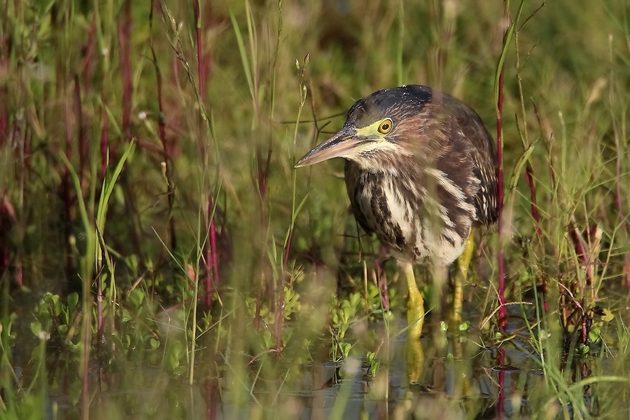
Green Herons are year-round residents at Lake Cuitzeo, so it is not unusual to see juveniles like this one. But they are very photogenic birds.
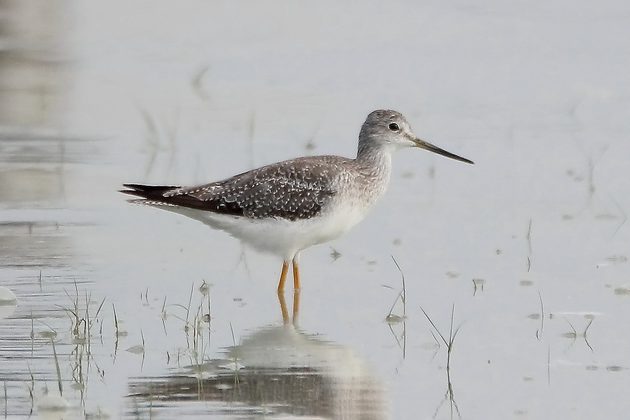
Salitrillo is a good spot for comparing migratory Greater and Lesser Yellowlegs. This one is Greater.
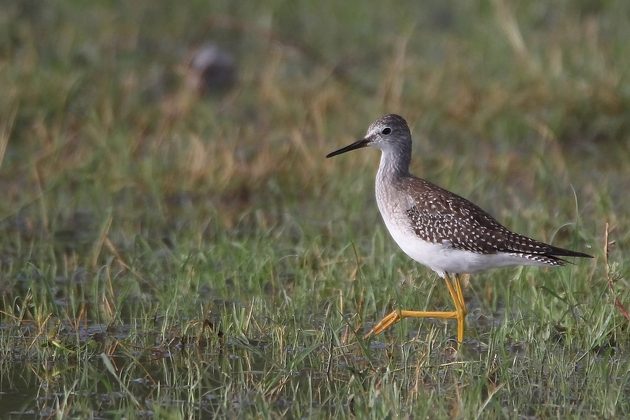
And this one is Lesser.
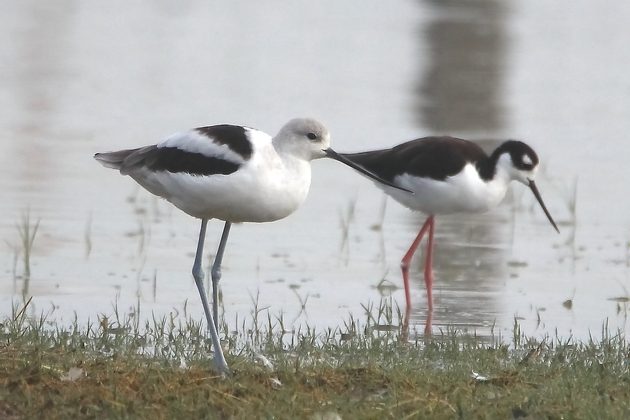
Seeing an American Avocet next to a Black-necked Stilt provides an interesting study in leg color.

Most of the year, Ring-billed Gulls dominate on Lake Cuitzeo. (And Caspian Terns are the dominant terns.) But in September, Laughing Gulls are much more abundant. By the time they reach us, they have usually lost the black heads of their reproductive plumage. So this one caught my eye.

Near the town of Cuitzeo itself, large flocks of shorebirds became the rule. These Long-billed Dowitchers displayed their diagnostic white black patches in flight.

Lots of Black-necked Stilts were also present.
Towards the end of our outing, by the town of Capacho, we had one more rare sighting: A Pectoral Sandpiper, still showing his reproductive plumage. This was only the 13th time this species had been recorded on the lake, with all but two sightings involving Jonathan and/or me. It is another species that is only seen there on its southward journey in the early fall, as it flies from the arctic north to the far end of South America.

A nice touch to birding in central Mexico is that all the towns are historic and picturesque. We could hear music from the Capacho church as we birded.











Leave a Comment