

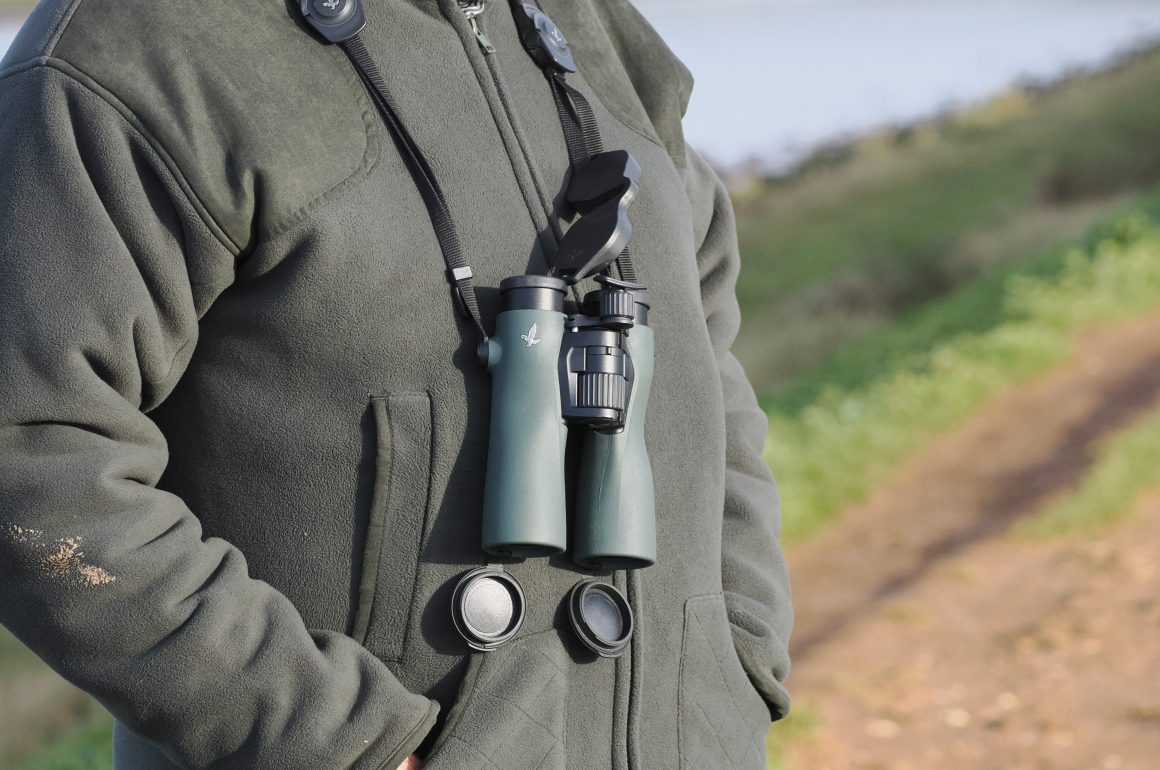
One of the great pleasures of birdwatching is that you don’t really need a lot of kit to enjoy the pursuit: it can be one of the cheapest of hobbies, though of course there is the option to spend lots of money should you so wish. Here I feature the few items that I regard as important, which I use frequently and wouldn’t want to be without.
BINOCULARS
Without a doubt the most important piece of kit for any would-be birdwatcher. I’m frequently asked for advice about binoculars by friends who are considering buying a pair. The first question I ask is how much they are prepared to spend (usually not very much), and they are then usually horrified when I tell them how much my binoculars cost. These days there is a wide choice of inexpensive optics, priced in the £300 to £500 (US$400 to $700) bracket. Then there’s a big jump to top-of-the-range binoculars from the leading manufacturers – Swarovski, Leica and Zeiss, with prices starting at over £2000 ($US2700).
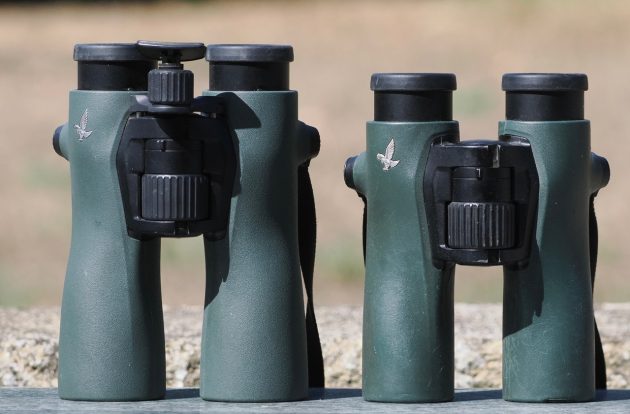
My birding bins: Swarovski 12×42 NL Pure and Swarovski 8×32 NL Pure. Optics do not come better than these
Look through one of the best of the cheap binoculars and then a premium product with the same specification (say 8×32) and it can be difficult to see much difference. The fact that the latter may cost four or five times as much does seem excessive. However, those of us who use binoculars every day appreciate the extra durability of the more expensive product, the fact that the optics remain bright when daylight is fading, even the better balance and handling. For someone who is only going to look through their binoculars once a month, or when they are away on safari, then the cheaper optics will be fine. If you are a daily user and want the best, then it’s worth paying for it.
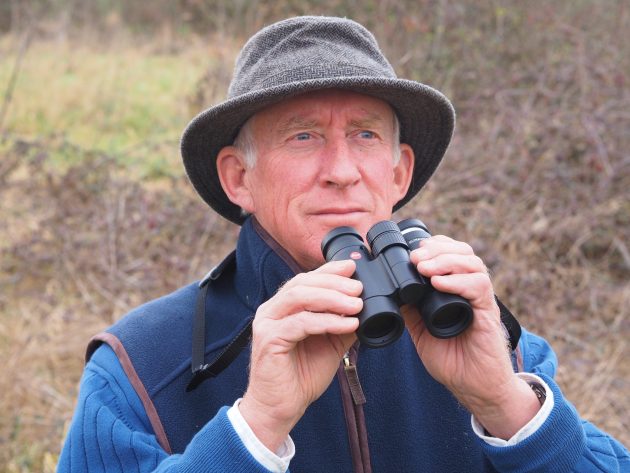
I use my Leica 8×32 binoculars everyday when I walk my dog
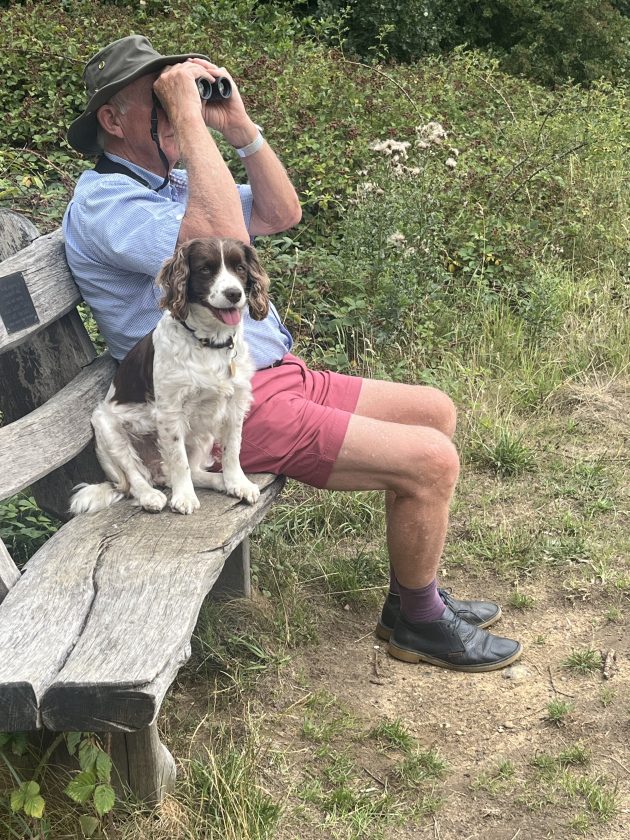
I’ve used many different binoculars over the years. My current favourite is my Swarovski 8×32 NL Pure which combines an unbeatable bright and sharp image with great handling – they feel so good to hold. I also have the 8×32’s bigger sibling, the 12×42 NL Pure. These aren’t my everyday binoculars, but are my choice for long-distance wildfowl and wader watching. (They do, however, sit on my desk, so are used frequently for checking out birds in the garden). I also have a Leica 8×32, a wonderfully bright yet compact binocular that I take with me when I’m walking my dog.
TELESCOPE
These days it’s rare to see a birdwatcher in the UK who is not either carrying a telescope or a camera with a long lens – many have both. Telescopes are invaluable for watching and identifying distant birds, and equally so for showing people birds. When I was guiding birding groups, I found my scope essential for ensuring that my clients saw the birds. While inexpensive binoculars often seem to perform as well as those that are more expensive, that’s not the case with telescopes. Some of the cheaper scopes may look the part, but they seldom offer the sharp, crisp image, nor the wide field of view, of the top manufacturer’s offerings.
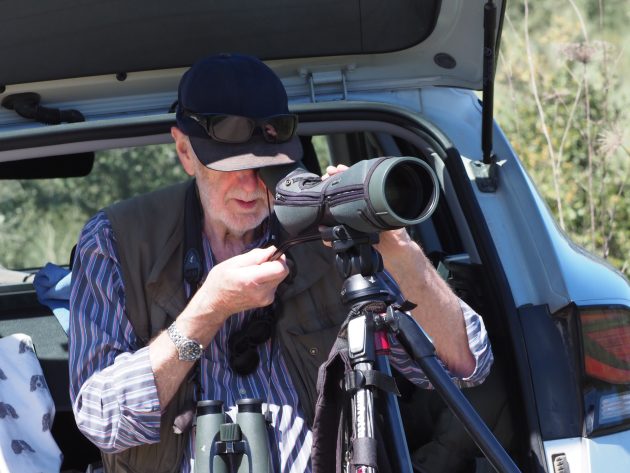
Big telescopes require hefty tripods
Weight is a major factor to consider when buying a telescope. Swarovski’s big BTX spotting scope system with 110mm objective lens is a fabulous piece of kit, but it weighs a whopping 3520gm. It needs a hefty tripod, too, as the weight is far beyond what most of us would consider lugging around. (To be fair to Swarovski, it’s a scope that’s designed to appeal to people fortunate enough to have a house overlooking an estuary or perhaps a mountain, and the scope is likely to remain in the living room.)
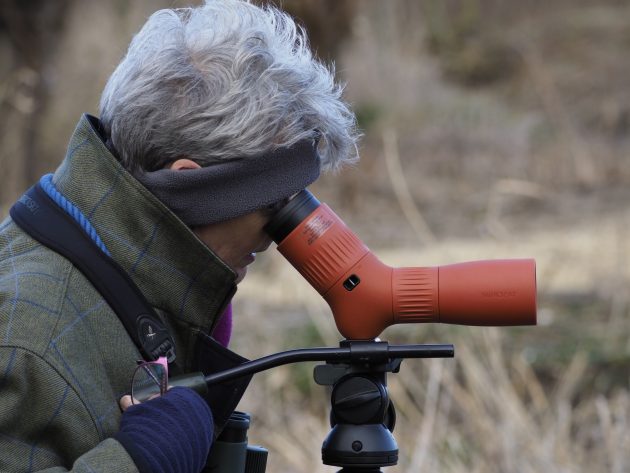
Swarovski’s ATC travel scope is a compact but impressive performer
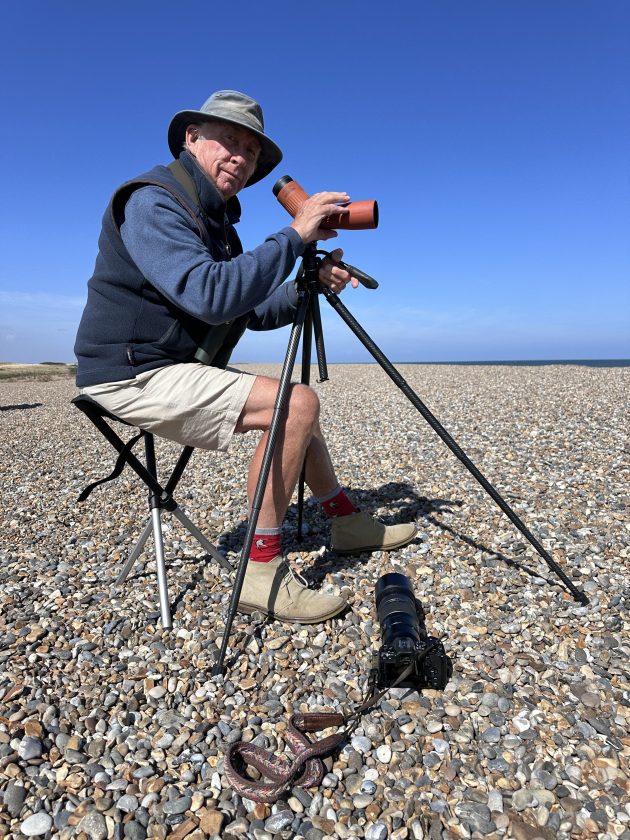
I don’t enjoy carrying a heavy scope and tripod, so I’ve compromised with a Swarovski ATC 17-40 x56. It weighs just 970gm, while it works perfectly on a lightweight tripod (I use a Sirui AT-124 carbon tripod with a SmallRig Selection Compact Fluid Head: it works brilliantly). There’s a compromise using a small scope like my Swarovski, as in poor light it’s not nearly as good as its bigger brethren, but it’s a penalty that, in my opinion, is worth putting up with.
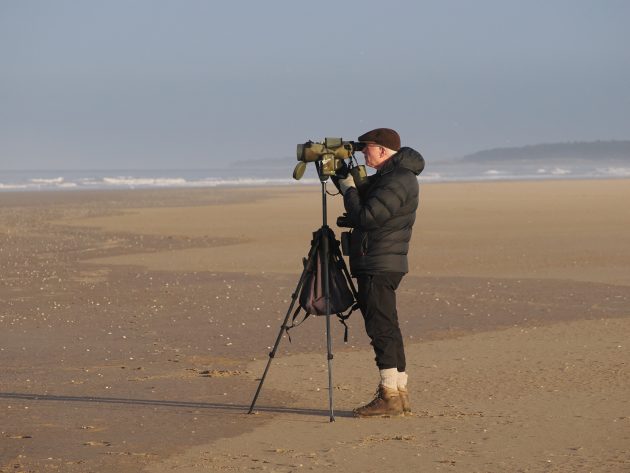
Straight-through telescopes are not designed for sharing (unless you are tall)
One major thing to consider if you are thinking of buying a scope is whether to choose an angled or straight-through design. I switched to angled over 30 years ago and wouldn’t go back. An angled scope can be used by people of different heights – it’s easy to bend down to look through an angled scope – but a straight-through scope, set up on a tripod by a 6ft person, is impossible to look through for anyone under 6ft. Many people cite the fact that it’s easier to locate a bird through a straight rather than angled scope, but with a little practice you will soon become as proficient with the latter.
TECHNOLOGY
Most of us have a smart phone in our pocket these days, and these extraordinarily clever devices have made redundant one of my old pieces of birding gear, the tape recorder. It was a heavy and clumsy piece of kit, and I’m not sorry to see it go. Your smartphone gives you the option to record birdsong, but even better, it allows you to use the Merlin app. I’ve become a dedicated Merlin user, despite the fact that I do know the calls and songs of almost anything I’m likely to encounter in the English countryside.
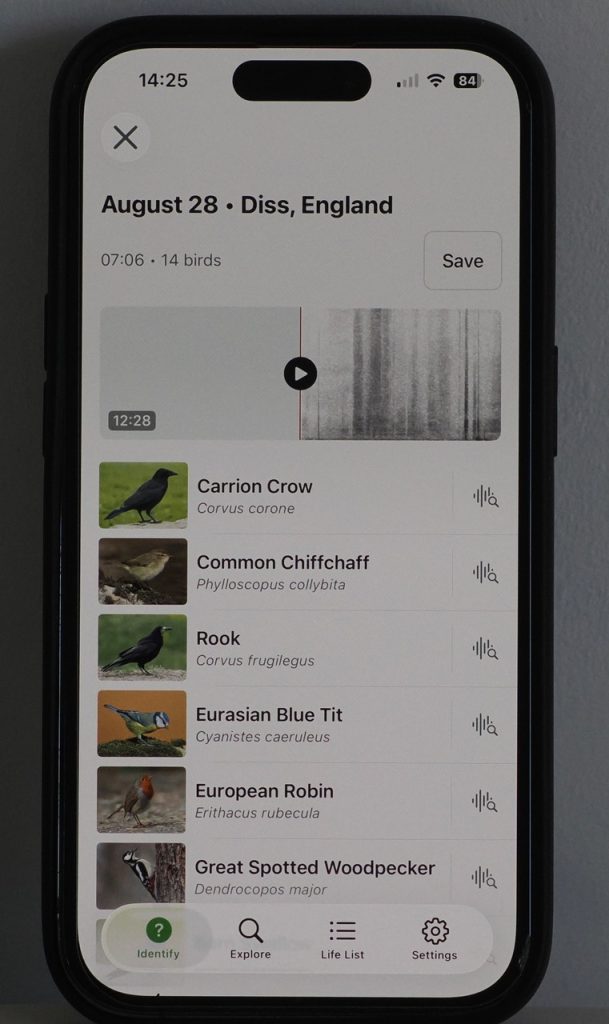
Merlin (above) is uncannily accurate, and rarely seems to make the mistakes that it did when I first started using it. It also picks up certain birds, such as Treecreepers, before I do. This past summer I have been impressed with its ability to detect calling Marsh Harriers, often before I have seen or heard the birds. Of course it does make errors (you may note that it makes suggestions as to a bird’s identity, not a certain claim), but I reckon it’s right in 98% of cases. It sometimes makes me wonder whether I’ve missed bird – the other day it noted a Spotted Flycatcher (a scarce bird locally) but I neither saw nor heard it. Was there really one there?
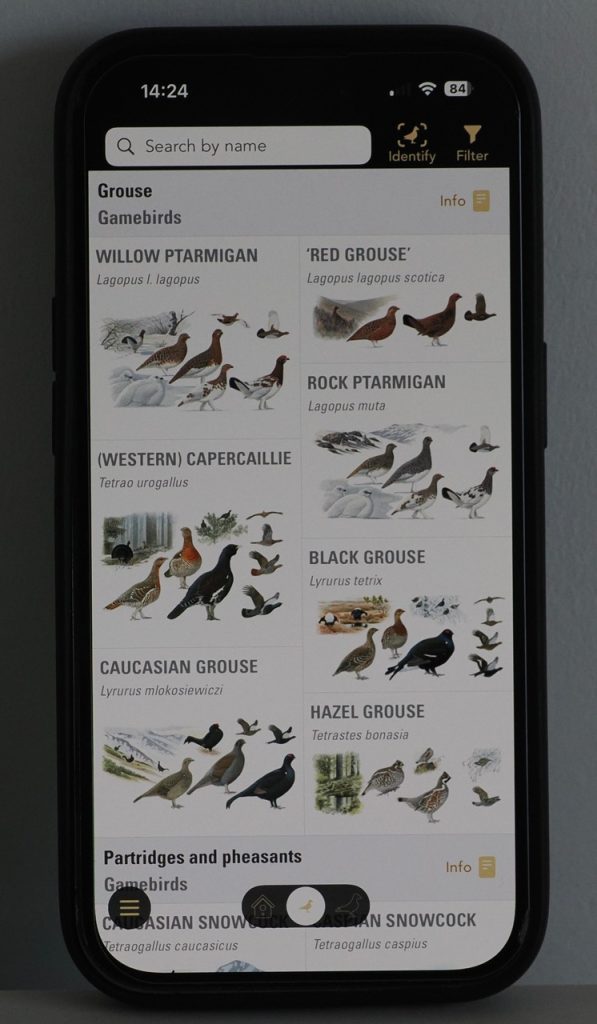
Your smartphone also allows you to have an entire field guide available on your phone. I have the Collins Bird Guide app (above), as well as the Birds of the Western Palearctic app, on my phone. I never took field guides into the field, as I have always hated carrying unnecessary clobber, but having such reference works in your pocket is handy.
FIELD GUIDES
Well, I may have the Collins Bird Guide on my screen, but I also have the hardback version, and this is the one I’d rather use. Call me old-fashioned if you like, but there’s still a pleasure to be had looking through a real book and turning the pages, rather than staring at a screen. Of course, there are many guides that aren’t available as apps, so we have to make do with the paper versions. When I started birding outside Europe 45 years ago there were precious few guides to many of the best birding countries. I remember struggling with A Field Guide to the Birds of East Africa, by J.G.Williams, and first published in 1981. It covered an impressive 650 species, but that meant that there were an awful lot of birds missing. The Field Guide to the Birds of East Africa, by Terry Stevenson and John Fanshawe, covers nearly 1400 species. It’s brilliantly illustrated, too.
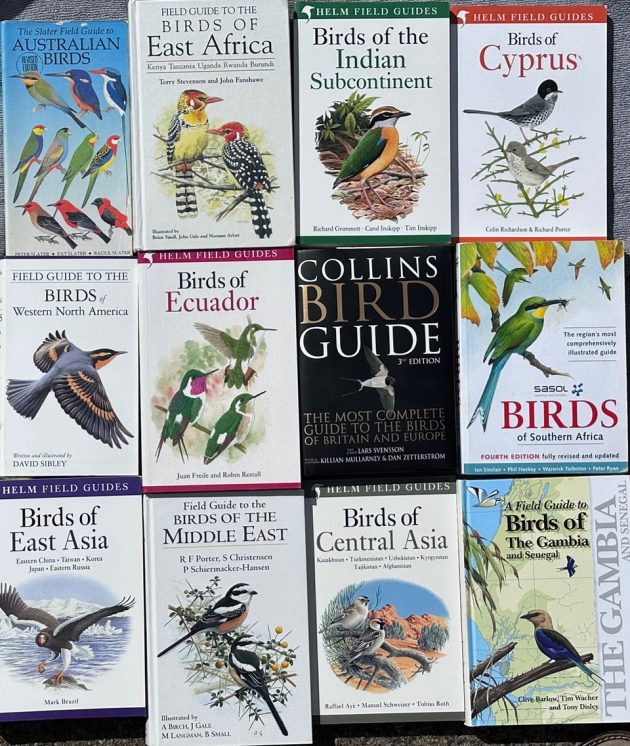
These days nearly every country or area in the world is covered by a genuinely useful field guide, complete with great illustrations. The modern generation of travelling birders don’t know how lucky they are.
SITTING COMFORTABLY
It’s often handy to be able to sit down when watching birds. I don’t like sitting on wet grass or damp logs, so my folding seat pad, made by Helikon-Tex, is invaluable, especially as it fits snugly into my pocket. It’s called a Vagabond and costs less than £10.
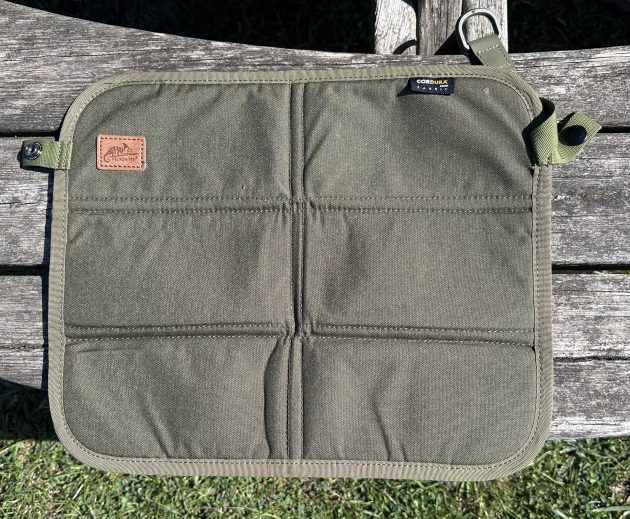
The Vagabond folding seat pad. Much better than sitting on a wet bench
I’m also very fond of my Walkstool, a three-legged telescopic stool. Walkstool is a Swedish company that makes what are arguably the best folding stools you can buy, combining great strength with lightweight. Walkstools come in a variety of heights. Mine is a 65cm/26in Comfort, which weighs just 960gm (less than my scope) yet can support 250kg (I’m pleased to say that I weigh a great deal less than half of that!). It’s called a Comfort and lives up to its name. A great piece of kit, but not cheap at £110. It’s compact enough to fit in my hand luggage when I’m travelling, and comes in a bag that I can hang over my shoulder.
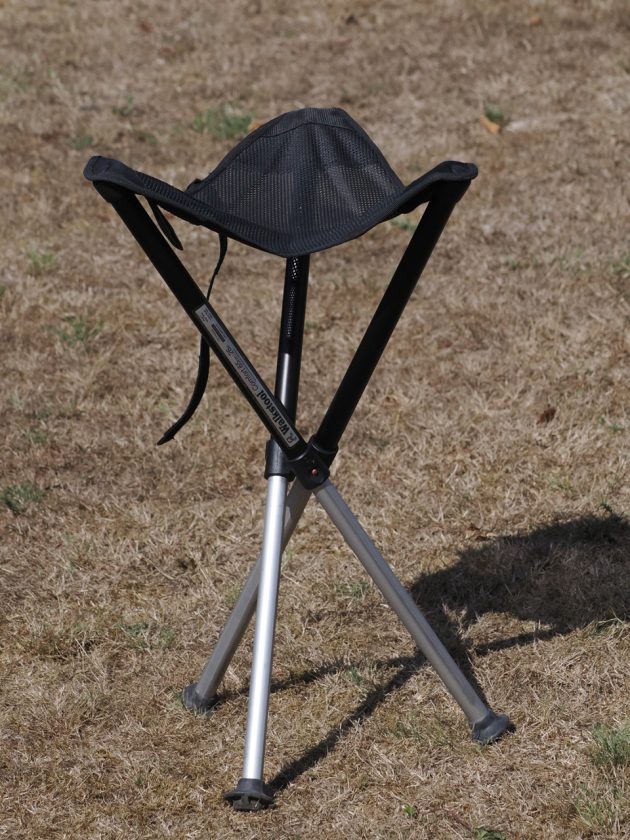
The Swedish Walkstool is strong, portable and above all, comfortable
COUNTING PRECISELY
Click counters make counting easier: the birds in the flock below are Brent Geese
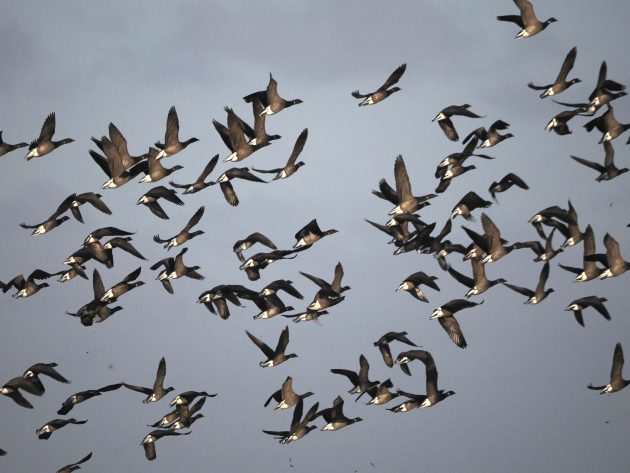
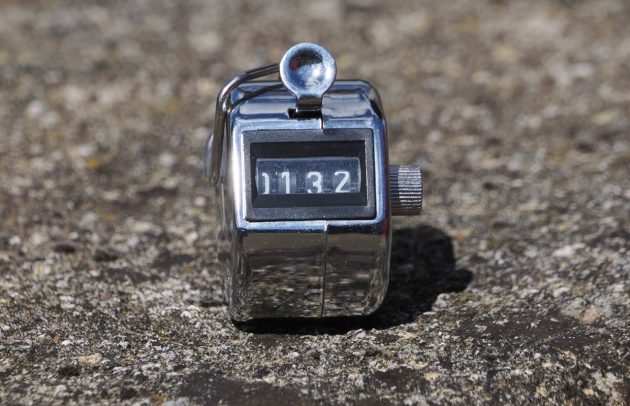
We birdwatchers do like to count, but often it’s not easy. I’m always amused when I see counts of 1342 Wigeon, or 6720 Starlings – how can anyone be so precise? A click counter does make counting flocks much easier, though it’s no use when numbers are in their thousands rather than hundreds. Click counters work as their name suggests, and they are cheap, too: expect to pay around £10 for a good one.
TIME FOR A DRINK
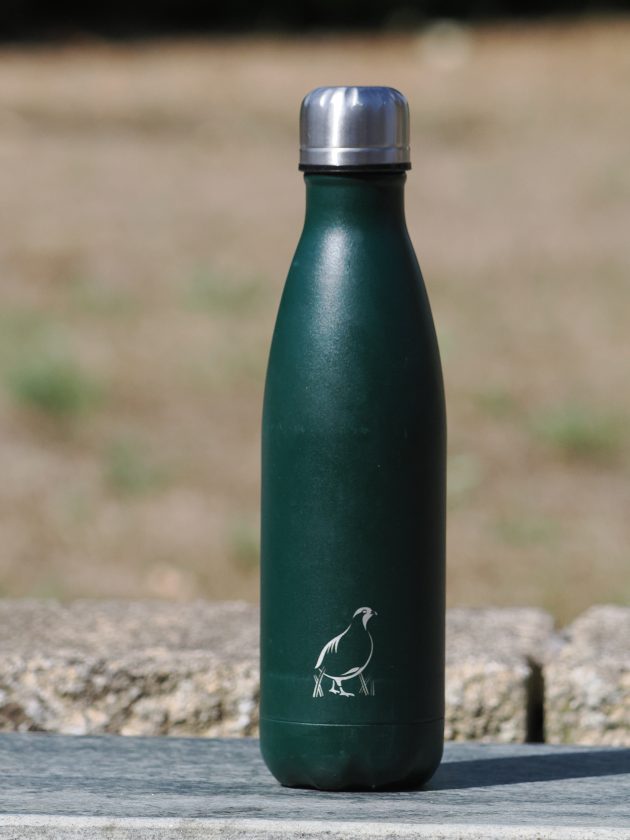
My Chilly’s bottle – perfect for keeping drinks hot or cold
I remember the days of old-fashioned insulated flasks which were so delicate that they had a tendency to break. These days there’s a great choice of stainless steel flasks that keep drinks either hot or cold for many hours. My bottle of choice is a Chilly’s, which looks very smart in GWCT (Game and Wildlife Conservation Trust) livery (above), but there are numerous alternatives in a highly competitive market.
CAR
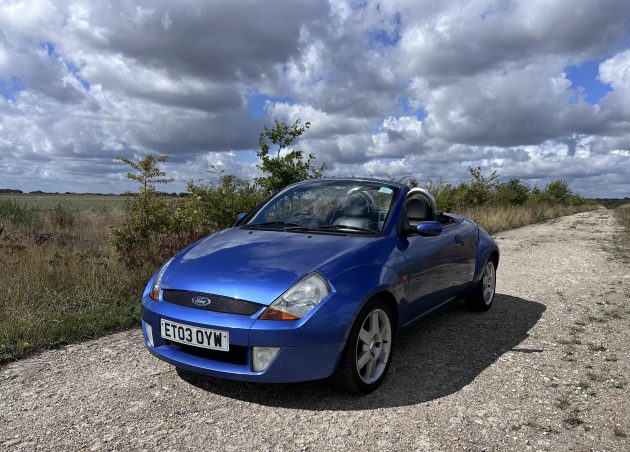
Ford StreetKa – great for bird photography
My birdwatching car is a 23-year-old Ford StreetKa. It’s a two-seater, so I can only go birding with one passenger, but because it’s convertible (has a folding roof) it’s great for both watching and photographing birds. I’ve taken many photographs from its driver’s seat, such as the Skylark, below. It’s a very small car, especially compared with the SUVs that dominate our roads these days, and it’s not designed for going off road, though it’s fine on the tracks of my local farm (above). It is a spring and summer car, and hibernates during the winter. It will emerge from its winter slumber on 1 April, when the first Swallows of the spring will be arriving back in the UK.
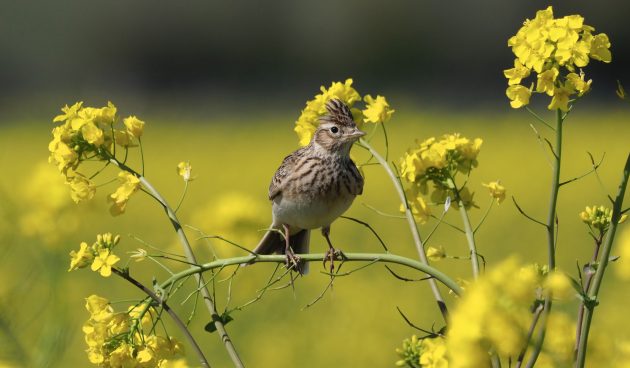
Skylark photographed from the StreetKa
That’s a highly personal selection of my best birding gear. Please add your thoughts or suggestions in the comments below.









How can you report 1342 Wigeon with a straight face? That sort of thing happens to me regularly for common birds.
So you see a large flock, which you estimate at 1300. Later you see a small flock of 20, and then another flock of 22. And there you go.
Binoculars: check. Scope: check. Flask: check. Stool: need one now! Car: replaced by bike. Great article as always. My Saturday ritual these days: read David, drink coffee and go to market.