

By Faisal Rehman
Faisal is a backyard bird-feeding enthusiast from Pakistan who writes practical bird-feeding guides at BirdFeedly.
If you picture backyard birding, you probably picture a tube feeder, black-oil sunflower seeds, and a chickadee. My backyard looks nothing like that, and that is exactly why I love it.
I live in Pakistan, in a town where the streets are narrow, the rooftops are flat, and the birding starts before the sun finishes rising. There is no feeder catalogue here, no seed aisle at the garden centre. Backyard birding in South Asia is rawer, louder, and far more woven into daily life than most Western birders would guess. Let me show you around.
The morning chorus, South Asian style
My day starts with the Asian Koel. If you have never heard one, imagine someone blowing a rising whistle, ku-oo, ku-oo, ku-oo, each note climbing higher than the last, repeated until the whole neighbourhood is awake. The koel is a brood parasite, a cuckoo relative, and in summer it is the undisputed alarm clock of the subcontinent.
By the time I carry my chai to the rooftop, the Rose-ringed Parakeets are already commuting overhead in screaming green flocks. To a visitor from Europe or North America, this is the first shock: Parakeets are not exotic escapees here. They are as ordinary as Starlings, noisy, abundant, and utterly unbothered by humans. A flock of thirty tearing across a pink dawn sky never gets old, no matter how many mornings you have seen it.
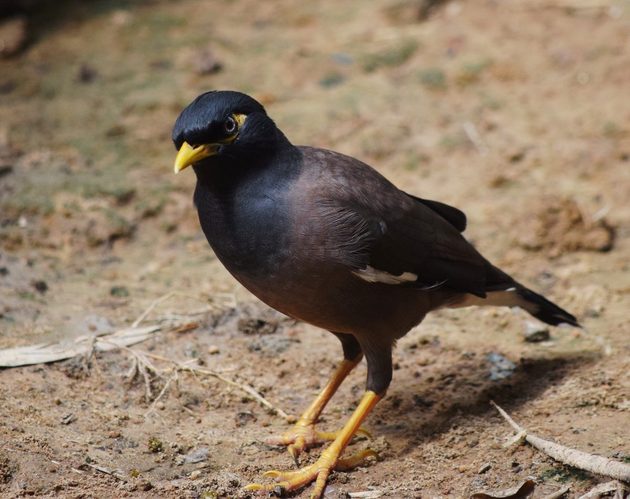
Then the smaller cast arrives. Red-vented Bulbuls with their jaunty crests and crimson undertail flashes. Purple Sunbirds, our answer to Hummingbirds, hovering at the hibiscus flowers, males flashing metallic green-blue in the sun. Common Tailorbirds stitching their sharp towit-towit calls through the hedges. And everywhere, the Common Myna: strutting, chattering, quarrelling, the undisputed landlord of every South Asian backyard.
Feeding birds is a way of life, not a hobby
Here is the second thing that surprises Western birders: in South Asia, feeding birds is not really a “hobby.” It is just something people do.
Scatter grain for Pigeons and Doves in the morning and you are doing sawab, a small act of charity. My grandmother kept a clay bowl of water and a handful of millet on the rooftop every single day of her life, and she would have laughed at the idea of calling it “birdfeeding.” It was simply what decent people did.
Walk through any old neighbourhood at dawn, and you will see it: shopkeepers tossing handfuls of bajra (pearl millet) onto the pavement for Rock Pigeons and Laughing Doves. Families putting out wheat and bread scraps. Nobody owns a specialised feeder; a flat rooftop, a courtyard corner, or even a windowsill does the job. The birds know every generous house in the street.
That said, there is a practical side I have come to appreciate deeply. Summer here is brutal, 40°C (104°F) and above for weeks, and a shallow clay bowl of fresh water in the shade genuinely saves lives. I have watched Bulbuls and Sparrows queue up at mine on May afternoons, panting with open beaks. If there is one tip I would give any South Asian reader, it is this: in summer, water matters more than food.
No chickadees, but no shortage of drama
What we lack in Titmice and Nuthatches, we make up for in sheer theatre. A Black Kite circling over the rooftops, tilting its forked tail, will scatter every Pigeon in the neighbourhood in seconds, and then the whole street watches the sky until the all-clear. In winter, the drama scales up: migratory visitors like the Grey Wagtail bob along the irrigation channels, and if you are near wetlands, the sky fills with species that have flown thousands of miles from Central Asia.
The House Sparrow deserves a special mention. While Western headlines mourn its decline, the sparrow is still the beating heart of the South Asian backyard, chirping from every hedge, dust-bathing in every lane, stuffing its nest into every available crevice. Watching a hedge full of Sparrows at dusk, all shouting at once before roosting, is one of the great free shows of nature. I hope we never take it for granted.
What I have learned from my rooftop
Years of watching from a plastic chair with a chipped mug of chai have taught me a few things I did not expect:
Birds here are bold because people are kind. Generations of casual feeding have produced birds that barely flinch at humans. A Sunbird will feed two metres from your face. That trust was earned over decades, one handful of millet at a time.
You do not need gear; you need patience. I own no feeder, no birdbath with a heater, no optics fancier than my eyes and a phone camera. The birds come anyway, because the habitat, food, water, and a little tolerance are what matter.
The ordinary is extraordinary to someone. My Parakeets are your bucket-list birds. Your Chickadees would stop traffic here. Backyard birding reminds us that “common” is a matter of geography, not value.
Come and see for yourself
If you ever visit South Asia, skip the souvenir shops one morning and find a rooftop at dawn instead. Bring chai. Listen for the Koel, watch the parakeets commute, and let the Mynas argue over the millet. You will understand quickly why, here, birding was never something we scheduled into our lives.
It is simply life, with feathers.
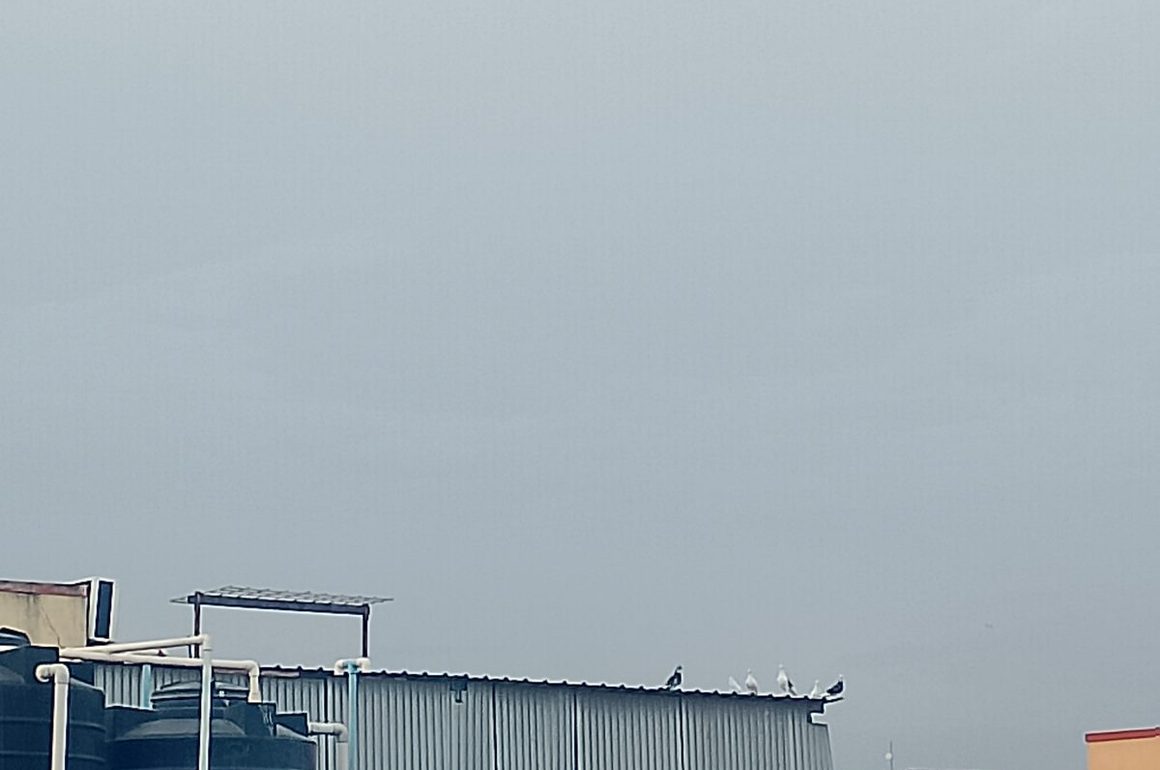
Photos: Feral pigeons on a rooftop in Tamil Nadu, India (taken on a mobile phone) — CC0 public domain, via Wikimedia Commons
Common Myna on the ground, Bangladesh — CC BY-SA 4.0 by TausifAlHossain, via Wikimedia Commons









Leave a Comment