

Most birding trips to Namibia treat Windhoek as a place to pick up the rental car and move further afield. But Windhoek’s high elevation of about 1,700 metres asl and thornveld surroundings mean birding within city limits can be surprisingly rewarding. I recently spent a few days in the city between stints of human-elephant conflict research that I was conducting in the north of the country, and had the chance to savour some of its avian residents.
The city also has a sense of humour about itself. The Tintenpalast or “Ink Palace” housing the parliament is so named as the German colonial administration inside was mocked for using so much ink. I advocate that most, if not all, government buildings in the countries I’ve lived in should be rebranded this way, though nowadays probably using LLM-assisted digital ink. Fortunately, the birds of the city were a good deal less bureaucratic.
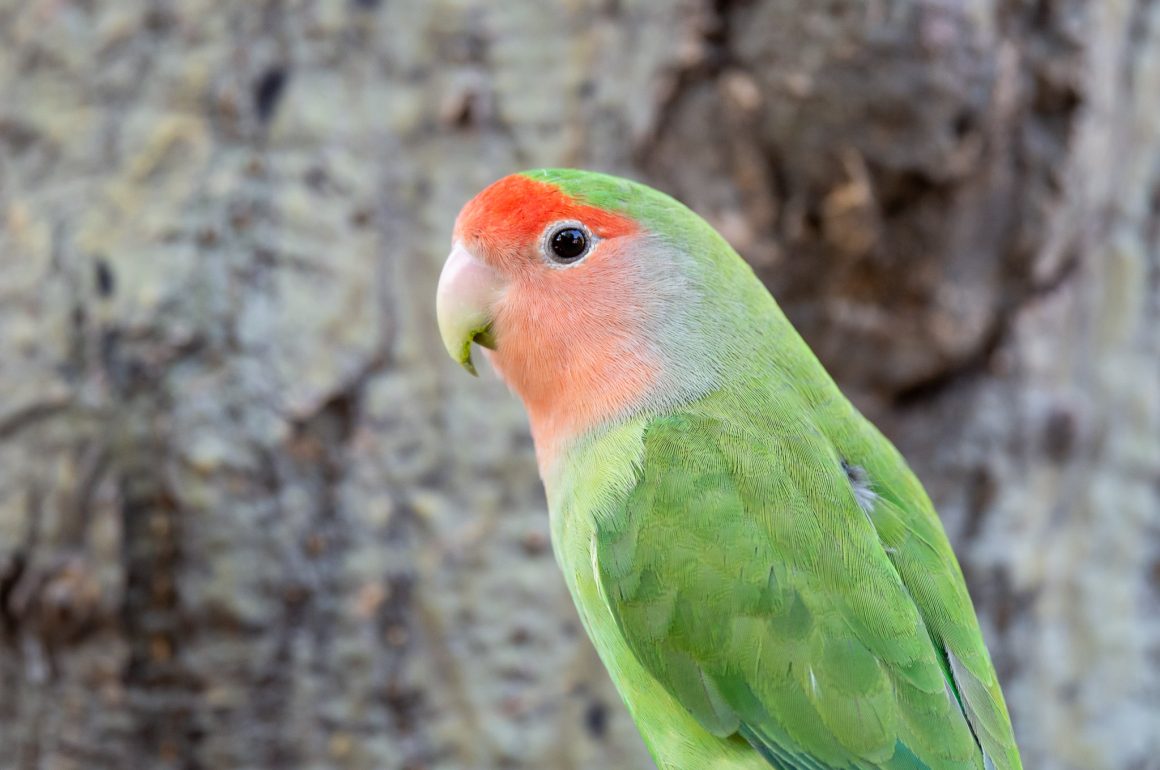
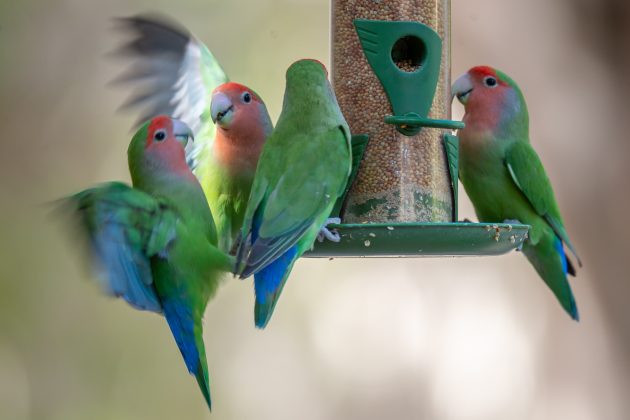
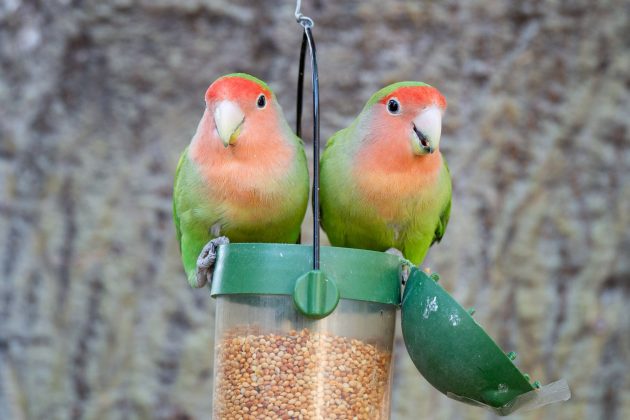
The obvious stars were the Rosy-faced Lovebirds. Many birders in Europe know this species only as a cage bird, or as the odd escapee in a city park. In the US there is even a feral population in Phoenix. Seeing them again after having last been to the country 10 years ago felt a bit like, felt both like meeting a celebrity in their hometown and being welcomed back by old friends. Then again, maybe I’m just compensating for not knowing any celebrities.
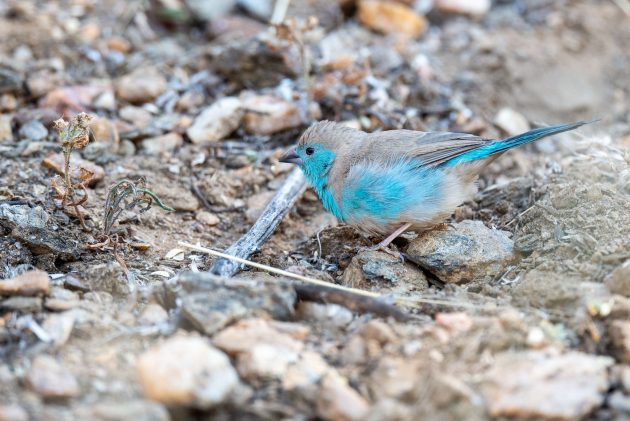
The arid areas of southern Africa are always alive with colourful seed-eaters, and Windhoek did not disappoint. Blue Waxbills, now called Southern Cordonbleu because they are literally filled with cheese and bacon, hopped along the edges of lawns and verges, the males’ powder blue face and breast giving them an almost porcelain look.
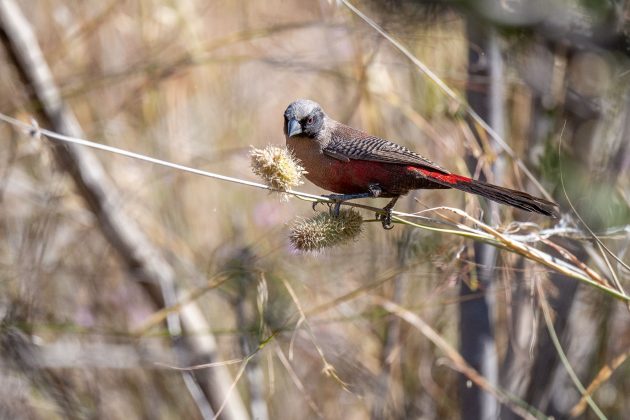
On a few drier, quieter road verges on the edge of town, the Blue Waxbills were joined by Black-faced Waxbills. The subtle mix of finely barred grey and especially the transition between wine-red and black in their plumage make them extremely pleasant to watch if you manage to come across a more chilled-out individual than most of the skittish crew. The genus name is Brunhilda, which is a lot of Wagnerian drama for a bird that weighs about ten grams. I’m not sure the Valkyrie would approve of the comparison, but the bird certainly didn’t seem to mind, being preoccupied by a spike of grass seeds.
Windhoek won’t make anyone’s list of the world’s great birding destinations, but if it’s your first stop and have never been to Namibia, you can’t really complain about a capital where lovebirds replace pigeons. Even better, just outside the city are a few spots that produce really excellent birds, including Avis Dam, which I’ll cover in my next post.





Leave a Comment