

By Sudheesh Thattekad
Sudheesh Thattekad is a birding and herping guide based in Kerala, India. The insights in this post are based entirely on personal field observations as a resident naturalist in Thattekad, rather than academic texts. He is always happy to learn and correct any errors.
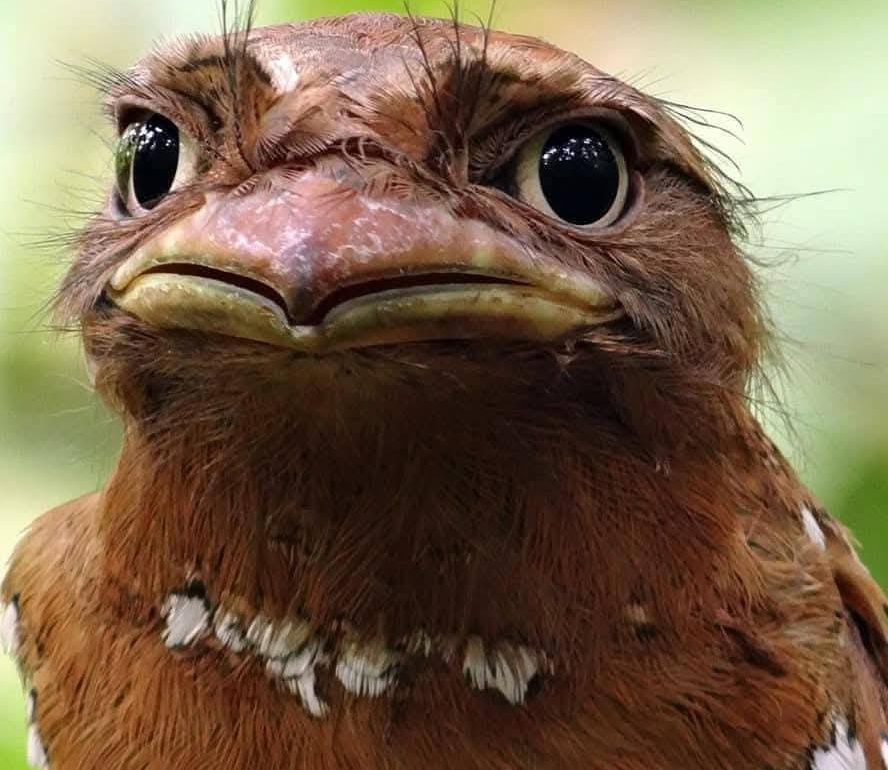
The Sri Lanka Frogmouth (Batrachostomus moniliger), locally known in Kerala as Makkachikada or Thavala Kiriyan, gets its unique name from its wide, frog-like gape. This incredible bird is single-handedly responsible for putting the Thattekad Bird Sanctuary on the global birding map. Although they are found across the Western Ghats and Sri Lanka, their flawless camouflage makes them exceptionally hard to spot, often giving the false impression that they are extremely rare.
Spotting a Frogmouth is like finding a dry leaf with eyes amidst a pile of leaf litter. They typically roost during the day in the dense undergrowth of Anjili, palm, Edana, and bamboo thickets, usually at a height of 1 to 3 meters from the ground. Interestingly, if you observe their roosting perch closely, you will notice thin, horsehair-like fibers hanging down. Dry leaves get caught in these threads, creating a natural screen that helps the bird blend seamlessly into its surroundings. Once they find a safe roosting spot, they stay loyal to it for years; I have personally monitored a bird that frequented the exact same tree for nearly six years.
During the day, the male and female usually roost close together. However, during the breeding season, the female takes over the spot alone. Once the chick hatches, the family of three can be seen together for a few weeks. Their nest is built at a height of about 6 meters on straight, unbranched twigs or vines. Shaped like a tiny clay lamp, nearly 80% of the nest is made from soft down feathers and moss.
After the egg is laid, it is the male who takes up the responsibility of foraging at night and incubating the egg during the day. The male’s greyish plumage perfectly matches the tree bark, keeping it safe from predators. The female, on the other hand, sports a much brighter brick-red (rufous) coloration.
Nests face constant threats from squirrels, monkeys, and even elephants. Since strong vibrations can cause the fragile nest to fall, these birds smartly choose trees leaning over frequently used human paths, where animal activity is minimal. If you closely watch an incubating male, you will see him occasionally rotate over the egg to distribute his body heat evenly to all sides. They lay only a single egg per year.
As dusk falls over the jungle, the male begins to call from his perch. He then sways his shoulders and tail rhythmically, shifts about 15 centimeters along the branch, and calls again. Hearing this, the female glides or sidles over to sit right next to him. After a louder call from the male, he flies to a bush about 10 meters away, calls again, and the female follows. From there, their nocturnal hunt begins. They fly with a rhythmic, undulating motion, catching insects mid-air. Through my observations, they seem to have a special fondness for fireflies.
One of my absolute favorite things is watching them during the monsoon. Years of close observation have revealed a fascinating secret: they barely get wet! Even after an hour of torrential downpour, I have watched only about three drops of water roll harmlessly off the tip of their tail.
Photo: female Sri Lanka Frogmouth, easily identifiable by her distinct, rich brick-red/rufous coloration, which sets her apart from the greyish male.






Great post. Seeing a pair of these extraordinary birds was a highlight of my last trip to India. They were roosting at a site my guide knew of: even when we were a few feet away they were very difficult to spot.