

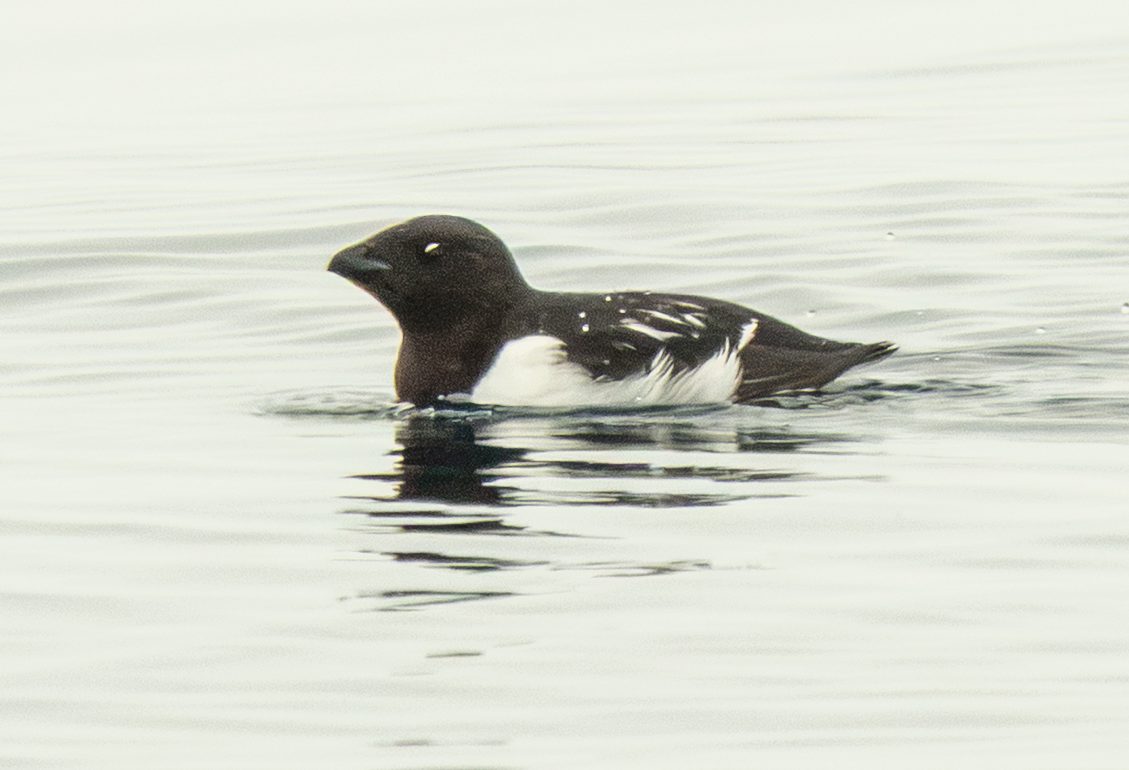
Among the many things and experiences that amazed me while traveling around Svalbard this past July, was a tiny bird that could cover some ground or water in this case. I saw it almost everywhere. The bird looked like a fat bullet flying fast, frantically, and low over the water. My eyes were not yet accustomed to recognizing the various black and white birds around Svalbard, since I had not done much pre-trip studying of the birds. Consequently, here I was playing catch-up in real-time with Merlin, eBird, and one of the ship library’s “borrowed” field guides. Of course, adding to my identification effort was what name to use for this little bullet bird. I got myself all tangled up in Little Auk versus Dovekie and realized it was only a regional distinction by geographic birders. All these little birds are Alle alle for the scientific experts, but to me, coming from North America, these little beauties are Dovekies!
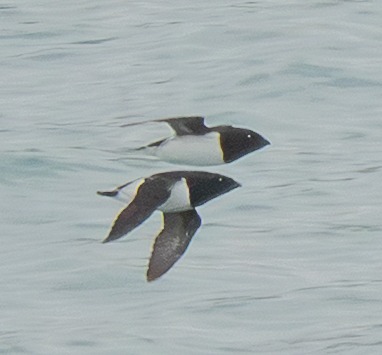
Dovekies, off the coast of Smeerenberg, Svalbard July 2026
I was seeing Dovekies and they were everywhere, breeding in the high cliffs above Longyearbyen, or skimming the waves past our ship, never flying over it, just next to it and crossing over at the bow or stern. They were so fast, so small, and often camouflaged within the waves and dark, roiling waters. It was hard work trying to get a shot of them with my camera to identify and see them closer. Rarely were these birds alone, often in pairs and never lingering long when the ship approached. Like all good alcids, Dovekies are keen hunters underwater and I got to see this while I tried to track them feeding. They would pop up far from where I had seen them dive down. Since I was slow birding Svalbard, I spent a lot of time watching them, trying to shoot decent photographs, and studying their rapid, frantic flight patterns.
These Dovekies are not a lifer for me. I was lucky to see a little solitary Dovekie floating on the offshore swells in front of my home along coastal North Carolina in February 2025. It was a black speck that disappeared and reappeared in my scope. I watched that little guy for quite some time, ruling out all the possibilities until landing on the Dovekie. That was my first “yard” bird Dovekie. More gratifying was my first sighting in December 2023, and this time was especially lucky because the Dovekie was swimming quite close to a local public fishing pier. I was able to take decent identification photos and observe my new lifer up close. At the time I had no idea that just a few years later I would be watching Dovekies fish and breed from a ship deck thousands of miles up north.
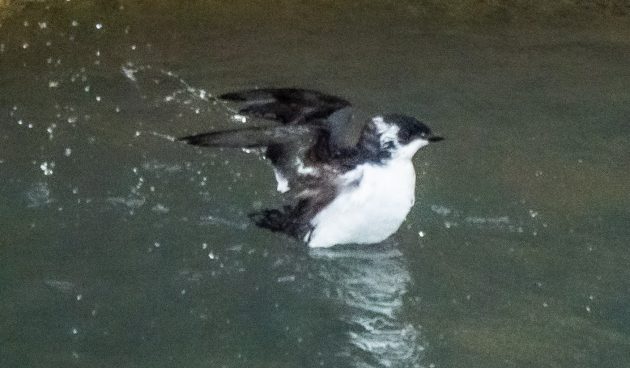
Dovekie, Bonner Bridge Pier, Oregon Inlet, North Carolina, December 2023
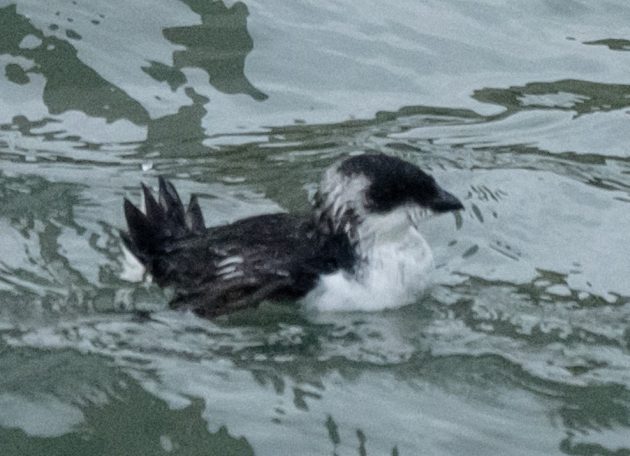
Dovekie, Bonner Bridge Pier, Oregon Inlet, North Carolina, December 2023
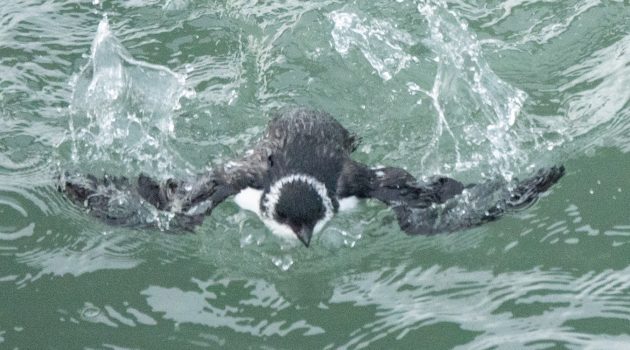
Dovekie, Bonner Bridge Pier, Oregon Inlet, North Carolina, December 2023
As we traveled further north along the western coast of Svalbard, the Dovekie did not leave me. At the time I did not think too much about how birds in the Arctic might hang out on the western versus eastern coast of Svalbard. Yet I learned from the ship’s ornithologist that there are different birds along either coast. The Dovekie however, was ubiquitous as Svalbard is a major breeding ground. Both coasts and even the northernmost top islands have them. I kept an eye out for them as we explored the coast and fjords.
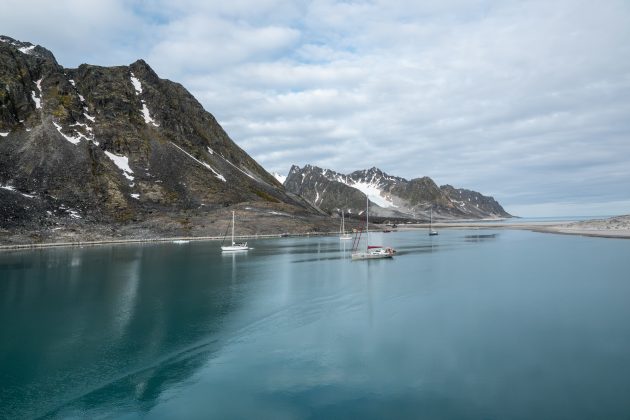
Dovekie breeding cliffs, Gravenesodden, Svalbard, July 2026
In Gravenesodden, we walked along the shoreline below the cliffs where many Dovekies were breeding. You could hear them calling and squawking, but it was incredibly difficult to see them nestled in the crags and cracks of the looming cliffs. Luckily, our ornithologist brought along his scope and we were able to see the black and white colors, but details were impossible to discern. Fortunately, the Dovekies were super busy and were bombing in and out of the nests to the sea to hunt for food for the endless appetites of their chicks. I sat on a large rock and listened to them, knowing that I would remember their sound and would never hear them elsewhere.
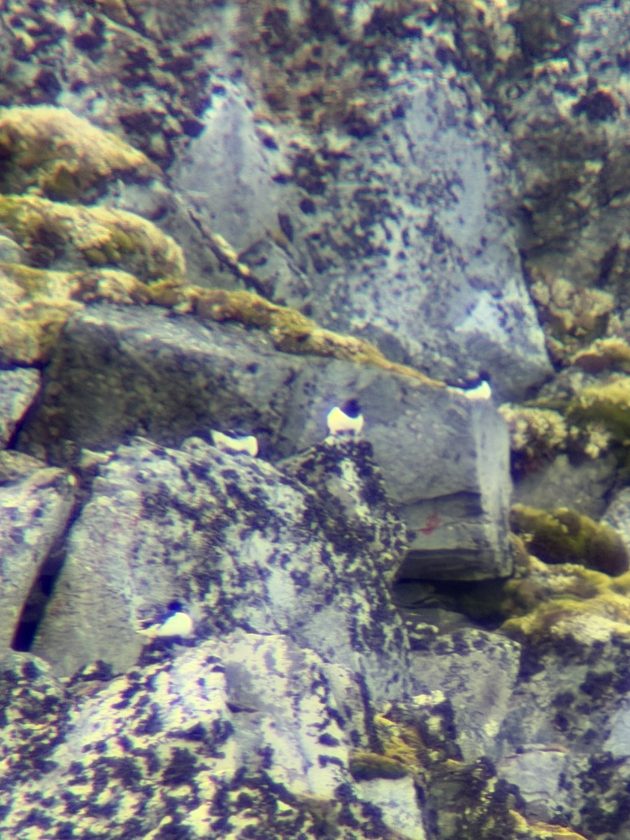
Scope photo of Dovekies on nest in cliffs, Gravenesodden, Svalbard July 2026
At the ice shelf leading to the North Pole, we had a rare, spectacular warm, clear, calm day. The temperature was 35 F and there was no wind. The ice pack offered up ice floes of various sizes and shapes that gently touched the sides of the zodiac as we slowly explored the ice pack edge. In the distance I saw my first bird of the day: a Dovekie. Not just one but a couple, floating and hunting together. I wondered how far they had flown to arrive here to hunt. We were approximately 80 degrees 40′ north and breeding cliffs were not close, guessing maybe 400 miles away? I could not wrap my head around that if it were true.
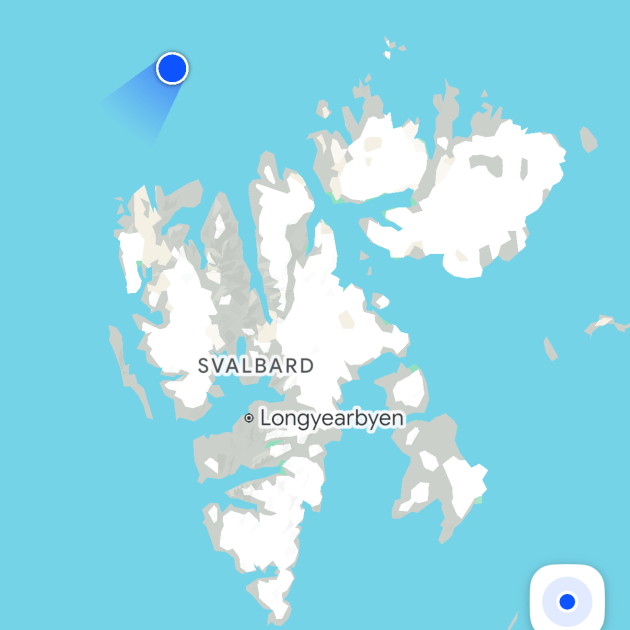
At the Arctic pack ice, approximately 80 degrees 40′ North.
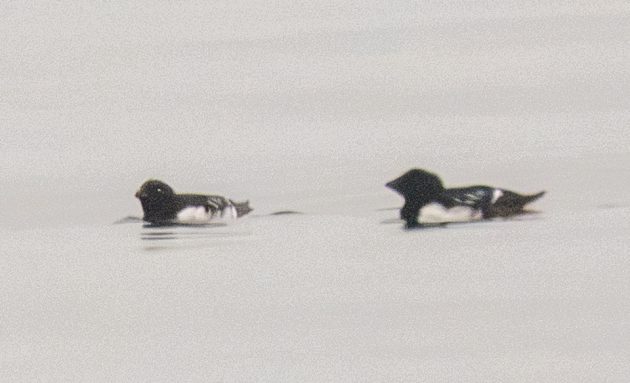
Dovekies at the pack ice, North Atlantic north of Svalbard, July 2026
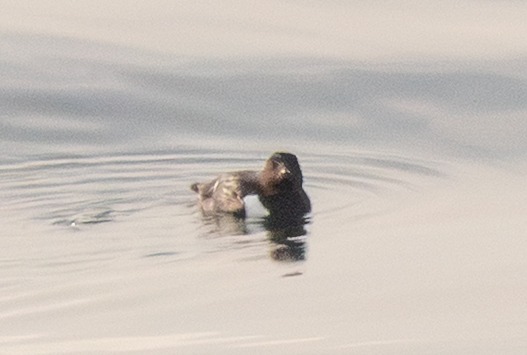
Dovekie at the pack ice, North Atlantic north of Svalbard, July 2026
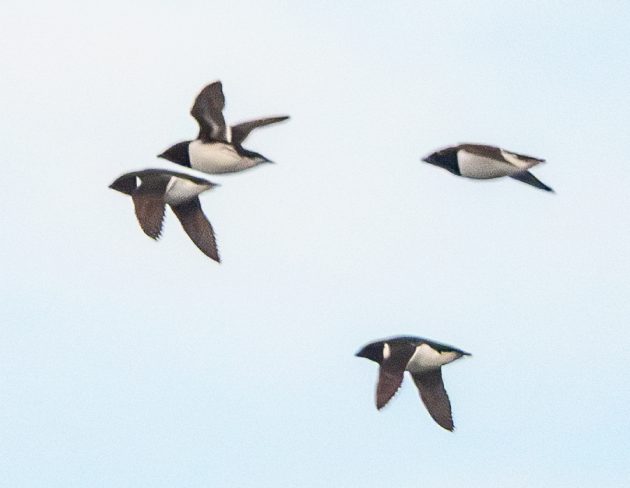
Dovekies at the pack ice, North Atlantic north of Svalbard, July 2026
As the ship continued its circumnavigation east and south around Svalbard, I kept seeing my little friends. I wondered if I would see one in the coming months, maybe around Christmas or New Year’s, after they had departed their summer breeding grounds of Svalbard. It is not common to see them here because I live in its most southern range and the Dovekies like to hang out off the coast on the seaward side of the Gulf Stream. However, as noted, I have gotten lucky a few times here and hopefully I will again. Now, if I see a Dovekie in my home turf in the future, I will shout out “respect” because this little bullet bird has come a long, long way to see me.
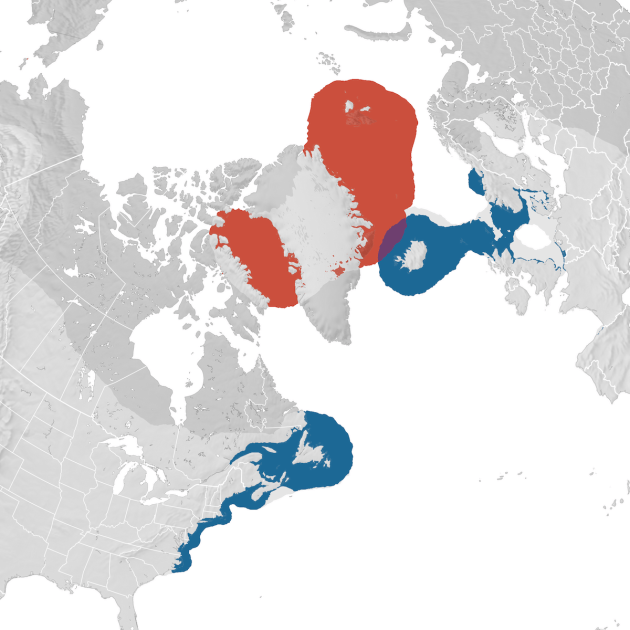
Dovekie range map: blue = Nonbreeding Oct-Feb; Red= Breeding May-August; Purple = year round. Source: Cornell Lab






Leave a Comment