

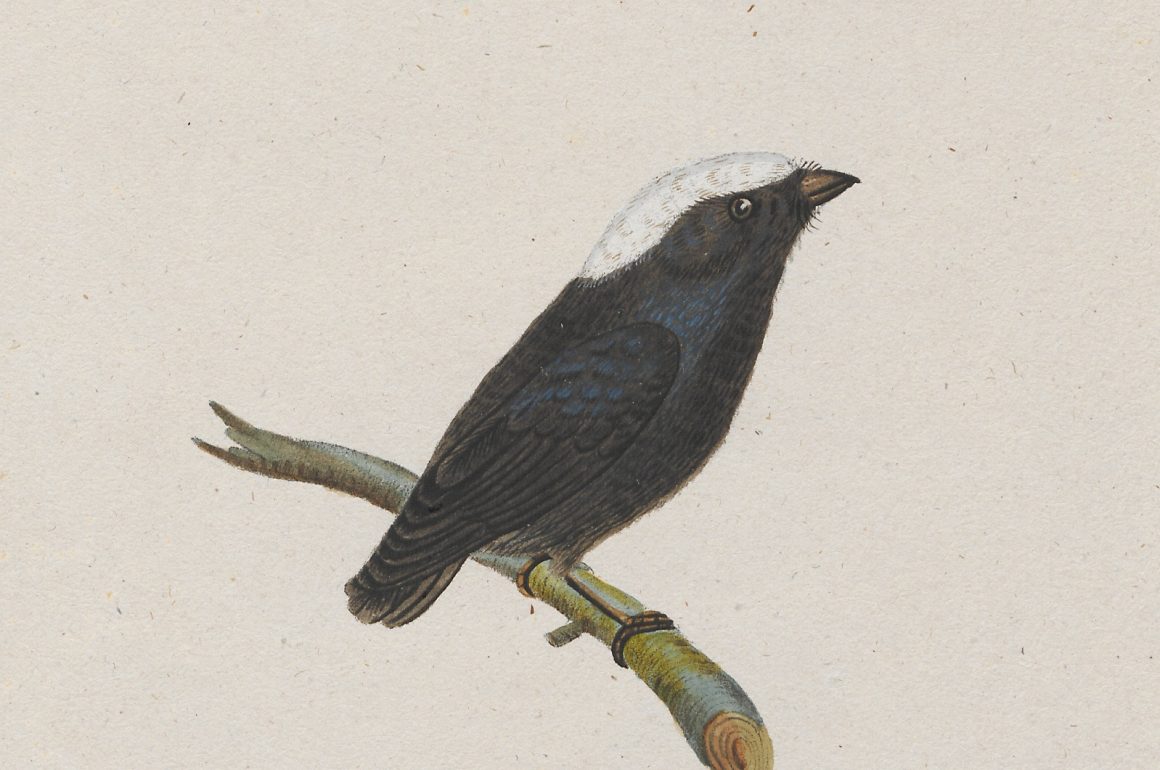
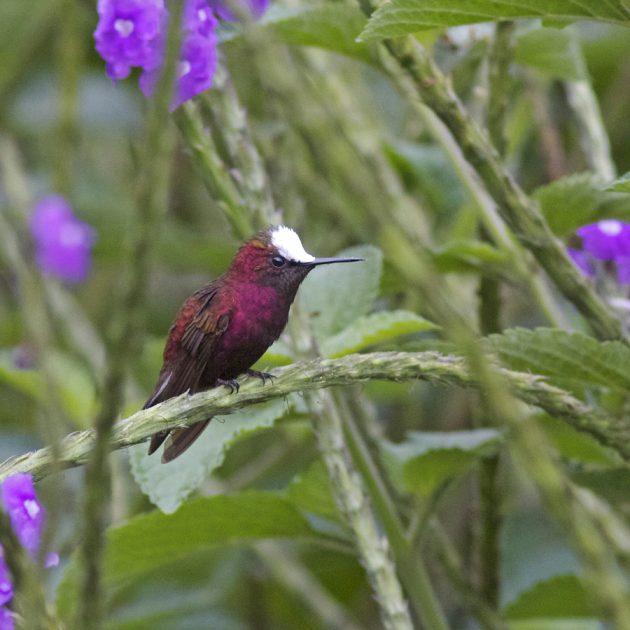
The Snowcap, unlike other hummingbirds, does not disappoint. Why is that, you may justifiably wonder. First, a male Snowcap in good light is burgundy with a white cap. In bad light, the same chap becomes a monochromatic marvel, still a very striking persona and highly distinguishable from other hummers. The female Snowcap is a much drabber affaire, but still cute in her tininess. As far as I have been able to ascertain during my recent visit to Costa Rica, Snowcaps like to be out in the open which helps showing off their beautiful colour.
Second, Snowcaps resemble White-crowned Manakins. Manakins are the coolest birds. The male Manakins lek by dancing. Some dance like the male actors in a Bollywood movie and they are just as charming. Other manakins perform solo and dance like Michael Jackson. Our target bird does not lek alone, but the leks are dispersed with the males within earshot of each other.
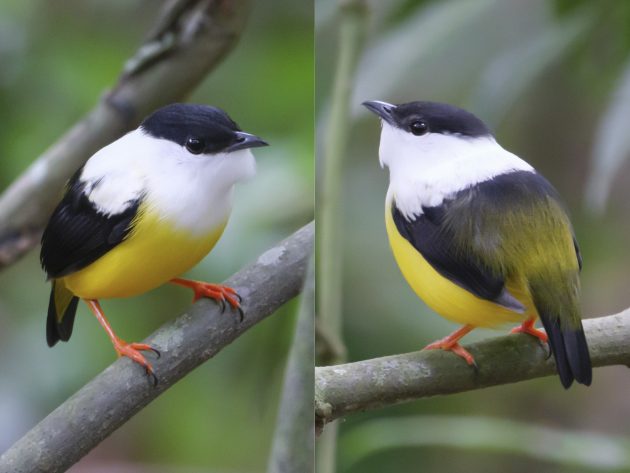
An ideal morning at the Rancho Naturalista’s private reserve would therefore have good sightings of both the manakin and the hummingbird. It was up to our excellent guide Mercedes Alpizar to deliver. The walk to mid-elevation would show us a hattrick of manakins, confusingly called White-ruffed Manakin, White-collared Manakin and White-crowned Manakin. All we had to do was look through impenetrable forest. Easy…
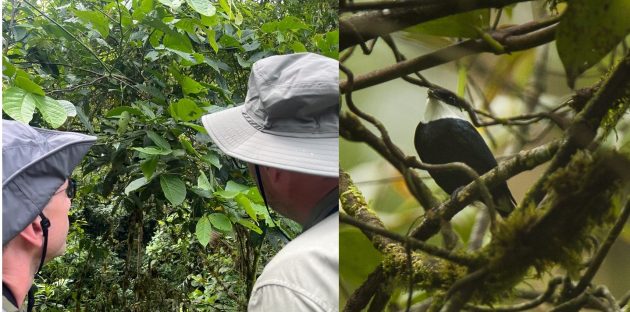
On our first morning walk we checked out the garden Verbenas for the Snowcap, dipped and went for breakfast. After the delicious breakfast (the fresh juice!) we walked up the hill. There is about 300 meters altitude difference between the lodge and the top of the local hill. Interestingly, the birds have spread themselves along this altitudinal space, with the White-collared Manakin first, then the White-ruffed Manakin and only at the very top did we finally encounter the White-crowned Manakin.
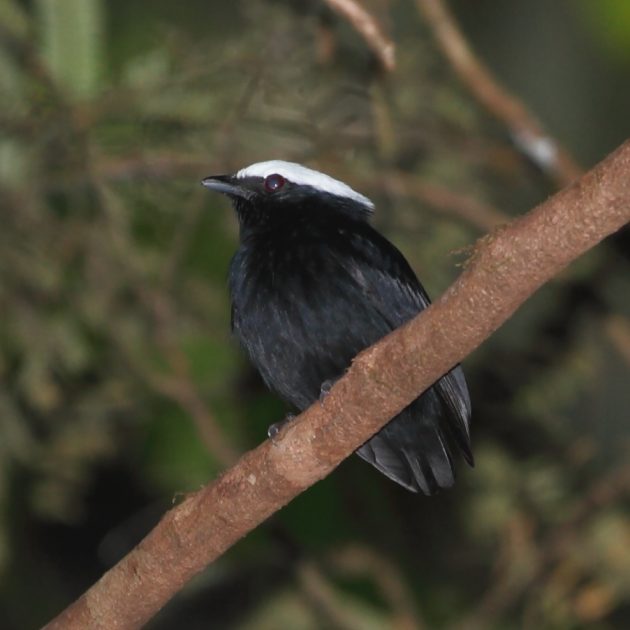
The post-breakfast walk yielded an impressive 23 species. I daresay that we saw all the birds Mercedes heard and this was the trend for the whole week we were birding with her. Birds in the tropics are few and far between, so being able to show every single one of them is a great skill. We saw birds from the large Crested Guan to the tiny Green-crowned Brilliant and Crowned Woodnymph, the very shy Thicket Antpitta to the boisterous Brown Jay and both the Black-cheeked Woodpecker and the White-crowned Parrot.Taking half-decent pictures is hard under a closed canopy and in an abundance of vegetation. The birds in this article prefer a landscape that does not favour photography. Credit is due for the accompanying pictures as follows:
Carl Wilhelm Hahn, (public domain, via Wikimedia Commons) drew the zoological drawing in the header.Snowcap, Joseph C Boone, CC BY-SA 3.0 <https://creativecommons.org/licenses/by-sa/3.0>, via Wikimedia CommonsWhite-collared Manakin, HaleBopp, CC BY-SA 4.0 <https://creativecommons.org/licenses/by-sa/4.0>, via Wikimedia CommonsWhite-ruffed Manakin, Francesco Veronesi from Italy, CC BY-SA 2.0 <https://creativecommons.org/licenses/by-sa/2.0>, via Wikimedia CommonsWhite-crowned Manakin, Hector Bottai, CC BY-SA 4.0 <https://creativecommons.org/licenses/by-sa/4.0>, via Wikimedia Commons




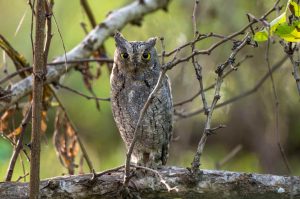





Manakin “hat trick” was one of the highlights of that trip – an unexpected joy to see them all, especially lekking!! Mercedes is awesome, Rancho Naturalista is awesome!!!!
I saw my first (and last) Snowcap at Rancho Naturalista over 30 years ago. It was a memorable sighting, and it’s great to know that they are still there, many generations on.
Our guide wanted Costa Ricans to see the value of eco-tourism. He would pay them to let birders come to their properties. I saw my lifer Snowcap in a local’s front yard. It was a winning strategy for everyone.