

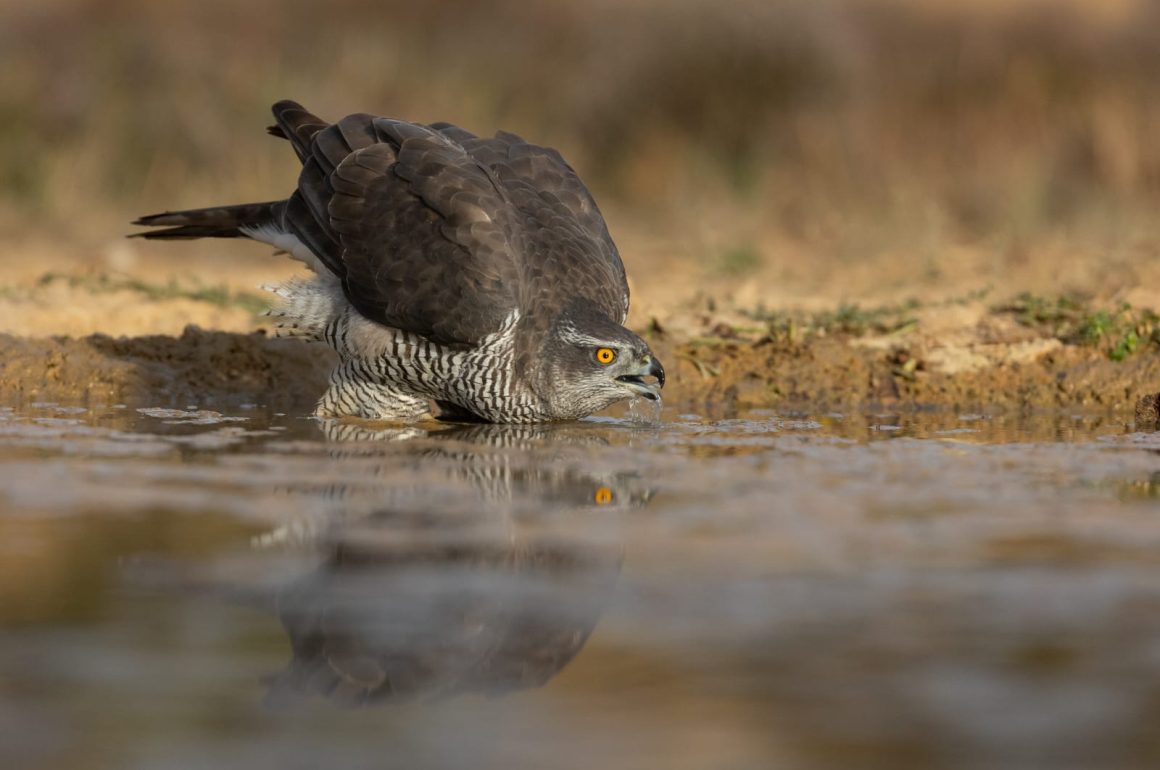
There’s a subtle difference between being a birdwatcher (or birder) and a bird photographer. For the former, of course, it’s seeing a bird that is the goal. For the latter, it’s pointing the lens, pressing the shutter and getting the photograph. I’m a birdwatcher who takes photographs. Many birders now, like me, carry cameras, and getting photographs of the birds we see adds to the pleasure of each outing. I freely admit that my photography is a form of trophy hunting. I come home from a day in the field and download my photographs onto my iPad: it’s always an exciting moment to see what I’ve captured.
Photographs can help confirm the identity of a bird that you have encountered, and they can also prove that you have seen it. However, bird photography in Europe is a challenge, and it’s not unusual for me to come home from a day in the field with just a few decent photographs, and sometimes I don’t get any.
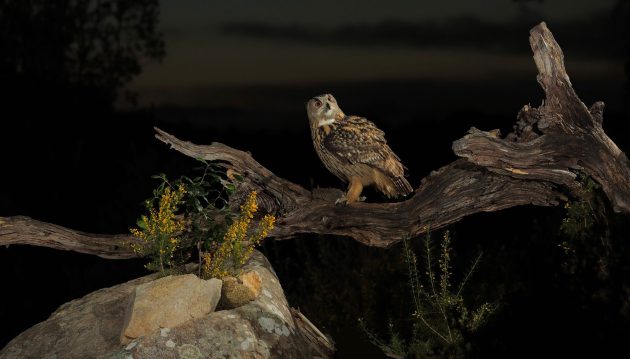
European Eagle Owl, always a difficult bird to photograph away from the nest
The secret to successful bird photography is getting close to your quarry, and this is where hide photography comes in. Providing hides for visiting bird photographers is largely a 21st-century innovation, but it is one that I’m convinced is great for both birds and conservation. It gives birds real value, and makes their conservation, and preserving their habitats, worthwhile for rural communities. Bird photography also introduces many people to the natural world, so many bird photographers become genuine birdwatchers.
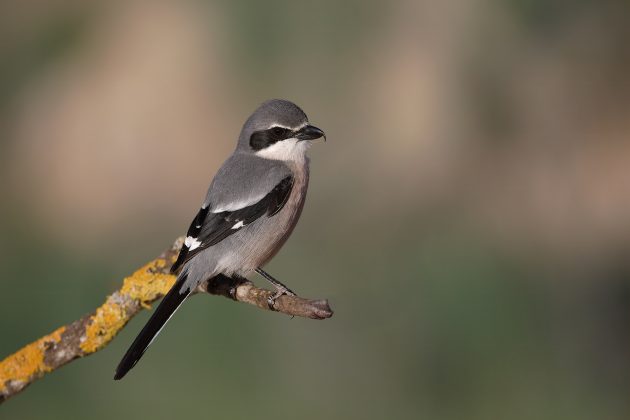
Iberian Grey Shrike, an Iberian endemic
Last month, as I have reported here on 10,000 Birds, I went to Spain to photograph birds, with my principal quarries Lammergeiers (or Bearded Vultures) and Lesser Spotted Woodpeckers. That I succeeded, despite only being away from home for four nights, was thanks to the brilliant hides I used. These were supplied by a Catalan company called Photo Logistics, one of the pioneers of hide photography in Europe. I thought that it would interesting to ask the company’s founder and director, Carles Santana, about Photo Logistics. I found his answers fascinating: I hope that you do too.
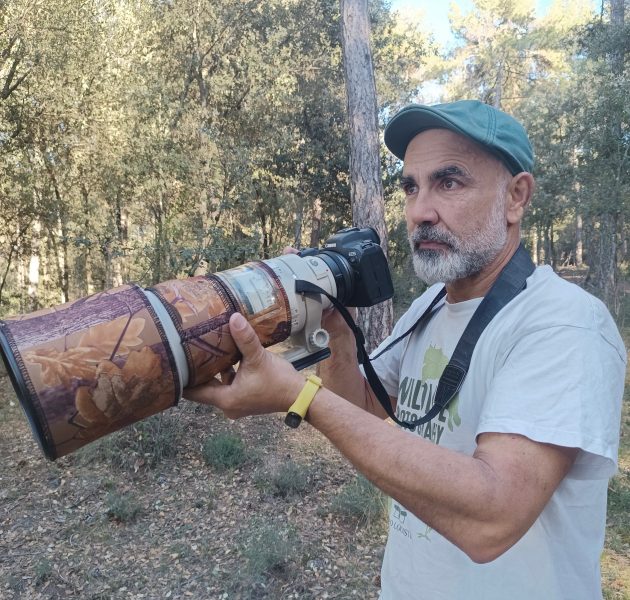
Carles, what prompted you to build your first hide, and where and when was it?
I’d been experimenting with photographic hides for years on a personal level – like most people, just trying to get close to wildlife without being seen. But the first proper hide came later, in La Terreta, near Tremp [near Lerida, in the Spanish province of Catalonia] and, truth be told, it wasn’t even a hide to begin with. It was a fairly basic shelter used to operate a trapping system for Griffon Vultures as part of a ringing project run by the Tremp Town Council. That’s also where I met my now business partner, Roger Sanmartí – arguably the most valuable outcome of the whole experience.
The structure had potential, though. With a bit of vision, it could be turned into a real photographic hide. We pitched the idea to the council, they liked it, and little by little the ringing project evolved into a proper photographic setup.
Our aim was to bring here a model already working well in Finland and other countries: making wildlife photography accessible to more people, while supporting conservation and rural development along the way. A slightly more refined approach than just hiding in a bush and hoping for the best.
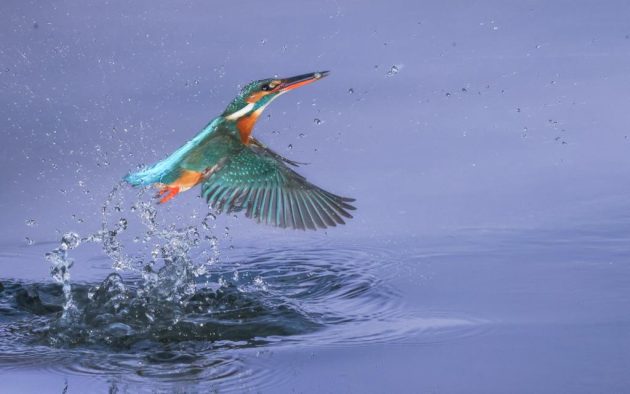
Kingfisher – always a popular subject with photographers
How important is the siting of the hide to ensure good photography?
Being in the right place at the right time – that’s wildlife photography in a nutshell, isn’t it? Keeping a respectful distance from the animal, of course, but also thinking about the angle, the background… even the perches. It all matters. In fact, it’s absolutely fundamental.
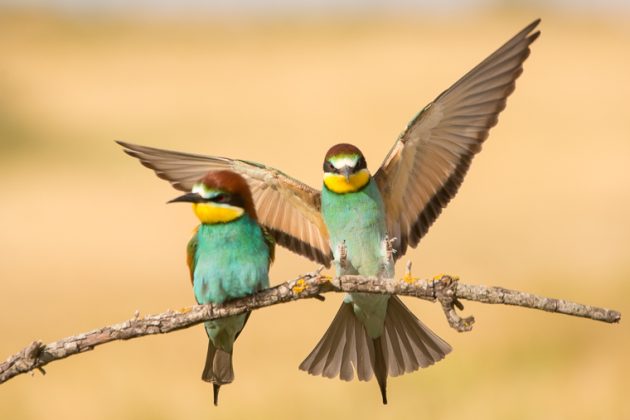
Bee-eaters, one of Europe’s most colourful birds
Do all of your hides have one-way glass?
Not all of them, but the vast majority. There are really only two exceptions:
- when it’s impossible to prevent the bird from seeing its own reflection and repeatedly attacking the glass to the point of exhaustion, or if there’s a genuine risk of a fatal collision;
- and when light conditions are so delicate that even the slight loss of a stop through the glass makes a difference. With modern cameras handling ISO levels that were unthinkable a few years ago, this is much less of an issue nowadays. That said, for example, in the Capercaillie hides we used to run, we didn’t use glass.
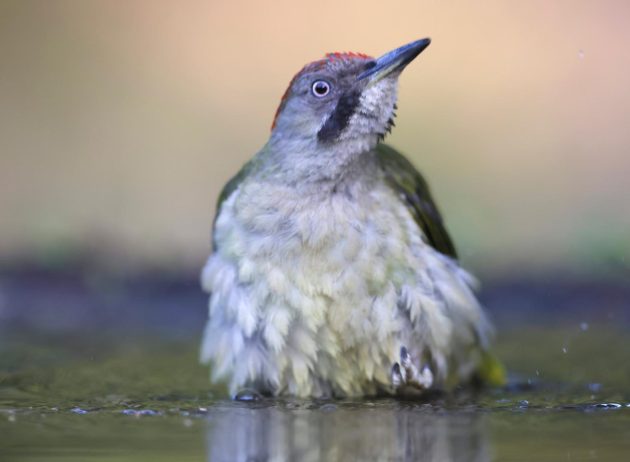
Iberian Green Woodpecker. It is restricted to Spain and Portugal
Is it necessary in Spain to get licences from the local government (or conservation organisation) to allow photography?
Absolutely. We typically work with two, sometimes even three, levels of permits:
- environmental authorisation, as you mentioned, from the regional government (Spain is highly decentralised when it comes to environmental matters);
- landowner permission—most hides are on private land, so close collaboration with owners is essential;
- and, if the site lies within a protected area (natural park, Natura 2000, etc.), approval from the relevant managing authority.
It’s also worth bearing in mind that land ownership and environmental protection status are two entirely separate things. The fact that land is privately owned doesn’t exempt it from complying with environmental legislation and land-use planning regulations.
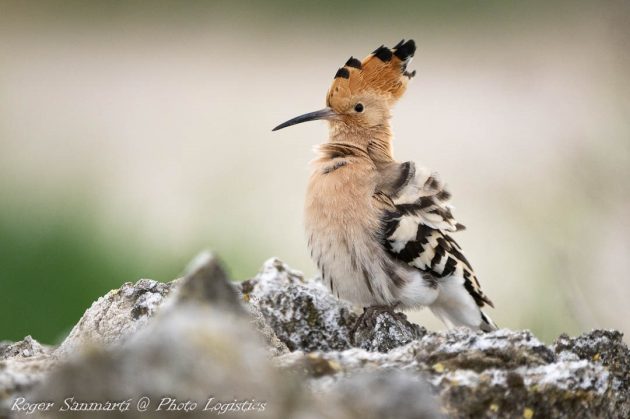
Hoopoe, a bird that everyone loves to photograph
When did you start Photo Logistics?
In August 2009, together with Roger Sanmartí – and with the unwavering support (and, it has to be said, a fair bit of patience) from our families – we decided to embark on something that felt genuinely worthwhile, both environmentally and personally.
That first hide in La Terreta was just the beginning. Soon after came the hides in the Bellmunt–Alemenara farmland, and that’s really where our concern for steppe habitats began to take shape.
We did try—rather optimistically, in hindsight—to bring the sector together at a national level in Spain, but without much success. So in the end, driven largely by demand from the market, we set about building our own network of hides.
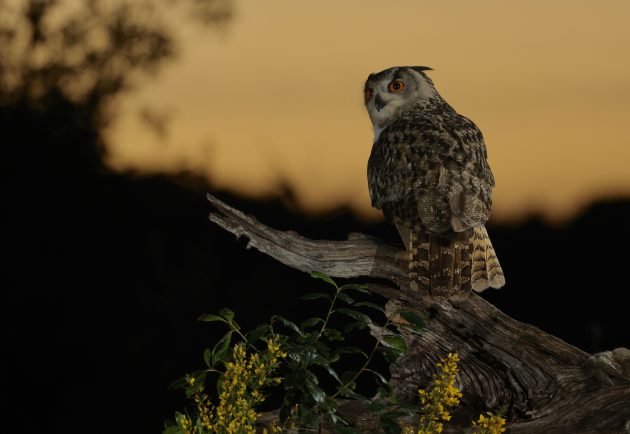
European Eagle Owl
Do you have a favourite hide, or a bird you particularly like to photograph?
Steppe birds combine both striking beauty and deep environmental significance. Little Bustard, Great Bustard, Black-bellied Sandgrouse, Pin-tailed Sandgrouse, Calandra Lark, Stone-curlew… these are species that define a landscape – and one that is quite literally slipping through our fingers. If we’re not careful, we risk losing that biodiversity in farmland habitats for good.
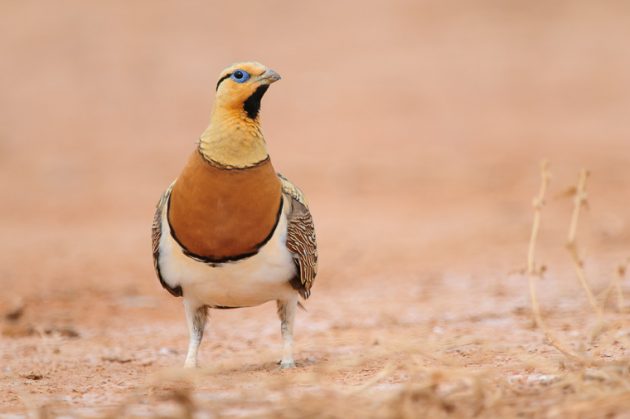
Pin-tailed Sandgrouse, one of the most beautiful of steppe birds
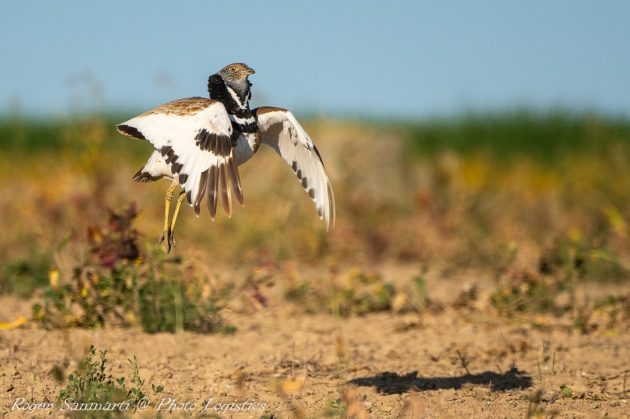
Little Bustard: a fast-declining species in Spain
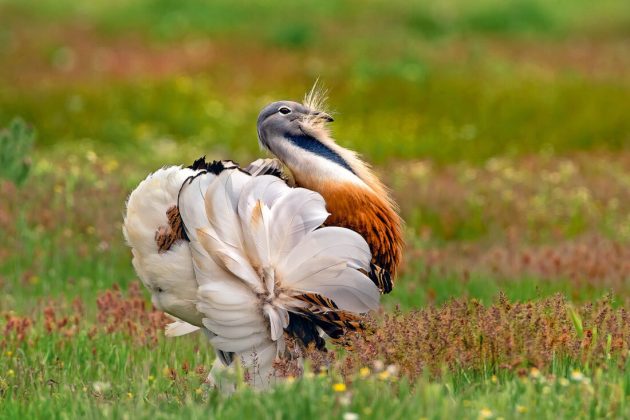
Great Bustard displaying: the biggest and most spectacular of steppe birds
And of course, the Bearded Vulture will always hold a special place in our hearts. It was the very first species we dedicated a hide to—and it’s now our logo, which probably says it all.
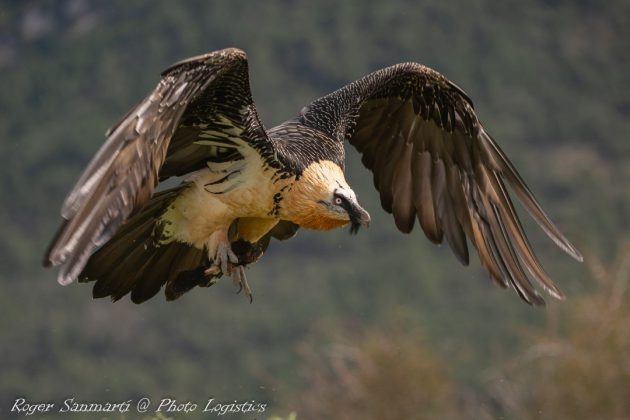
Lammergeier or Bearded Vulture – the Photo Logistics logo bird
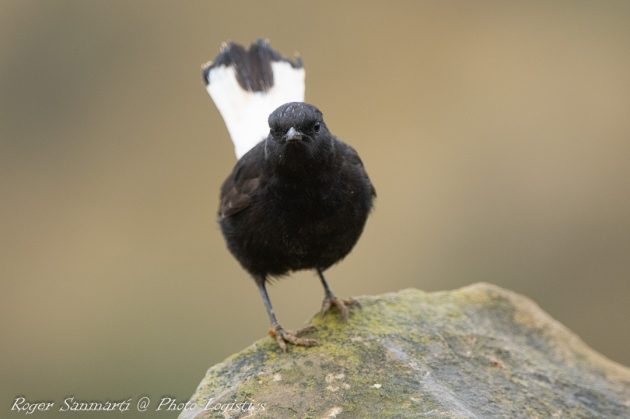
Black Wheatear
I believe that you now have nearly 100 hides across Spain. Are there any species that you would like to have a photography hide for that you are currently unable to offer?
Wolves and bears (in Spain), mainly due to the social conflict surrounding them – they’re species we’ve chosen not to work with.
And Capercaillie, because the populations we have access to simply aren’t in a condition to support this kind of recreational activity. Not everything goes – and it shouldn’t.
Which countries do your clients come from?
Roughly 55% of our clients come from outside Spain. Of those, the Dutch market (the Netherlands and Flanders) is the most significant, closely followed by the British.
After that come the French—along with other French-speaking clients such as those from Switzerland and Wallonia—then Italians, Germans, and Scandinavians. More recently, we’ve also started to see growing interest from North American and Asian visitors, although still in relatively small numbers. The remaining 45% are Spanish clients, predominantly Catalan – unsurprisingly, as we’re a Catalan company – but also from many other parts of the country.
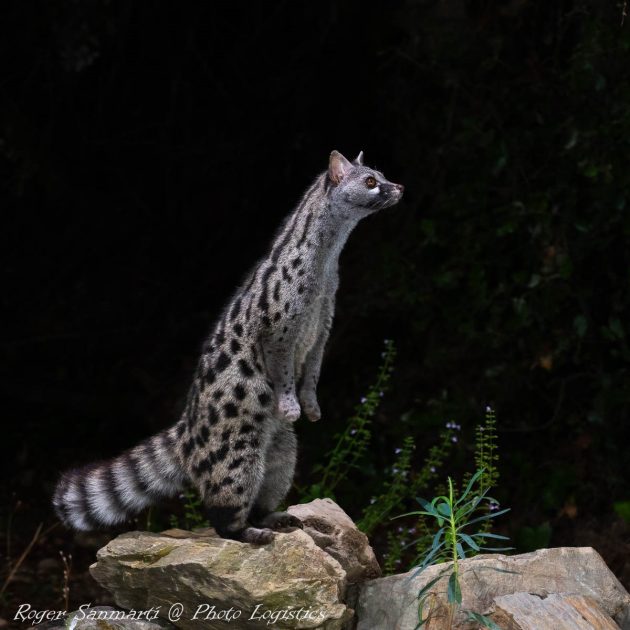
Without a hide, nocturnal mammals such as this Genet are almost impossible to photograph
Do photographers come back every year to try and photograph different species?
Yes, we have a large number of clients who return time and again. They appreciate the way we do things and share our philosophy of using wildlife photography as a tool for conservation. Others come with very specific goals in mind and, once they’ve achieved them, don’t necessarily return – but they’re very much in the minority. Mind you, in wildlife photography there’s always “just one more species”… so they tend to come back sooner or later.
Photo Logistics uses the slogan “the shortest way to get great pictures”, which I thought would be an appropriate title for this article. For further details, go to www.photo-logistics.com. All the photographs illustrating this piece were taken from Photo Logistics hides. The header photograph is of a Goshawk.
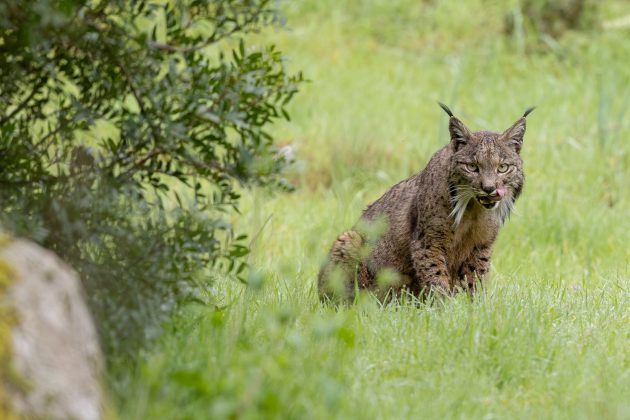
The elusive Iberian Lynx can be photographed from hides in Andalucia








Impressive, I wish I knew of this company when I visited Spain a couple years ago!