

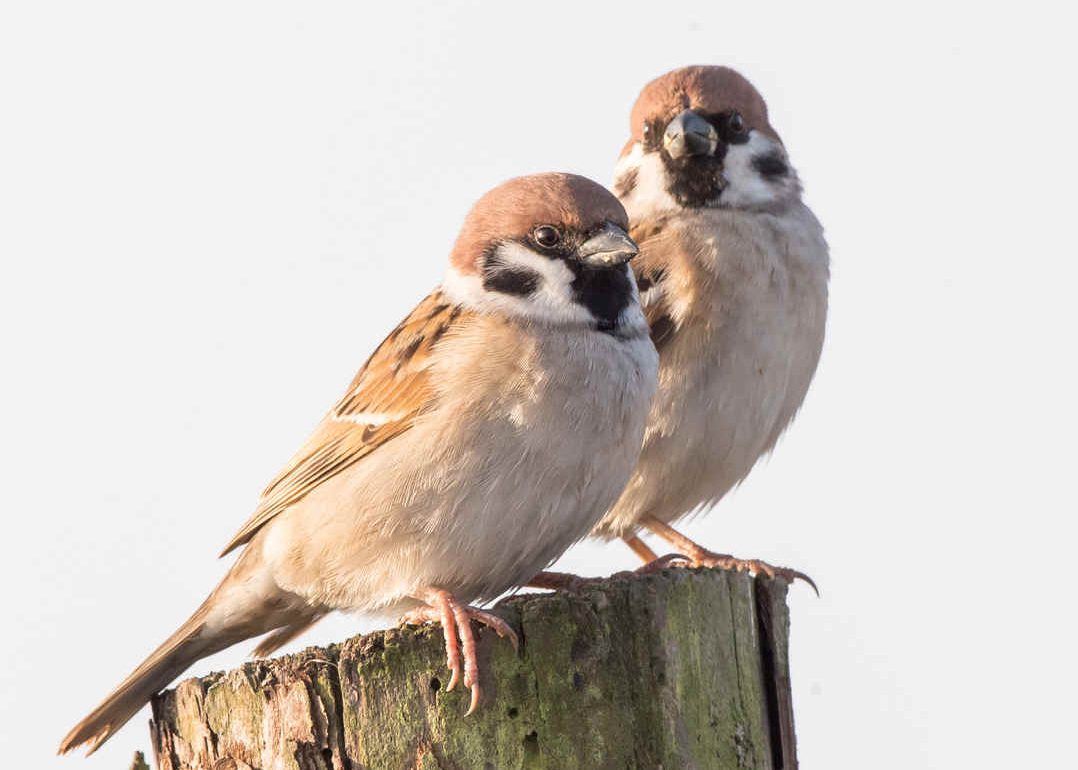
Apparently, yes — although scientists tend to avoid the word personality and prefer something more grantworthy like “consistent individual behavioral differences.”
For a long time, birds were mostly treated as identical representatives of their species. Differences between individuals were seen just as random variations. But studies over the past few decades suggest that individual birds behave in reliably different ways. Some are consistently bold, others cautious; some curious, others reluctant to investigate anything new. And these tendencies seem to persist over time.
The idea is not even particularly new. “Birds as Individuals” by Len Howard was already published in 1952, and its recent re-release with a foreword by Stephen Moss indicates that the interest in this topic is increasing.
The observations of Howard and others mostly involved common species such as Great Tits, for which individuals could be observed repeatedly. When presented with unfamiliar objects or situations, the same birds reacted in similar ways again and again, suggesting something like a stable personality. The differences mattered: bold birds often discovered food faster but exposed themselves to more danger, while cautious birds played it safe at the risk of staying hungry.
This does not mean birds have personalities in the human sense. Still, they appear to show “stable behavioral tendencies” (ok, personalities) shaped by genetics, experience, and circumstance. To birders and also pet owners, this probably does not come as a big surprise. What is new is that these differences are now taken more seriously. Ornithology has so far focused on species – maybe individuals are the next chapter in understanding birds.












I am sure they have “primitive” emotions, and hope better they don’t have the kind of human self-reflection on emotions.