

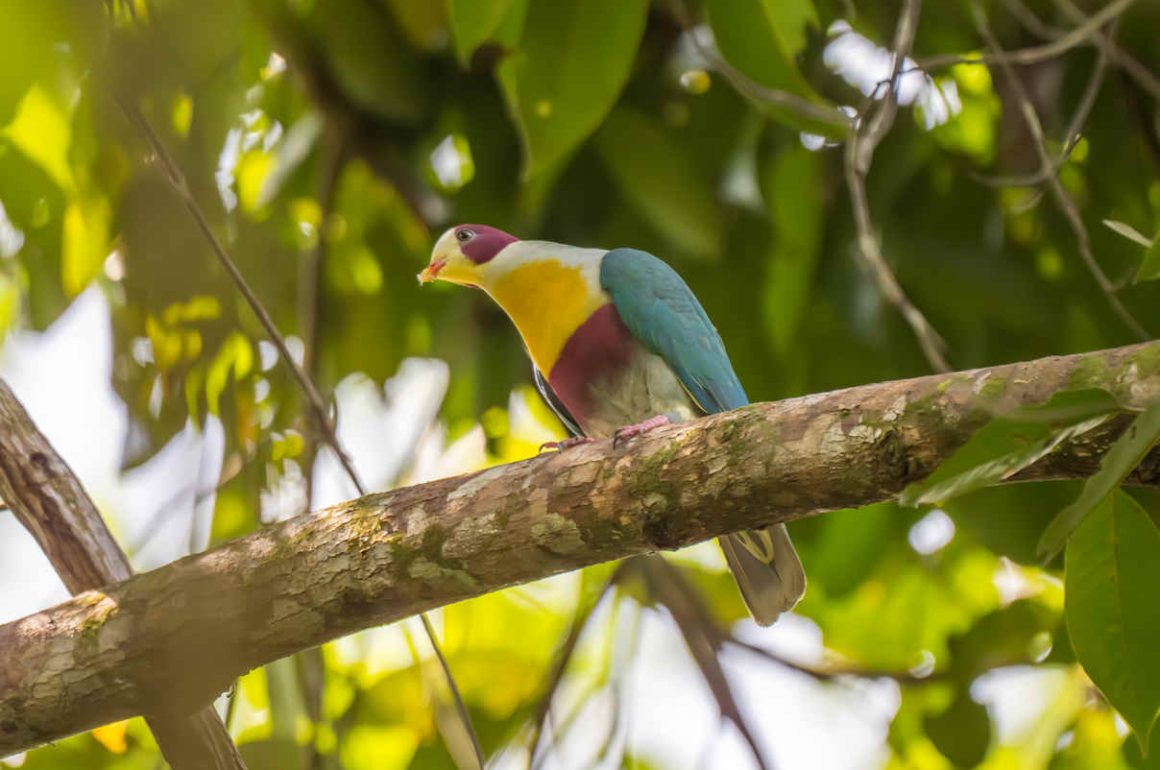
On my recent trip to the Philippines, I had reasons to pay particular attention to pigeons and doves. The Philippines is a good place for this family, as there are roughly 30–35 species of pigeons and doves, depending on the checklist and taxonomy used. This includes imperial pigeons, fruit doves, green pigeons, bleeding hearts, brown doves, ground doves, and introduced pigeons such as the Rock Pigeon, and quite a few of them are endemic.
ChatGPT puts the Philippines at rank three or four among the countries with the highest species count of the family. Having many separate islands helps, as the leading position of Indonesia illustrates as well.
| Country | Approx. number of pigeon/dove species (of about 300-340 global) | Notes |
|---|---|---|
| Indonesia | ~93 | World leader; huge island diversity |
| India | ~45–50 | Many green pigeons and imperial pigeons |
| Philippines | ~34–40 | Extremely high endemism; many bleeding-hearts |
| Papua New Guinea | ~35–40 | Crowned pigeons, fruit doves |
| Australia | ~35 | Rich in bronzewings and fruit pigeons |
| Malaysia | ~30+ | Strong Sundaic diversity |
| Brazil | ~25–30 | Very rich Neotropical dove fauna |
| Colombia | ~25–30 | Andes + Amazon combination |
| Democratic Republic of the Congo | ~25 | African rainforest diversity |
I found this interesting and looked a bit more into it (which nowadays means asking ChatGPT about it and then pretending one did not).
So, apart from multiple islands generally increasing species counts, what makes the Philippines a particularly good place for pigeons and doves?
- Pigeons are excellent island colonizers, as many species are strong fliers capable of crossing sea gaps.
- At the same time, the pigeon family is surprisingly evolutionarily adaptable. So, new environments/islands mean new species.
- Tropical forests (as the Philippines historically were) are ideal pigeon habitat, as many tropical pigeons are primarily fruit eaters.
- The Philippines has comparatively few mammalian competitors (monkeys, squirrels) that compete with pigeons
So, back to my trip. I only went to Mindanao and Luzon, and stayed for just a few days. Still, I was more impressed with this family than I usually am in other locations.
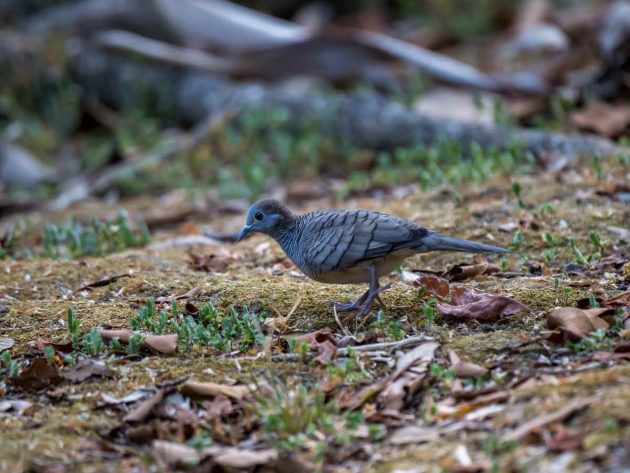
Well, I was not that impressed with the Zebra Dove seen in Luzon …
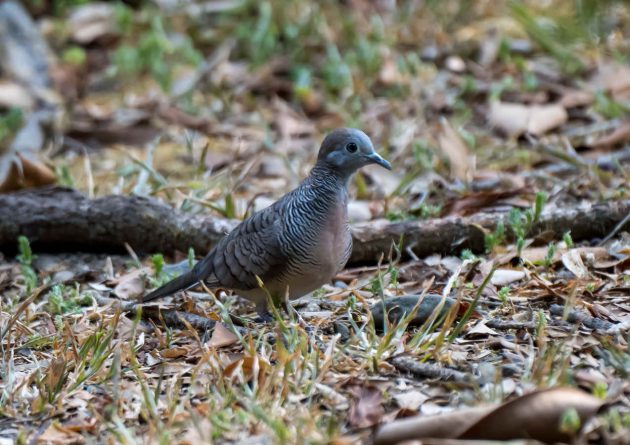
… as it is just too common in Southeast Asia.
And while the Common Emerald Dove is an attractive bird …
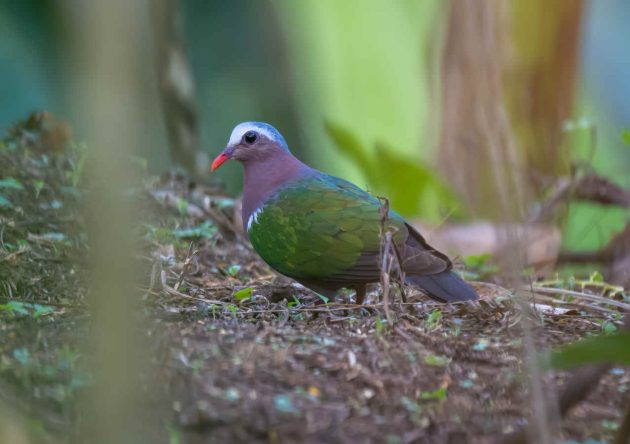
… I had just seen it in Yunnan a month earlier.
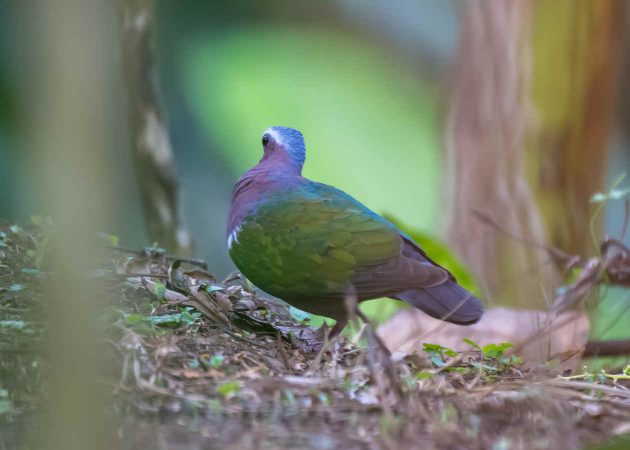
But that left three doves endemic to the Philippines.
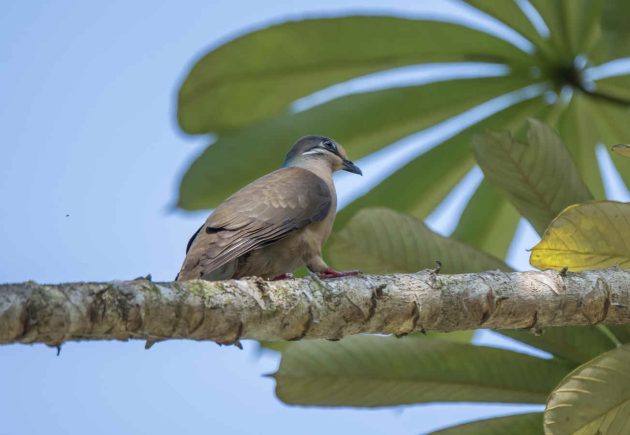
The scientific name of the White-eared Brown Dove (seen at PICOP in Mindanao) is Phapitreron leucotis. Not a very interesting name – there is no Sir Edward Leucos (1778-1823), a British citizen of Greek descent, who did get ennobled by the Crown for his dedicated services as an ambassador to Greece, but who later fell into disrepute due to his shady business dealings, partly with parties regarded as enemies of the United Kingdom.
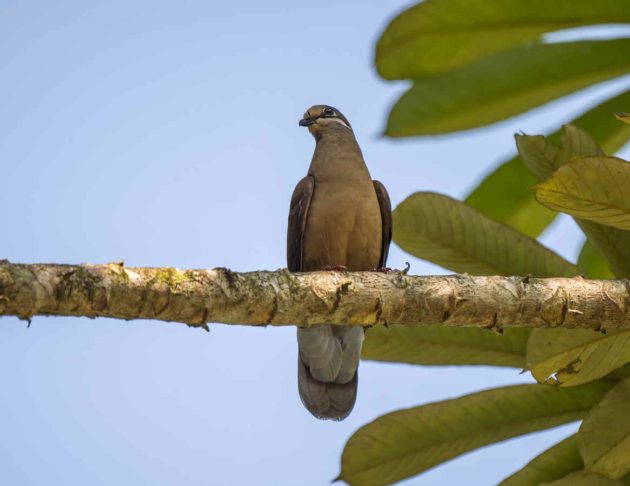
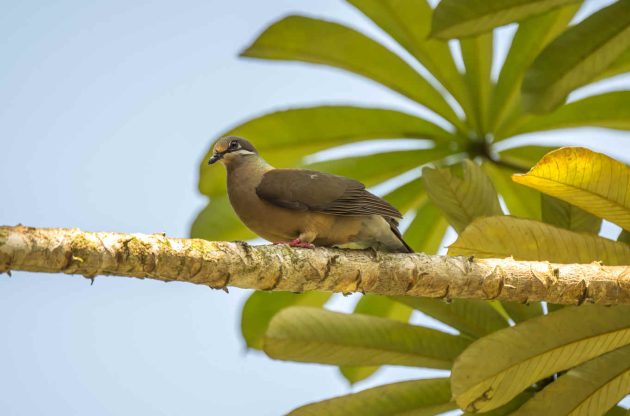
Instead, leucotis just means “white-eared”, and maybe (like me) you get a very minor thrill from realizing that the otis in that word is the same otis used for those great birds, the scops owls.
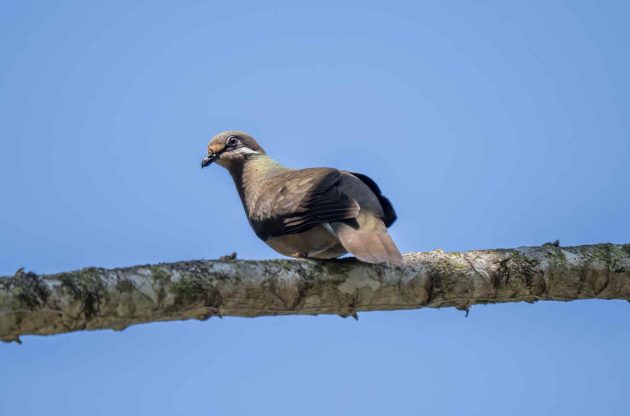
In terms of appearance, I rather like this one. It reminds me a bit of the Whiskered Treeswift, not exactly sure why, and it avoids the flashiness of some of the other tropical pigeons, such as the next one.
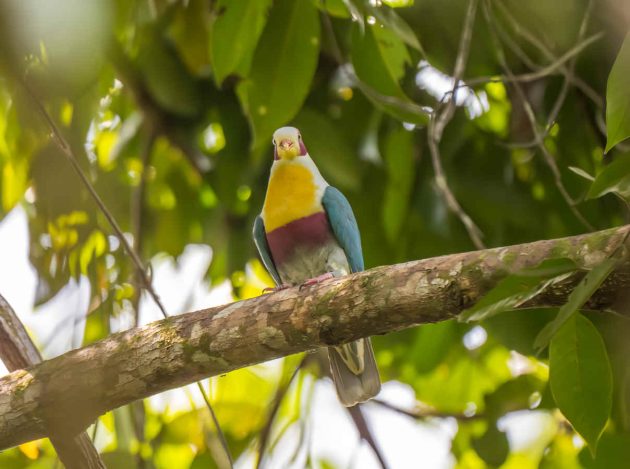
Namely, the Yellow-breasted Fruit Dove as seen at PICOP in Mindanao.
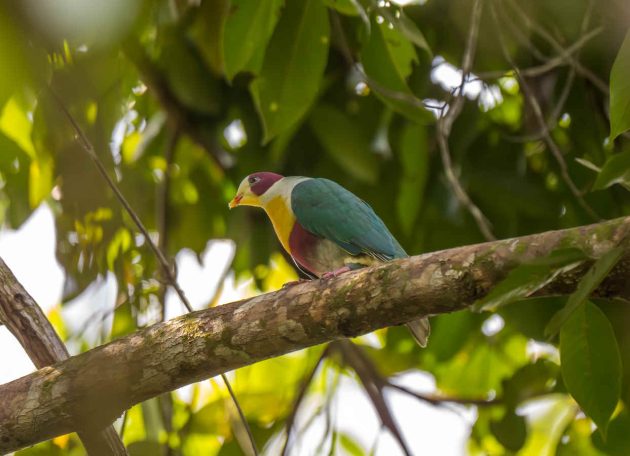
Again, I am forced to write about the scientific name – Ramphiculus occipitalis – even though it is not that interesting (occipitalis means at the back of the head, presumably highlighting the purplish area behind the eyes of the bird).
Which means that again, there are few, if any, scientific papers on the species apart from such chestnuts as “AVIAN DIVERSITY OF THE FOREST CANOPY LAYER IN THE UNPROTECTED AREAS OF MT. APO KBA“.
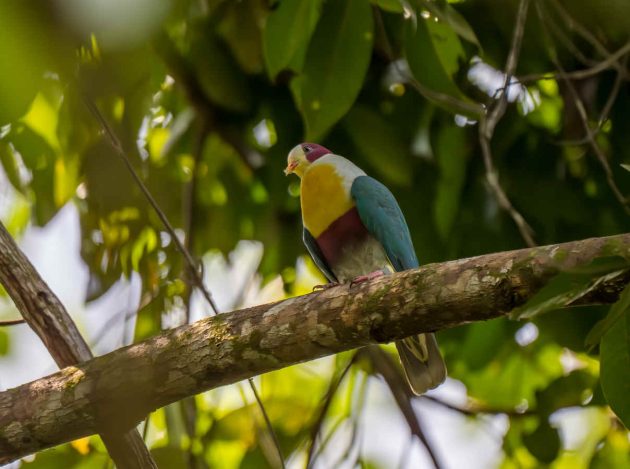
Not true! Here is an interesting one, a paper describing nest predation by a Spotted Wood Kingfisher on a Yellow-breasted Fruit-dove nest. The semi-gruesome details are as follows: “The kingfisher finally took on the nestling, biting its head and pulling it downwards, out from the nest. This method likely leveraged the nestling’s weight for easier handling, rather than lifting it from above. However, the exact manner of eating the nestling was not captured in the footage. As the kingfisher was doing this, the parent was nowhere to be seen, and no signs of retaliation were observed. Later that same day, after the incident, the parent returned to the nest, did its usual routine as mentioned above before climbing onto the nest, and searched for the nestling, but unfortunately, it was gone. In the subsequent frames captured by the camera, the nest was abandoned, and neither of the birds returned.”
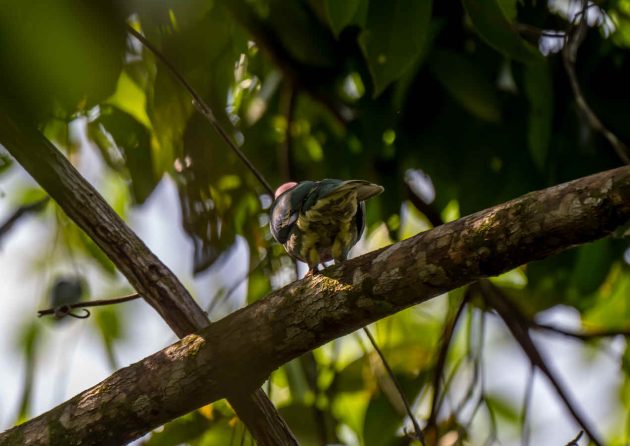
Finally, the Cream-breasted Fruit Dove (seen at Infanta Road in Luzon) is listed as Near Threatened.
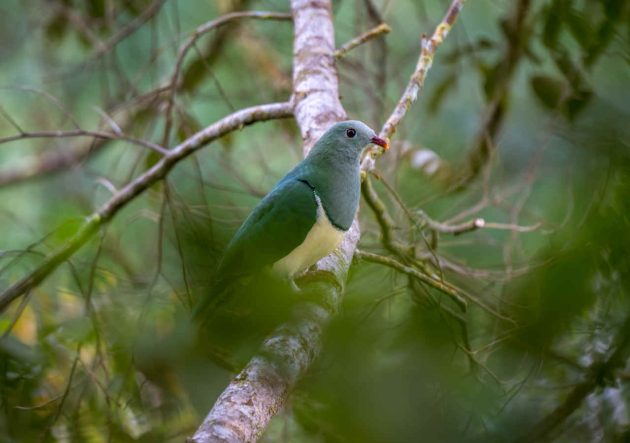
However, the HBW thinks that a listing as Vulnerable might be more appropriate: “Currently considered Near Threatened. This species is at least vulnerable, since it occupies a limited range within an area undergoing severe deforestation, and habitat loss and hunting have undoubtedly caused a moderately rapid decline.”
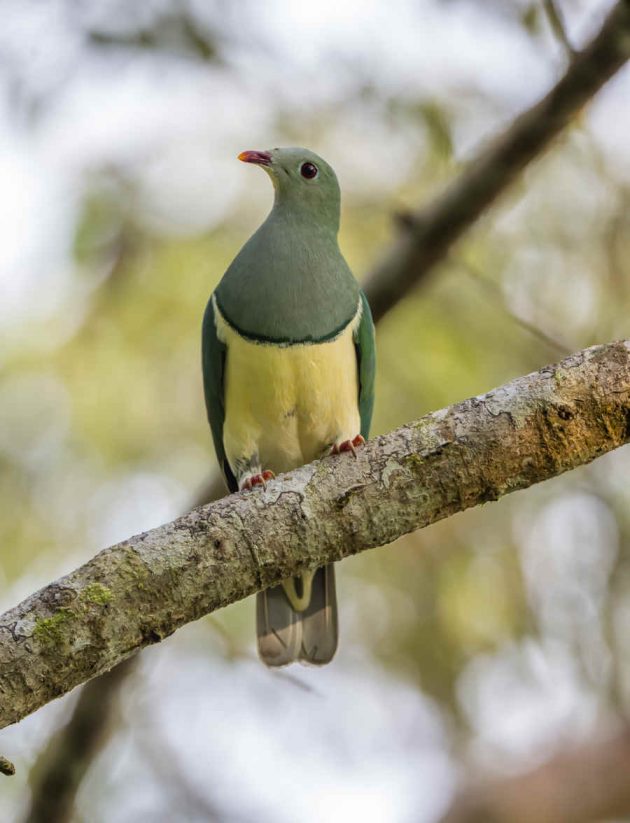
While it is found in some protected areas of the Philippines, my understanding from talking to locals is that these protected areas do not offer much real protection from hunting and logging. Not if you are willing to bribe your local government official.
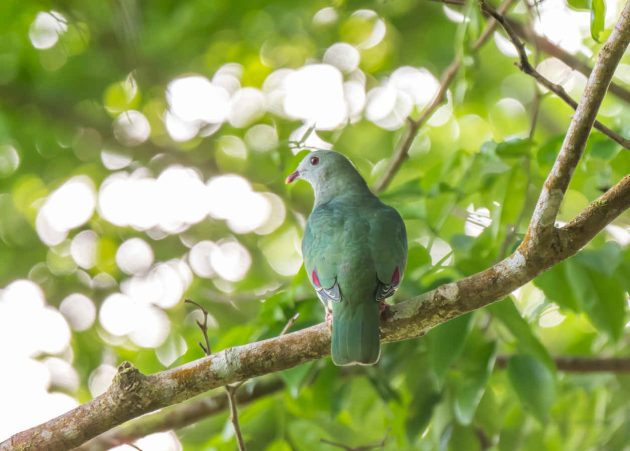
Its scientific name, Ramphiculus merrilli, commemorates one otherwise admittedly likely long-forgotten Elmer Drew Merrill (1876-1956), a US botanist who was a collector in the Philippines from around 1902 to 1929.
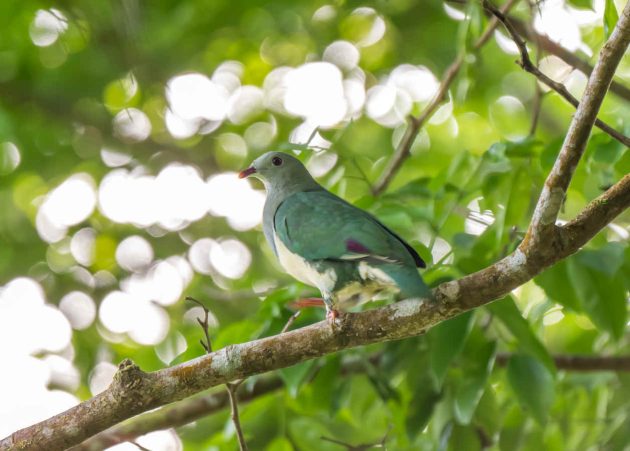
Lessons learned from the trip (boilerplate term from management consulting): there are worse ways to spend a birding trip than paying slightly too much attention to pigeons — though perhaps not if you’re trying to avoid scientific names, deforestation, or nest predation.












Generally speaking, I dislike pigeons and when in a new region I try to find them as quickly as possible, tick them off and happily ignore pigeons for the rest of the trip. This is a bad strategy as I will spend too much time looking for the unwanted. Now Kai has shown another pigeon, the gorgeous type. These pigeons are reason enough for self-doubt, reassessment of strategies and to travel to the Philippines.