

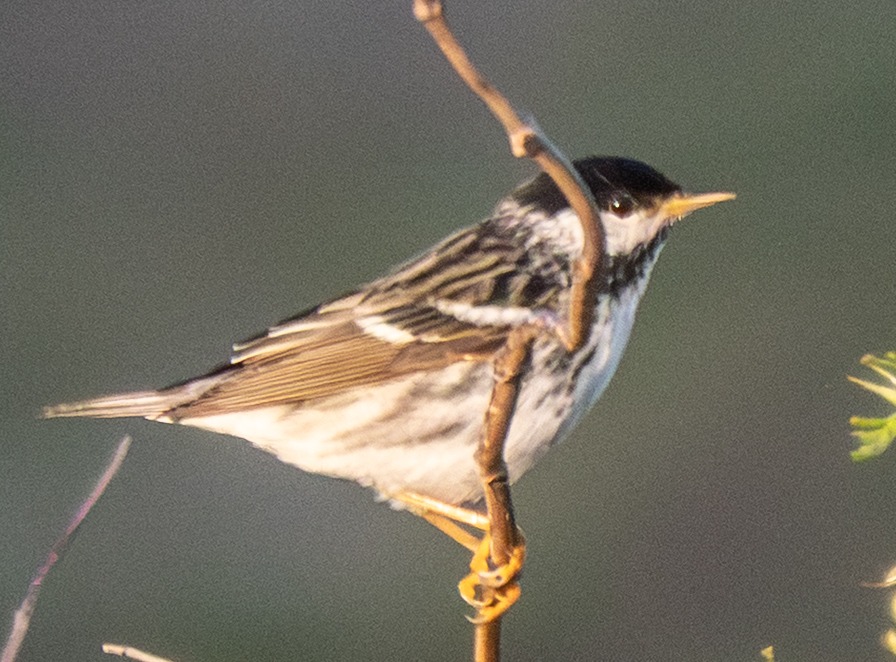
The spring migration along the USA’s eastern coast seems to be slow in starting this year. At least for us on the mid-Atlantic Outer Banks we are seeing more shorebirds than warblers. Some tell me that this is not unusual and that Fall is more for warblers but nevertheless comparing numbers and sightings of warblers from the past several years during this spring, I do not see the numbers or varieties.
This morning is another beautiful, clear, breezy day on the coast. Blue skies just keep coming from the east and west and the wind from the southwest. It is in the low 60s and clear. I am feeling a bit uninspired to go out to my usual patch to bird with that hope we all have of seeing great birds because there have been very few warblers. With a cup of coffee in hand, binoculars, and camera I go out on my deck to watch the bird feeder in the yard. It’s only a good stone’s throw from the coastal dune and there are no leafy trees around, just some stalwart pines in the neighbor’s yard and good scrub and brambles along the edges of mine. This attracts House finches, House Sparrows, an infrequent Chickadee, Cowbird, or Red-winged Blackbird. Once, a couple of years ago, a female Painted Bunting surprised me at the feeder for 10 minutes. She has not returned since. Around the yard we have Tree Swallows and Fish and American Crows soaring by right now. No warblers ever. It is not their habitat. If I want to see warblers I have to go over to my patch which is less than two miles south and has their habitat.
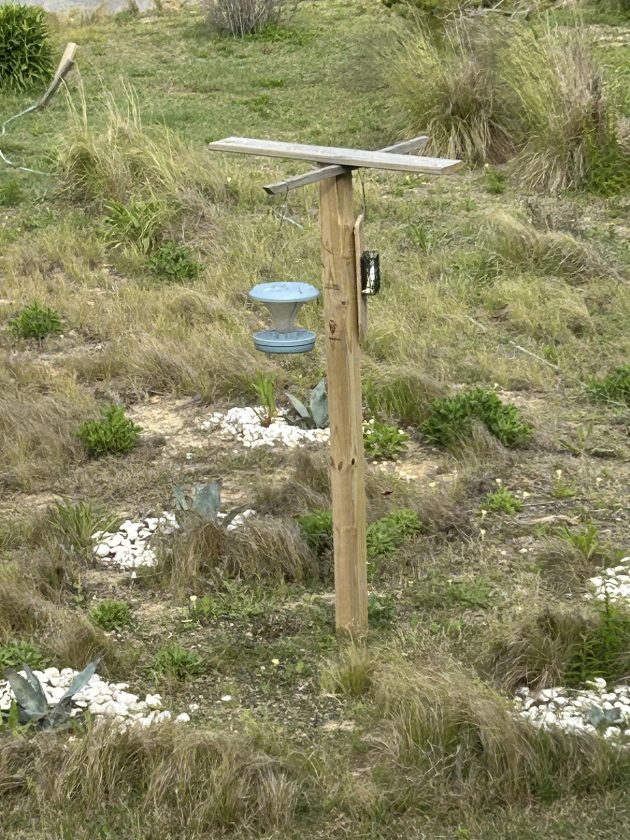
I take a sip of my coffee and look out at the feeder and the yard. I start to listen. The House Sparrows and American Crow are loud. A Northern Mockingbird chases another crow across the yard. The sun is rising and everything has that rosy golden glow, casting long shadows. I hear something different. It’s a chip. It is slightly different than a Northern Cardinal chip. I begin scanning with my binoculars across the feeder, the yard’ and the neighbor’s pines. I hear it come closer and move to the bramble hedge. I look out and see the House Sparrows going in and out of the brambles and vines in the hedge and a chickadee that has just come from the feeder. Or has it? Wait, it’s very stripey. Too stripey. binoculars up and …
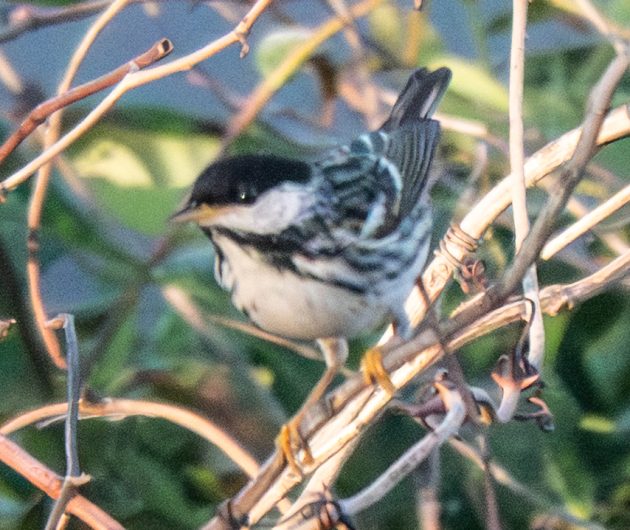
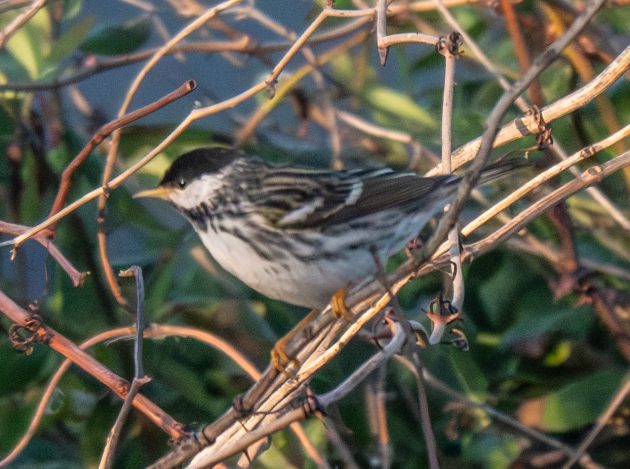
A Blackpoll Warbler! A black cap so dark it gives it a “batman” look. Bold streaks that are so beautifully black and white that I know it is not, nor could it ever be any chickadee. It turns and the sun catches it’s eye and it opens its beak and chips. I have a warbler in my yard! A real Blackpoll Warbler! Not a common warbler even and a beautiful visual in clear view, not mosaic through brambles and branches. It is the first for my yard! It is a beautiful, black and white migrant that I welcome with all my heart. You know that thrill. You know that excited surge you get when you see that new, special bird in an unexpected place. Perfect!
Now, as I reflect on this excitement of this morning, I realize with a smile, that the birds surprised me again, just at the right time when I was uninspired and feeling a bit down and debating whether going out birding was worth it. Birds know. This Blackpoll knew. He rescued me and brought my inspiration back, renewing my energy and joy. Mission accomplished…and best of all, it was by a black and white bird.







Leave a Comment