

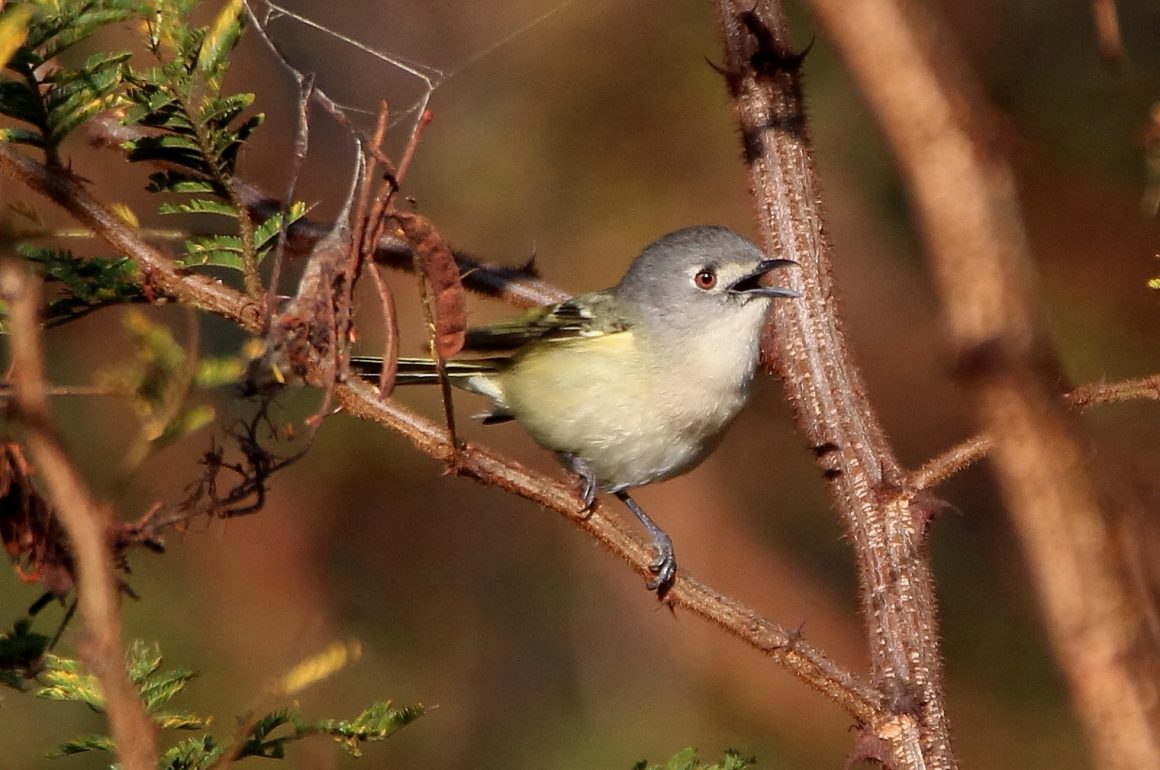
For our Old World readers, Vireos are the 35 members of the single New World genus bearing that name. They look rather similar to our more colorful Wood Warblers, also exclusive to the New World, and a few look very much like the Kinglets found across the northern hemisphere. Vireos are distinguished from the members of those families by the their heavier hooked bills.
The Mexican state of Michoacán, where I live, is rich in Vireos. I have seen 11 of the genus’ 35 species here, as well as an emblematic Shrike-Vireo from another genus in the same Vireonidae family. Five (Cassin’s, Plumbeous, Blue-headed, Black-headed, and Bell’s) spend winters here but reproduce in the U.S. and Canada. The Hutton’s Vireo is non-migratory but is resident in both western Mexico and the western United States. Most Western Warbling Vireos migrate from the U.S. to Mexico, but some remain in central Mexico year-round. Yellow-green Vireos actually winter in South America and migrate north to Mexico to breed. Golden, Slaty, and Dwarf Vireos are all endemic residents of Mexico, as is the larger Chestnut-sided Shrike-Vireo.
In April I went out with my birder buddy Jonathan Vargas for what turned out to be a very Vireo-rich trip. Jonathan, who has been working hard to find reliable sites for all of Michoacan’s endemics so he can include them in birding tours he leads, was eager to see if a promising new site might be a good place to see our endemic Dwarf Vireo. And indeed it was. But we also ended up seeing exactly half of my 12 Michoacán vireos in a single day.
I’ll start with those Dwarf Vireos. True to their name, these are the smallest of all Vireos. Although Hutton’s Vireos can also be just under four inches long (3.9 inches, or 10 cm long), Hutton’s can reach larger sizes than the largest Dwarf Vireos. All other Vireos are at least 15% larger than Dwarf Vireos. Their small size makes these Vireos look disproportionately cabezón (large-headed).
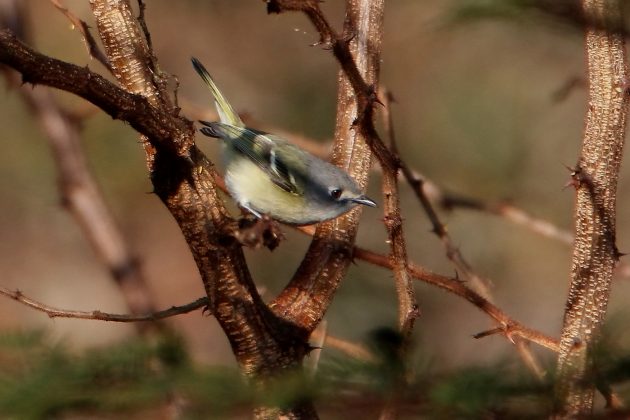
The reason Jonathan was so interested in Dwarf Vireos is because they are an endemic that is, well, unusually endemic. You can only see them from central Mexico all the way to… central Mexico. We saw three in a single day.
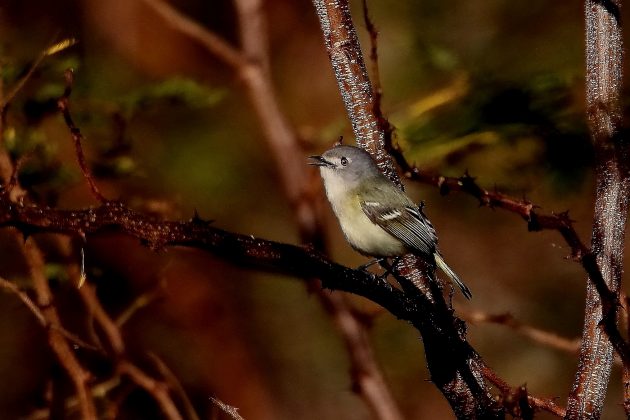
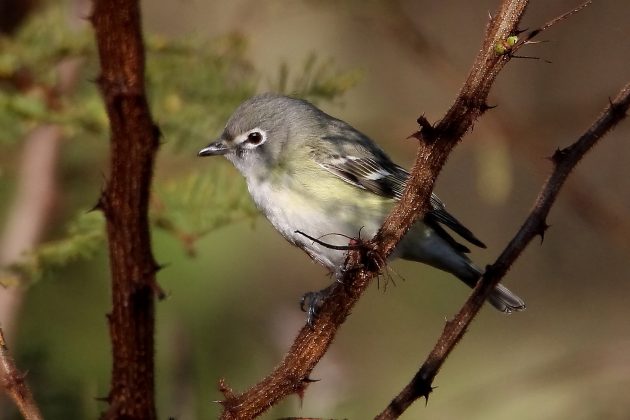
Each of our endemic Dwarf Vireos seemed to have a migratory Cassin’s Vireo stalking it. Cassin’s Vireos are quite a bit larger than Dwarf Vireos, and wear sharply defined white “eyeglasses” rather than the white “superhero mask” of the Dwarf. I didn’t manage photos of the day’s one Plumbeous Vireo, but if you take away the yellow wash on the Cassin’s flanks, you get the idea. Plumbeous Vireos are entirely gray and white.
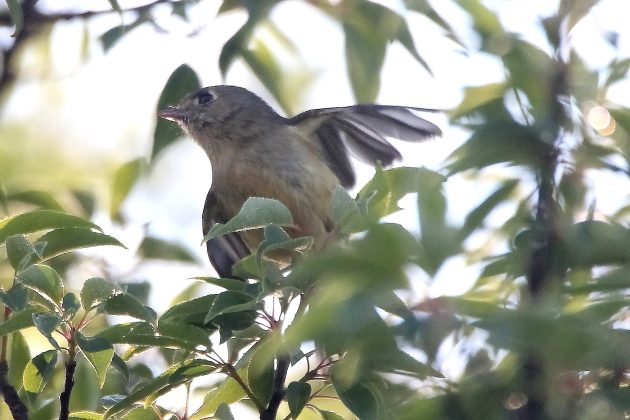
My photos of the day’s Hutton’s Vireos weren’t great, but were just good enough to show their eyering which is interrupted at the top, giving them a perturbed look. They share this eyering with the surprisingly similar Ruby-crowned Kinglet. That frowning eye goes well with their disgruntled raspy calls.
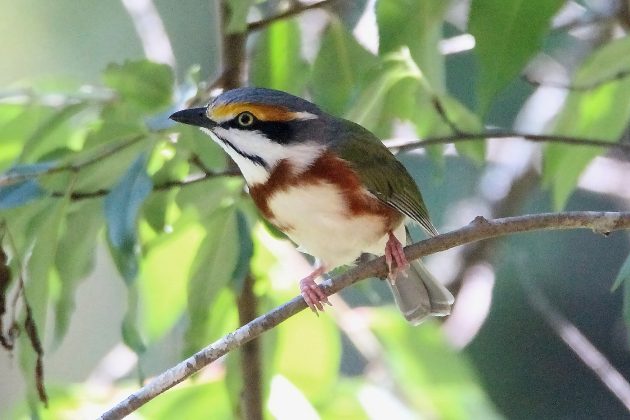
As mentioned above, I achieved no photos at all of the day’s Plumbeous Vireos, or the bright yellow Golden Vireos we saw. But that was certainly not the case for one of our emblematic Chestnut-sided Shrike-Vireos. He chose to get very up-close and personal.
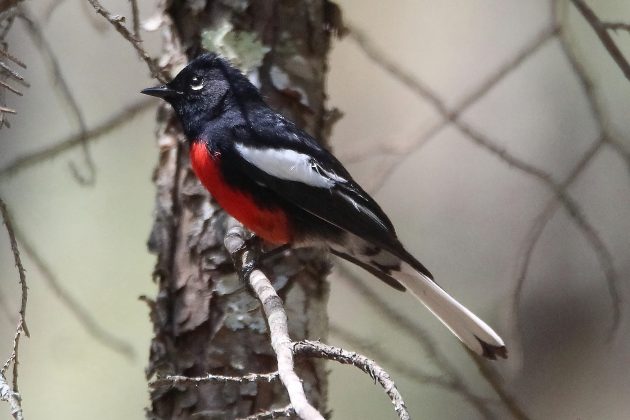
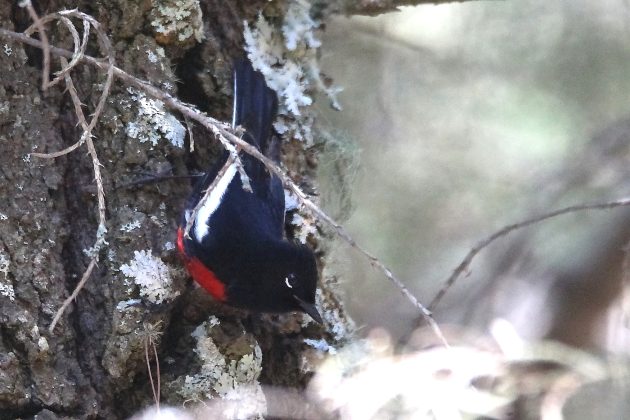
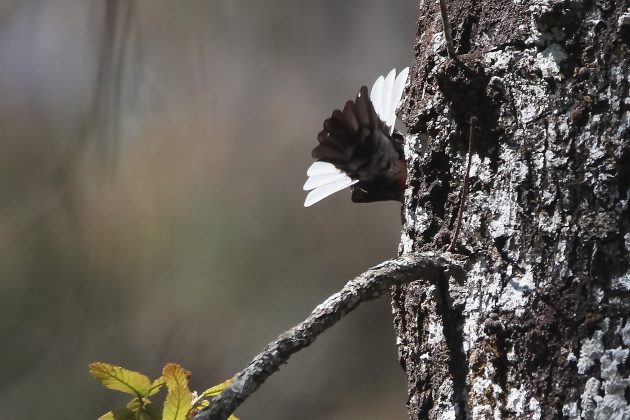
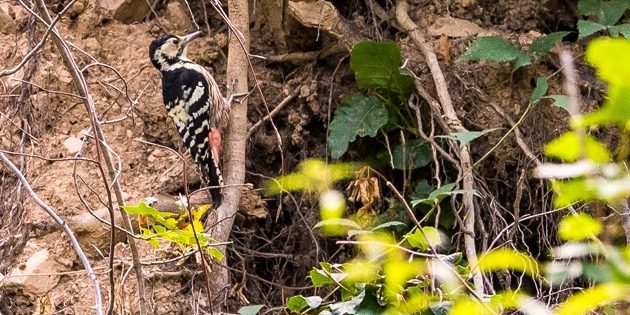
Of course, no single genus can be responsible for all the good images from a single day, especially one with a total of 84 species seen. So I’ll share a few photos from other familes before closing. A Painted Redstart showed off two of its talents: 1) bark acrobatics, and 2) repeatedly snapping its tail open, a habit which gives these birds their Mexican common name of pavito (little turkey).
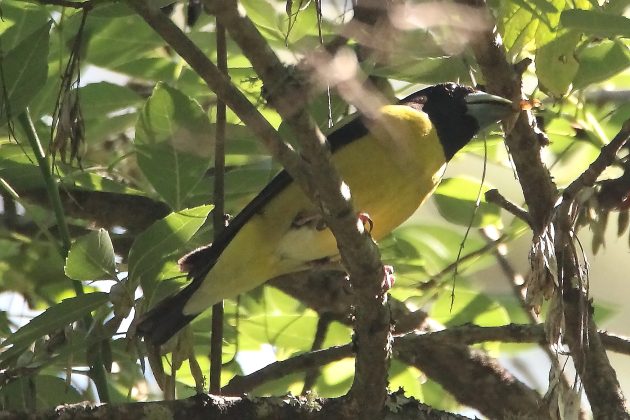
Seeing a male Hooded Grosbeak was an exciting and rather rare treat.
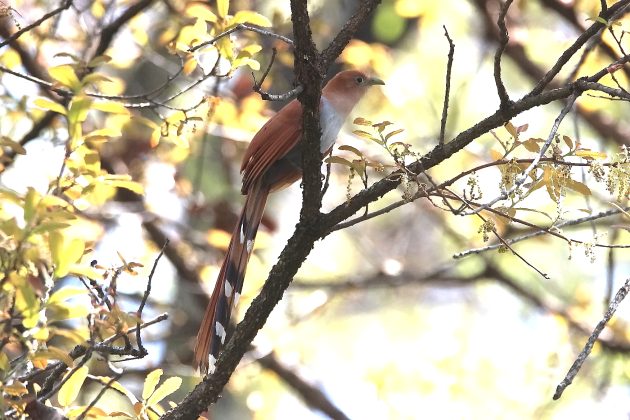
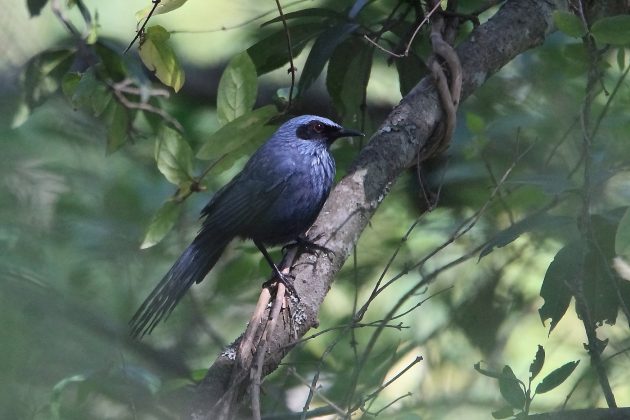
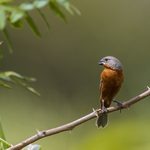
While more common, a Squirrel Cuckoo and a Blue Mockingbird gave me some evocative images.
It was quite a day, considering we were trying out an entirely new site.
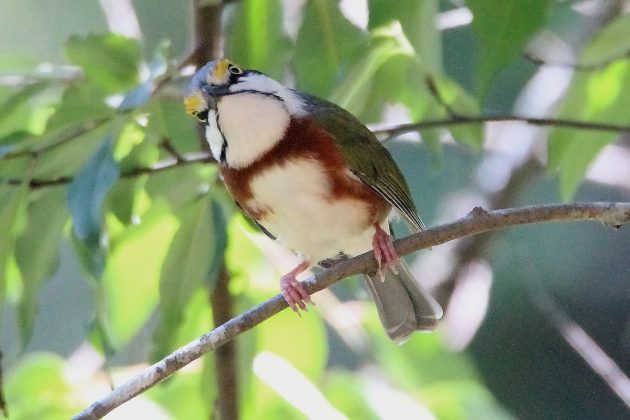











That Chestnut-sided Shrike-Vireo is gorgeous. Nice set of vireos indeed.
It may not be my spirit bird, Peter. But it is certainly the one that greets me every time I open my computer.