
I have no real idea why anybody would want to write a post with the title above. Yet once that idea had settled into my brain, there was no way around working on it.
And it turned out to be surprisingly difficult. One would have thought finding examples is easy enough – works of world literature with a specific bird in the title. It is not.
In particular, some birds that almost cry for incorporation into book titles – say, eagles, or penguins – almost do not feature at all. Still, I finally got a list:
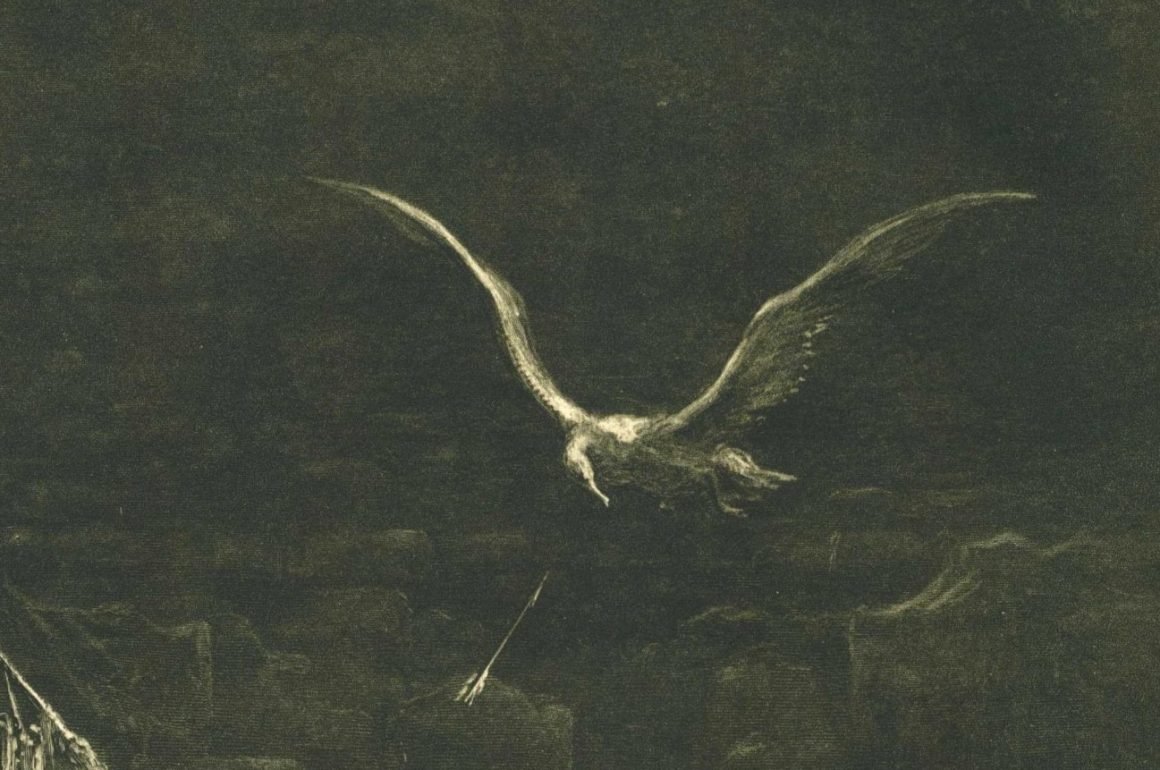
- Albatross (Samuel Taylor Coleridge – The Rime of the Ancient Mariner)
- Mockingbird (Harper Lee – To Kill a Mockingbird)
- Vulture (Franz Kafka – The Vulture)
- Seagull (Anton Chekhov – The Seagull)
- Cuckoo (Ken Kesey – One Flew Over the Cuckoo’s Nest)
- Raven (Edgar Allan Poe – The Raven)
- Swan (W. B. Yeats – Leda and the Swan)
- Duck (Henrik Ibsen – The Wild Duck)
- Eagle (Alfred, Lord Tennyson – The Eagle)
- Skylark (Percy Bysshe Shelley – To a Skylark)
And I know, I am cheating a bit as the first entry does not have the albatross in its title – but that one is too good to leave out, and the alternative would have been to add Paul Gallico’s “Snow Goose” to the list, which is a truly terrible novella. Better to cheat.
So, what do all these birds stand for in the human world (note: humans generally do not care too much for birds, so they use them as symbols for this and that, rather than as stand-alone creatures)?
I did not want to spend a day figuring this out, so instead, I asked ChatGPT to give me three buzzwords for each work:
- Albatross – Guilt, fate, and the burden of conscience (Coleridge).
- Mockingbird – Innocence, moral conscience, and justice (Harper Lee).
- Vulture – Menace, oppression, and existential dread (Kafka).
- Seagull – Artistic aspiration, desire, and mortality (Chekhov).
- Cuckoo – Madness, societal confinement, and rebellion (Kesey).
- Raven – Loss, grief, and the supernatural (Poe).
- Swan – Divine power, transformation, and beauty (Yeats).
- Duck – Illusion, hidden truths, and consequences of idealism (Ibsen).
- Eagle – Majesty, authority, and symbolic power (Tennyson).
- Skylark – Joy, inspiration, and the transcendence of nature (Shelley).
So, what does that show us?
That birds can stand for pretty much anything – from joy to grief, from guilt to innocence, from existential dread to inspiration, from mortality to divine power.
Somehow, I had expected more from this post than discovering that birds are literary Swiss Army knives.
Illustration: Detail from Gustav Doré’s engraving of The Rime of The Ancient Mariner







There is also The Birds and Other Stories by Daphne Du Maurier, where the birds have a bit of a role to play as well. Though, I didn’t enjoy the story very much. Children’s books feature birds much better!
The Six Swans
Jacob and Wilhelm Grimm
and how could you forget blackbirds: Four and Twenty Blackbirds baked in a pie …”
and Swan Lake – Tchaikovsky