

Whether you love them or hate them, there’s no escaping the fact that European Starlings are birds of character. Often regarded as the spivs of the bird world, they are a species that will, given half a chance, take over the bird table. Years ago I tried to devise ways of preventing Starlings raiding my bird feeders; today, some decades later, I’m delighted when I see one in my garden.
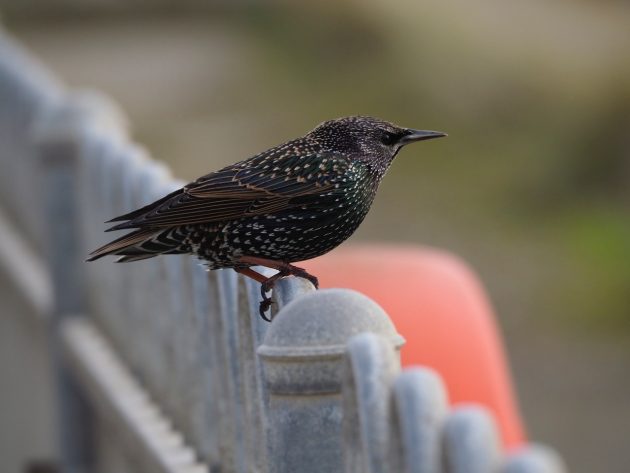
Adult Starling in winter plumage: a remarkably smart bird
I’m well aware that on the other side of the Atlantic, Starlings are regarded as unwelcome invaders. The first releases of European Starlings in the USA in the 19th century were generally unsuccessful, but when 40 pairs from England were released in New York’s Central Park in 1890 they immediately settled in, with the first nest soon discovered under the eaves of the American Museum of Natural History. There were further releases elsewhere, but none succeeded like the Central Park birds.
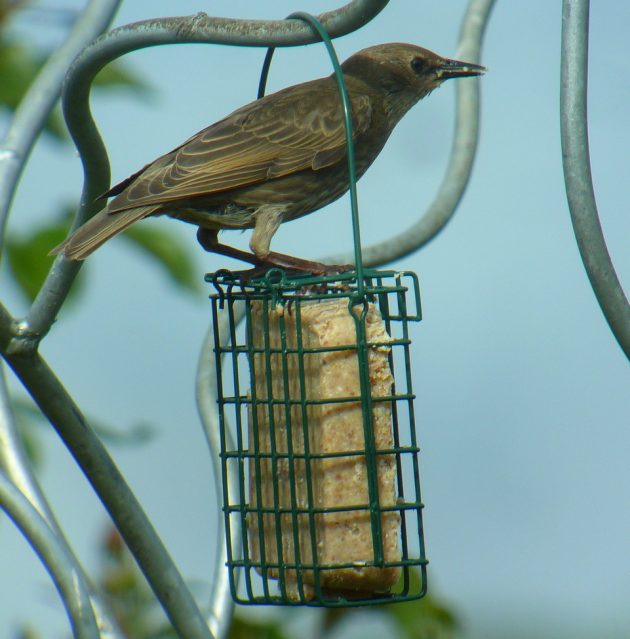
A juvenile raiding a fat cake in my garden
It’s generally thought that all the Starlings found today in the USA and Canada are descended from those New York birds. Their explosive spread was phenomenal, and today the American population numbers many millions of birds, while numerous attempts to control them have only ever met with limited success.
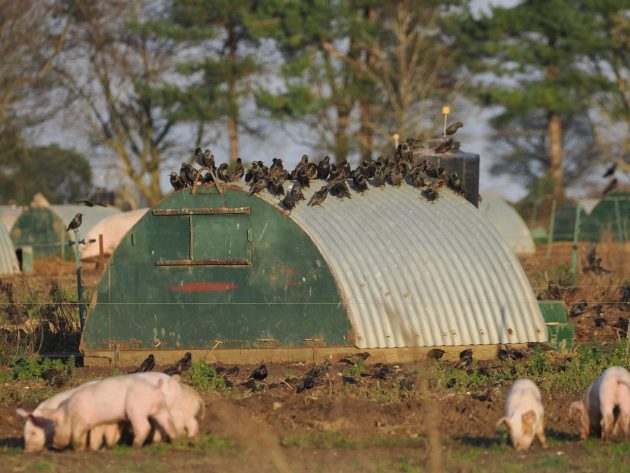
Outdoor piggeries provide good winter feeding grounds
In contrast, here in the UK Starling numbers have been falling for over 50 years, and the British Trust for Ornithology’s figures show a 57% decline between 1995 and 2023. They are now red-listed as a bird of UK conservation concern, despite the fact that the total breeding population is estimated at around 2 million pairs. In the winter we get a major influx of birds from the continent, so the number of birds in the country may more than double.
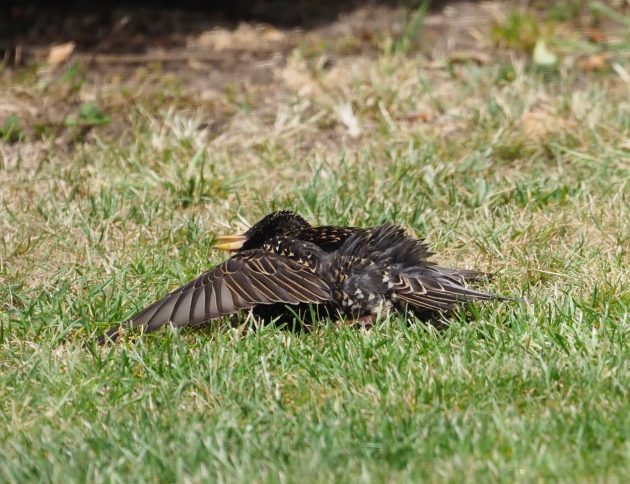
An adult enjoying the sun
Many people in Britain dislike them, in marked contrast to Sweden, where you will see Starling nest boxes in rural gardens. For the Swedes, Starlings are birds of summer: the population is migratory, and none remain in the winter. Their return in the spring is welcomed in just the same way as we delight in seeing the first Swallows.
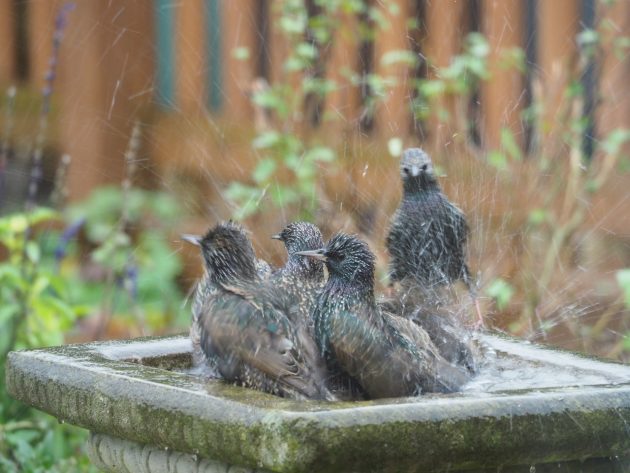
Bathtime
Starlings are the sort of bird that most of us take for granted, and never really look at closely. Did you know, for example, that they have two distinct plumages? In winter there are heavily spotted; they lose most of the spots in summer and their feathers are shot with a wonderful metallic green and violet sheen. Telling the sexes apart is tricky, but the female tends to be less glossy, and in winter appears rather more spotty.
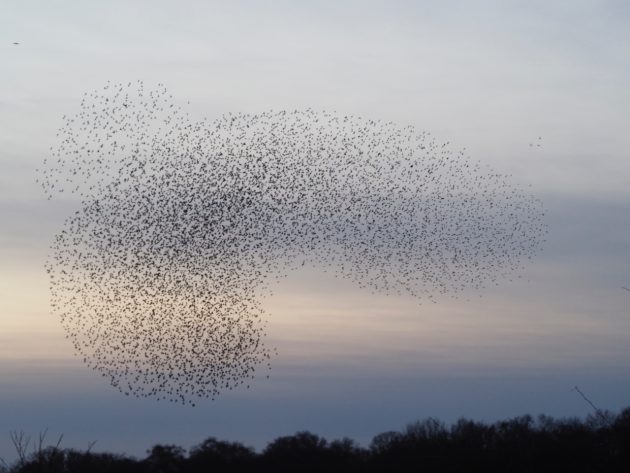
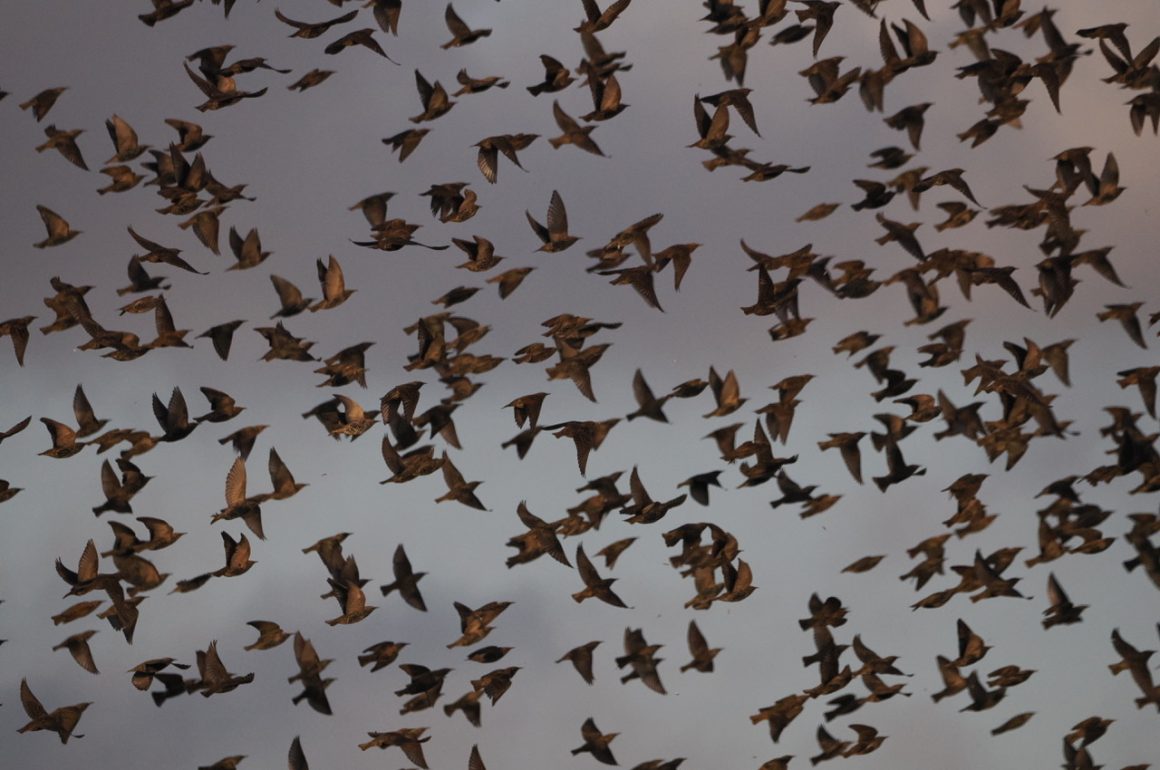
Winter murmurations provide entertaining viewing
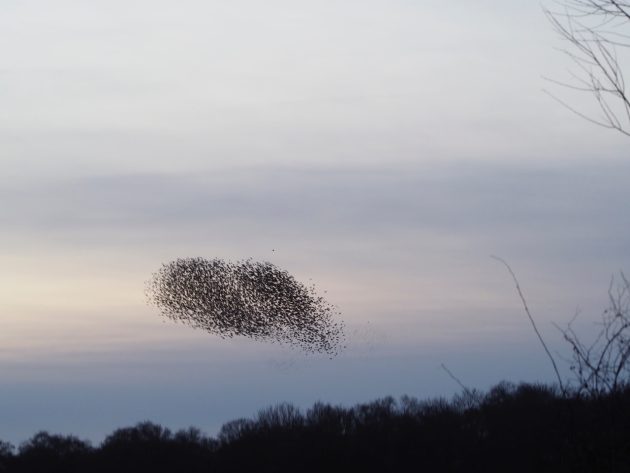
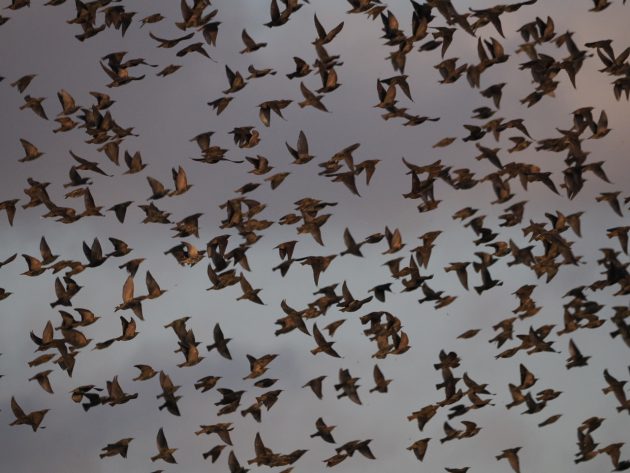
They are highly sociable, happiest when feeding in flocks, while their winter roosts are renowned for the number of individuals that gather together. Winter roosts may number anything from a few hundred to several million birds. I have a couple of roosts close to my home, but they are relatively small, seldom exceeding a few thousand birds. However, even small murmurations of a few hundred birds are entertaining to watch as they perform their aerial ballet before finally settling down to roost for the night.
Nobody is quite certain of the exact purpose of their aerial displays, but they are probably a protection against predators. However, such big flocks do attract raptors keen to catch a Starling for supper. Sparrowhawks are often seen at roosts, and on one occasion I watched a Peregrine make repeated attacks on a Starling murmuration. The falcon was unsuccessful, but it was exciting to watch as it stooped at the flocks.
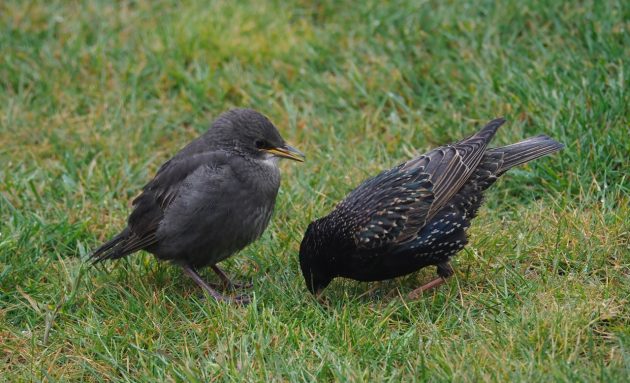
Juveniles depend on their parents for a few days after fledging
Starlings have a cunning breeding strategy which helps with the survival of their young. All the birds in a colony (or an area) will lay their first clutches synchronously, with the result that the great majority of chicks leave the nest within a day or two of each other. Suddenly there are flocks of noisy young birds everywhere. They do, of course, attract predators, but there are only so many that a Sparrowhawk can kill, and within a few days the young birds will be quite adept at avoiding capture.
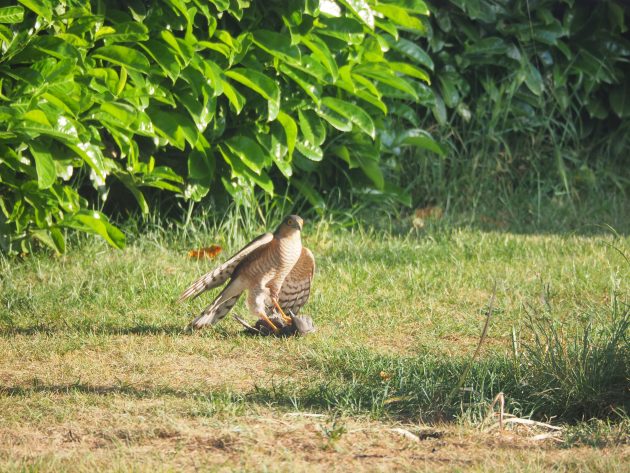
A Sparrowhawk mantling a juvenile Starling. The latter put up a strong fight and surprisingly managed to escape from the hawk’s talons
Most of our local Starling chicks fledge in the third week of May. In the days before the young leave the nest I have a constant stream of adults coming to the fat balls in my garden. They feed quickly, taking beak fulls of fat away to feed their hungry chicks. Starlings are quite omnivorous, but the chicks are fed almost exclusively on animal food, which is mainly insects and their larvae.
Only the male sings, but he delivers a song that is filled with a lively medley of warbles, chirrups, whistles and gurgles, plus a touch of mimicry thrown in for good measure. Few people rate the starling as a songster, but I think that he is one of the most entertaining of birds, and one I always enjoy listening to. Now is the peak season for starling song, but they can be heard all year, except after the breeding season when they moult.











Enjoyed this piece very much. My first encounter with a Starling was in Central Park, New York, quite fitting given that the species’ North American story began there after birds were released in the park in 1890. Since then I’ve seen and photographed them in several places around Europe as well. Whether admired or cursed, they certainly have personality!
Wonderful birds. Lovely post too.
Just yesterday, while enjoying tea in my garden, I admired the imitations of a starling. It was good practice for me. I recognized more birdsongs than the Merlin app. To me, starlings are superstars.