

Having spent the last week in the Land of Many Waters (some call it Guyana), I had the good fortune of spending some time with two very similar raptors. While similar to each other, these two kites are notably different from almost every other species of bird on the planet, and therefore are immediately distinguishable from other medium to large birds of prey they may share their habitats with.
Their difference arises from their extreme level of specialisation – both species feed almost exclusively on snails. Consequently, each is equipped with a sharply hooked bill capable of deftly extracting the soft parts of snails. Of the two, the Snail Kite is much more well known and documented, no doubt due in part to its wide range and preference for relatively accessible habitat. The first Snail Kite documented in North America was found near the head of the Miami River in 1844, which currently is downtown Miami. I’m not very familiar with the available habitat in downtown Miami, but I assume there isn’t much room for this languid raptor there at the moment.
Snail Kites are sexually dimorphic, males are overall slate grey while females are brownish overall. Both sexes have a broad white band at the base of a relatively long tail, however. Wings are long as well, despite being narrow near to the body they broaden considerably the further out they go. This awkward looking wing-shape serves it well, any observer of a Snail Kite would note its slow, deliberate flight over a body of shallow water. Many twists and turns occur as it traverses back and forth, often hovering briefly before dropping suddenly on an unwary snail. It must be said, however, that this is a bold assumption on my part, as I’m honestly not sure what a snail that is aware of rapidly approaching talons would have on its table of potential escape strategies.
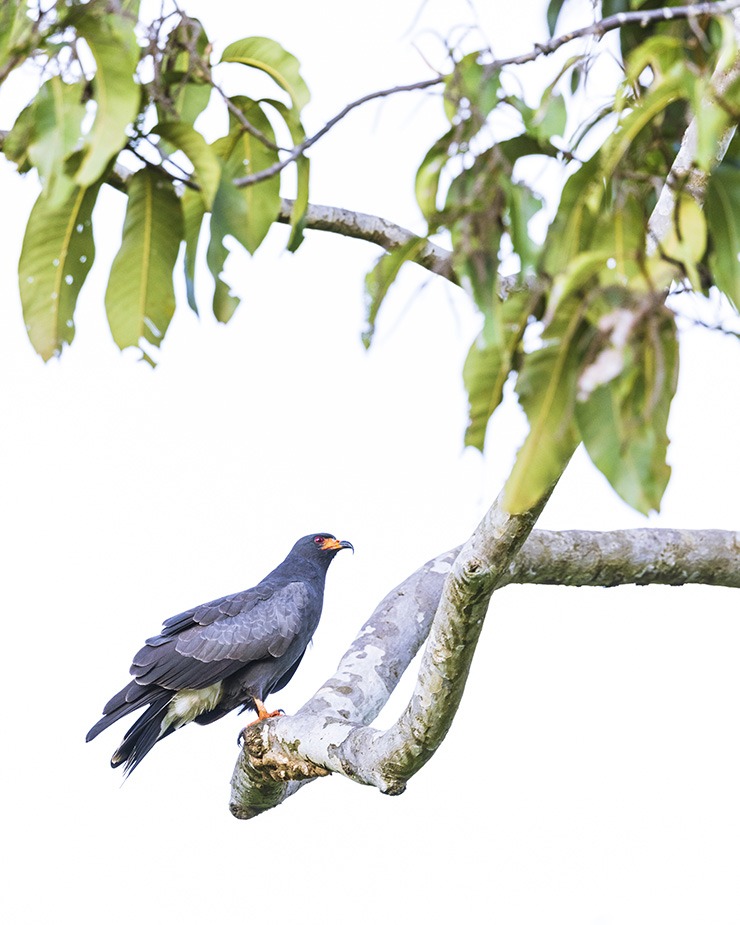
Snail Kite
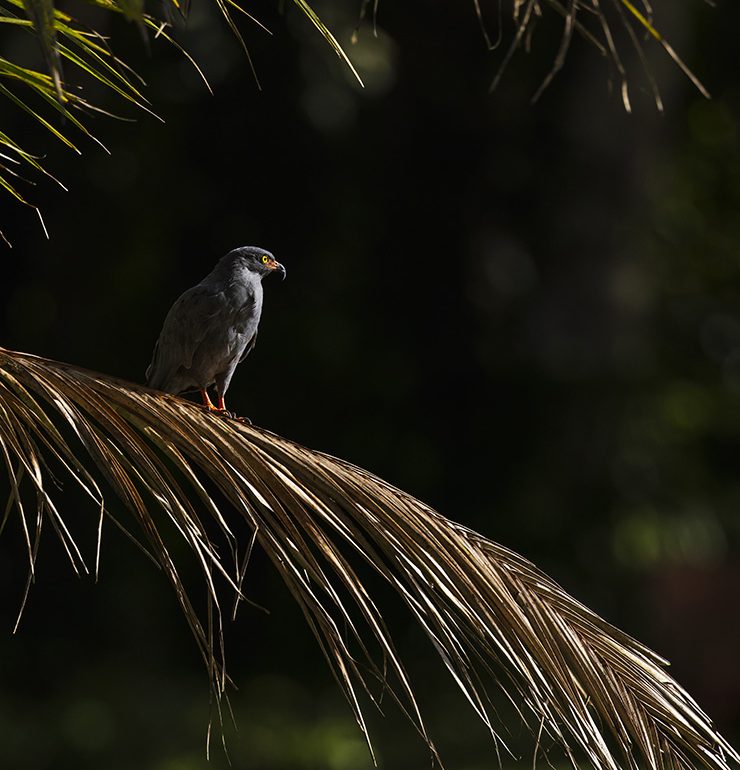
The very similar Slender-billed Kite is a much more reclusive character, possessing a preference for significantly denser forest cover from which it launches its assault on the local snail population. While the Snail Kite may sometimes drop on a snail from a perch, Slender-billed Kites are consummate perch-hunters. This habit of sitting motionless within dense vegetation has surely assisted in its non-detection, as it is the precise colour of a shadow. A long tail would be useless for this lifestyle, therefore these kites are particularly short-tailed, giving them a plump appearance. Plump in the flattering sense, of course.
Adult Slender-billed Kites also lack any white markings – juveniles may have a couple (or three) thin white bands on their tail, visible most often when the bird is in flight. At close range, their eyes give it away as well – bright, piercing yellow, as opposed to the blood-red eyes of the Snail Kite.
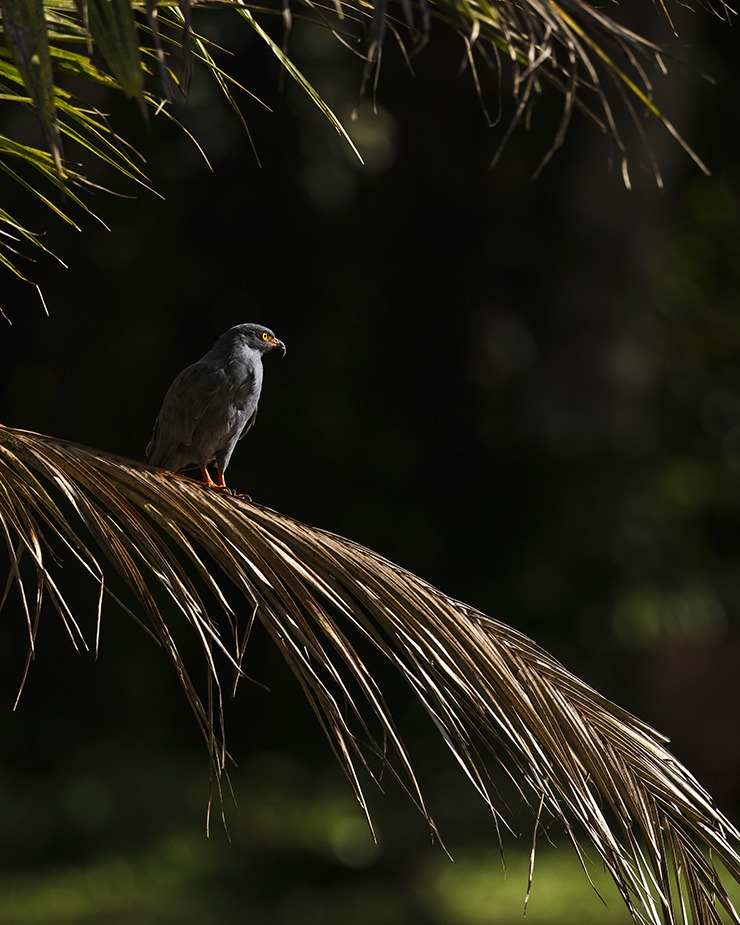
Slender-billed Kite
The Slender-billed Kite remains poorly known, with a patchy South American range mostly in flooded lowland forest. In fact, I had been birding for several years before I was remotely aware of the existence of this species. Personally, if I had to choose to spend a day with one of these two birds I’d probably swing the way of the Slender-billed Kite. Sure enough, Snail Kites are much more entertaining to look at, but it’s the unpredictability of it all that clinches it for me. You never know when you’ll come upon a Slender-billed Kite, and you never know when it’s going to do something interesting. Even though when that time comes, it typically then flies off to another undisclosed location that requires a brand new search.













Leave a Comment