

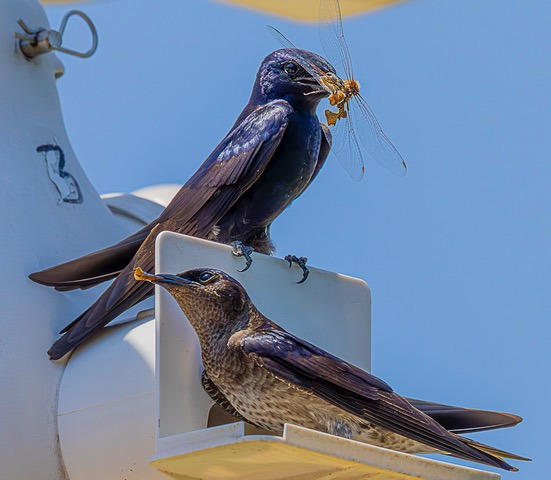
Last year, I became a Purple Martin Landlord. I don’t have a particular preference for Purple Martins over any other bird species, but becoming a landlord seemed like a way to connect with birds more intimately. Purple Martins are the largest swallow in North America. East of the Rocky Mountains, they nest primarily in manmade structures. Indigenous Americans would hang up hollowed-out gourds to serve as cavity nests. These days, most manmade colonies are racks of 6 to 24 plastic gourds hanging 10-15 feet above the ground on a metal pole.
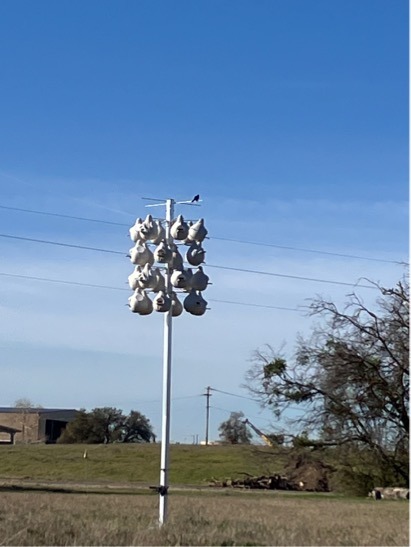
The idea for a colony came to me while birding, as most good ideas do. I saw several Martins diving and swooping over a field between the San Gabriel River and the local waste management site. A perfect place for a rack of gourds; plenty of water and plenty of insects for food. I had to get permission from the city to erect the colony, then enlisted help and financial assistance from the local Audubon group. Some mountain bikers I’d met while birding helped build a trail to the rack and dug the hole for the post. It was a real group effort. We went big with a 24-gourd rack.
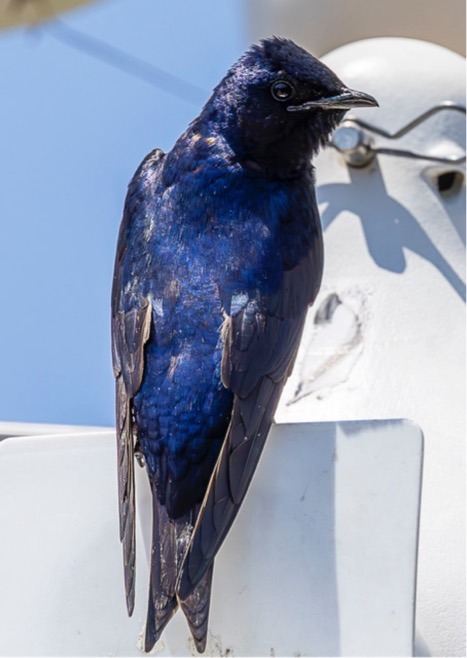
There was great optimism, and we were not disappointed. We noticed Purple Martin activity in mid-February. These swallows winter in South America, then, in late January or early February, the older Martins, called scouts, will fly north. They usually return to areas where they’ve nested before. I guess they liked the look of our rack because two pairs eventually made a home there.
Unfortunately, so did a handful of European Starlings. These birds are aggressive and will take over cavity nests if they can. As we moved into spring, I did weekly nest checks and removed several Starling nests from the gourds. Some had pale blue Starling eggs hidden under the nest material. Then the winch broke, and the nest checks came to a halt. I watched with mounting frustration as the Starlings moved in with a vengeance, but our Purple Martins hung on. Each pair had at least 2 fledglings by late spring. Our troubles were not over, however. In July, there was a massive flood, and the San Gabriel River overflowed its banks. We couldn’t get to the rack for weeks due to the destruction and debris. By fall, the cleanup crew was done, and we were able to inspect the rack. The post was solid, and the rack survived with all the gourds intact. Most were filled with the remains of Starling nests, a few with Purple Martin nests, and several had become infested with Red Paper Wasps. I had unwittingly become a Purple Martin Slumlord.
When January came around, we repaired the winch, cleaned out the gourds, and filled them with pine needles in hopes the Martins would return and bring some friends. We also retrofitted excluder entrances to all the gourds. These entrances were designed to let the Martins in but keep the Starlings out. Hope springs eternal. Even so, this whole Purple Martin thing didn’t turn out to be the bucolic experience I had imagined. The flood and pests were almost biblical challenges. And the broken winch inspired a torrent of obscenities and some rather childish behavior from yours truly (I’m embarrassed to say). But, in spite of everything, we managed to prepare a place for these immigrants from the south, and now we’re waiting to welcome them home.
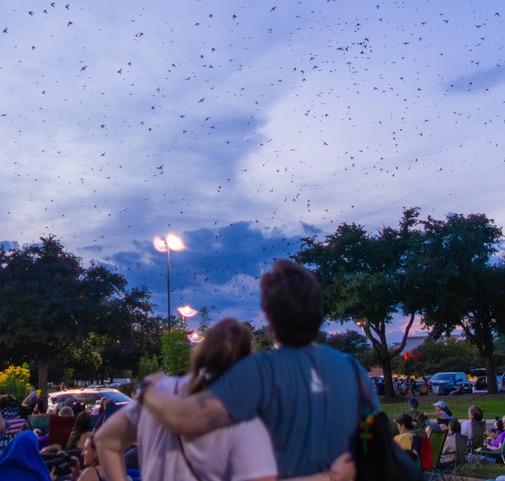
Photos by Susanne Harm, bisonwerksd619.myportfolio.com










I love Purple Martins and the San Gabriel river, though I know it way downstream from where you are. An interesting thing about these birds is that the older males come back first and monopolize as many nest gourds as possible, keeping other older males out. Then when the younger males arrive later, they let them nest in neighboring gourds. This is because older males are good at getting the females paired with the younger males to mate with them. Females prefer older males but only if they are unpaired for their social partner. Charles Brown studied these birds and I wrote about them in Social Lives of Birds, published by Tarcher at Penguin Random House in 2025. Oh, and those red wasps, Polistes carolina, are another favorite of mine and you can watch their nest behavior on my YouTube channel if you search for Polistes carolina strassm YouTube. Hope this helps!
Alas, no Purple Martins this side of the Atlantic. We do have House Martins that nest in colonies, and they will readily use nest boxes, but they nest under eaves of buildings. (I’m mystified by the term wench – what is a wench? Here in the UK we have serving wenches [girls], but they don’t tend to break.)
Yikes. Winch, not wench. I probably need to get an editor. Spellcheck is no help with homophones.