

Growing up in southern Trinidad, I did not need a field guide to know that a toucan was something special. I knew nothing then about taxonomy, genera, species limits, or the quiet arguments bird people have over names. I simply knew that somewhere above me, in the trees, there was a large bird with a ridiculous bill and a voice that sounded slightly prehistoric to my ear.
That bird was the Channel-billed Toucan, Ramphastos vitellinus.
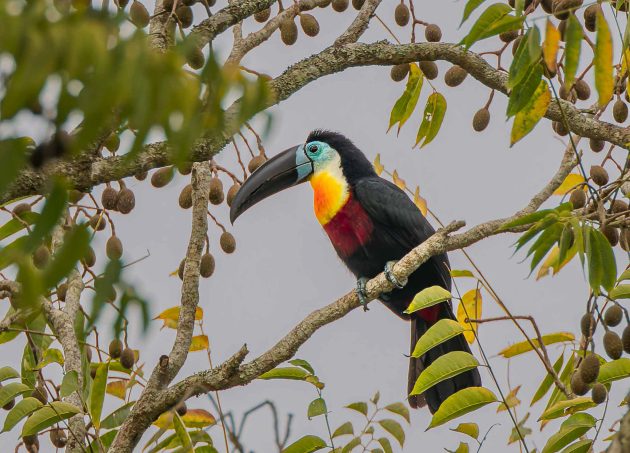
Trinidad is, as far as I understand it, the only Caribbean island with a native toucan population. Sitting so close to South America, it has borrowed more than a little of the continent’s wildness, and the toucan is one of the best examples of that.
Of course, at that age I was not “birding.” I was just seeing birds. There is a difference. Birding came later, much later. But those early toucans probably planted something in me. You do not see a bird with that oversized bill and all those colours, looking as though it had been designed during a Trinidad Carnival committee meeting, and then simply forget about it.
Toucans are birds of the Americas, found naturally from Mexico through Central America and into South America. They are not African hornbills, although people often compare the two. Hornbills got Africa and Asia. Toucans got the New World, and, if I may say so, they got the better wardrobe. You are free to disagree with me, although I may need a little time to recover.
The toucan family, Ramphastidae, is usually arranged into five main groups: the large typical toucans, the mountain toucans, the aracaris, the green toucanets, and the dichromatic toucanets. The exact number of species depends on which checklist you follow, because taxonomy seems designed to keep birders humble. What surprised me is that I have now seen at least one member from four of those five groups.
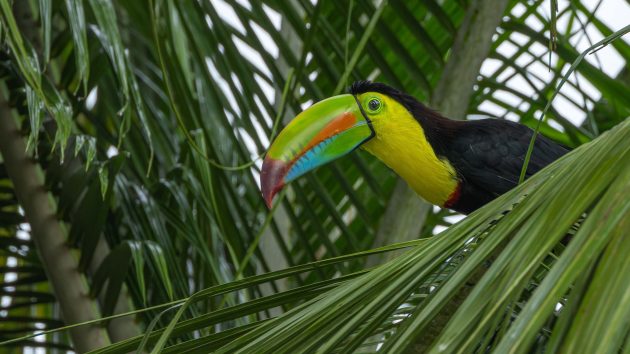
The large toucans came first for me, beginning with the Channel-billed Toucan in Trinidad. Later came the Keel-billed Toucan in Panama, one of those birds so brightly coloured it looks as if someone painted the bill first and then remembered there was supposed to be a bird attached.
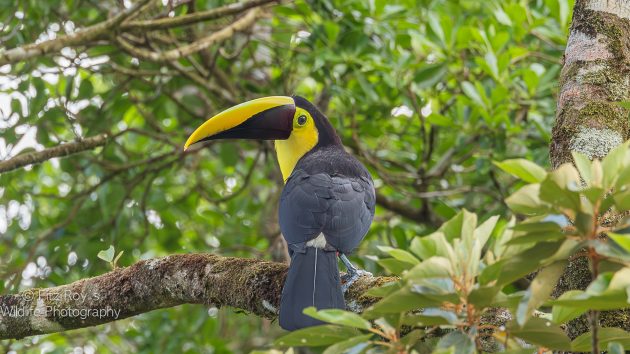
There were also the Yellow-throated and Chestnut-mandibled Toucans, which led me into one of those small birding rabbit holes where you begin by checking a name and end up questioning your entire understanding of toucans.
I had to do a bit of research on this, mainly to make sure I was not inventing differences where none existed. The Yellow-throated Toucan and the Chestnut-mandibled Toucan are very closely related, and in some references the Chestnut-mandibled is treated as a subspecies of the Yellow-throated Toucan. They can look very similar, but the Chestnut-mandibled usually shows a deep reddish-chestnut to maroon lower mandible, while the Yellow-throated tends to have a darker, more solid-looking bill. The skin around the eye can also differ slightly.
I am still learning these details, but with toucans, the small things really do matter.
Then came the aracaris. In Panama I have seen Collared Aracaris and Fiery-billed Aracaris, both smaller and more acrobatic than the big toucans, and both with that slightly mischievous look that suggests they know exactly where the best fruiting tree is and have no intention of telling you.
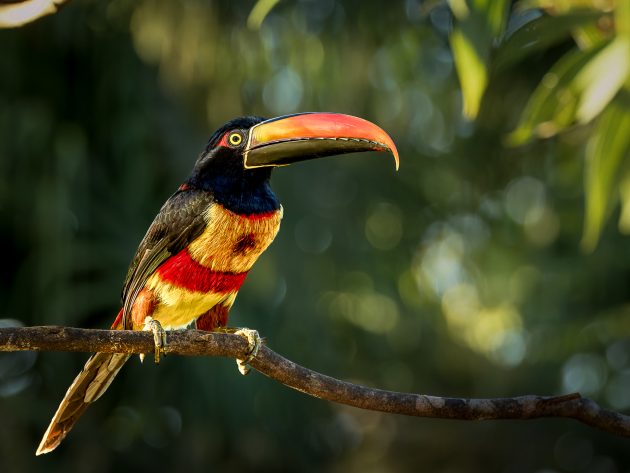
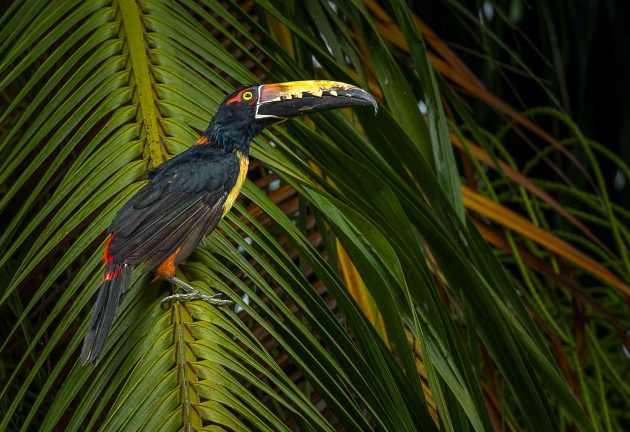
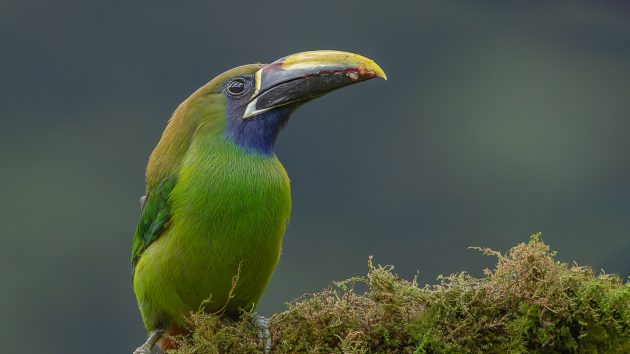
Costa Rica gave me the Emerald Toucanet, a green jewel of a bird and a reminder that not every toucan needs to be large to make an impression. Some birds arrive like a brass band. Others simply appear in the leaves and make you lower your voice.
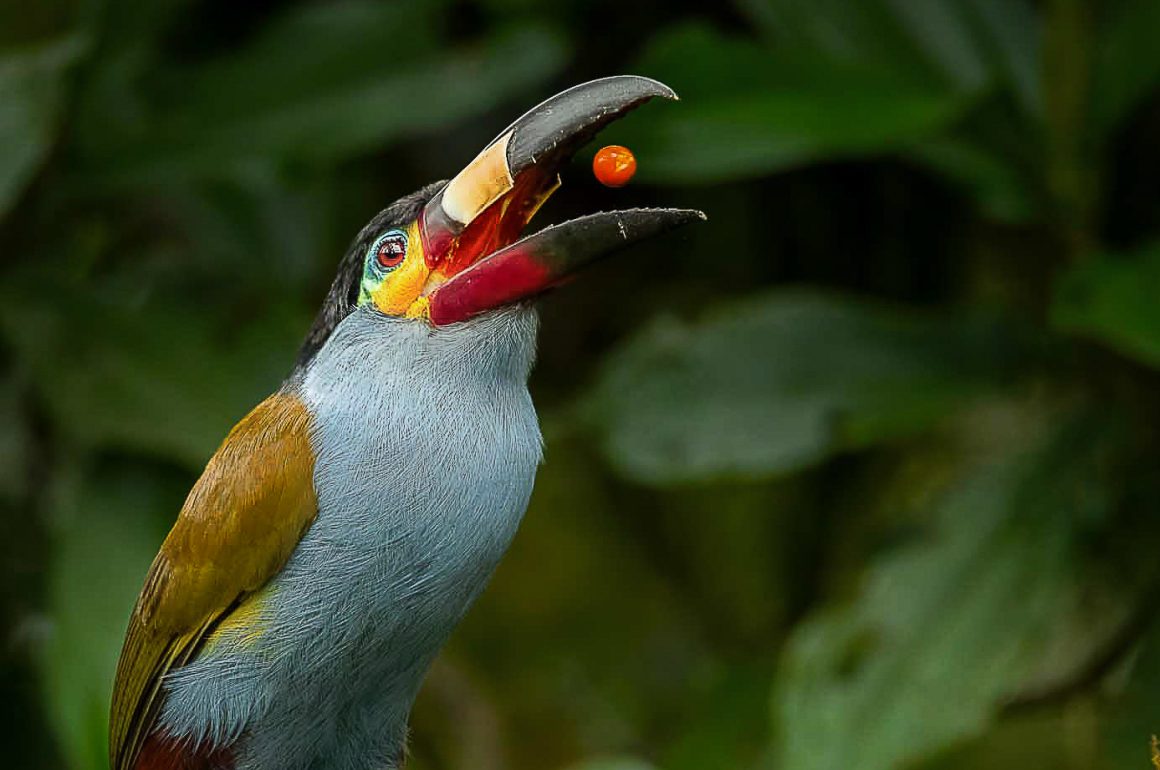
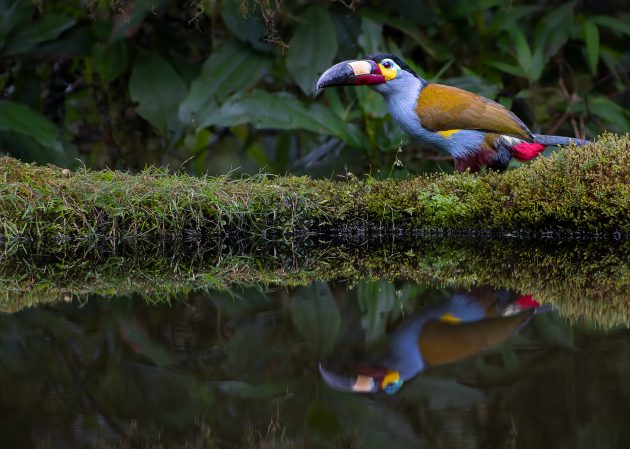
Ecuador added one of my favourite toucan encounters so far, the Plate-billed Mountain Toucan. Mountain toucans feel different. They belong to cloud forest, mist, moss, and steep roads that make you question both your knees and your life choices. The Plate-billed Mountain Toucan, with that strange rectangular patch on the bill, looks almost unreal, as though the Andes decided regular toucans were not dramatic enough.
In Ecuador, I also added the Chocó Toucan, photographed around the Milpe area, another big-billed forest character with a voice that carries through the trees.
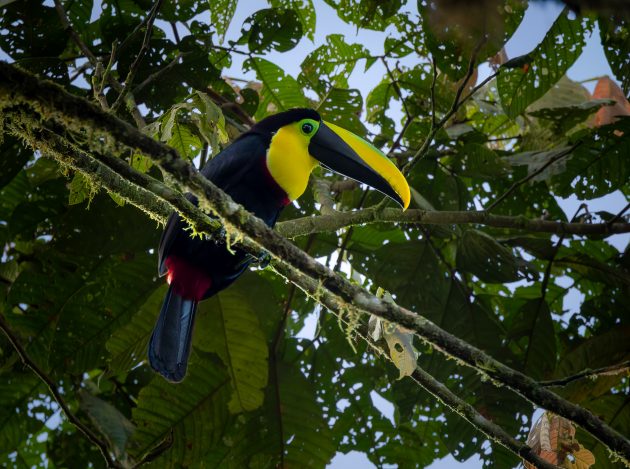
That leaves one group still missing from my personal toucan list, the dichromatic toucanets of the genus Selenidera. I have not seen one yet, and I rather like that. It leaves one more reason to keep looking.
Toucans seem to have turned up at different stages of my birding life, from southern Trinidad to Panama, Costa Rica, and Ecuador, and I suspect they will keep appearing as I make my way through more of the Americas. For birds with such oversized bills, they still have a way of leaving just enough unfinished.










Great birds, and I agree with Fitzroy, generally more handsome than most of the hornbills, though some of the hornbills of south-east Asia are truly spectacular.
Nice article and Great birds. I confess that my first toucan identification relied heavily on a vocalization, specifically ‘follow your nose’.