

On our recent trip to the Gaspé Peninsula and Percé in Quebec, it took two attempts to see the breeding seabirds of Bonaventure Island. Our first boat excursion was cancelled due to fog, rain, and wind gusts up to 48 km/hr. Our guide didn’t want us to miss this pelagic tour and got us on an early morning trip the next day. It was grey and misty, but there was no rain and the winds were calmer, but it was cold to be out there at 10°C and the water was still rough.
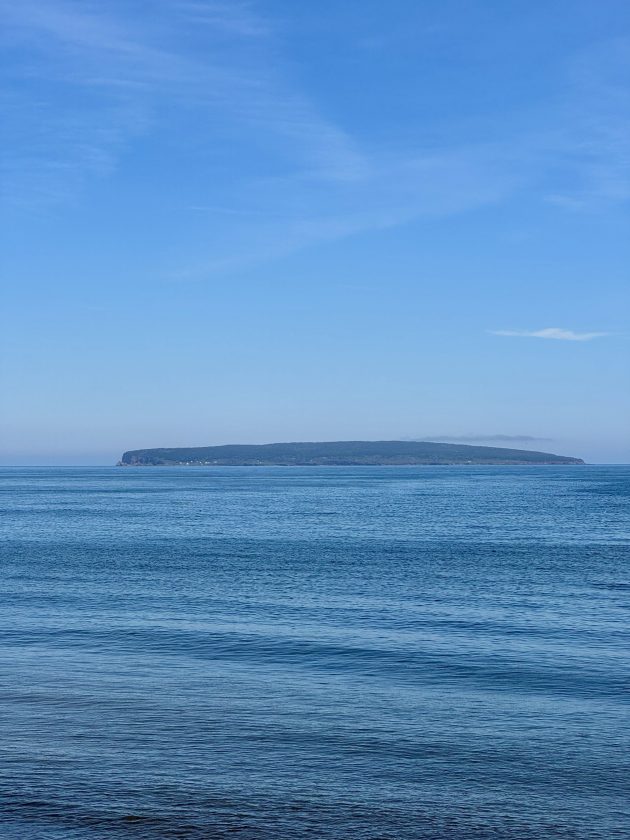
Bonaventure Island on the day we travelled there
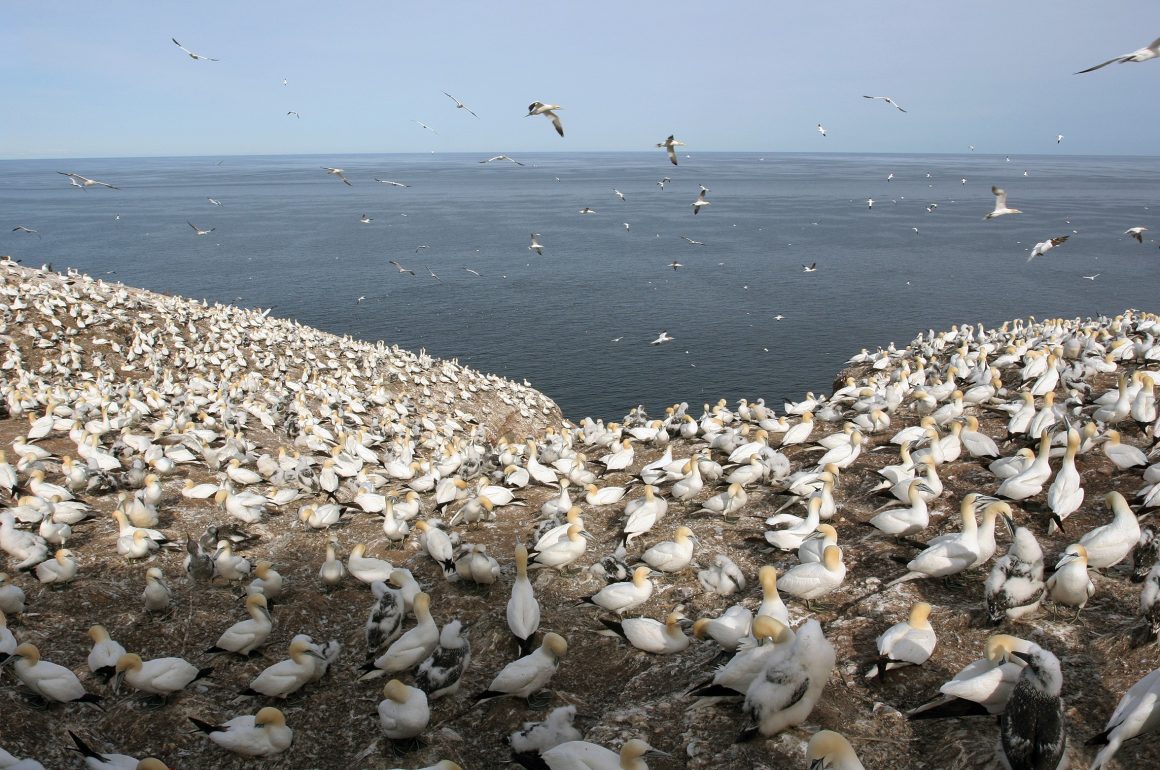
In this blog, I will talk about the stars of Bonaventure Island: the Northern Gannets. These large seabirds return around the beginning of April for the breeding season, which runs until the end of September. Bonaventure Island has the second largest gannet colony in the world and the most accessible in North America. Between 45,000 and 50,000 pairs nest there seasonally. Even though we could ride out to the island, the water was too rough for us to land there. This was disappointing for us, as we couldn’t hike the trails to the gannet plateau, where you can stand close to the nesting pairs.
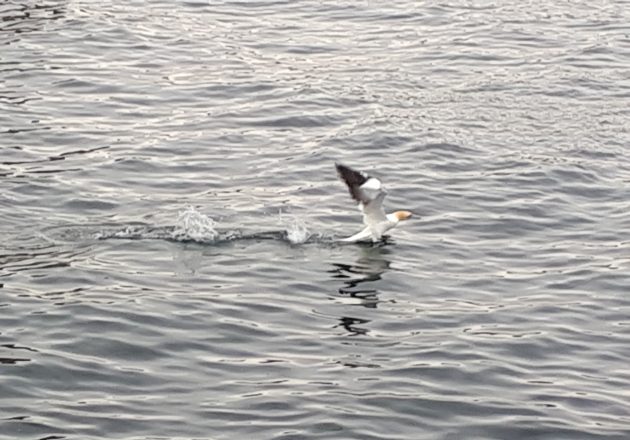
Northern Gannet taking off
The birds come to the area for the bounty of fish, which they use to feed their young. The birds are monogamous and use lifelong nesting spots. A pair has only one egg and they share incubation for about six weeks. The chicks hatch in June. They grow quickly over the summer on the meals regurgitated from their parents’ stomachs.
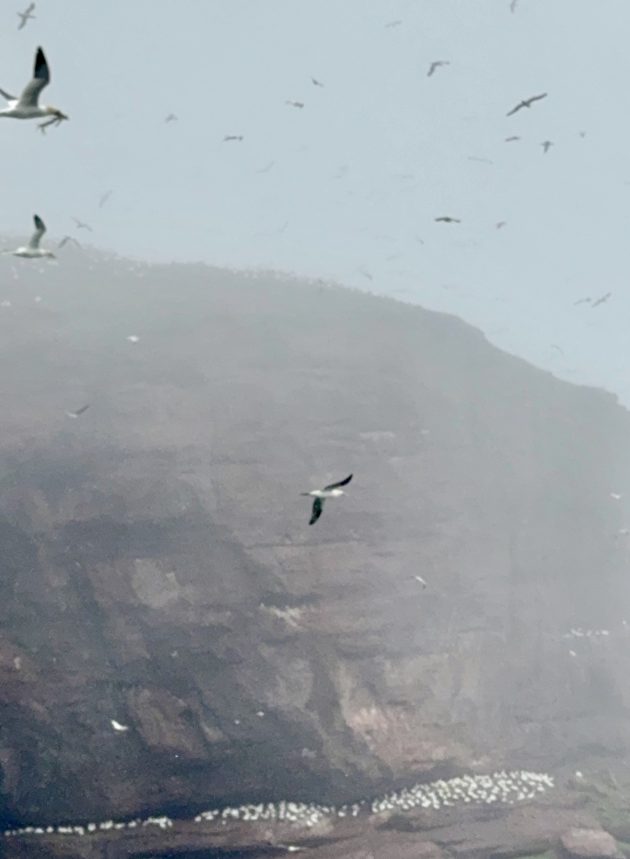
Northern Gannets carrying seaweed for nests
It is fascinating to watch the adults plunge into the water as they hunt. They spot prey from up to 30 metres above the water. They have air sacs located in their face and chest, which inflate and cushion their body as it strikes the water. The muscles in their neck contract to lock their spine into place, to prevent whiplash and neck fractures. The impact of the dive can take them 20 to 30 metres deep. They use their wings and webbed feet to swim and chase fish. They then bob back up to the surface.
We did our own bobbing and bouncing on the water. But, it was worth it to see these birds up close.
Note: Header photo is by Marc-Lautenbacher from Wikipedia Commons, an online source of copyright-free photos: Gannet taking off by Leslie Kinrys; remaining pictures by a friend.






Gannets are spectacular birds to see, especially on their breeding colonies. We are lucky here in England in that we have a thriving mainland colony on Bempton Cliffs in Yorkshire, so no boat trips are needed in order to see them at close range. Bonaventure Island does, however, sound an exciting place to visit.
There’s few things more awe-inspiring than being in the middle of an aerial bombardment by gannets. It has happened to me several times with different species and I am always very happy not to be a sardine or anchovy.
What a wonderful blog, Leslie! ? Reading it brought back so many great memories of our Gaspé adventure together. Your photos of the gannets are absolutely stunning, and you captured the beauty and excitement of Bonaventure Island so well. Thank you for sharing your talent and helping us relive such a special experience. I hope our paths cross again on another adventure soon! ??