

By Peter Hinow
Originally from Dresden, Germany, Peter Hinow is a mathematics professor at the University of Wisconsin in Milwaukee, Wisconsin, USA. One day, when left unsupervised at home, he toyed around with a 300 mm lens that his better half had bought as part of a camera package, and which had sat several years in its original box unused. It turns out, they can make distant objects appear closer!
You have earned your “serious birder” badge if you have been to the Hurghada Sewage Works! Yes, where tourists from all over the world come to enjoy the pristine beaches of the Red Sea, the amazing coral reefs underneath, and the culture and cuisine of Egypt, you must visit where all the piss and poo go! Large cities in deserts often have stunning eBird hotspots nearby, because the precious fresh water needs to be reclaimed as much as possible (another fine example is the Henderson Bird Viewing Preserve near Las Vegas in Nevada).
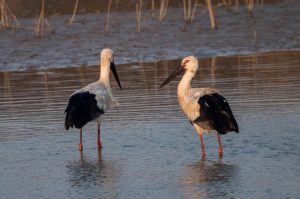
White Stork (Ciconia Ciconia). My first picture of a perched animal.
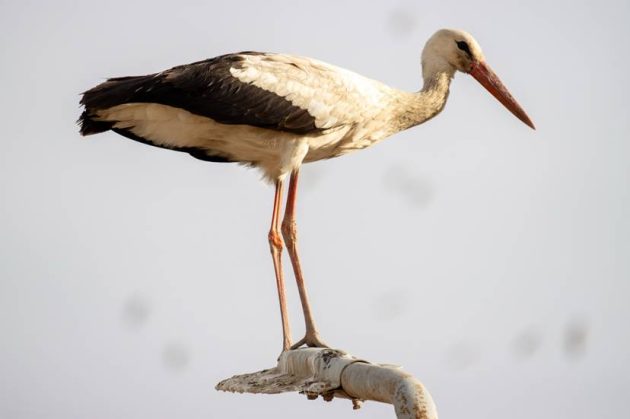
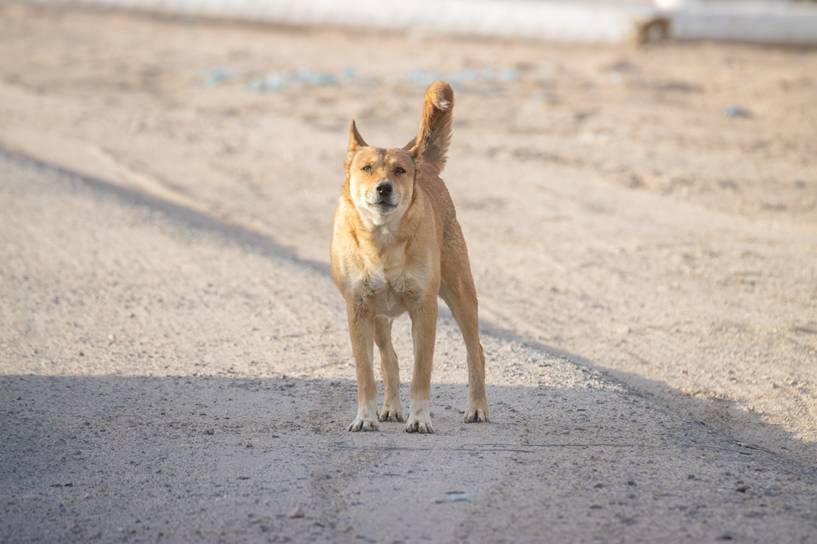
I had to go there twice because on the first attempt, I took a wrong turn (left instead of right) when facing the wall that fences off the actual sewage works. This led me to a narrow and dusty alley between the sewage works and a giant garbage dump (yes, the full package!). Between fast-moving tanker trucks and viciously barking dogs, I still managed to see lots of White Storks (Ciconia Ciconia), White-eyed Gulls (a Red Sea specialty, Ichthyaetus leucophthalmus), and Western Cattle Egrets (Ardea ibis), among others. The dogs are scary, but they don’t come closer if you keep your distance. My estimate of the safety zone is 15 meters, but as a lawyer would say in German, “Diese Angaben sind ohne Gewähr.” (no guarantee is given).
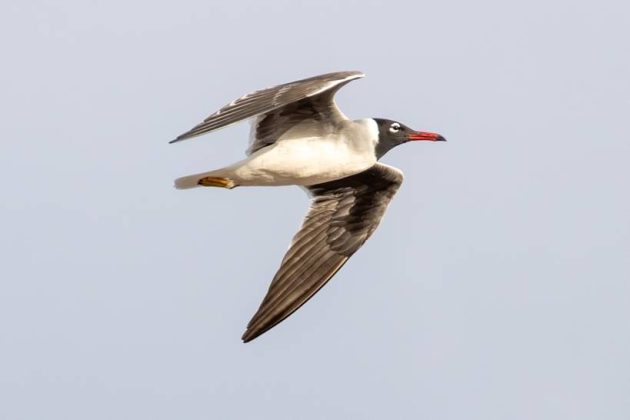
The very aptly named White-eyed Gull (Ichthyaetus leucophthalmus). A strictly coastal species confined to the Red Sea and the Gulf of Aden.
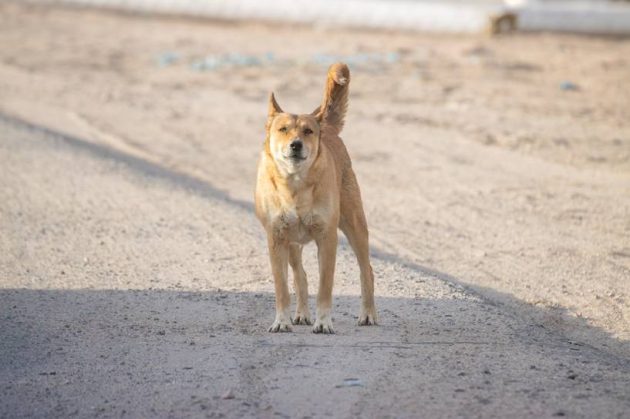
“Stay where you are!” says the Dog (Canis familiaris).
On a day that the Red Sea was closed and we could not go snorkeling, we took a trip to a Bedouin village some 20 kilometers to the west of Hurghada in the mountainous desert that separates the Red Sea from the Nile valley. Deserts are not among the most bird-rich environments, but they hold the potential for reclusive specialties that would be hard to find elsewhere. Here we came across a few mighty Steppe Eagles (Aquila nipalensis) migrating between their winter quarters in central and southern Africa and their breeding grounds in central and east Asia. Unfortunately, the species is now classified as “endangered” by the IUCN due to the increasing number of steppe fires and livestock trampling over their nests. It is the national bird of both Kazakhstan and Egypt.
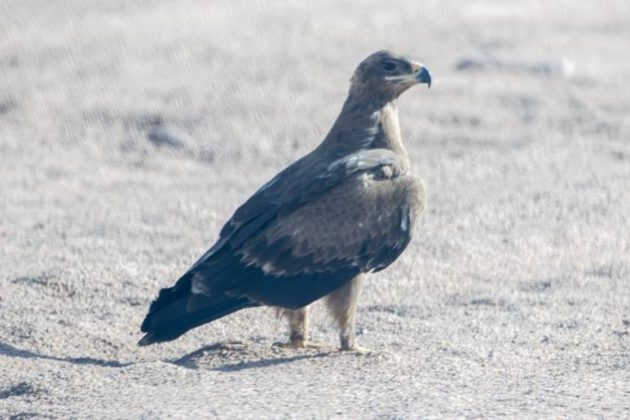
Steppe Eagle (Aquila nipalensis)
In the Bedouin village, I took pictures of a bird that I don’t often spend my photographic efforts on, a Rock Pigeon (Columba livia). Feral descendants of domesticated birds are seen in cities and agricultural areas all over the world, but there is also the fascinating “wild type”: uniformly gray, with two black wing bars and greenish to purple iridescent feathers around the neck. Wild birds nest in rocks and cliffs. To make matters more complicated, there are also “wild-type looking” feral birds, and the village had a dovecote from which obvious domestic pigeons flew in and out.
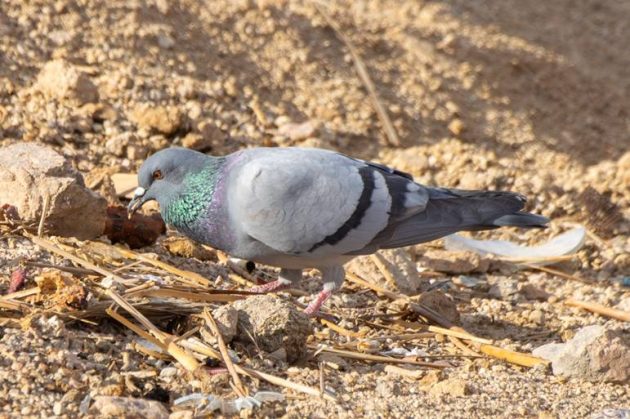
A possibly wild Rock Pigeon (Columba livia). Note the iridescent feathers surrounding the neck.
Back to the Hurghada Sewage Works, on my second trip, I took the right turn (namely to the right) and was richly rewarded. A surprisingly tame Eurasian Kestrel (Falco tinnunculus) let me approach to almost arm’s length. A Spur-winged Lapwing (Vanellus spinosus) made a lot of noise so that I would not miss it. The rocky desert is also an ideal habitat for wheatears, and so I had three of them: the Northern Wheatear (Oenanthe oenanthe), the Eastern Black-eared Wheatear (Oenanthe melanoleuca), and the Isabelline Wheatear (Oenanthe isabellina).
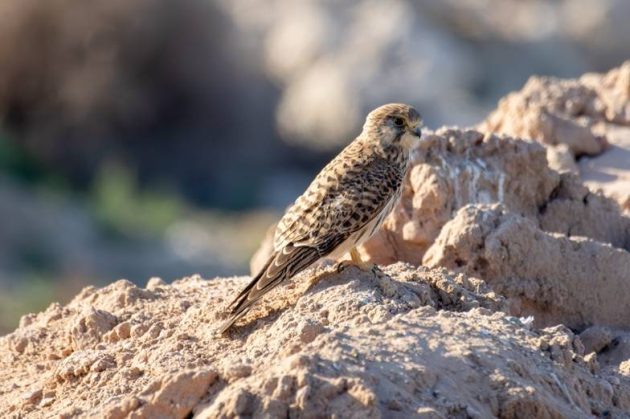
Eurasian Kestrel (Falco tinnunculus). One sees falcons all over Egypt as various incarnations of the god Horus, although that one is more likely modeled after the Lanner Falcon or the Peregrine Falcon.
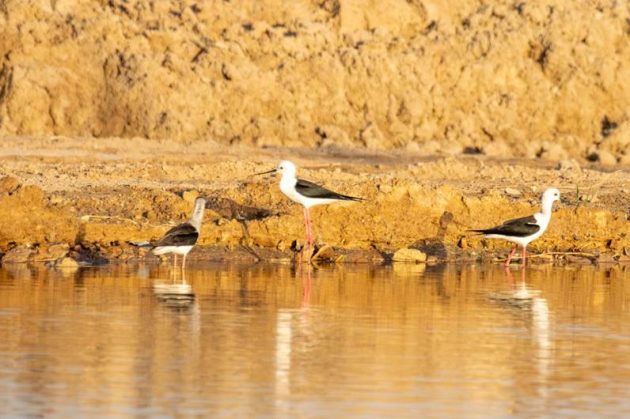
A flock of cute Black-winged Stilts (Himantopus himantopus) enjoying the presence of some water in the desert.
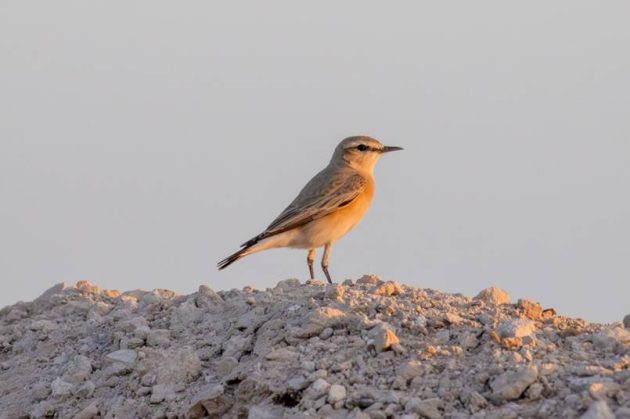
An Isabelline Wheatear (Oenanthe isabellina) is soaking up the last rays of the setting sun.
As practical advice, this is a place for either an early morning or late afternoon visit. A taxi cost me USD 30, dropping me off from the hotel zone and picking me up two hours later. Make sure to bring sunscreen and pay attention when crossing the Hurghada-Al Ismailia highway. Good birding!



Leave a Comment