

If I were an 18th century ornithologist with naming rights to some newly discovered species, the world would now have Mini’s Nuthatch and Xiaomao’s Bunting. For reasons not quite clear to me, the people who did indeed have these naming rights then squandered them, not immortalizing their favorite cats but instead just their (possibly quite boring) spouse.
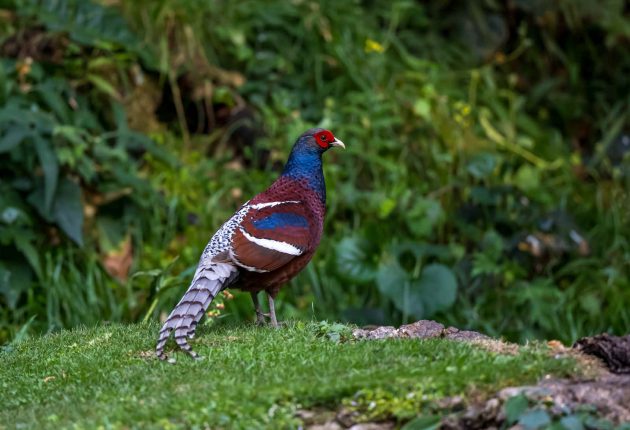
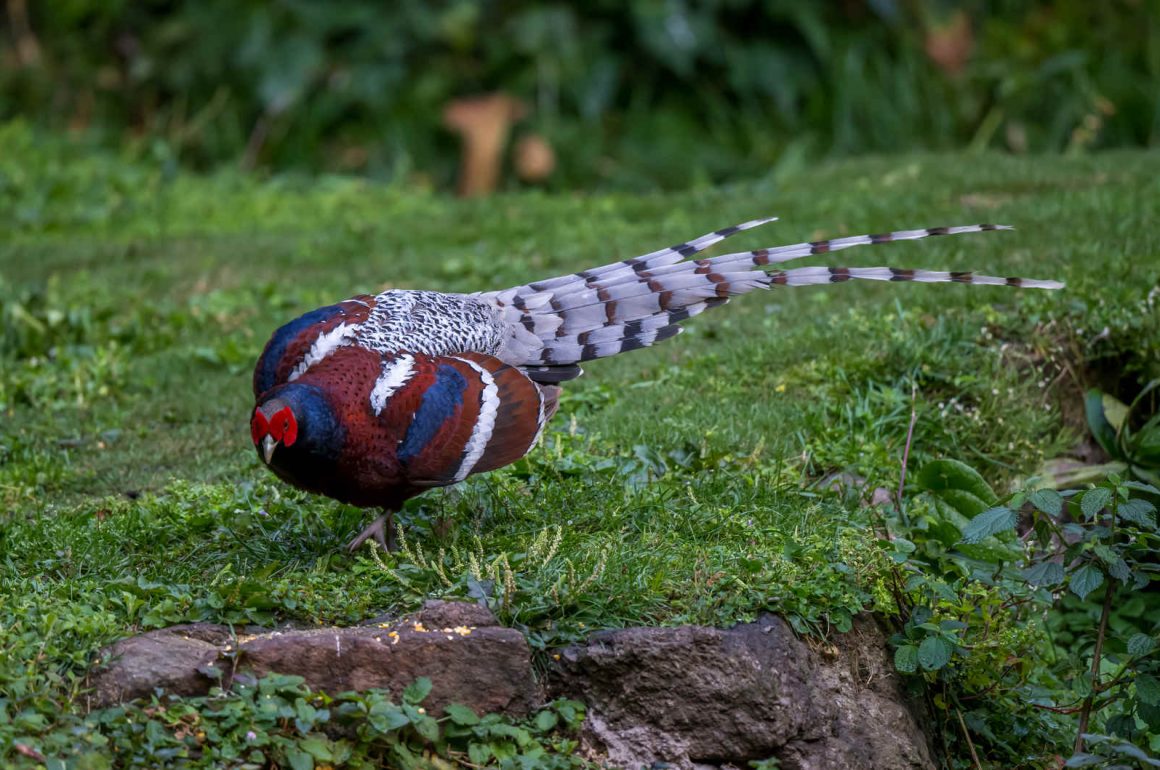
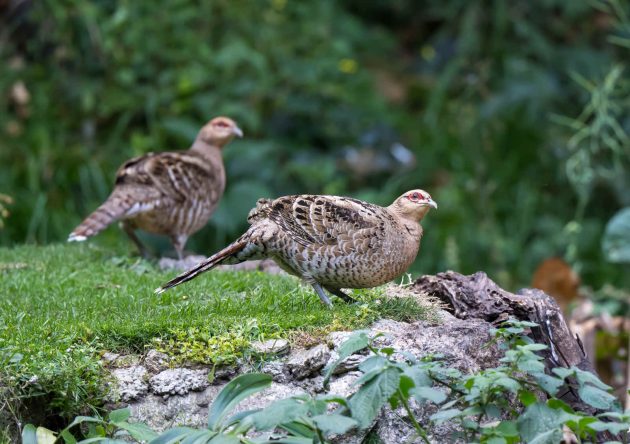
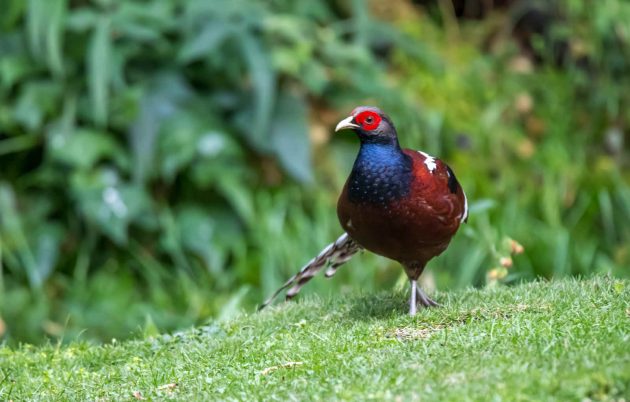
This is why we now have Mrs. Hume’s Pheasant. The cynic in me thinks that the English ornithologist Allan O. Hume must at some point have cheated on his wife, Mary Anne Hume née Grindall (1824-1890), and if his salary was meagre, he may not have had the means to splurge on jewelry and instead opted for giving her a bird name as an apology. Men can be such cheapskates.
Mr. Allan Octavian (!) Hume seems to have been an important person, even though my judgment is solely based on the considerable length of his Wikipedia entry. But not without his critics: “A notable ornithologist, Hume has been called ‘the Father of Indian Ornithology’ and, by those who found him dogmatic, ‘the Pope of Indian Ornithology'” (Wikipedia again).
Actually, except for his philandering (which I just made up), he probably was a good guy, at least outside of the perspective of British imperialists: “He was a proponent of Indian self-rule and strongly supported the idea of Indian independence. He supported the idea of self-governance by Indians.” (no points for guessing that this is from Wikipedia again).
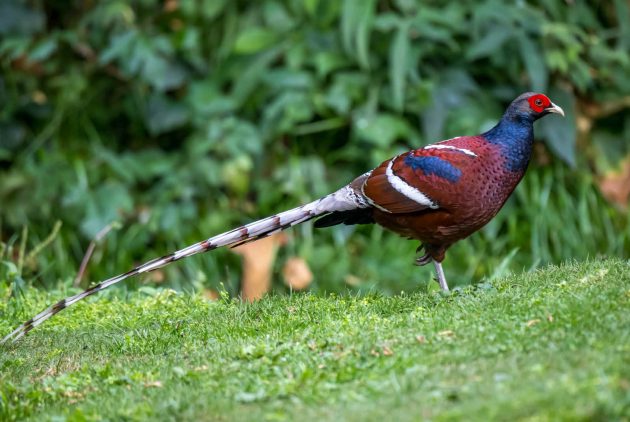
And you can tell from my rambling about the species name that I have neither too much interesting to say about the bird species, nor am I very interested in doing so, stubbornly clinging to my conviction that pheasants are basically overrated. Sorry, Mrs. Hume. Should have insisted on the jewelry.
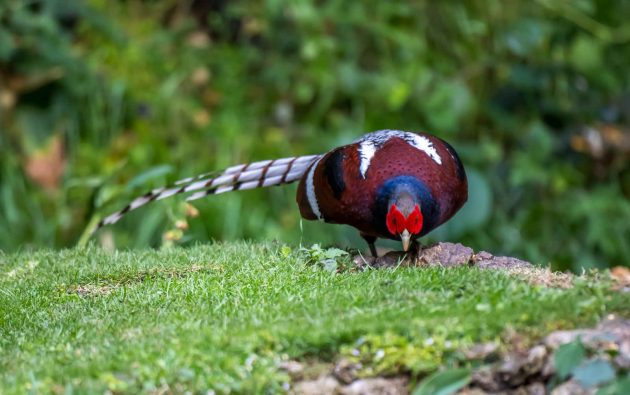
But that is just the last name of Syrmaticus humiae. The first name, Syrmaticus, apparently is derived from the Greek surmatos, “robe with a long train”, which is also reflected in the rather depressing-sounding German name “Schleppfasan”.
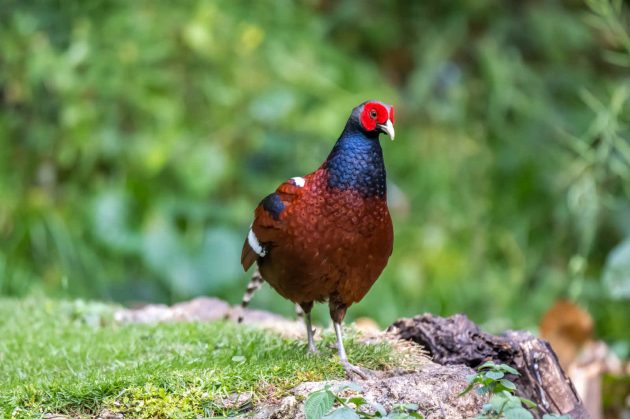
Carrying such a long robe around is tough – the pheasant is listed as Vulnerable, says the HBW (though about two sentences later, it says the following: “Not globally threatened. Currently considered Near Threatened, but was formerly regarded as Vulnerable.” Wish it would make up its mind).
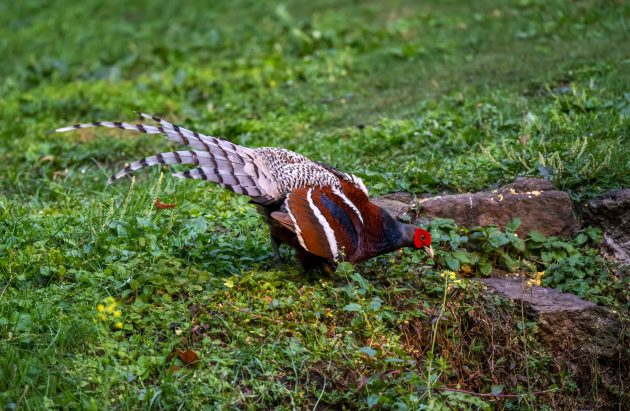
As a management consultant to the chemical industry, I used to do a lot of customer interviews. “Why do you use this supplier?” “What are your selection criteria?” Apparently, some scientists used the same kind of research (though presumably without a printed questionnaire and without the business class flights in between) to identify the roosting site preferences of the pheasant.
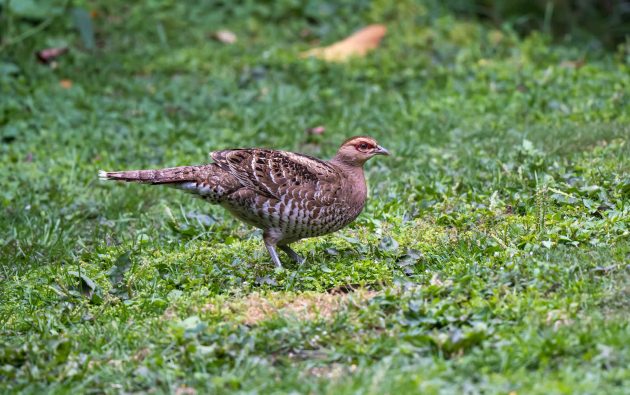
And the result? “Safety, comfort, and foraging convenience are the three key considerations for the pheasant’s roost-site selection.” Not so different from my selection criteria for airport lounges when I still had expense accounts.
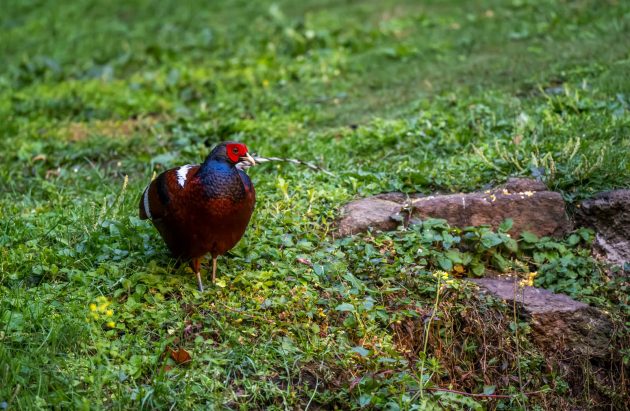
And what about habitat? One study, rather disappointingly, finds that “the key factors of habitat selection differed with seasons,” which, according to the authors of the paper, means the same as the (to me completely unintelligible) sentence “The results of principal component analysis of the factors in used plots revealed that the factors with large loads in principal components differed in different seasons”.
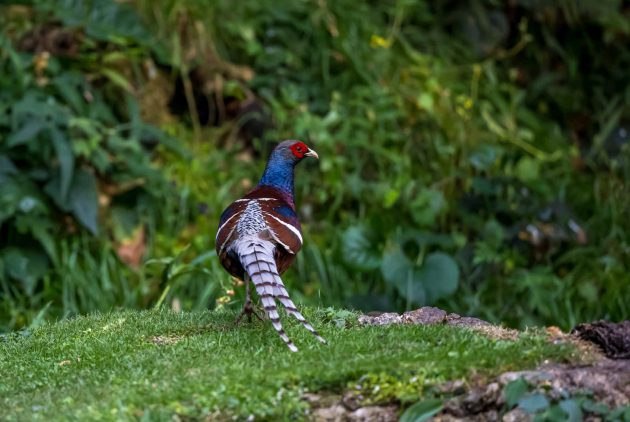
I will leave you with that. Mind you, I still think Mrs. Hume’s Pheasant should have stuck to the 1960s, when people mistakenly believed that combining brown with other colors could look good. They were wrong, of course.
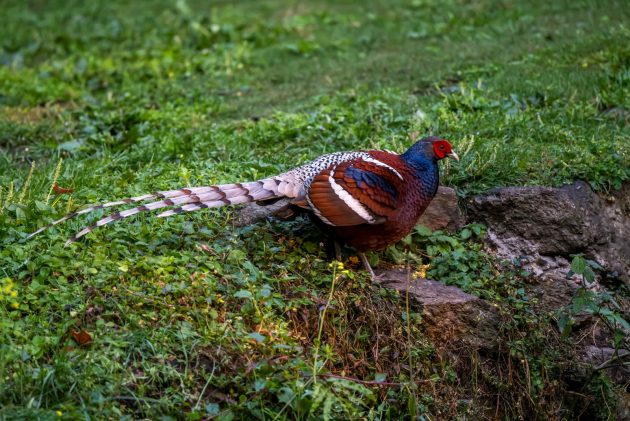








Brilliant. Love the naming speculation. I do think it is (the male at least) rather splendid with the blue and brown. Quite worthy of a business class upgrade.
A bit anti-wife here. Actually naming the bird with a wife’s name makes perfect sense here. The idea of a pheasant symbolizing a wife is found in East Asian cultures. It is a symbol of loyalty, family happiness, beauty, good fortune, and love.