

Few would be drawn to the historic university town of Oxford for the purpose of birding. I wouldn’t either, I’m afraid. England has some fantastic places for birding such as the North Norfolk coast, but Oxford doesn’t qualify. From what I’ve experienced, the city should continue capitalising on its ancient colleges and on being the set for various movies rather than venture into the market of ecotourism. Not that it tried, to be fair. It’s more that I need a scapegoat after being desperate for some birding and facing ensuing disappointment at the meagre pickings. A more humble birder would probably look for a fault in their own abilities rather than run a smear campaign against the birding destination. I’ll try my best to live up to this expectation by sharing a few impressions of my brief outing a few days ago.
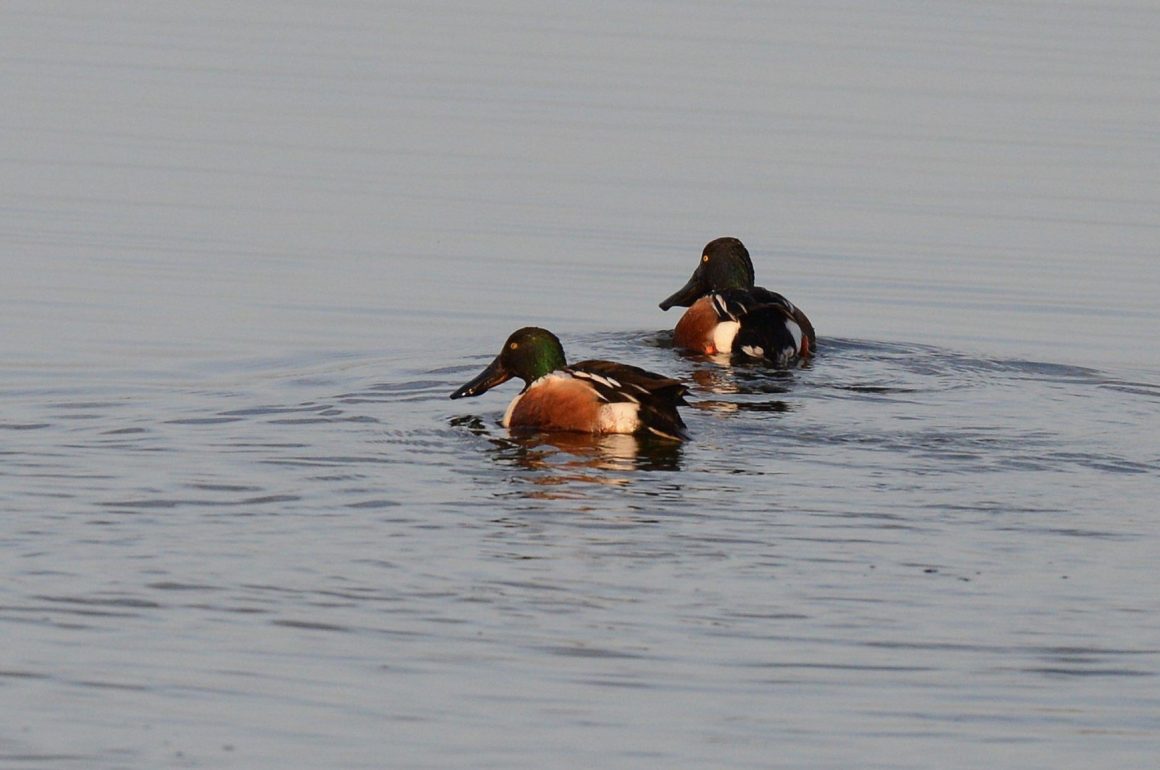
Port Meadow is a large area of common land which through the grazing by cows and horses is maintained as – surprise! – a meadow. In the winter months, large expanses flood and attract waterfowl. Northern Shovelers are the most obvious. I pointed these out to my friend from the US who was with me, expecting that these would be an interesting sighting for him. He dismissed these with a wave of the hand, noting that they are widespread in the US. Unjustly so in my opinion, as shovelers are surely among the more unusual ducks out there.
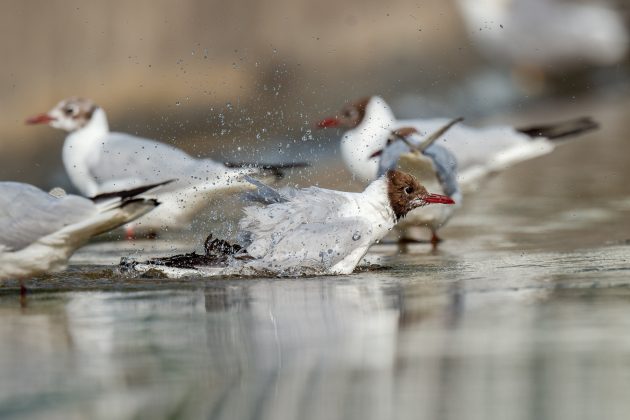
Aside from a few species of duck, Black-headed Gulls were active in the area. I spent a few minutes looking at the screen after having written this past sentence, unable to fathom what to point out about these birds. I do love them when their heads have the colour of 80% Lindt chocolate (also I’m noticing that I’m hungry while writing this!) but have to admit that I rarely give them a second glance at other times. I wonder how many Bonaparte’s Gulls I’ve missed…
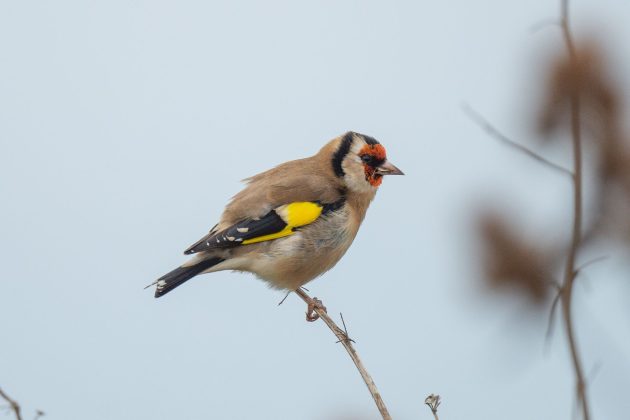
At the margins of the meadows, European Goldfinch was pretty common. Usually, however, we only noticed them as they fluttered out from the thickets, their tinkling calls fading as they disappeared into the distance. This is definitely one of the species I never grow tired seeing, especially when I come across a brightly coloured adult in good light.
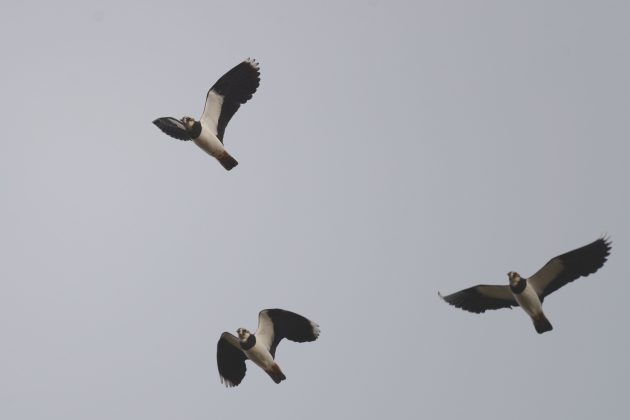
There was quite some action overhead, at least compared to the birdlife on the meadow. A group of Northern Lapwings flew past at one point, always a great bird to see. It’s one of those species that have declined significantly due to the intensification of agriculture but I can’t imagine that they’re threatened as you still see them in most places. This is surely a case of shifting baseline syndrome, as I remember even my parents always remarking how much more widespread they used to be in their childhood.
To those who are particularly keen about raptors, I have nothing to offer except a few Red Kites that soared above the meadow. The story of these birds is pretty remarkable as they were extinct in nearly all of the UK but experienced a dizzying 2,464% increase in population size between 1995 and 2023, according to the RSPB (the Royal Society for the Prevention of Birds, as John Cleese calls it).
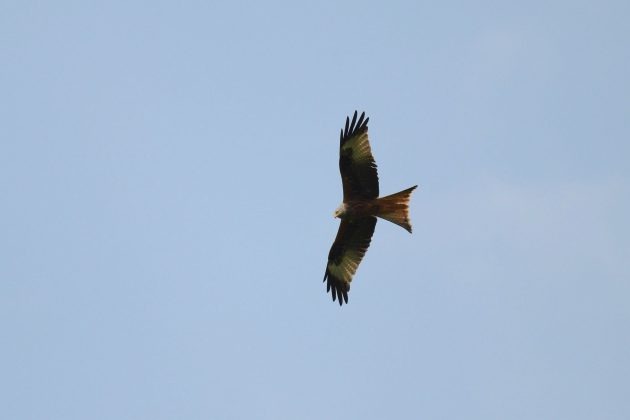
The bottom line of this should be that I really can’t complain about the birds to be seen in Oxford. None of the ones I encountered in this outing are special in terms of rarity, but simply getting out to watch the flight antics of gulls and the filter feeding of shovelers should be rewarding enough.









The right comeback for the dismissive remark about the northern shoveler would be: passenger pigeons were once abundant too… We cannot take abundance for granted. Besides, I agree with you: these ducks are very, very handsome.