
Today, we will be going to the Netherlands. All of them? Do not worry, it’s one single country despite the plural name. For birders, the choice is even narrower: swamps and tidal mudflats. Most of the birdlife in the Netherlands (581 species) is typical of Western Europe, but for sheer numbers of waterfowl and waders, there’s no other place like the damper parts. The country is centrally located and conveniently small, with excellent tourism infrastructure, and most of the population speaks English.
The National Bird
The country’s only endemic species is a vole. A cute one, but still a mammal. There are very rare birds that local birders prize highly, but Black Grouse can be seen better in Sweden, for example. You want a Leaf Warbler? Go to Siberia. You want thousands upon thousands of geese in one field? Welkom in Nederland! You crave the spectacle only the Netherlands can offer: large flocks of waders of multiple species, geese, ducks and swamp specialists, like Common and Great Reed Warblers, Reed Buntings, whatever we call Bearded Tits these days, Sedge Warblers, Bluethroats, Black Terns, Purple Herons and Great Egrets.
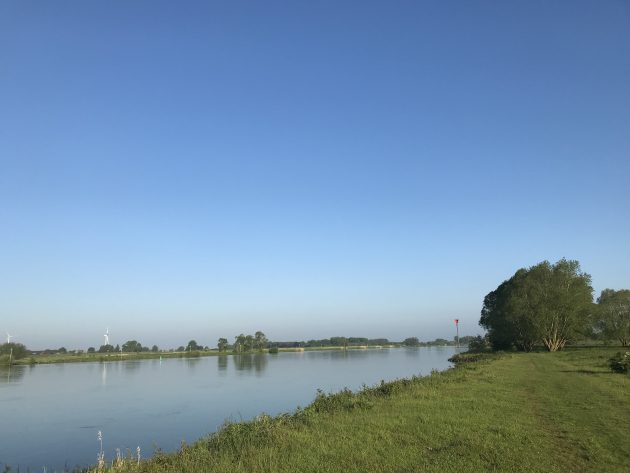
Typical river landscape (Vreugderijkerwaard, Overijssel)
Key Bird Species and Families
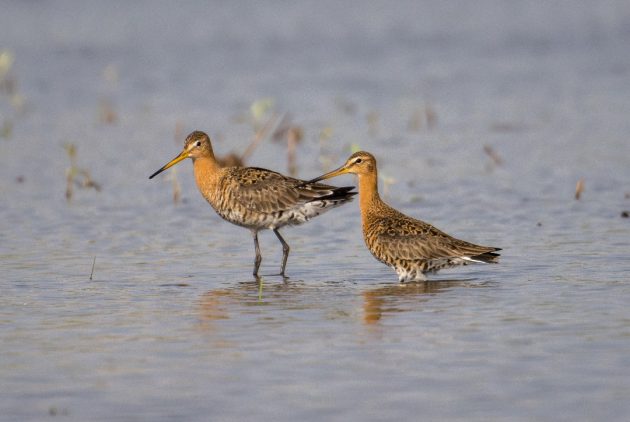
- Black-tailed Godwit: National bird by popular vote, not by official protection. Declined precipitously over the last decades due to the intensification of agriculture.
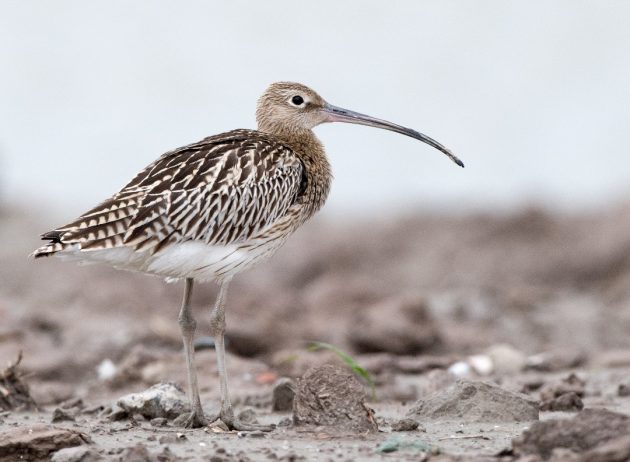
- Eurasian Curlew: Making a very large beak look cool. Typical coastal bird with some inland locations but not as tied to moorland as, e.g., in the UK.
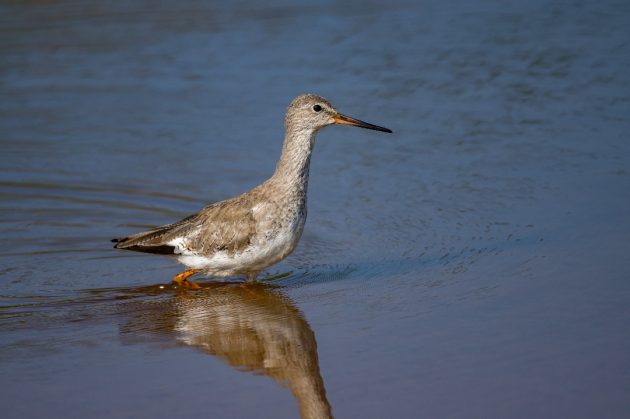
- Common Redshank: Iconic Dutch bird, making a comeback due to some focused conservation efforts.
- Greylag Goose: When I was a boy, these geese had been extirpated as a breeding species. Now they are everywhere. Mixed in with them are all the other large goose species, which makes for a fun challenge. Like finding that special gull on a landfill.
- Barnacle Goose: Originally an Arctic species that, like many English pensioners, decided to move south. Unlike post-Brexit English pensioners, they did not need to move back, so they can still be enjoyed in rather impressive numbers. Occasionally, a Red-breasted Goose hides among them. Check out rarity warnings here and here.
- Acrocephalus Warblers: Little brown jobs singing their hearts out everywhere you can find reeds – and that’s not a very limiting factor in the Netherlands. Their brood parasite, the Common Cuckoo, requires larger stands of reeds with some dispersed trees, but locating cuckoos shouldn’t be that hard either.
- Montane Raptors: Hahahaha, funny. The highest point in the Netherlands has to be shared with two other countries, and the highest point in the west is a toxic sludge dump. We like our oxygen in concentrations only sea level can offer.
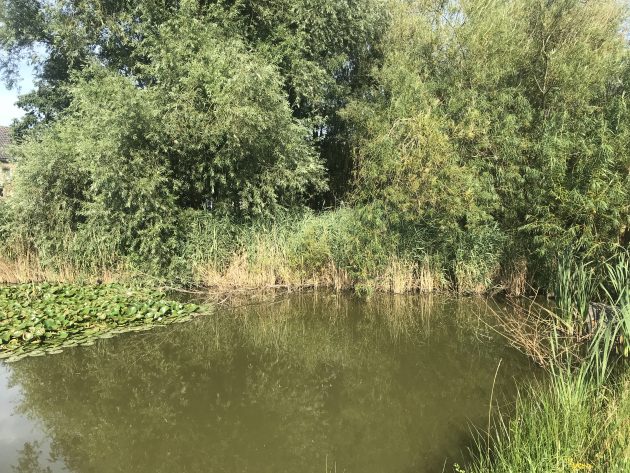
Typical Acrocephalus biotope (Oostvaardersplassen, Flevoland)
Best Regions for Birding
One look at any relief map of the Netherlands shows you why the country is so good for wetland species. Half the country is below sea level – which, despite Al Gore’s misgivings – is a blessing. For a country safely behind dikes, the low-lying national character guarantees a low-lying nature. Add the efforts of the last few decades to create overflow areas, and you know to go where dear Mr Gore told you not to. Where they go high, we go low:
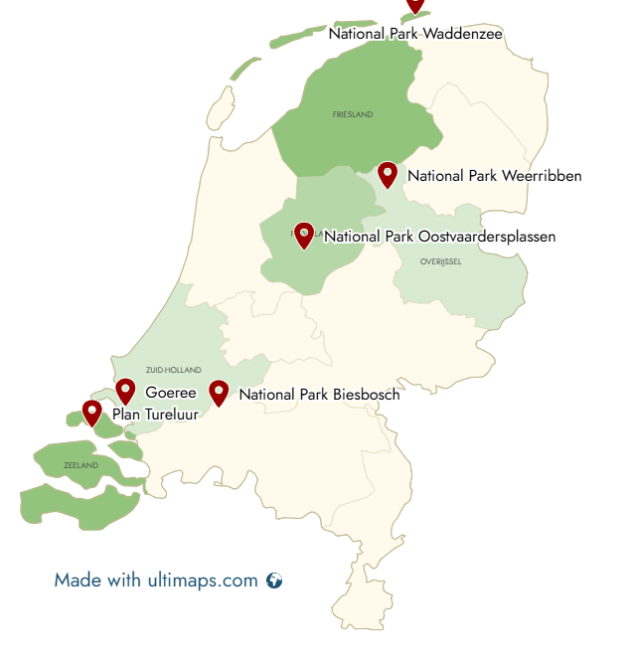
National Park Oostvaardersplassen is one of three must-see destinations. Too low to drain, it remained a forgotten swamp until it was discovered to be awesome and quickly turned into a National Park. Go to the Visitor Centre and walk the paths to the hides from there. Some paths may be closed in the breeding season (acceptable) or to protect the grazing animals (what the f…?), so some flexibility is required. There will be too much for a single day, so plan to stay close by.
The Waddenzee does require some preparation. The provinces of Friesland and Groningen are thinly populated, with only a few cities. Getting there with public transport is possible, but reaching and exploring the vast inland sea is much more difficult. You can cycle, but be prepared for stronger winds and lower temperatures. Staying on one of the islands is magical, and do bring your family (for once). Texel has been described on this site, and Schiermonnikoog is a personal favourite (and great for Short-eared Owl). I’d list the whole region as my second must-see destination.
Plan Tureluur was created to stop the decline of several waders, first and foremost the eponymous Common Redshank. The project is centred around the Koudekerkse Inlagen. You will need a car to reach this location, or be prepared to cycle through the province of Zeeland from Middelburg or Vlissingen. Zeeland has great beaches and the sunniest summer skies of the Netherlands, historical cities and villages and interesting cuisine (fresh oysters anyone?). So you could bring the family! The Koudekerkse Inlagen will require a scope for better enjoyment, and since this is a high-water refuge, check the tides. Place yourself on the dike between the sea and the salt marsh when the tide comes in and enjoy the continuous fly-over. Third must-see destination. In winter, add the island of Goeree to your itinerary for fields filled with geese and the rather splendid Kwade Hoek National Park.
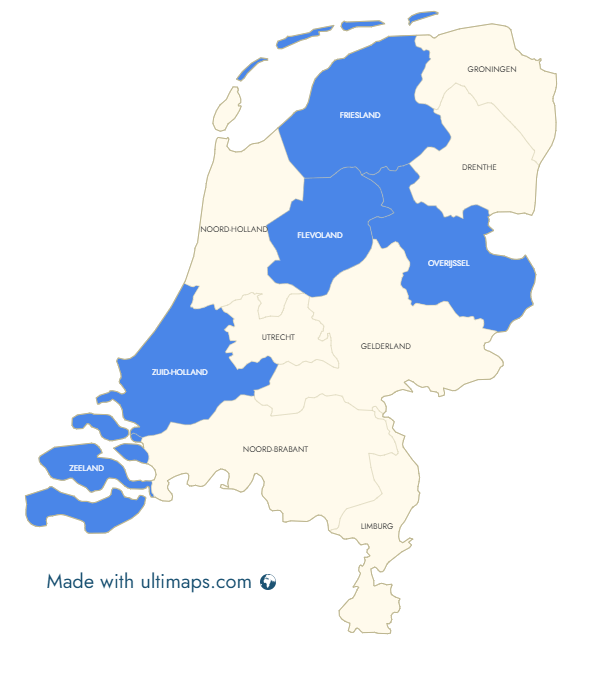
Netherlands map with key locations for birding
First bonus location, the Biesbosch is a tidal forest and the only forested area I would recommend for international birders. There’s an atmosphere of mystery to this place. It is my number one choice for “places to hide a dead body“, but it is much better, and legal, to go and watch the birds. Marsh Warbler, Common Nightingale, Bluethroat, and tits are especially good here, and interesting vagrants show up regularly, fancy a Blyth’s Pipit? The city of Dordrecht provides food, shelter and entertainment for the non-birding family members.
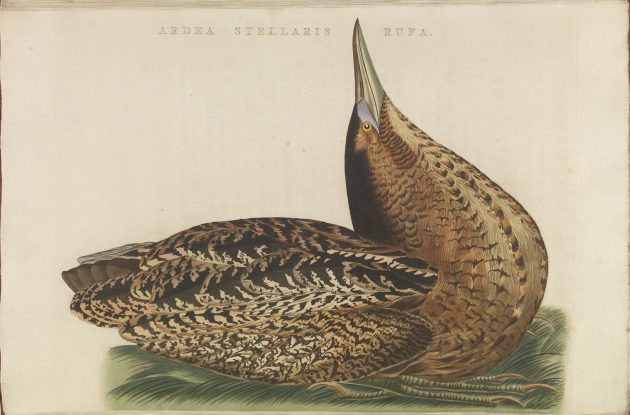
Second bonus: Weerribben. I have not been to the Weerribben for birding, but the eBird list is impressive. The park is very good for Savi’s Warbler (seen several while pushing a pram – the most non-birding activity possible) and Eurasian Bittern.
Eurasian Bittern (from Nederlandsche vogelen, by Nozeman & Sepp)
Best Birding Season
The best birding season for the Netherlands is every month except July and August. And even during the heights of summer, you will enjoy the waders in Zeeland and the Waddenzee. Essentially, what holds true for northern hemisphere birding also applies to the Netherlands. Migration in spring and autumn is very good, especially along the coast, with all sorts of vagrants showing up. Spring is downright fantastic in any swamp of choice. While there, enjoy the mosquitoes and realize malaria was once endemic.
Birding Trip Suggestion(s)
For a one-day trip, arrive at Schiphol and take the train to Lelystad. Get yourself an OV-fiets and ride southwest to the Oostvaardersplassen.

Discover there’s too much to see, too little time and decide to miss your plane and stay another day. If you are smart, you reserve at least a week. Here are some ideas, but do not be restricted to these choices only.
- Southwest (3-4 days). Stay a minimum of two or three days in Zeeland and enjoy the spectacle. Add a trip to the Biesbosch on your way to the airport, or check out all the other options that have been reported on over the years.
- Northern provinces (4 days). Travel to the Oostvaardersplassen (rental car!), stay there at least one night, and travel subsequently to Harlingen to take the ferry to Schiermonnikoog. Alternatively, take a ferry to Texel from Den Helder. On Texel, you can use your car; Schiermonnikoog is car-free.
- Dutch highlights (1-2 weeks). Stay at least two days in every location mentioned in this post and add as many other places as possible. You want three weeks? No problem, just add more destinations. There’s so much to enjoy. When you are tired of the flat and marshy bits, you can still go to the forests or take in a bit of Belgium. The latter country is exciting enough for its own future post, of course. The Belgians also brew a lot of exceptionally good beers.
Common Redshank
Practical Tips
- The Netherlands are very safe, with the exception of pickpocketing at major tourist attractions. You are not going to the Red Light District for birding, but do keep an eye on your belongings.
- Payment is easy; Dutch people love taking your money. A credit card or phone with a contactless payment option is all you need. Just keep a few Euro coins in your pocket for the really small expenses.
- There are a lot of Dutch people crammed into a small space (my personal theory is that we are not welcome elsewhere), so traffic is horrendous. It’s easy to hire a rental car, but make sure you are well ahead of the congestion hours (which start before 7:00 hrs). It is much better to travel by public transport and rent a bicycle at the station. You will need an OV-card if you want to use this OV-fiets (the most convenient option). Big cities have bike rental agencies, and some hotels rent out bikes too. Go to the ANWB shop to buy bicycle maps if you want to explore the bicycle path network. Alternative fact: when stretched, the network would reach Alpha Centauri. It’s vast.
- Hides are everywhere, check out Vogelkijkhut.nl
- A spotting scope will allow better views, but it can be cumbersome to bring along on a bike.
- There is a lot of weather to be experienced, and the Dutch language contains 37 different words for rain. Dress in layers and bring a raincoat.
Books
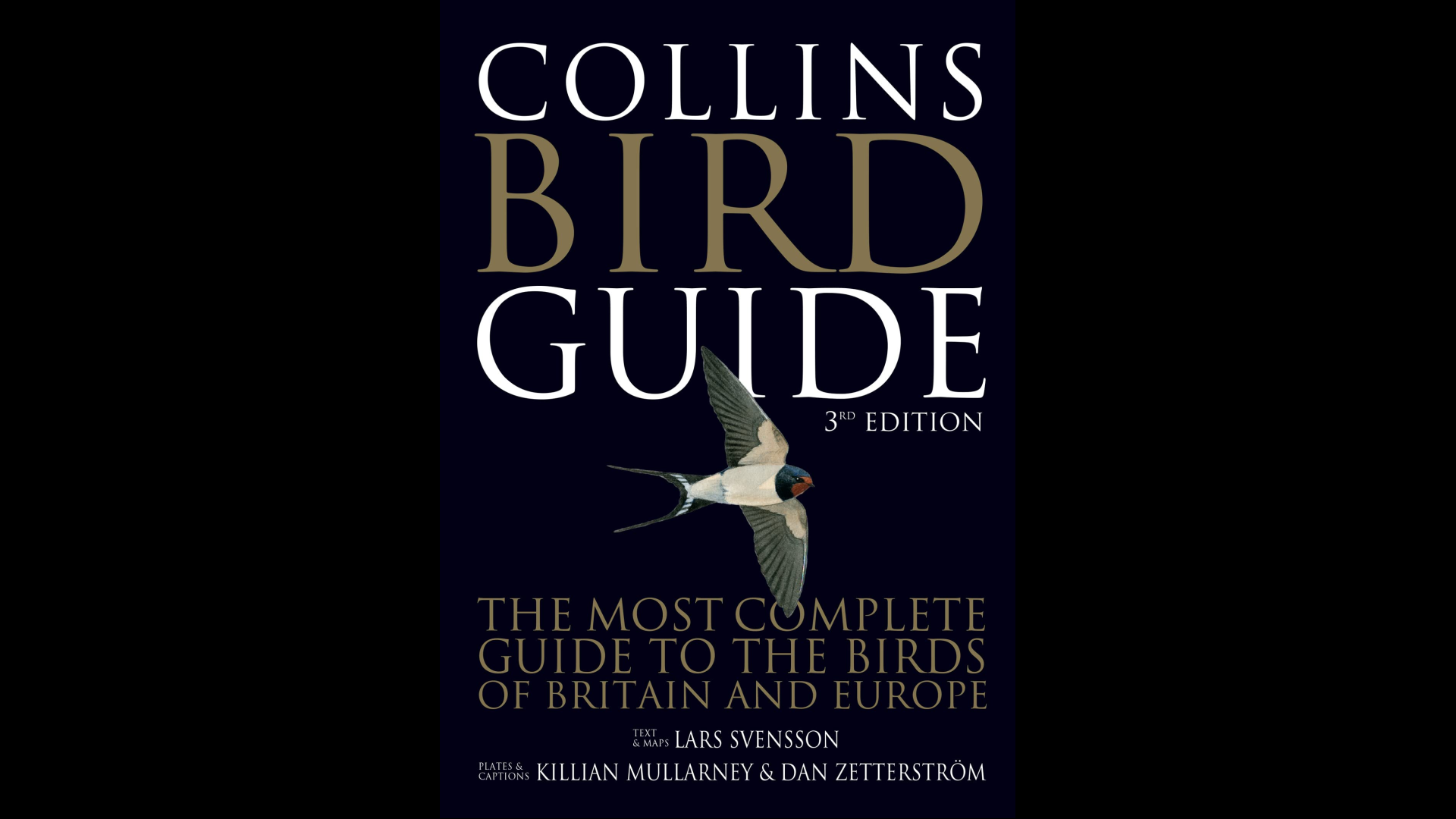
For identification, you will need the Collins Bird Guide. That’s it.
Links
10,000 Birds has many posts on the Netherlands’ bird life, by different writers. The important links can be found throughout this post. Key resources in summary:
- Hides
- Rare Bird Alerts
- Alerts
- Fat Birder: Netherlands
- Posts by Peter Penning
Eurasian Curlew
By Peter Penning
Peter is a regular contributor to 10,000 Birds. He lives in the Netherlands and Portugal and regularly birds in several African countries.







Great profile! The practical tips around getting around are very helpful.
There is also an app for the OV fiets