
November is a very happy month in my household, as we have several birthdays before the official silly season. It is also a hopeful time of year in Melbourne. The wetness of spring begins to ease, and summer starts peeking through the corner (supposedly – it is beyond the scope of human ability to predict Melbourne weather).
This November we went away to the Mornington Peninsula for a long weekend. It was a birthday trip, but I tried my very hardest to maximise the birdwatching opportunities. Mornington Peninsula is a very popular holiday destination and is technically part of the larger Melbourne area. It is, however, over an hour’s drive from Melbourne CBD.
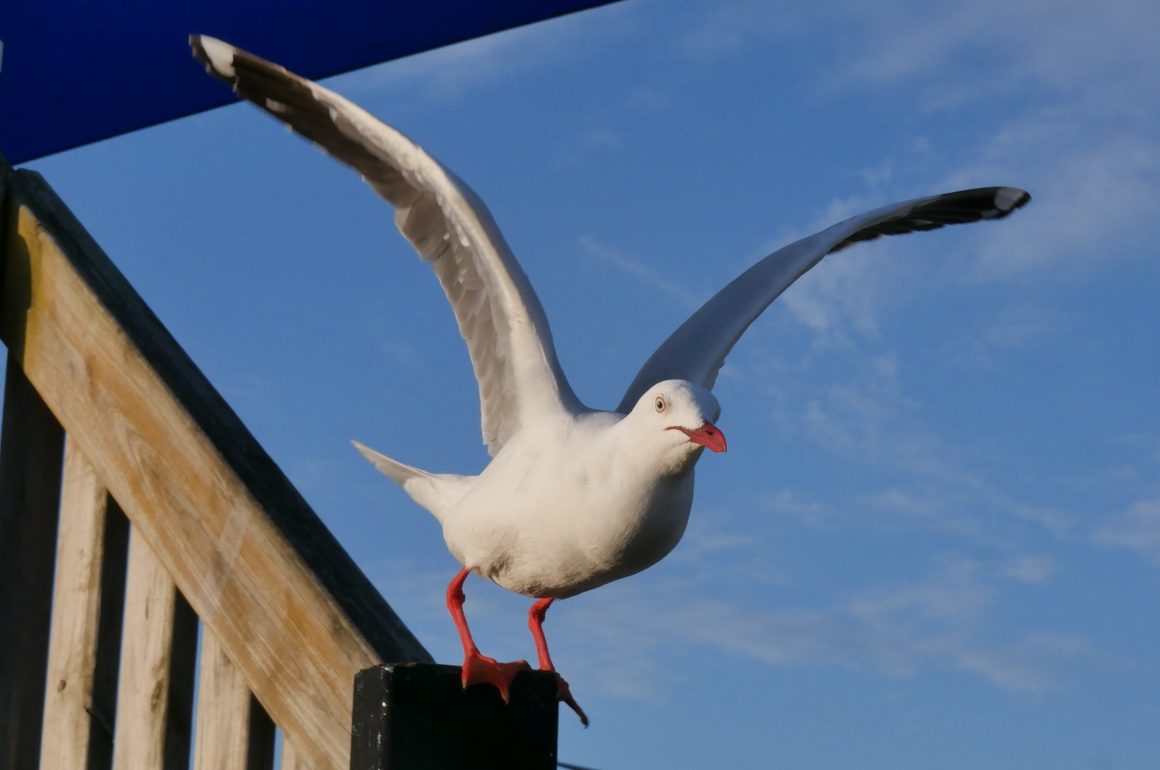
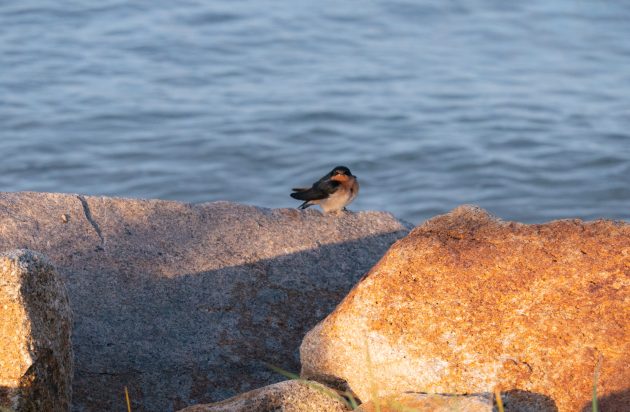
We stayed in a small beach town called Rye. The beach and immediate surrounds were completely smothered by Silver Gulls (pictured at the top of this post) and a lesser number of Pacific Gulls, but there were additionally much welcome flocks of Welcome Swallows who stayed still just long enough for me to make eye contact with them. We also got to see a stingray and a pufferfish in the water, so it was all very exciting stuff.
At home, I’m surrounded by Noisy Miners, Rainbow Lorikeets, and Sulphur-crested Cockatoos, but in Rye, the most numerous birds on the streets away from the water were Red Wattlebirds and Little Wattlebirds. Our accommodation was visited daily by vibrant Crimson Rosellas, Eastern Rosellas, and Eastern Spinebills. To me, Eastern Spinebills are the most beautiful of all the Honeyeaters in Victoria, and I am always thrilled to see them.
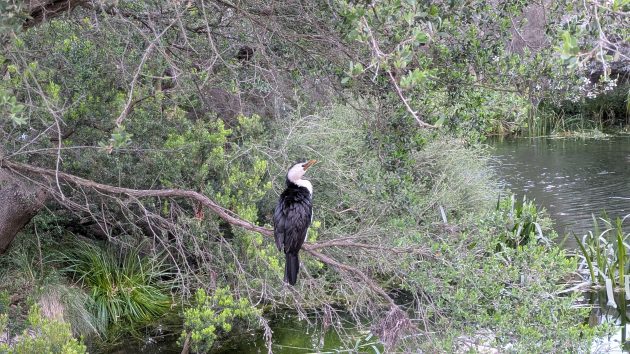
One of the unexpected bird havens on this trip was the Mornington Peninsula Hot Springs. Instead of enjoying a restorative bath as the more sane visitors were doing, I was crouching near bushes in an oversized bathrobe. The highlights were the Spiny-cheeked Honeyeater, the Brown Thornbill, the White-browed Scrubwren, the Willie Wagtail, and a Little Pied Cormorant taking a snooze in full view.
Day two was spent at Point Nepean National Park, where I saw my first Silvereye, Yellow-faced Honeyeater, and an Eastern Yellow Robin. We also spotted a pair of Australasian Gannets and an Echidna, which is not a bird but does lay eggs and, moreover, is really, really cute, so I will keep this picture here.
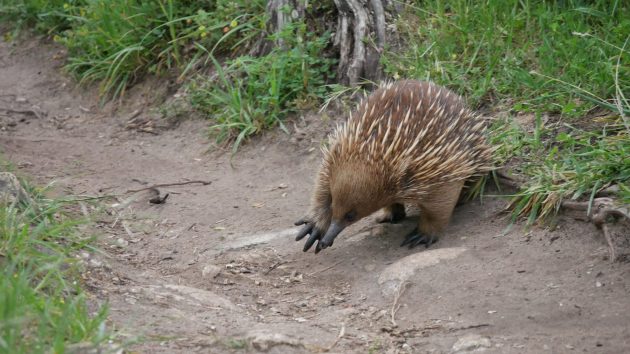
We drove to Sorrento for lunch (another gorgeous beach town). As I enjoyed a delectable chicken and leek pie, we sighted a Crested Tern. Other terns were seen on this trip, but this was the only one I could identify with confidence.
On the final morning, we went to the lookout over London Bridge, which is also part of the Point Nepean National Park. We watched a fight break out between a pair of Silver Gulls and a Pacific Gull, all the more tense as they were buffeted by the blustery wind. Amidst that drama, we spotted a Sooty Oystercatcher (another lifer for me) down below on the beach. With that burst of dopamine, we got in the car to return home. As our toddler needed a nap (and because he is the king of the world, as all toddlers are), we hadn’t gone down to the actual beach.
Dear reader, you can imagine my heartbreak when another in our group, after descending to the beach, later sent me pictures of the Hooded Plovers they had seen just metres away from them. I have since come to terms with the fact that this is all part of the character-building that is birding around a toddler’s very demanding lifestyle.
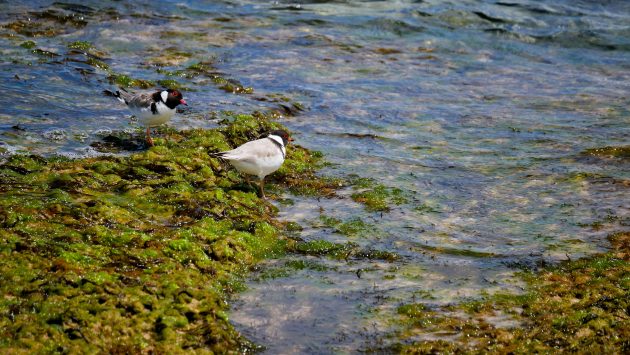
So, all in all, I highly recommend exploring this part of Victoria that’s bursting with birdlife. If that’s not enough of a draw (it should be if you’re on this site), there is always the beach.


What a wonderful piece of writing. The phrase “I was crouching near bushes in an oversized bathrobe” is worth a Pulitzer. I want to visit Australia even more now.
I’m sorry you missed those plovers! Loved the Echidna- never knew such a cute creature existed! Thank you for that!
Echidnas are of course the answer to the egg-chicken question. The egg was first.
Agree 100% with Mary Alice and Peter. Great post! Along with “oversized bathrobe” I also like “and because he is the king of the world, as all toddlers are.” So true, and very brave of you to bird with a two year old. I wonder if he’ll be a birder as he grows up. I hope so. I had never heard of an Echidna and so this is my next search.
Such a delight to read! That made my morning. I’d love to hear more in the future about your toddler’s birdcall identification skills—it made me realize that this skill is essentially teaching a child another language, with all the benefits that come from multilingualism.
It’s so good to have a birder writing about Melbourne . Next time you will have to visit the Geelong side of the bay. Thankyou for your story and Echidnas are gorgeous
Peter – Thank you for your incredibly generous comment! I am so happy to hear you enjoyed it.
Mary – Yay, so glad to introduce echidnas to people. They are such special creatures.
Cathy – Haha, thank you! I do feel like a bit of a warrior heading out to find birds with a toddler. I hope that he will experience more joys of birding as he grows up too.
Susan – Such an interesting point about multilingualism. Toddler brains would be primed to learn this information so much more, whereas, I still mix up very common bird calls. I should write more about what it’s like birding through the eyes of a toddler and what he’s learning. It is hard but magical!
Michelle – Yes, so many amazing birds we have here in Melbourne and surrounds. Birding in Geelong is close to the top of my list!