

Having written previously on my adventures in Guyana’s famous Rupununi (both savannah and river), I was not inclined to rehash any of those accounts. Except well, for the small detail of actually returning to the soul-altering expanse of the Rupununi last December. From the time one begins the southbound journey from the Atlantic Coast of Guyana, a sense of discovery and raw adventure begins to bubble somewhere within the psyche. It is undoubtedly much tamer now than it was even a few years ago – and that pales in comparison with the accounts of those who lived here when it was truly wild. On our last trip, we met the man who built the road which later became the Linden-Lethem Highway (not really a highway in the traditional sense, it is still very much a trail). He spoke of the journey taking three weeks, of flying over the jungle in a helicopter dropping rations for surveyors, and we even got to put eyes on the beast of the truck that bore the brunt of the work thirty-odd years ago.
To get to the Rupununi, one could either fly or drive from Georgetown. On both our visits thus far, we have driven. Driving – or being driven, I should say – through millions of thirty-metre trees is a quietly cathartic experience. The verdant walls never blur into nothingness, despite the hours spent on the red dirt road bisecting the forest. We came upon more than a few treasured sightings along that road, from a King Vulture to a Red Brocket Deer, but it is the feeling one gets after emerging on the southern end of that belt of jungle; the sudden transition into the gallery forest which borders the savannah, then the trees simply disappear – replaced by stunted and gnarled broad-leafed shrubs. In the distance, the Kanaku mountains rise from the savannah. They are thickly forested and often cloaked in cloud, contrasting with the expansive savannah below.
Last December when we burst out from the forest into the savannah, the sun had just set, and a Giant Anteater was sniffing around as a number of nighthawks took to the wing: Least Nighthawk, Lesser Nighthawk, and in the distance, a lone Nacunda Nighthawk. I was trying to photograph the anteater but the nighthawks kept coming – in retrospect I should’ve just concentrated on photographing the nighthawks as several of them gave me excellent looks as I was focusing on the obscure and rather unphotogenic anteater.
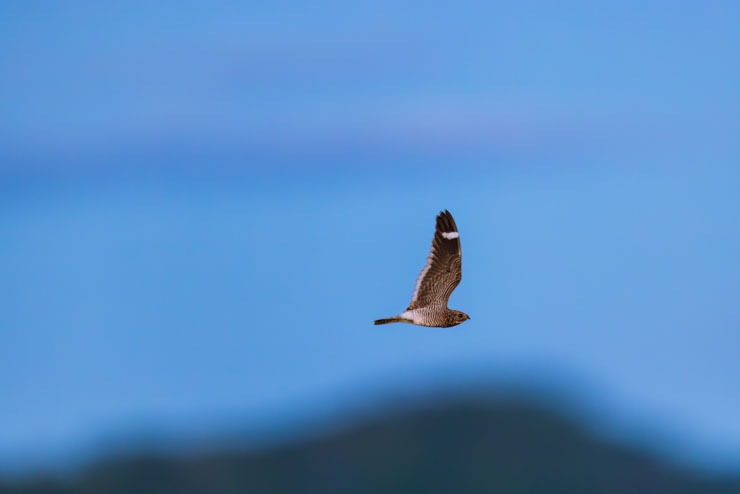
Least Nighthawk
The usual suspects were available during hours of daylight: White-tailed Hawks perched on fenceposts, White-tailed Kites on lofty, distant trees, and Fork-tailed Flycatchers whirling in defiant pursuit of any large bird that passed too close for comfort. Crested Caracaras and Buff-necked Ibis cruised over the grasslands while Crested Bobwhites scuttled in the undergrowth. I was lucky to catch a decent glimpse of a Grassland Sparrow that popped up one afternoon. Previously, I had only seen this bird in the pre-dawn roseate glow, so I was then unable to appreciate its very noticeable (in daylight) yellow eyebrows.
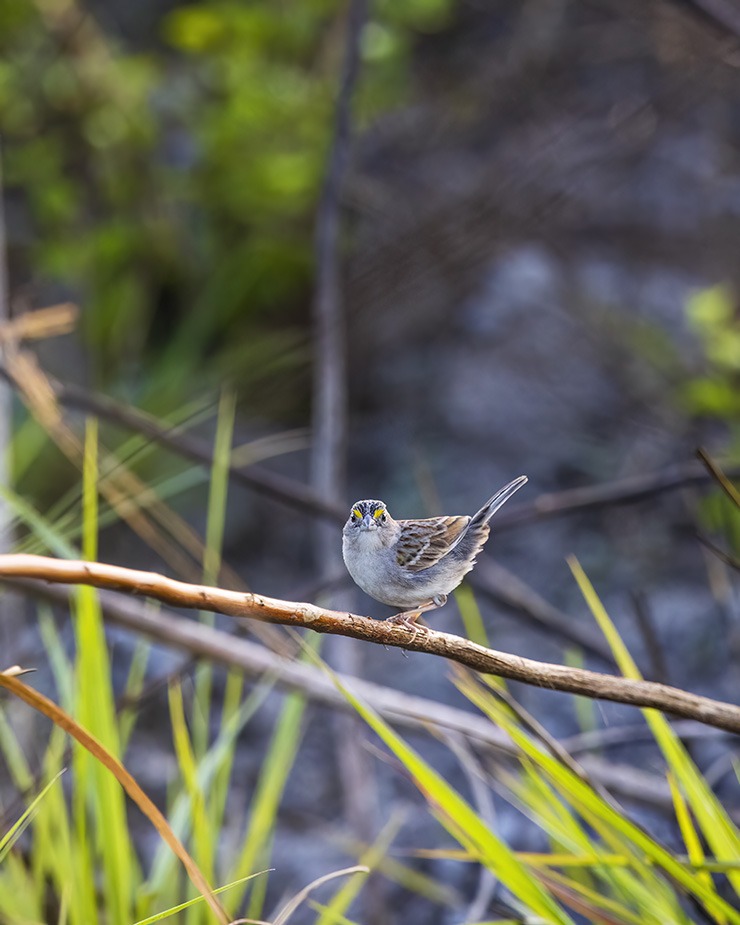
Grassland Sparrow
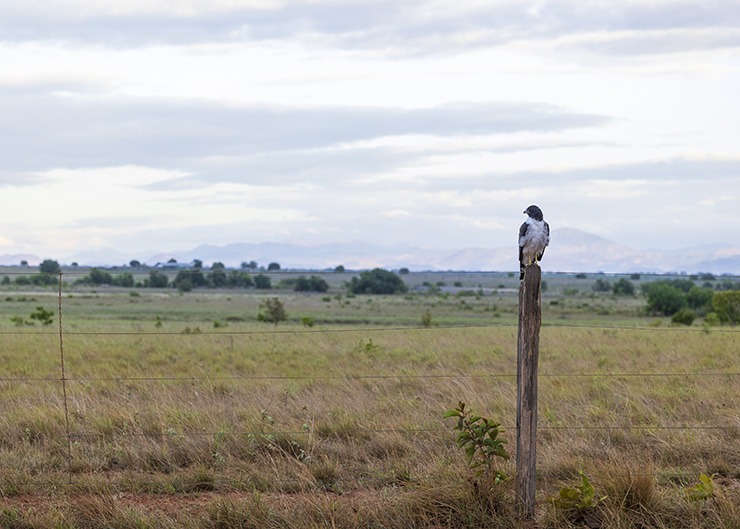
A White-tailed Hawk in a typical setting.
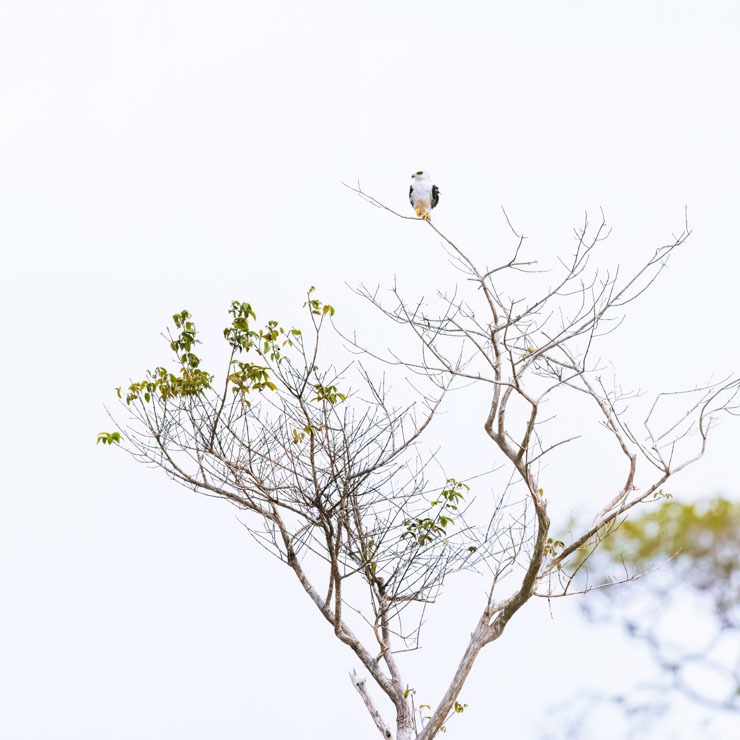
White-tailed Kite
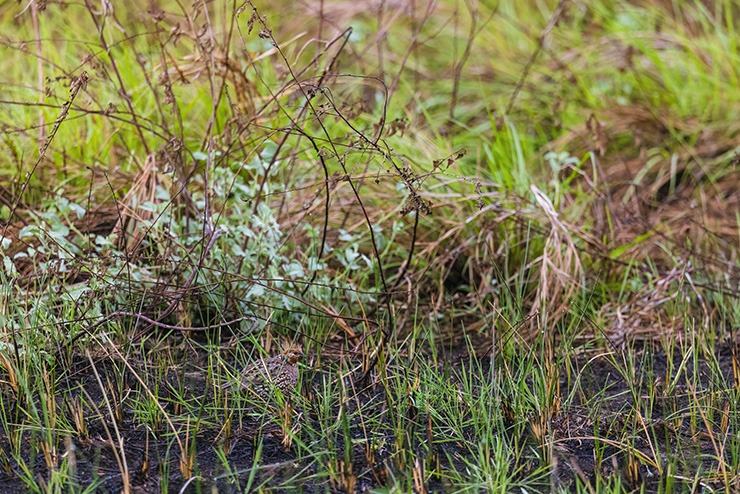
Again in a typical setting, this time a Crested Bobwhite.
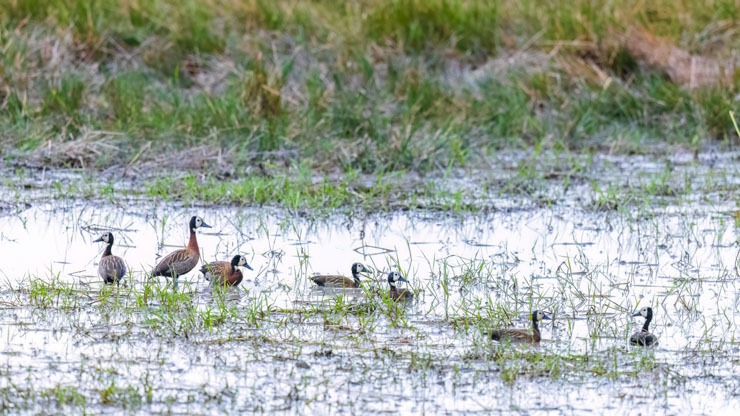
Some areas were still flooded, those that were attracted waterfowl such as these White-faced Whistling-Ducks.
Storks were prominent in the landscape as well, so much so that they warranted their own post altogether. Pinnated Bitterns leaned into the heavens, towering over Common Gallinules and even a lone Azure Gallinule.
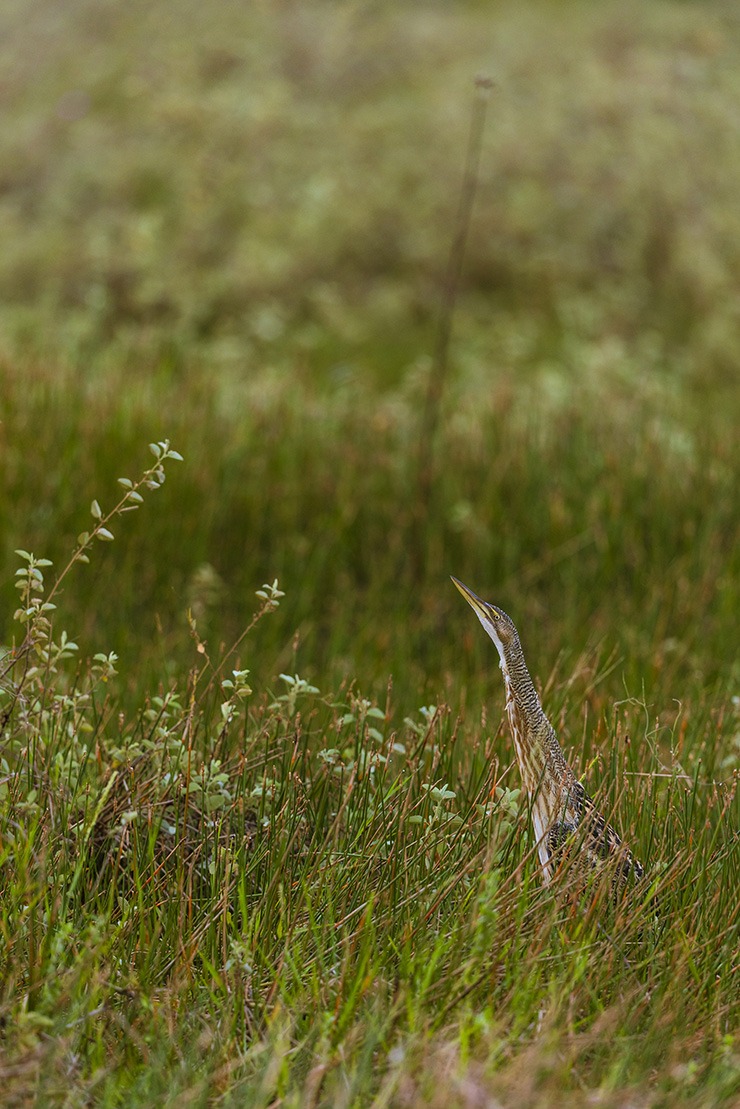
Pinnated Bittern
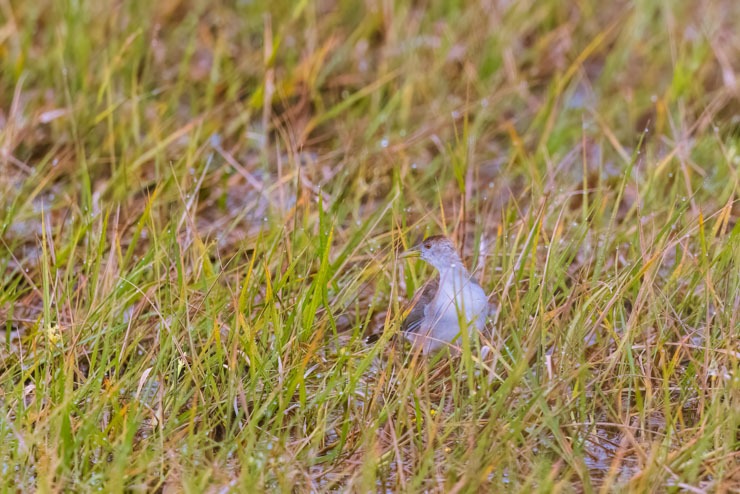
Azure Gallinule
At the banks of the Rupununi River where we had Red-capped Cardinals and Glittering-throated Emeralds two years prior, we now had a single sighting of a Pale-tipped Tyrannulet: a relatively common yet poorly understood species.
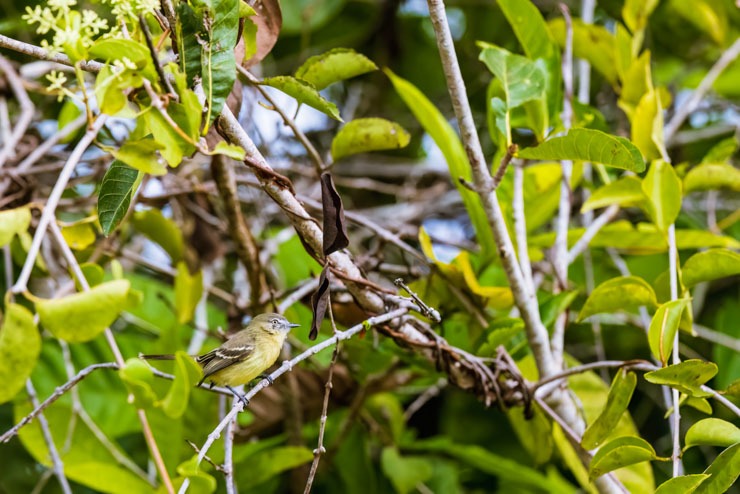
Pale-tipped Tyrannulet
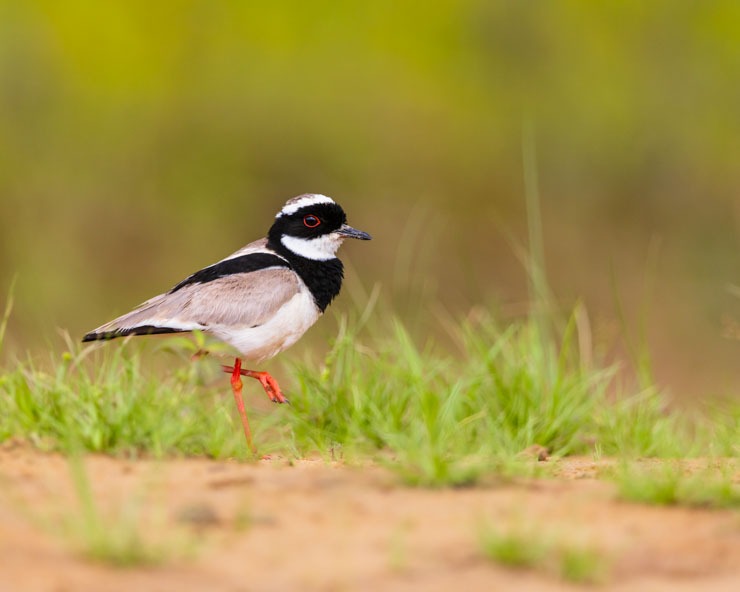
Our boat motored along the Rupununi River, slipping around lazy bends and sandbanks that looked like perfect sites for a lounge chair or two (to make it easier for a prowling jaguar, of course). As we did on our previous visit, we enjoyed views of several Swallow-winged Puffbirds, Cocoi Herons, and Amazon Kingfishers along the journey. Wood Storks soared overhead while Pied Plovers dotted the sandbanks.
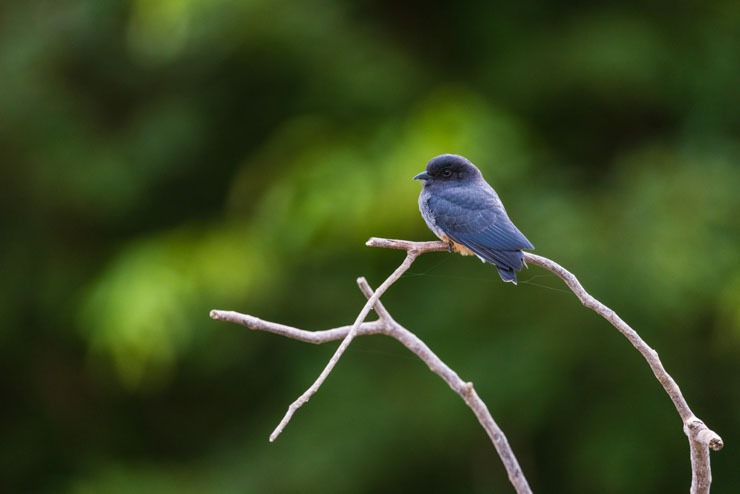
Swallow-winged Puffbird
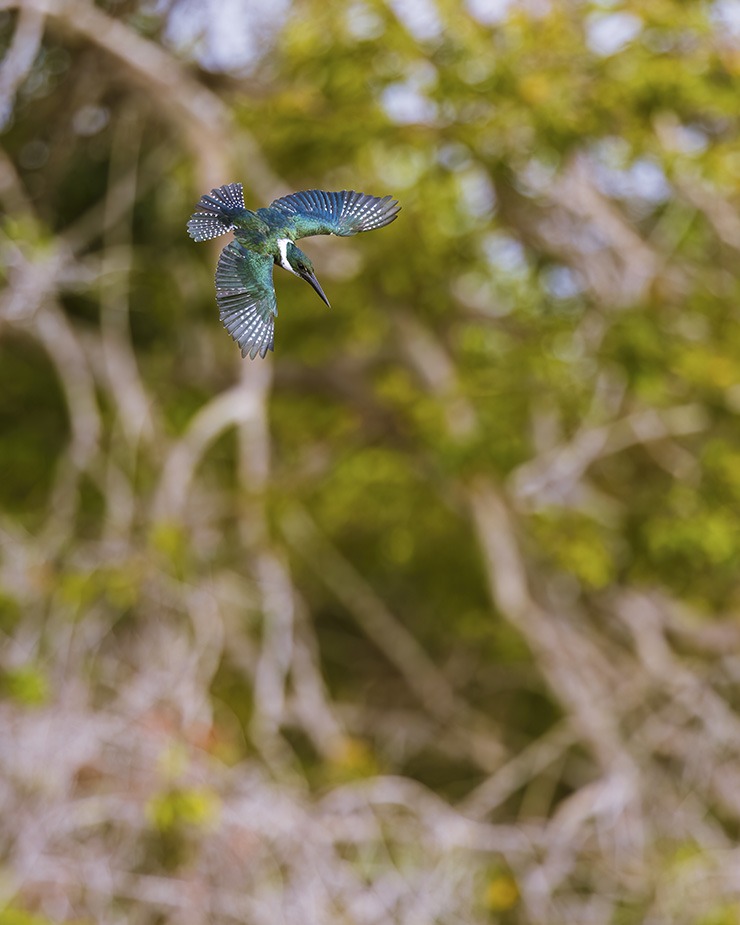
I was shocked to see this Amazon Kingfisher hovering over the water for a few seconds, much like a Pied Kingfisher, before plunging in. I thought they always hunted from a perch – according to Birds of the World they “occasionally hover over open water”. The more you know…
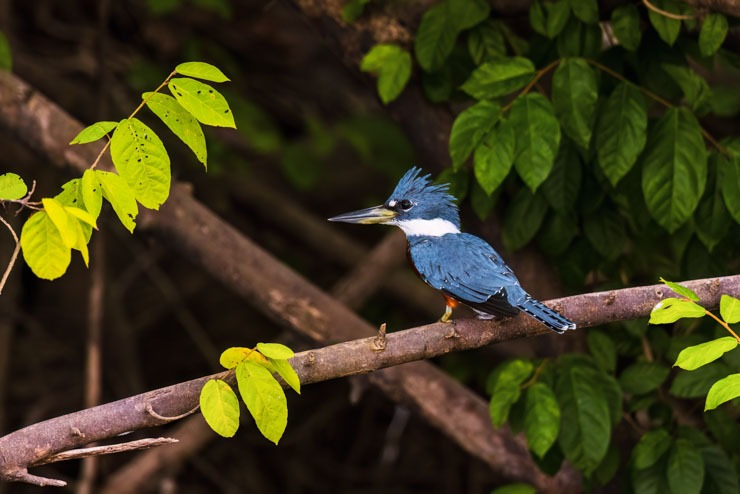
There were several Ringed Kingfishers around as well.
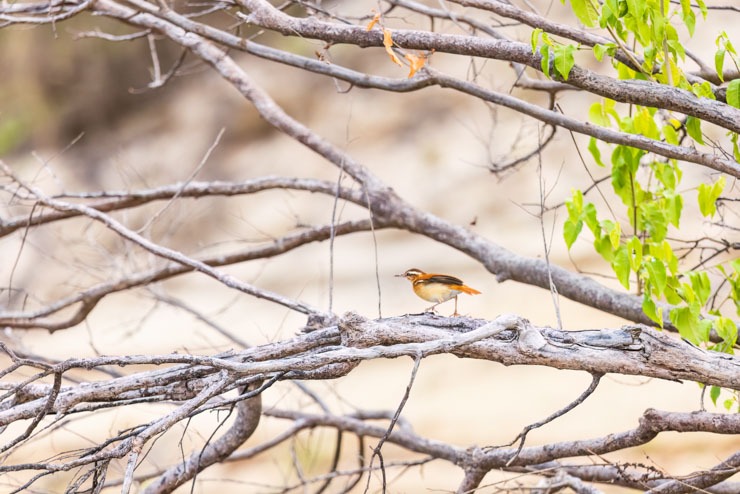
This Pale-legged Hornero was a lovely surprise.
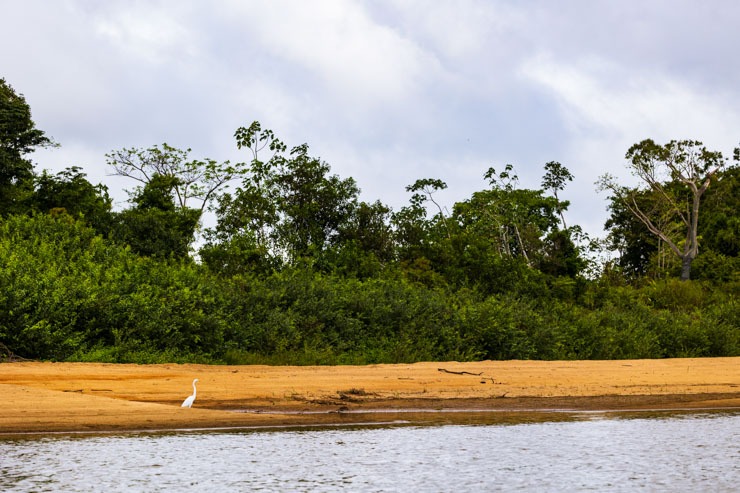
A Great Egret on a bend of the Rupununi.
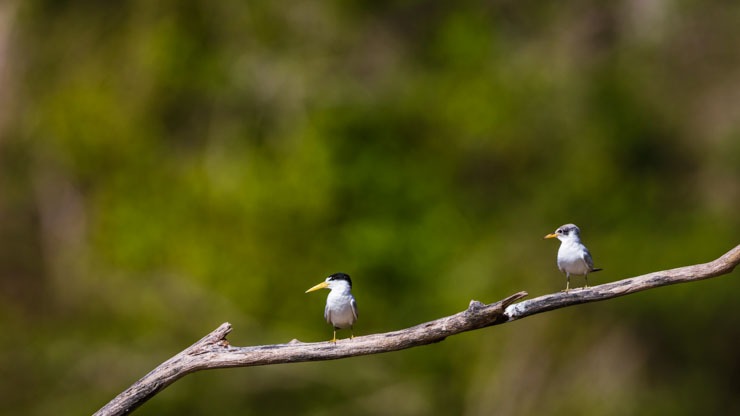
A pair of Yellow-billed Terns – adult and juvenile – on a piece of fallen tree.
A stunningly beautiful Pied Plover.
As we returned to the dock, a Great Black Hawk hopped off its perch and glided silently toward us, veering off at the last second to perch directly against the sun.
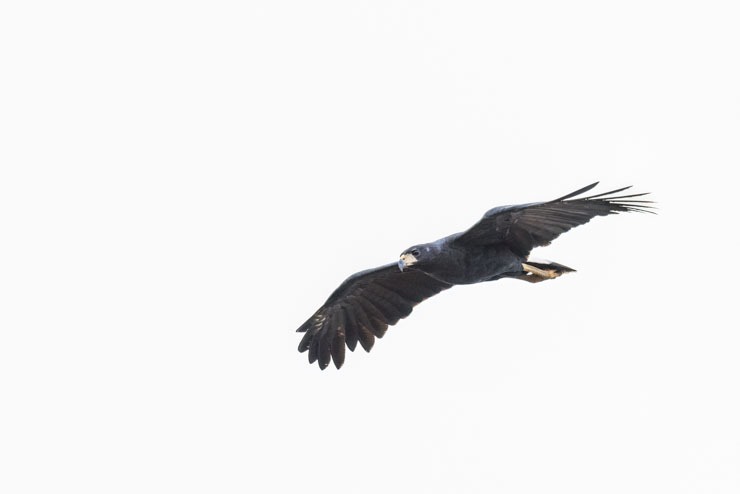
Great Black Hawk
The Rupununi continues to further cement its place as a destination I must continue to return to. Those who have been there speak of being fundamentally altered. Others draw a strong parallel with East African savannahs – also understandable. What will be your story when you visit?





Beautiful, Faraaz! I hope to make the journey there with you one day!
Many thanks, Preeti! Please do! More adventures beckoning!