

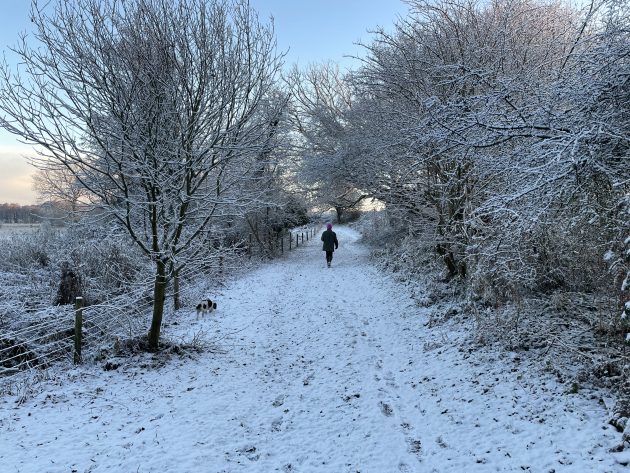
Well here we are, a week into 2026, and my New Year bird list is stagnating on 69 species. It should have been considerably higher, but bad weather has stopped play. To be more precise, my first major outing of the year was cancelled as my companion wasn’t feeling well, while my next excursion was postponed, this time due to snow. Donald Trump might not believe in climate change, but I can assure him that it’s true. Snow used to be a regular feature of our winters but it’s not anymore. When it does snow it catches us by surprise, and though we may have only had an inch or so of the stuff, it was sufficient to make many of the local roads treacherous and unsafe to drive on. This was the first significant snowfall locally since February 2021.
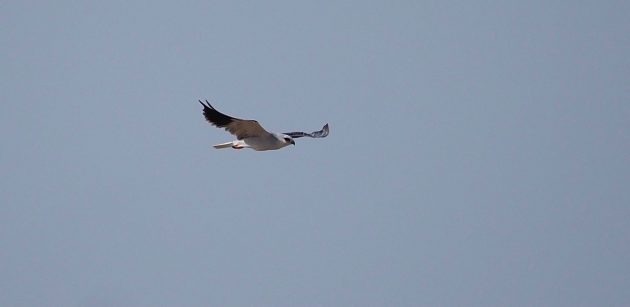
Black-winged Kite – still a major rarity in England
My last planned trip, abandoned due to the snow, was to the Norfolk Broads, where the target bird was a Black-winged Kite that had been reported daily since just after Christmas. This is only the third record of a Black-winged Kite in England. The first was in 2024, and the current bird may well be the same individual, as this is the third sighting in Norfolk. Historically, Black-winged Kites were restricted in Europe to a small area of central Iberia, which is where I saw my first back in the 1960s, while on holiday with my parents. I spotted it from the back seat of my father’s Ford Zephyr and could scarcely believe my luck. My Peterson Field Guide simply stated “Resident Portugal”. I saw my bird near Badajoz, a town in Extremadura on the Spanish-Portuguese border. It was unmistakable so I had no doubts as to the identity of the bird I saw.
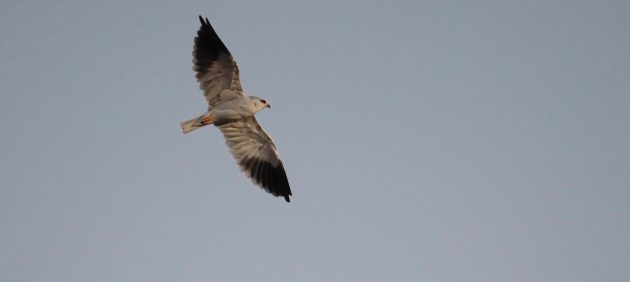
Black-winged Kites are unmistakable in flight
I’ve seen quite a number of these kites since that first encounter, for they are common and widespread in Africa and India, even occurring east to New Guinea. Their taxonomy is interesting, as they are clearly very closely related to the American White-tailed Kite, and Australia’s Black-shouldered and Letter-winged Kites. In Europe their population has undergone a remarkable expansion in recent decades (due to warmer temperatures?), and they now breed widely in France while last year pairs bred in both Denmark and Hungary for the first time. Their appearance here is hardly unexpected, and there’s a real chance that they will soon start breeding in England, too.
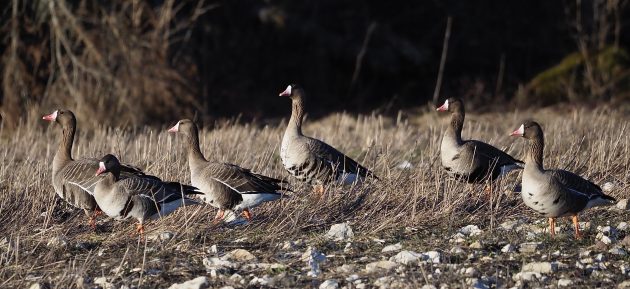
There has been a major influx of Russian White-fronted Geese into England
I may have failed to see the kite, but I have managed to connect with Greater White-fronted Geese (now generally called Russian White-fronted Geese here in the UK). There’s been an impressive influx into England in the last two weeks, with more than 150 sites logging flocks of these visitors from arctic Russia. Until a decade or two ago many thousands of White-fronts wintered in England, but in recent years the numbers have dwindled due to short-stopping. Instead of migrating across the North Sea to England the birds remain in the Netherlands and north Germany, but cold weather there can persuade them to move farther west.
One flock of 24 birds arrived just a dozen miles from home, so I made the effort to go and see them. They were feeding in a field of winter cereals (probably winter wheat); the same very large field had also attracted a flock of over 200 Greylags, but surprisingly the White-fronts weren’t associating with them. Reports today say that a flock of 12 Tundra Bean Geese has joined them. Bean Geese have always been rare winter visitors to England. This winter’s invasion – these geese have been recorded at around 50 different sites – is exceptional. If the Beans stay around and the weather isn’t too bad (a major storm is due to sweep through England in the next few hours) I will try and see them.
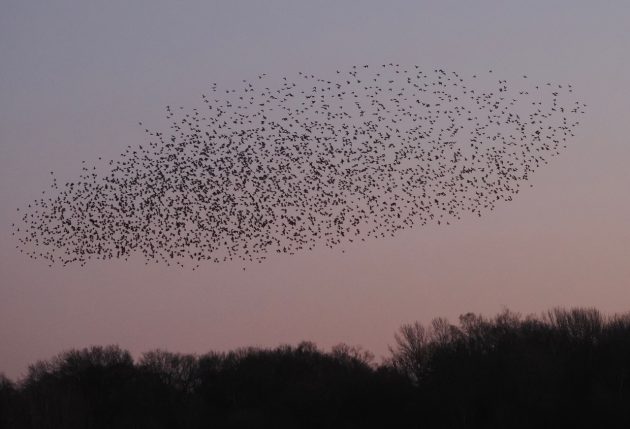
Starling murmuration at Redgrave and Lopham Fen
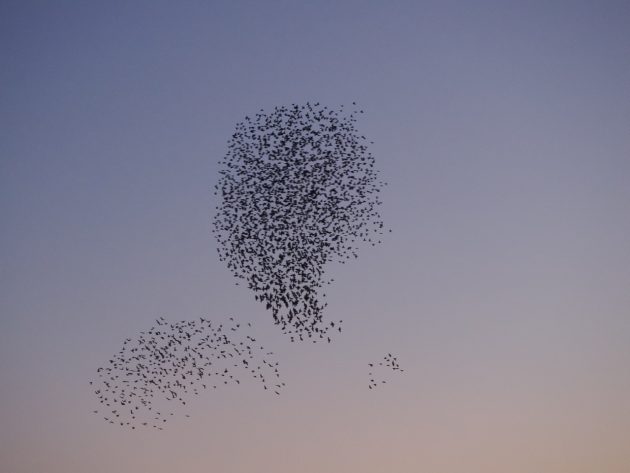
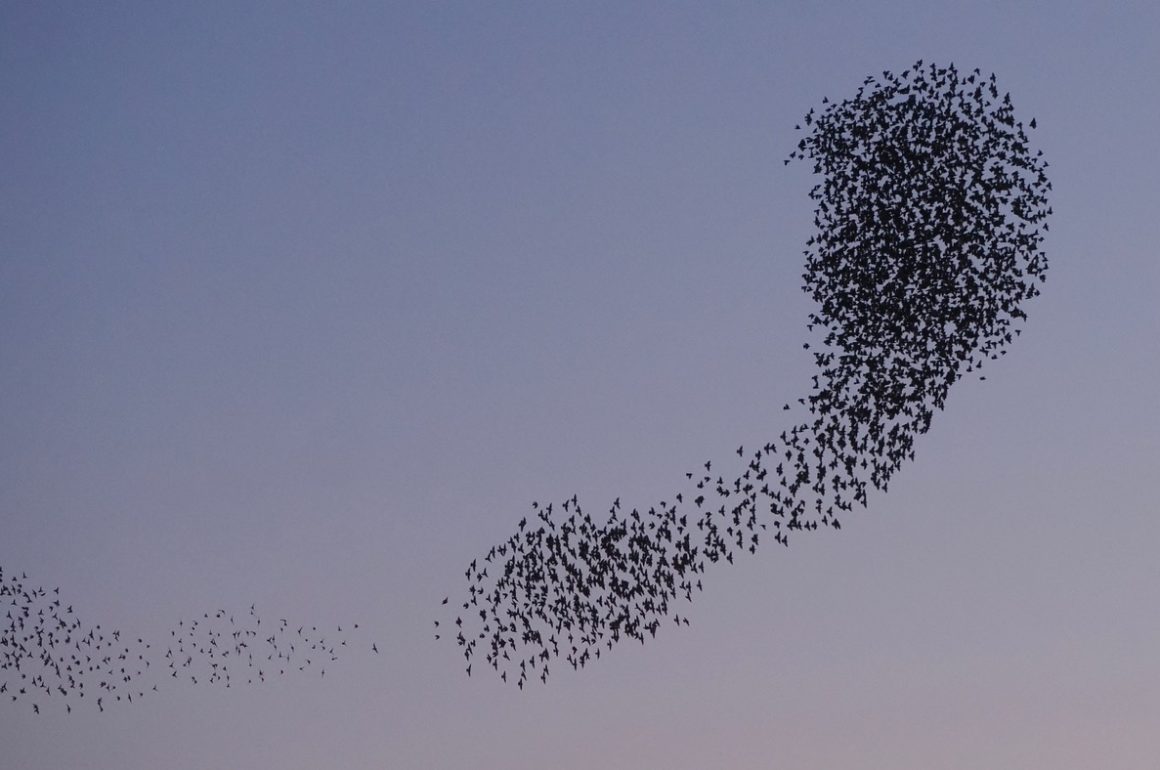
Starlings may be disliked in North America, where are of course they aren’t native, but they are birds with character and I always enjoy seeing them. They are at their most spectacular when they gather in huge flocks (murmurations) for their winter roosts. There are a few roosts not far from my house: I went to see one at Redgrave and Lopham Fen on a cold, clear evening earlier this week. Numbers were modest (many hundreds, but not thousands), but the birds still put on an impressive display as they wheeled and soared in the evening sky before finally dropping into roost in the reed bed. Well worth the effort of going to see them.
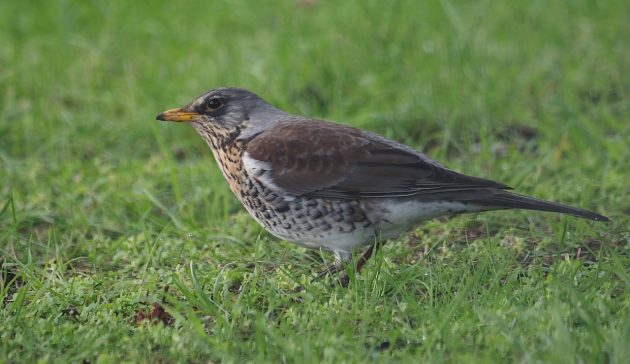
Fieldfare (above and below), winter visitors from Scandinavia
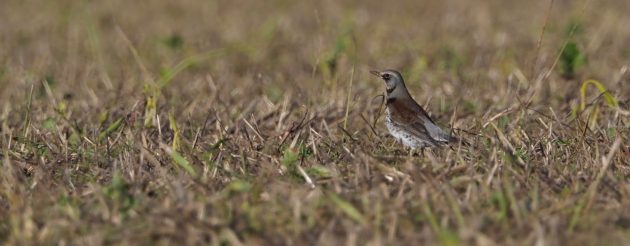
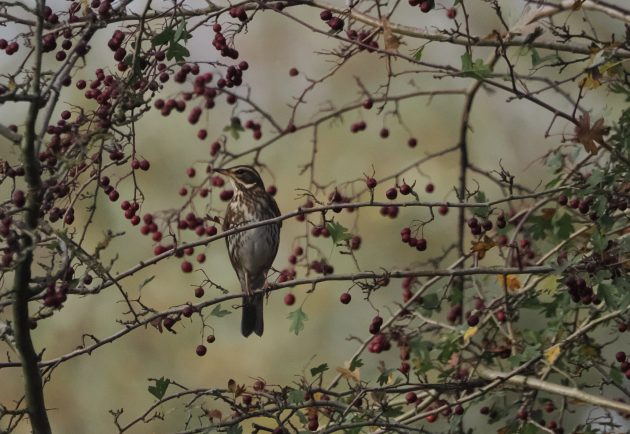
Redwings tend to be shy and unobtrusive
Curiously, many parts of England have reported a scarcity of winter thrushes – Redwings and Fieldfares – but here in the Suffolk Brecks we have exceptional numbers. These birds migrate to the British Isles from Scandinavia, and the number that come here varies from year to year. Last autumn there was an exceptional crop of hawthorn berries, the favourite winter food of the thrushes, and this explains why the birds have stayed locally. There are still many berries remaining, so plenty of food to see them through the shortest days of the winter. (The sun currently rises at 8am, and sets again at 4pm, but the days will soon start to draw out.)
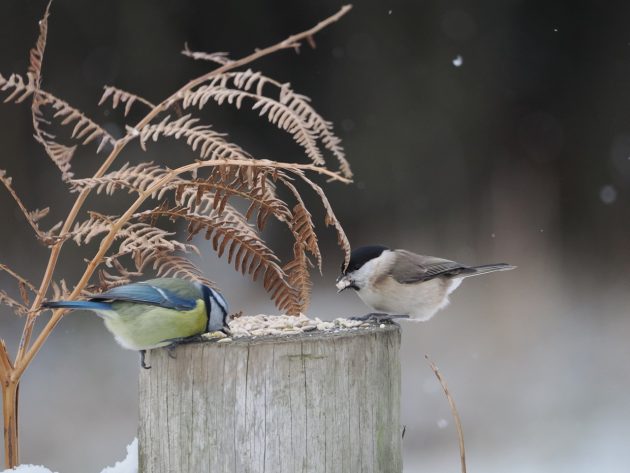
Blue Tit and Marsh Tit at my fence-top feeding station in the fen
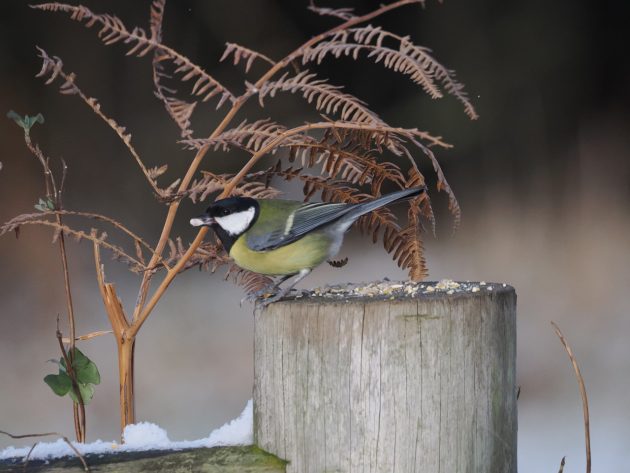
Great Tit
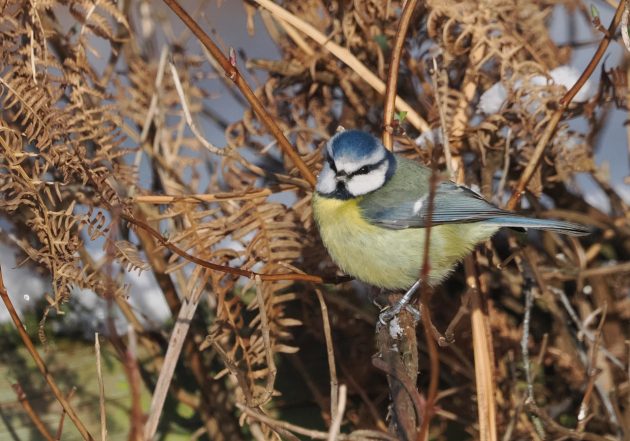
Blue Tit
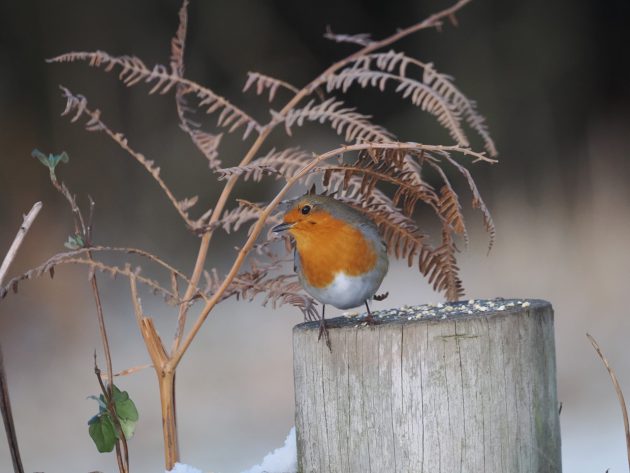
Robin
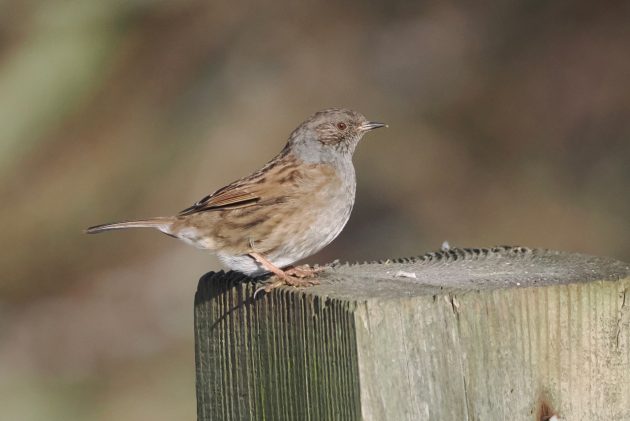
Dunnock– a shy and retiring bird
I’ve been enjoying watching the thrushes in the fen, where I walk with my spaniel before breakfast every morning. I always take with me a small bag of sunflower hearts, and the local tits are invariably waiting for me to feed them. Four species come to the food I provide (Great, Blue, Marsh and Long-tailed), usually joined by Robins, Dunnocks and Chaffinches, while a Great Spotted Woodpecker has also started to come to the free food. Sitting on a nearby bench, watching the birds darting in to take the seed, is a delightful way to start my day.
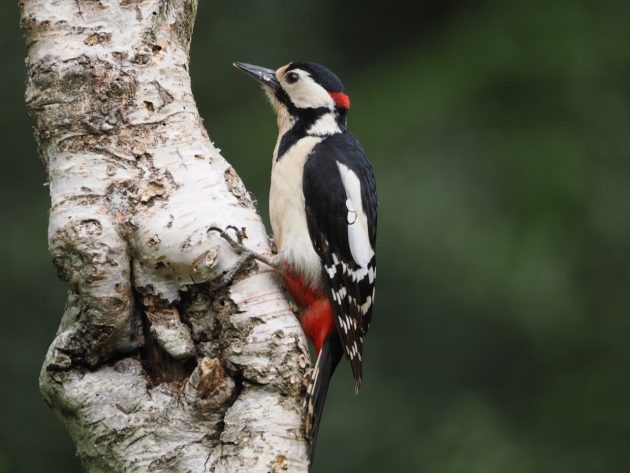
Great Spotted Woodpecker: they have just started drumming
There’s not much song yet. There was a Song Thrush singing at the end of the year, but the recent snow stopped the song. In early January survival is more important than proclaiming territory. However, a Great Spotted Woodpecker has started drumming, a sure sign that spring can’t be too far away. I’m looking forward to it.









A very enjoyable read.
Really enjoyed this piece. Thank you.
A very zen chill out read, captivating the beauty of winter walking and birding. I feel calm and relaxed after reading this lovely piece.