

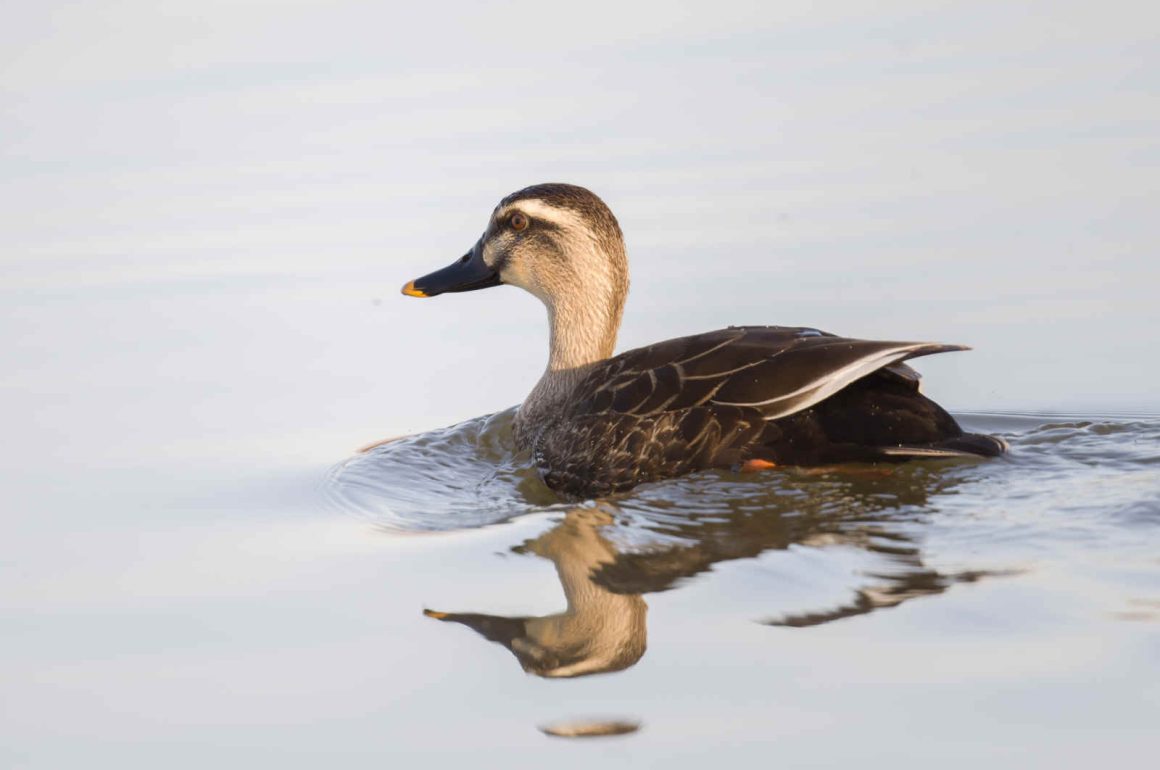
A waterproof bird is not simply a bird with oily feathers. Waterproofing is about surface chemistry: it comes from the interaction between the feather’s molecular composition and its microscopic structure. Keeping water away is the result of several chemical and physical effects acting together at the feather surface.
The basic material of feathers is keratin, a protein made up of both polar and nonpolar amino acids. Chemically, keratin itself is not strongly water-repellent. Its surface presents many polar groups capable of forming hydrogen bonds with water. A feather made only of keratin would absorb water, gain weight, and lose much of its insulating value. Waterproofing, therefore, depends on modifications to this base material.
One such modification is the application of preen oil. Produced by the uropygial gland, preen oil consists largely of long-chain wax esters, fatty acids, and alcohols. These molecules repel water, reducing the number of polar sites available for water to bind and encouraging droplets to form. However, a hydrophobic coating alone is not enough. A smooth, oil-coated surface can still become wet under pressure, and too much oil interferes with feather flexibility and cleanliness.
The physical structure of feathers is equally important. Feathers are composed of barbs and barbules of different lengths. This intricate arrangement affects how water behaves at the surface. Droplets rest on the outermost parts of the feather while air remains trapped in the spaces beneath. As a result, water touches only a small portion of the solid surface. The trapped air also contributes to buoyancy and thermal insulation.
By limiting contact with the feather material, water droplets adhere less and are more easily shed by gravity, wind, or movement. Even if the feather surface is only moderately water-repellent, this structural effect produces strong resistance to wetting. It also amplifies the action of preen oil: hydrophobic molecules are far more effective on a rough surface than on a smooth one, because the structure keeps water from reaching the underlying material. Together, a thin layer of oil and the feather microstructure create a level of water resistance that neither could achieve alone.
Waterproofing can fail when this structure is disrupted. Damaged or contaminated feathers allow water to penetrate, displacing the trapped air. Once water reaches the keratin surface, wetting occurs readily. Surfactants, such as detergents, are particularly damaging because they lower surface tension and allow water to infiltrate narrow gaps.
Maintaining waterproofing requires constant upkeep. Preening spreads hydrophobic compounds, realigns feathers, and re-establishes air-filled spaces. In this way, waterproofing is not achieved by chemistry alone but also by the bird’s continual care of its plumage.










Waterproofing feathers is such a neat topic. How do different birds achieve that?