

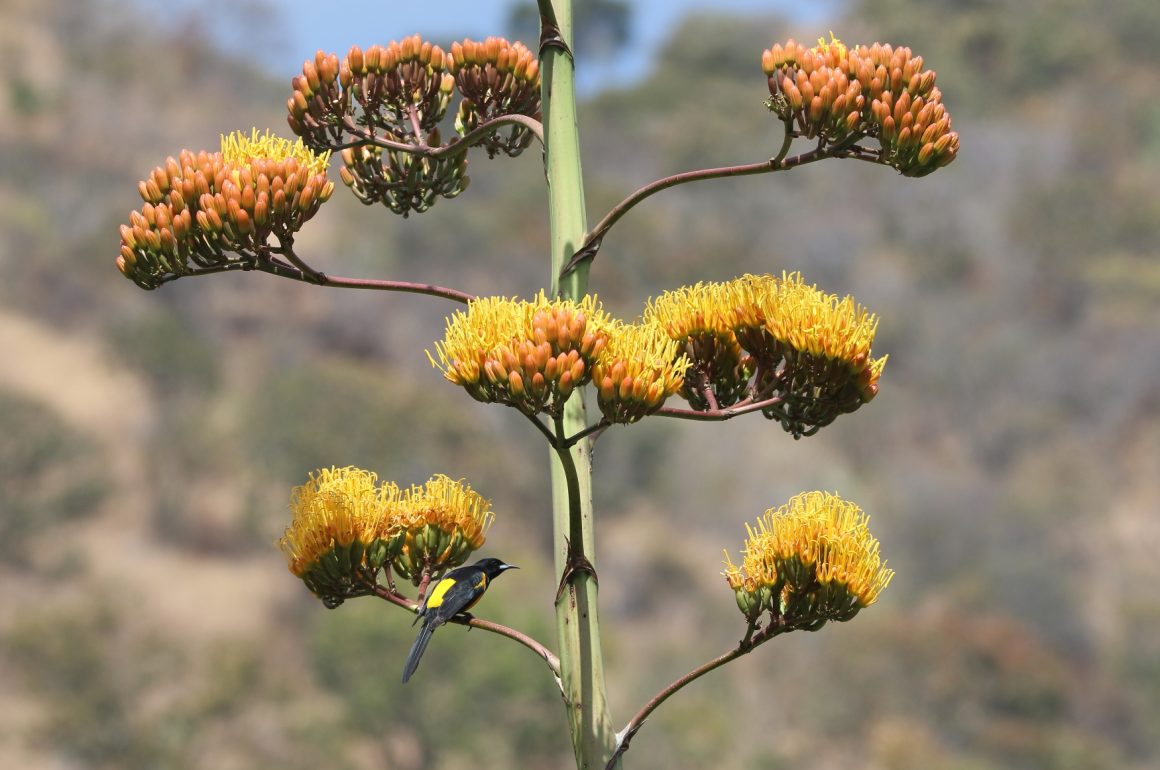
Agaves (pronounced ah-GAH-vase) are emblematic plants for Mexico. Lately, with the recent booms in interest in tequila and mexcal, both Mexican alcoholic drinks, vast tracts of natural forests have been cut down to grow the different varieties of agave with which they are made. But wild agaves are still common as part of natural ecosystems.
For most of their lives, the agave plant grows as a rosette of thick, fleshy leaves, each one with a sharp spine at its tip. Many agaves are very large, but not all. After growing for 5-60 years, the plant sends up a since flower stalk. Once it has flowered and producied seed the original plant dies, but it leaves a ring of new plants around its base. And during flowering, the agave is a major food source for insects, birds and bats.
I have been seeing a lot of agave stalks in flower on my recent outings, and a lot of birds visiting them. The stalks are colorful, and the birds that visit them (New World orioles and hummingbirds) are also colorful. So for the rest of this post I will let the pictures do most of the talking.
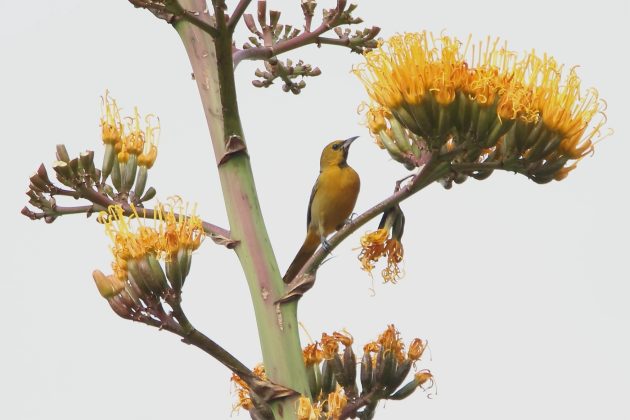
female Streak-backed Oriole, El Palmar
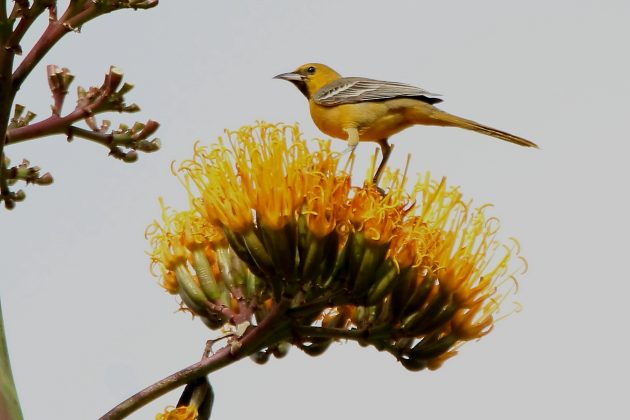
This Black-vented Oriole, seen on the dirt road to Arúmbaro, was a male. The same agave stalk hosts a female of that species in the title photo above. Streak-backed and Black-vented Orioles are both non-migratory orioles, found from central Mexico through Central America.
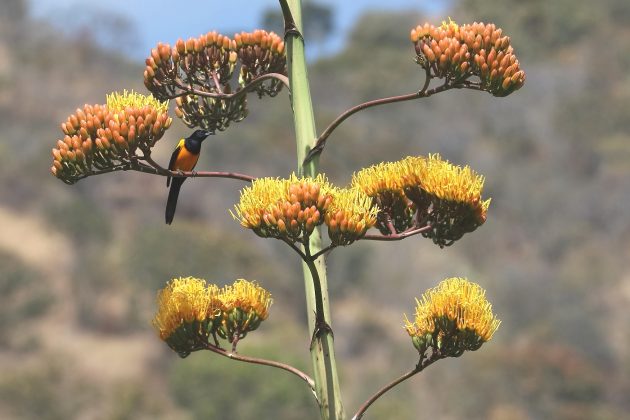
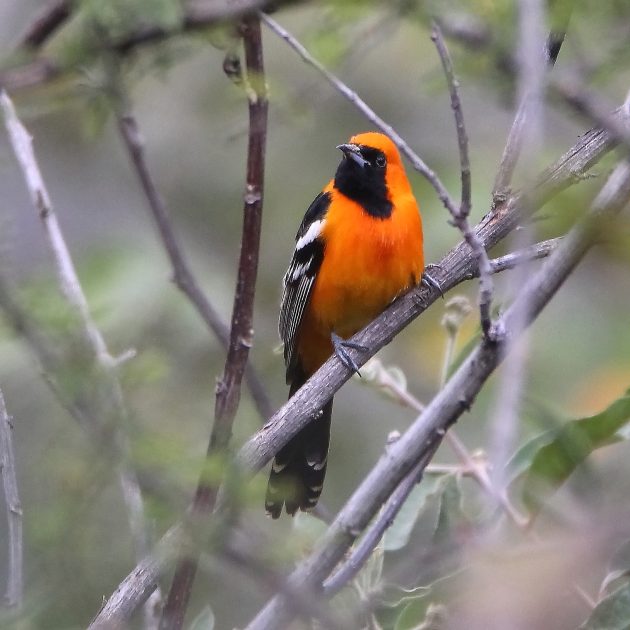
This winter-only migratory male Hooded Oriole eventually found his way to the above agave as well. Although I did not manage to photograph him there, he was too handsome to not include here.
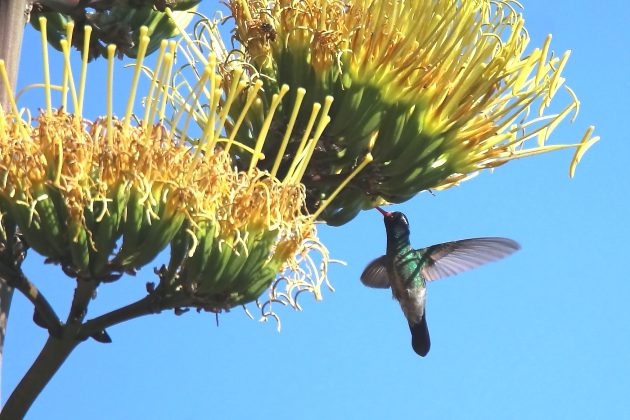
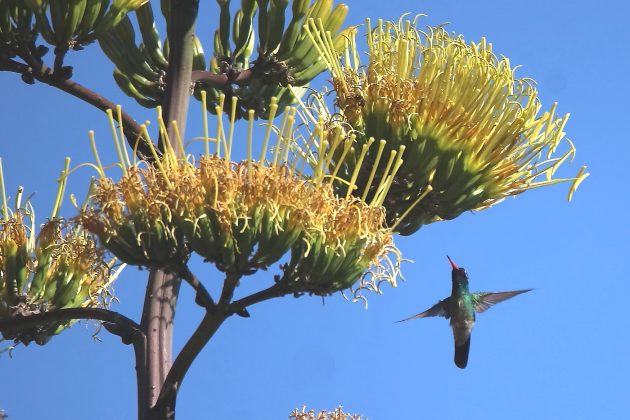
White-eared Hummingbird, Triquillo
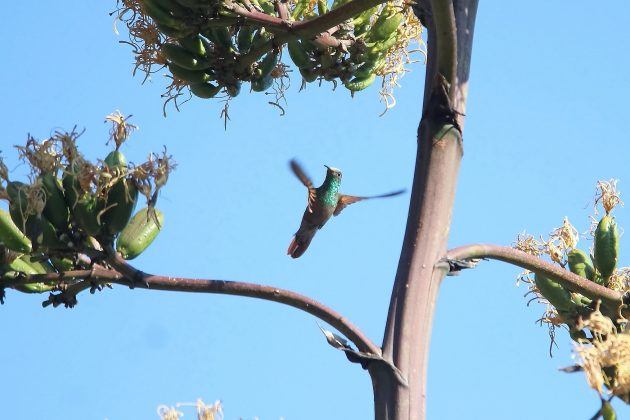
immature Berylline Hummingbird, Triguillo
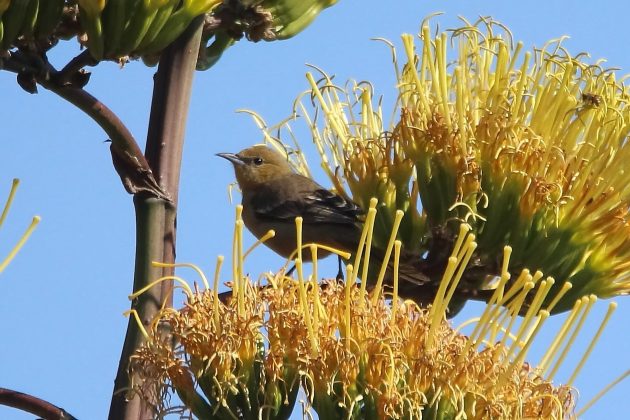
Orchard Orioles are migratory. But they can be seen in the central Mexican highlands all year round. Our summer Orchards probably head south to the coast in the winter, and are replaced by the Orchards from farther north. I saw this female in Triguillo.
.










The way you captured the agave details is really unique. Did you use any specific lighting techniques for those shots?