

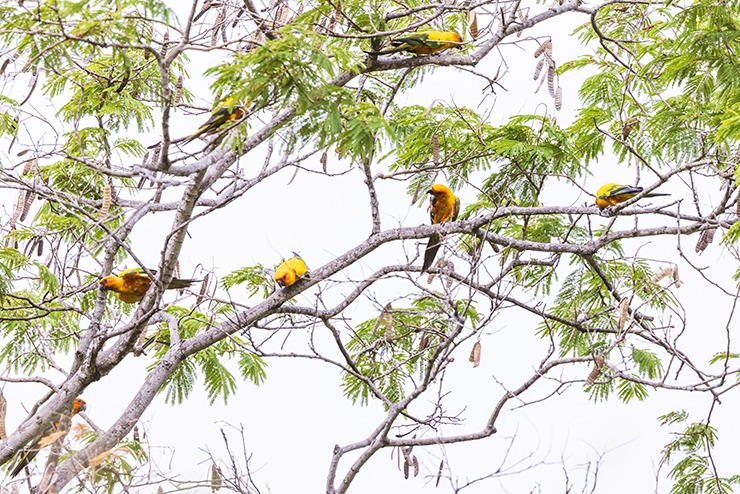
A couple years ago I detailed my misadventures searching for a few birds in Guyana’s wild interior. That post made mention of three species; the writer has since managed to make eye contact with two of those. While everyone was winding down and spending quality time with their friends and families at the end of last year, we were (naturally) birding furiously in Guyana’s emerald heart.
On our prior visit, we achieved the dubious distinction of being our friend Leon’s first unsuccessful mission to find the endangered Sun Parakeet. In that futile search, the Rupununi heat truly got under my skin, and I crashed in spectacular fashion upon my return to Trinidad a few days later. This time – just as we did on the previous visit – we commenced in the pre-dawn, quietly determined but keenly aware of the vagaries and inconsistencies of the natural world.
As always, we picked up our village guide, who distinctly remembered – and often jovially recalled – our failed mission for the parakeets. I hadn’t a clue but we were already legends, albeit not by virtue of achievement in any form. On that failed mission, we combed the vegetation, tuning and re-tuning our ears to filter any similar sounds that may distract us from our goal. This time, we barely birded for ten minutes before a sunshine-tinged movement caught our eyes.
The sun hadn’t quite crested the hills and there we were, with a small flock of around eleven Sun Parakeets generously distributed all around us. We were mentally and emotionally prepared for another arduous morning; the sight of these gorgeous birds washed us with waves of relief. One doesn’t truly know the weight of expectation until it is lifted – and oh did that weight take wing with the sight of these birds.
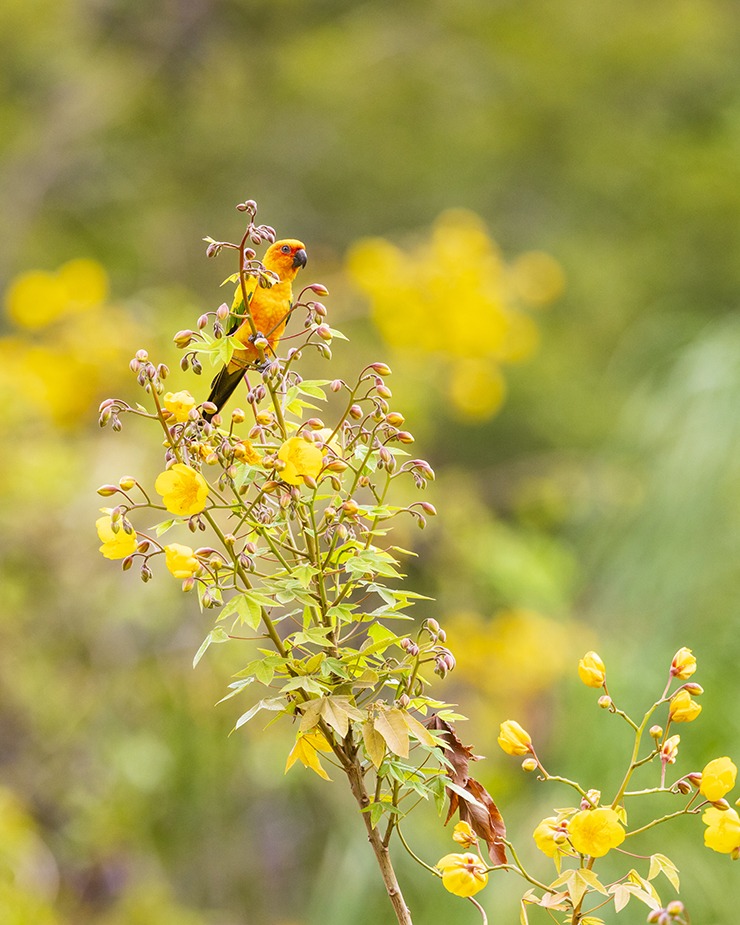
Sun Parakeet
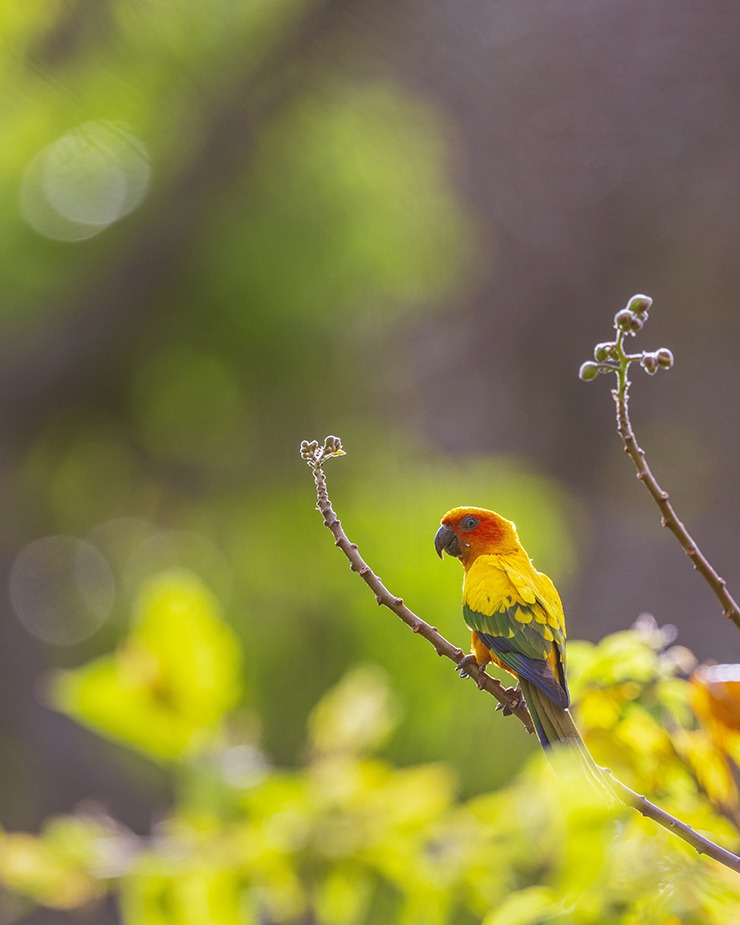
Waiting a couple of years to see these beauties at eye-level was entirely worth it. Sun Parakeets are highly threatened, mostly by the pet trade, they are well-known in those circles as “Sun Conure“
Sun Parakeets are endemic to the Roraima-Rupununi savanna ecosystem; the majority of the population lives in Brazil. Only a sliver remains in Guyana, we remain wholly grateful to be able to bask in the presence of so many!
Birds of the World states that the total wild population is likely fewer than 2,500 mature individuals. The unpalatable nature of humanity weaves a great tragedy; between 2005 and 2016 more than 20,000 Sun Parakeets were imported into Singapore. For cages, of course. When will we learn?
Ref: Aloysius, S. L. M., D. L. Yong, J. G. Lee, and A. Jain (2019). Flying to extinction: understanding the role of Singapore’s international parrot trade in growing domestic demand. Bird Conservation International 30(1):139–155.







Where did you see them? Karasabai?
That pleasant place was where my sighting was in 2019. :-}
Yes, Karasabai! The site of both our failure and success.
Legend!