

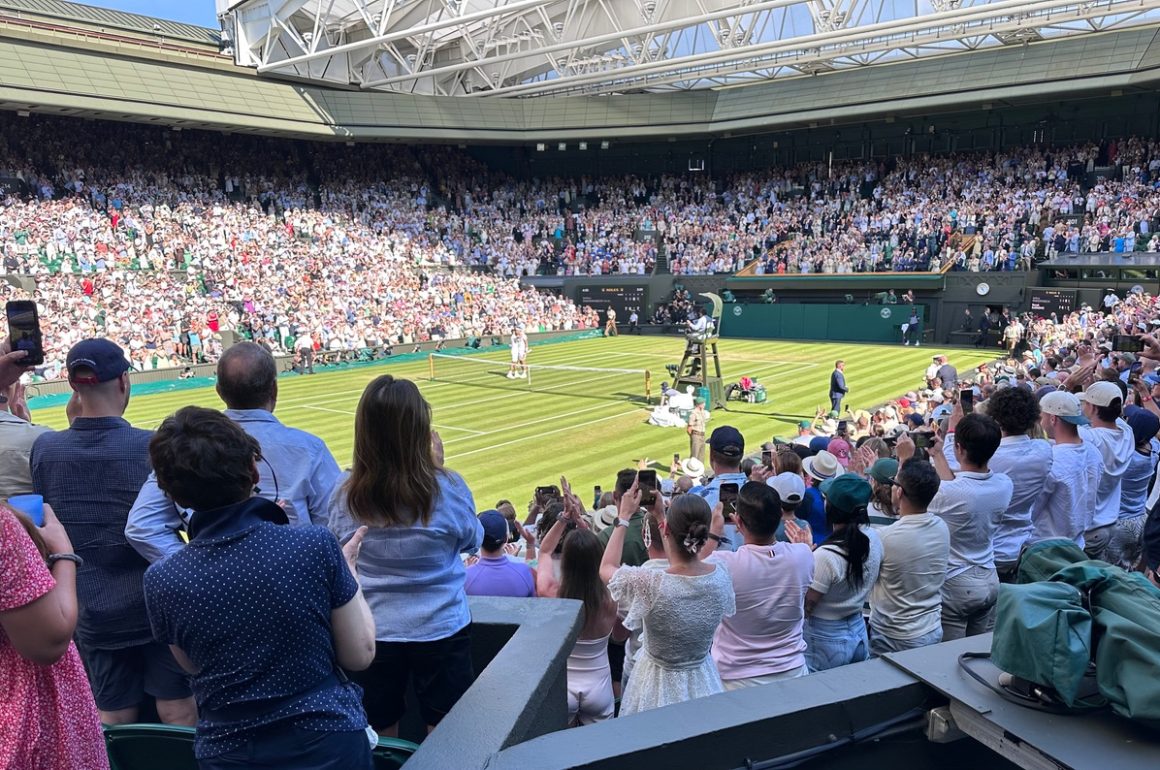
I’ve never done a Big Sit – that’s sitting in one place for many hours and recording all the birds you see – but I came quite close to one last week, when I sat on Wimbledon’s Centre Court for nearly six hours. Yes, I was watching tennis, but I had my binoculars with me, and they proved just as handy for checking out birds as tennis players.
A friend who was keen on Big Sits used to regularly notch up 80 species here in the UK, while in Finland the annual Battle of the Towers works on a similar theme, though with teams observing from a birdwatching tower. Here the winning team usually scores around 110 species, while the combined total of all the teams, watching from no fewer than 300 towers, is always well over 200 species. Impressive stuff.

Photographing tennis players is much easier than birds – they keep coming back to the same spot. This is, of course, Novak Djokovic
Centre Court is probably the worst place in Britain to see birds, and there is a very good reason for this. Everyday throughout the fortnight of the Championships, falconer Donna Davis flies Rufus, a Harris’s Hawk, around the 42-acre grounds of the All England Club in a bid to flush out any birds that might disrupt the play. Rufus first undertook the job in 2008 when he was just 18 weeks old. He’s still at it today at the age of 18.
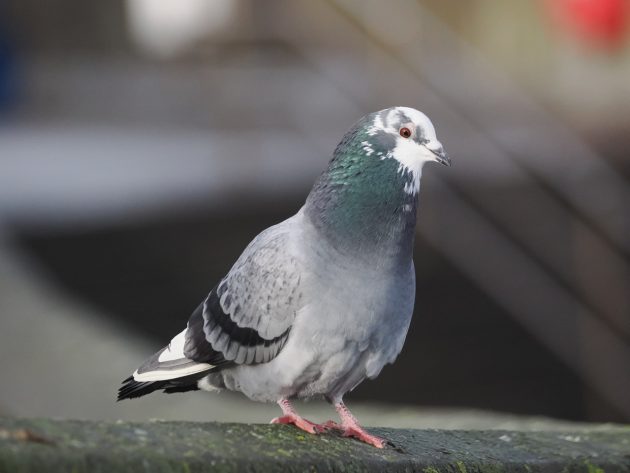
Feral Pigeon: Rufus the Harris’s Hawk is deeply unpopular with the Wimbledon pigeons
Pigeons are Rufus’s speciality, as these birds are fond of sitting in the roof of Centre Court. Rufus is very good at his job, as during my afternoon watching such stars as Sabalenka and Djokovic I saw just a single Woodpigeon and not a single Feral Pigeon. Rufus has his own Wimbledon photo-card security pass with the job title “bird scarer”. I’m not sure whether he ever catches the odd pigeon, but his presence is certainly sufficient to keep the pesky birds away.
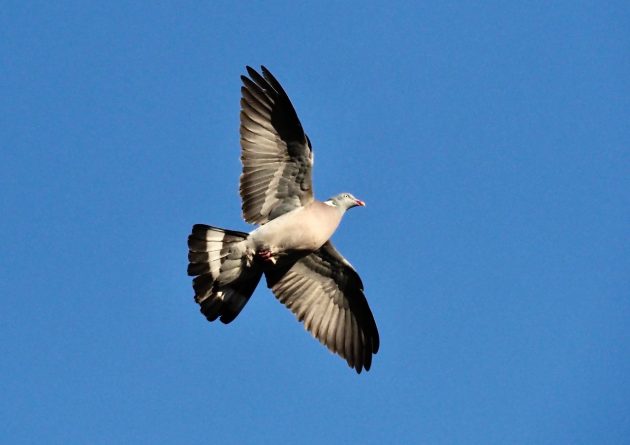
I saw just a single Woodie fly over Centre Court in the space of six hours
There were times when the tennis was sufficiently exciting that I may well have missed birds flying over, so I had to be satisfied with the four species I did see. I’ve already mentioned the Woodpigeon. This was a single bird, flying high over the court and clearly with no intention of stopping (it must have heard about Rufus). A similar fly-over was performed by a couple of Lesser Black-backed Gulls: they were very high, so Rufus wouldn’t have bothered them, even if he had been around.
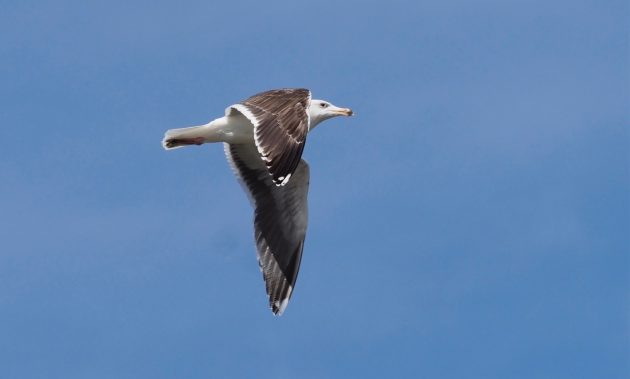
Lesser Black-Backed Gull – now a year-round resident in the UK
It’s unlikely that Jean Borotra would have looked up to see a Lesser Black-back flying over when he won Wimbledon in 1926, because a century ago these gulls were rarely seen inland in Britain. In those distant days their British population was relatively small, and they were regarded as summer visitors. Today our breeding population is around 110,000 pairs, and increasing numbers nest inland (including in London), usually on flat-roofed buildings.
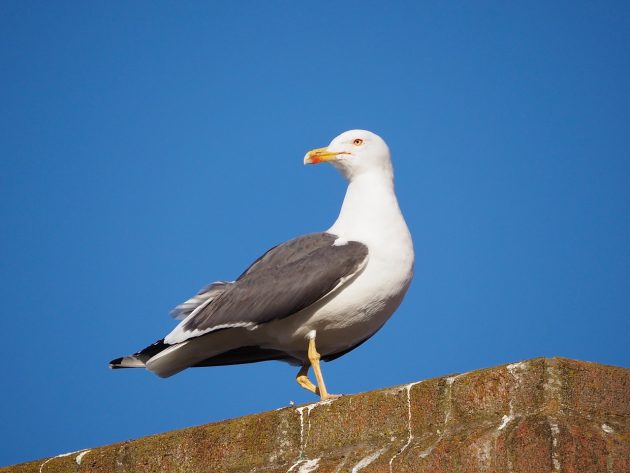
Urban-nesting Lesser Black-backs like flat-roofed buildings
The Lesser Black-backs we see in Britain are of the race Larus fuscus graellsi, their backs slate grey, unlike the smart black backs of the nominate race, Larus fuscus (often called the Baltic Gull) which nests in Scandinavia. Intriguingly, the latter is an exceedingly rare bird in the British Isles. Highly migratory, Baltic Gulls head directly south after nesting, flying across mainland Europe to winter off the coast of East Africa. Some gull enthusiasts have suggested that the two are really different species so should be split, but the latest AviList continues to lump them.
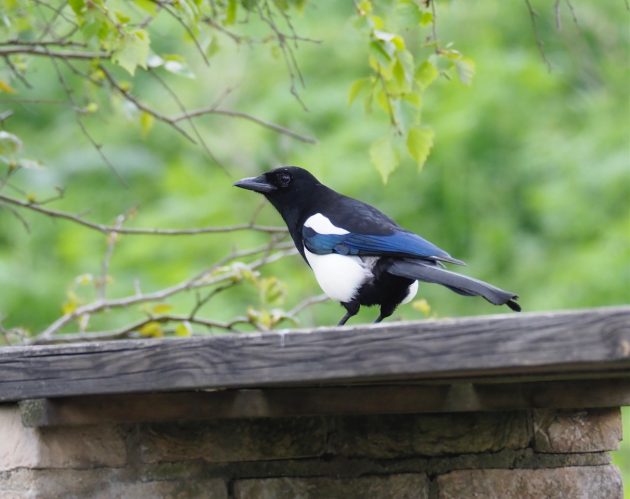
Magpie: only a recent invader of urban areas
I didn’t need my Leicas to identify the pair of Magpies I saw, perched high on the Centre Court roof. They were a new tick for my Centre Court list, as I can’t recall having seen them there before. Magpies are country birds that have adapted well to life in the city, only breeding in inner London for the first time as recently as 1977. They’re sufficiently tough that they’re probably not too bothered by Rufus, while it may be that they are bright enough to realise that Rufus only patrols in the early morning, never when tennis is being played.
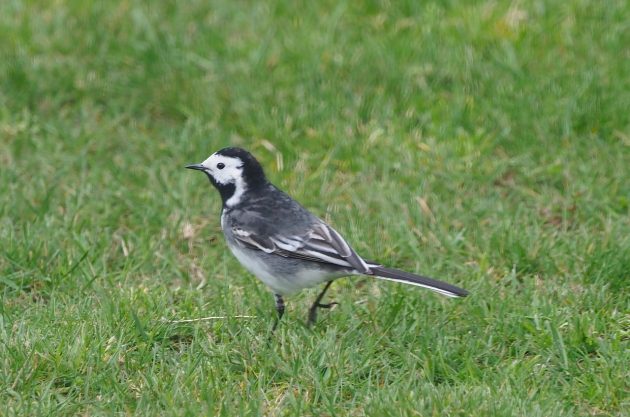
Pied Wagtail, a Centre Court regular
My fourth and final species seen was Pied Wagtail. These birds are Centre Court regulars, and one that I have seen there many times. Occasionally they will fly down to the court, attracted by the verdant green grass, and not put off by tennis balls flying around at 100mph. I saw a pair of these wagtails, but sensibly they never ventured away from the top of the roof. I spotted my first one because I heard it call, which is quite remarkable when you consider that there were 12,000 people sitting around the court. However, the Centre Court crowd is very good at keeping quiet during the rallies.
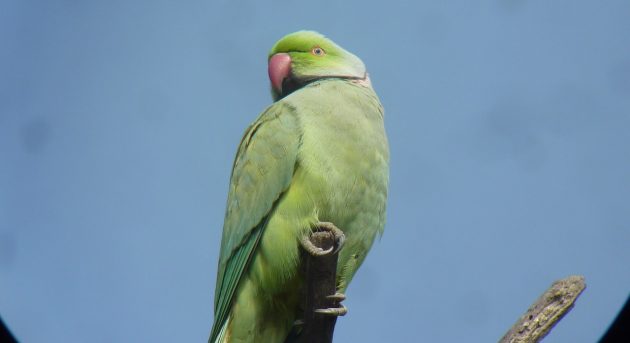
I ticked my first UK Ring-necked Parakeet of the year in Morden Park
In years past I have seen Ring-necked Parakeets flying over the grounds, but I neither heard nor saw one this year. These exceedingly noisy birds are loved and loathed in equal measure by Londoners. Though I didn’t see any in the grounds of the All England Club, I’d earlier ticked them off for my UK year list when I parked my car at Morden Park (I used the park-and-ride to get to the tennis, parking my car and catching a dedicated bus). Morden Park is an extensive green lung in south London, and here I also heard Green Woodpecker, Chiffchaff and Blackcap, so my species count for the day was nearly 10. I may not have noted many birds, but I did watch lots of tennis.
Footnote: There were rumours before the Championships that Rufus was to be made redundant, like the Wimbledon line judges, and to be replaced by drones. The All England Lawn Tennis Club has denied the rumours, disappointing the Wimbledon pigeons.
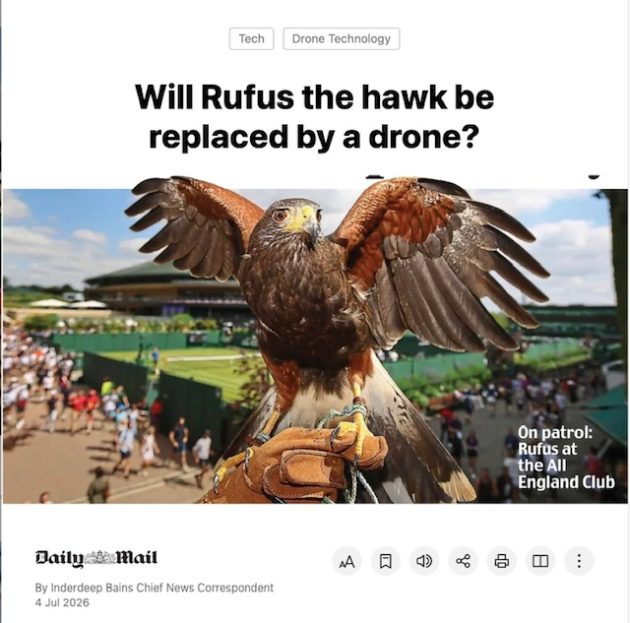
No, he won’t






Loved this piece! As we watched the tennis on tv I never thought about the birds or knew about Rufus. Now my Wimbledon watching will take on a new dimension.
The Woodies got defeated by Elting/Haarhuis in the doubles finals of 1998.
Spot on Peter.
Thank you for your charming and interesting article! I was actually excited to see what looked to be a fledgling Pied Wagtail in a short bit of pre-commercial video footage shown during the Wimbledon broadcast several days ago. And was thankful for the details you provided on the ecology of these species in London. (Your piece also brought back fond memories of the birds I noticed throughout a visit to the French Open at Roland Garros two years ago–including several of your species as well as singing robin, chaffinch, and blackbird.)