

By John Cavitt
John Cavitt is a Distinguished Professor of Zoology at Weber State University in Ogden, Utah. For over two decades, his research has focused on the ecology and conservation of Great Salt Lake birds. He has tracked shorebirds from Utah to the coast of Mexico, banded birds in Siberia, and spent more field seasons than he can count watching a lake he loves grow smaller. He writes and speaks regularly on Great Salt Lake conservation and can be found on Instagram @birdecologyguy and LinkedIn at linkedin.com/in/johnfcavitt
Three O’Clock in the Morning
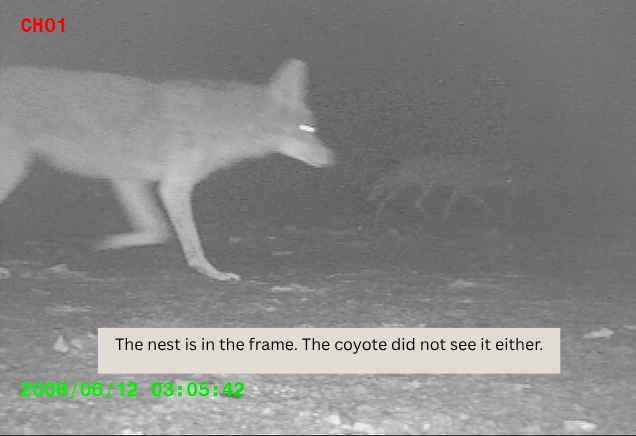
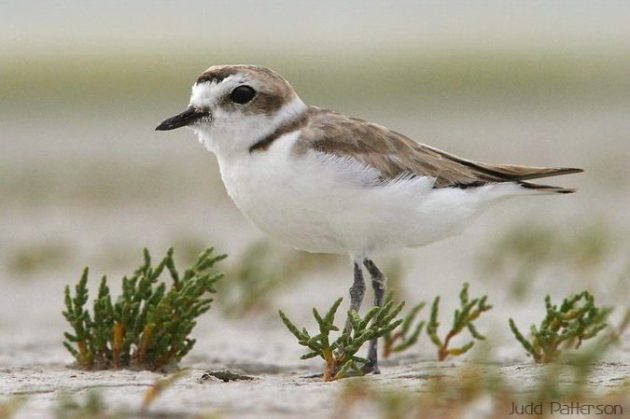
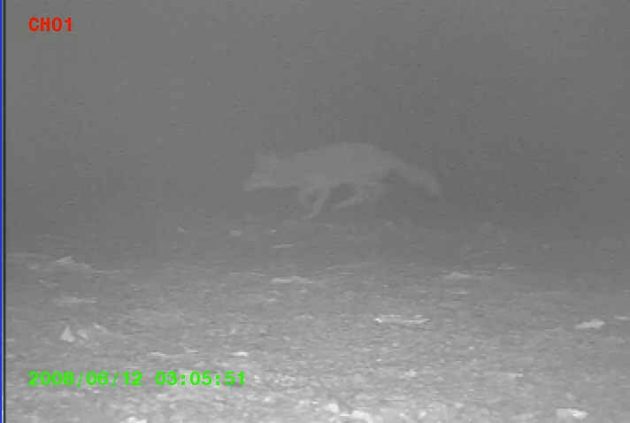
The camera does not lie, but what it reveals depends entirely on what we think we are looking for. The images here are frames taken from a research video camera centered on a Snowy Plover (Anarhynchus nivosus) nest. The footage begins at 3:00 am on the remote western shore of Great Salt Lake, Utah. Getting that footage in 2008 was its own small ordeal. My student technician at the time, Ed Parker, spent hours hauling solar panels, batteries, camera and recorder housings across the alkali flats to keep the system running, long before trail cameras were the back pocket devices they are today (Figure 1a – image courtesy of Judd Patterson, 1b).

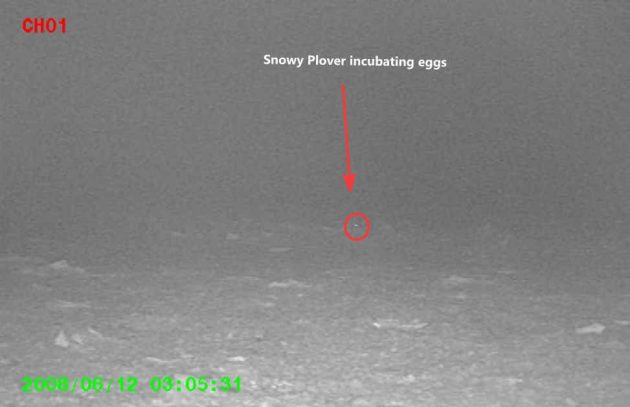
An adult Snowy Plover sits motionless at the center of the frame, incubating a clutch of eggs laid directly on open ground. Two coyotes (Canis latrans) enter from the left, moving at an easy trot, close enough that the camera captures the texture of their fur. Coyotes have worked these shores for as long as anyone can remember, so their presence is nothing new. They pass within a few feet of the nest. Neither breaks stride. Neither looks down. They disappear past the right side of the frame, and for a moment, the adult remains still, the threat apparently passed (Figure 2a, 2b).
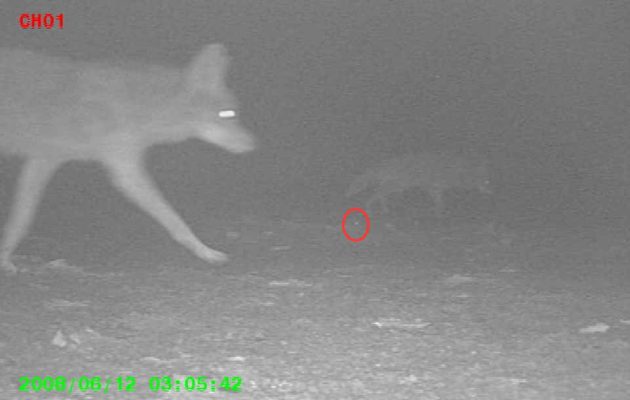
Then one coyote reemerges, its head lowered, nose to the ground. The animal is different now. The easy trot is gone. It quarters back and forth, reading something in the air the camera doesn’t reveal. It is not looking for the nest. It has already found it, or rather, its nose has. The eyes are almost incidental now. The coyote closes the distance until it is within a few feet of the incubating adult, and for a long moment nothing moves (Figure3a, 3b, 3c).
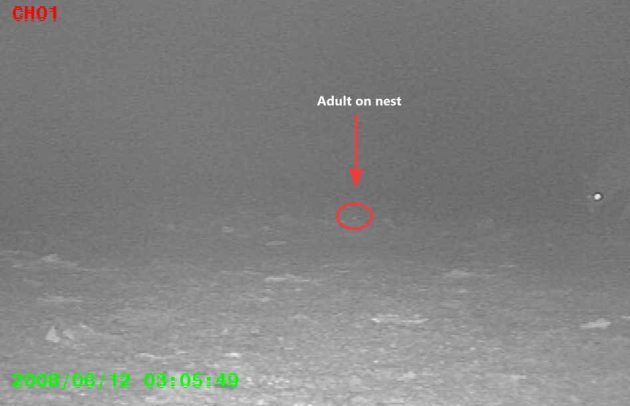
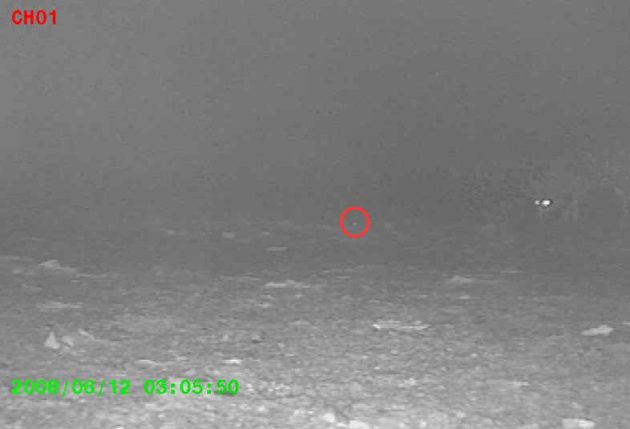
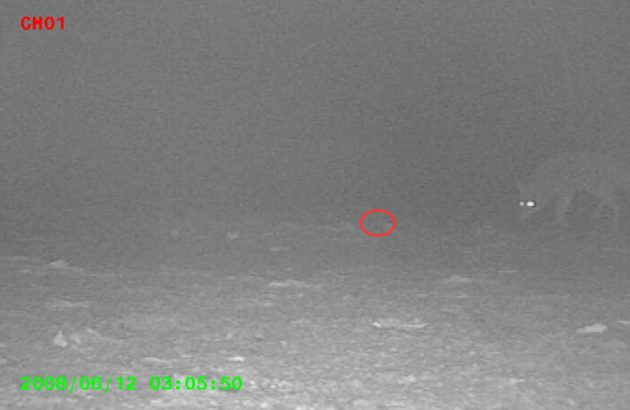
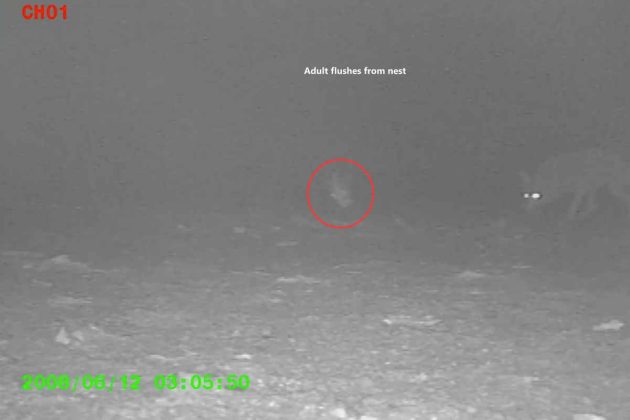
Then the adult flushes. She clears the frame in an instant, there and then gone. The coyote lunges for the plover, misses, and drops its head to the nest. The eggs are gone in under a minute (Figure 4a, 4b, 4c, 4d).
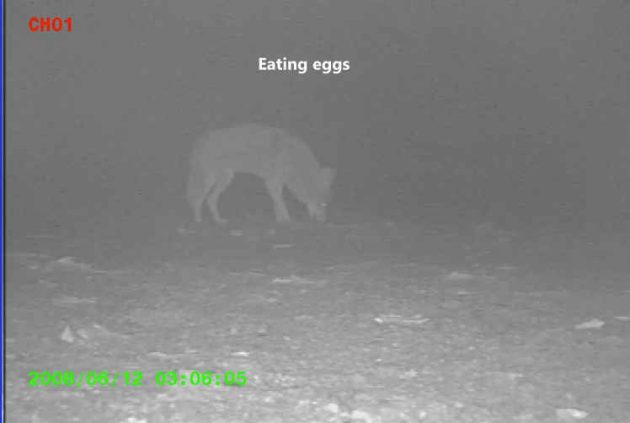
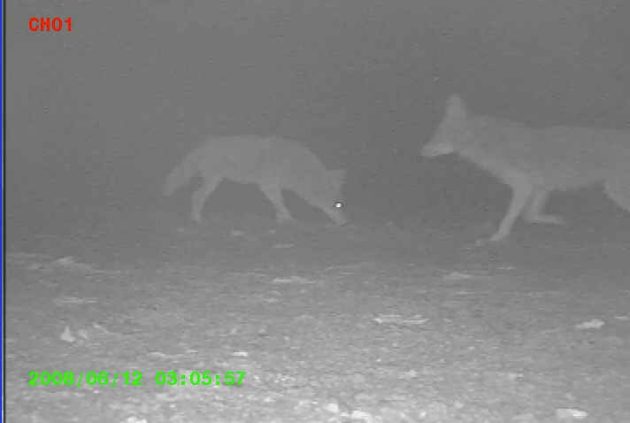
Eggs that are shaped over millions of years, matched so precisely to the pale alkali substrate that a careful researcher can walk past them without seeing them. It is the cryptic perfection that had fooled every visual searcher that ever passed this nest, including the same coyote sixty seconds earlier, all of it made irrelevant the moment that animal caught the scent (Figure 5).
What the camera recorded next is not strictly scientific, but it is the moment that has stayed with me. When the coyote finished, it squatted and urinated on the empty nest. My mammalogist friends have told me this is a scent-marking behavior, a canid claiming a food resource, and that may well be right. But watching the footage for the first time back at the lab, what I saw was a punctuation mark (Figure 6). The nest that no eye could find had been located, raided, and eliminated in less time than it takes to read this paragraph, and the animal that did it never once looked down.
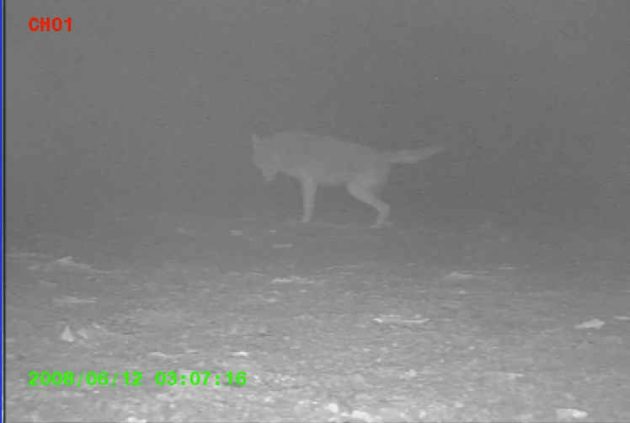
Looking for the Wrong Thing
I have spent much of my career thinking about why a scene like that one unfolds the way it does, and for years, the answer was not the one I expected. You see, I spent the first decade of my career studying nest predation in birds, carrying the assumptions most of us in this field shared. Within the ornithological community, the prevailing framework held that the choice of a nest site and how well that nest was concealed were the primary factors determining whether it would survive. We painstakingly quantified the concealment, measured percent cover, vegetation height, and the density of whatever grew around each nest, trying to determine what makes a successful nest (Figure 7a, 7b, 7c).
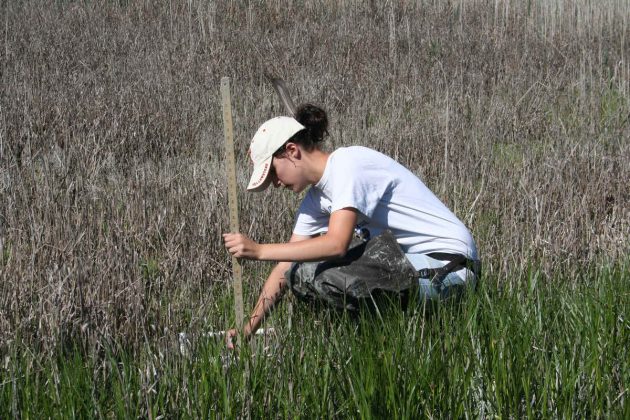
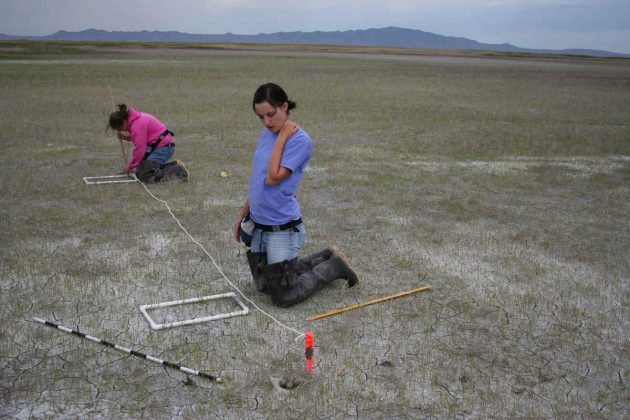
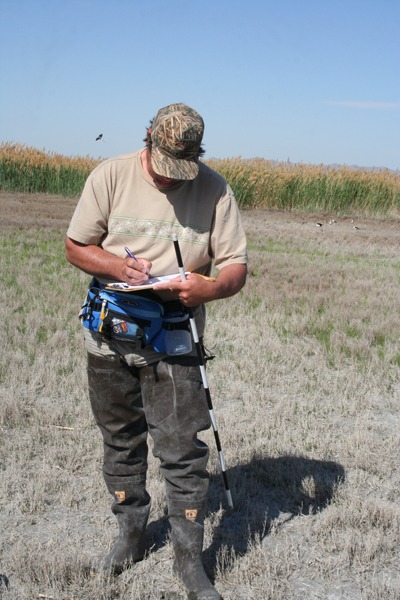
It was a reasonable framework, built on solid empirical work. But it was also a framework built largely in our own image. My colleagues and I had been investigating nest predation from the perspective of a visually oriented predator, because that is what we are.
It probably comes as no surprise that humans are a visually oriented species. But compared to most other mammals, we are the exception in that regard. Roughly 30 percent of the cerebral cortex is devoted to processing visual information, against just eight percent for touch and two to three percent for hearing, and if you add the pathways coordinating sight with movement and memory, nearly half the brain is involved in vision. We carry about 400 functional olfactory receptor genes; dogs have roughly twice as many, and mice more than a thousand. Our noses sit high on our faces, far from the ground where important scent trails are found. On the other hand, our forward-facing eyes are high on our heads and well positioned for scanning the horizon for color, movement, and depth. Our language indicates how important vision is to us relative to the other senses. When we grasp an idea, we say we see it, not that we hear it or smell it. We look for clarity, we call a person of foresight a visionary, and we complain about being kept in the dark. A great deal of our vocabulary is borrowed from the mechanics of vision.
So when we built assumptions of nest survival around concealment, around how well a nest is hidden from view, we were building them around our own dominant sense. And for most of the evolutionary history of Great Salt Lake, that emphasis actually fit the system reasonably well. Historically, the birds that nest here were shaped by predators that hunt more or less the way we would.
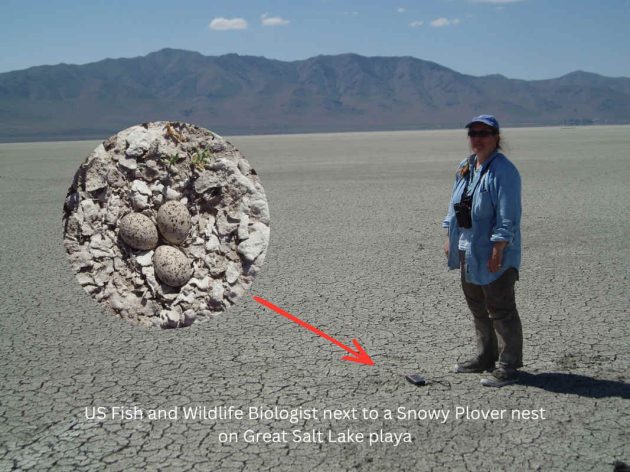
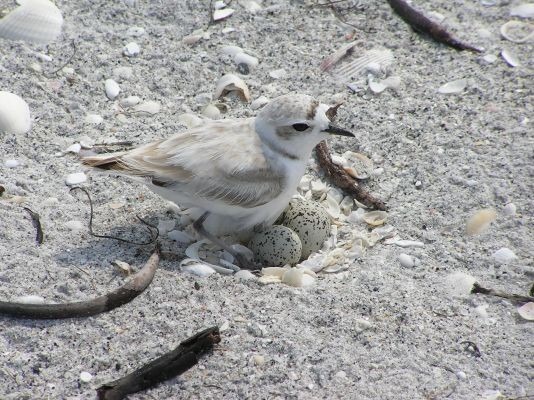
For most of the recorded history of this system, the principal nest predators at Great Salt Lake were likely California Gulls (Larus californicus), Common Ravens (Corvus corax), perhaps a few snakes, an occasional coyote, and of course humans. Archeological evidence indicates that eggs were an important food resource for Ancestral Indigenous peoples of the Fremont culture at Great Salt Lake. Except for the coyote and the few snakes found here, the other predators are primarily visually oriented. A gull or raven working a shoreline, or a young ancestral indigenous boy wading through bulrush, is essentially using the same techniques my student field researchers are taught to use when trying to locate nests. They watch for the movements of adults, scan for slight differences in the shape, color, or any break in the pattern that gives a nest away. Against predators like these, a nest that cannot be seen is a nest that is, for all practical purposes, safe. This is the world the Snowy Plover was built for, and its nest is a masterpiece of defense against the eye (Figure 8).
To appreciate that masterpiece, you have to see where the bird chooses to raise a family. Great Salt Lake is not one place but several, depending on where you stand. The eastern shore, where nearly all the freshwater inflow arrives, grades from lush wetland through emergent marsh into shallow sheet flows at the lake edge. The western shore is something else entirely, far from population centers and managed impoundments, harsh and unmediated, its alkali flats stretching to a horizon that offers nothing in the way of cover or shade (Figure 9). It is considerably drier out there as well, roughly 2.5 times so: Salt Lake City, on the southeastern side, averages about 15 inches of precipitation a year, while Lakeside, a railroad ghost town some 75 miles west, receives only about 6.25.
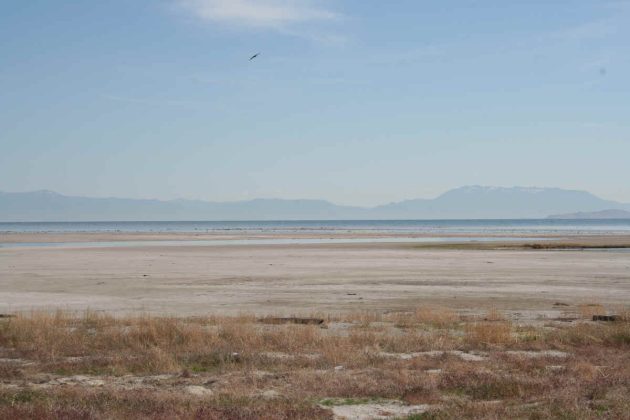
It seems an improbable place to raise a family. The open flats offer no shade and no refuge from a landscape where air temperatures regularly exceed 100? F, while ground surface temperatures regularly surpass 120? F and can often be found closer to 150? F. Yet Snowy Plovers nest here in numbers, their speckled eggs laid directly on the hot, bare ground and matched so precisely to the pale substrate that trained student field researchers, and their professor, can easily walk within inches of an active nest and never see it. That invisibility is not an accident. It is the product of millions of years of evolution, in which even the slightest advantage in coloring or pattern is carried forward to the next generation.
The coyote in that footage broke the whole arrangement because the coyote does not hunt the way a gull hunts. It hunts by its nose, and a nest engineered over evolutionary time to defeat the eye offers no defense against an animal reading the air. The coyote is no newcomer here, but across several thousand hours of nest recordings, that was the only coyote depredation event we captured. This leads me to believe that coyotes are incidental nest predators. What makes the footage useful, however, is what it demonstrates about method: how completely scent can defeat a defense built for the eye.
A few years ago, I wanted to know whether rates of nest predation at Great Salt Lake had changed over time. With the help of JaNae Kinikin, our subject librarian at Weber State University, I assembled nesting studies conducted here, going back as far as I could find them. We ended up with a handful of studies, mostly on waterfowl, with a couple on other waterbird species and shorebirds mixed in. The data were collected from different locations around the lake, going back to the 1930s. From 1930 through the 1970s, waterfowl nesting success averaged between 70-85%. In other words, roughly 70-85% of nests fledged at least one young[1]. As imperfect and as unevenly collected as they were, these rates are unbelievable to me. For context, a recent study published on waterfowl from the Bear River Migratory Bird Refuge in 2023 found just 23% nesting success. Our results for Snowy Plover published in 2015 averaged 10.5% at one location and 58% at our most productive[2]. A brief review of these results reveals a shift that occurs after the 1980s. Predation rates began climbing across a broad range of species and habitats, and at Great Salt Lake, the inflection point appears to be correlated with a historic event.
From 1983 to 1987, Great Salt Lake experienced the most significant and economically disruptive flooding period in the last hundred years. Driven by a multi-year deluge, the lake set an all-time peak elevation at 4211.85. Because it occupies a shallow basin, the rise caused the lake to expand from 1,700 square miles to more than 2,500 square miles. This flooding caused tremendous infrastructure damage as well as massive ecological impacts (Figure 10).
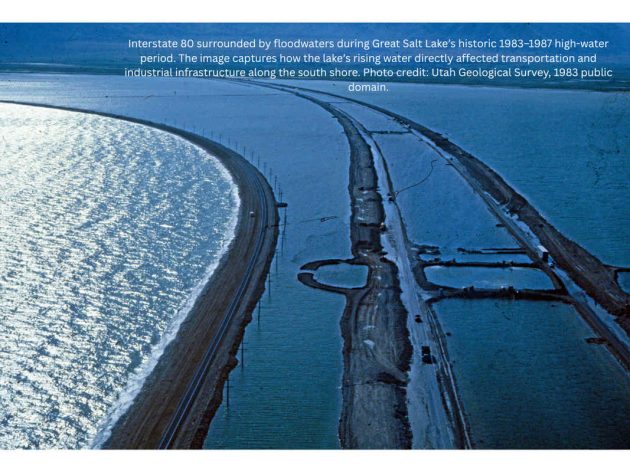
The flooding reshaped the shoreline ecology of the lake in ways that are still to this day playing out. The change in the lake and the surrounding wetlands created conditions in which a non-native fish and two predators were able to establish themselves. Populations of the raccoon (Procyon lotor) and the red fox (Vulpes vulpes) began increasing rapidly. Both are superb olfactory hunters. The lake gained two efficient and abundant predators, neither of which had historically belonged to the predator community. In a sense, local breeding birds had perfected defense against the eye, and the lake quietly handed them a growing roster of predators that hunt by their nose.
Raccoons are intelligent, adaptable, and capable of reaching high densities in wetland systems, but only if they can maintain a year-round food subsidy. At Great Salt Lake, that subsidy arrived alongside them, in the form of common carp (Cyprinus carpio). The carp is an introduced species that has colonized the freshwater impoundments and managed wetland units rimming the lake’s eastern and southern margins. I encountered the clearest illustration of this connection not through a camera but by following my own curiosity. During fieldwork at Farmington Bay Waterfowl Management Area, I watched a raccoon cross a dike and disappear beneath it. What I found when I investigated was a den holding seven young raccoons, surrounded by an enormous, scattered pile of carp bones.
I mentioned that observation to Dr. Sam Zeveloff, a colleague in my department who has written a natural history on the masked bandit[3], and his response was disturbing. A litter of seven, he told me, is not normal raccoon reproduction. It is the signature of a food-supplemented population, one with access to enough caloric surplus to push litter sizes well beyond what a native prey base would support. The carp were not merely coexisting with the raccoons. They were subsidizing them, sustaining the population through the winter when bird nests and most other food resources are scarce or unavailable. The carp maintain raccoons at densities the wetland bird community was never built to absorb. When nesting season arrives in spring, those inflated populations turn to eggs and chicks with an efficiency that a naturally regulated predator community could not match (Figure 11).
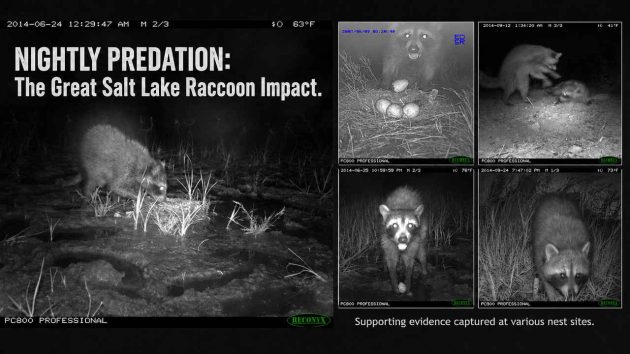
The den under the dike at Farmington Bay is a local instance of a pattern that recurs wherever a predator is decoupled from the prey base that would otherwise hold it in check. Examples range from feral cats fed in urban colonies to the egg-raiding mustelids of New Zealand. Here it means one thing above all: the birds of Great Salt Lake now face substantial predator densities their defenses were never designed to withstand.
If the predators here have shifted from hunting by eye to hunting by nose, the next question is what the birds might have evolved in response. For a long time, almost nobody thought to ask. The reason is the same visual bias that has shaped the rest of this story: it simply did not occur to us to check whether a bird might be doing something we couldn’t see.
That blind spot, though, rested on something older and more specific than a general preference for the visual. For well over a century, my field treated it as a settled fact that birds have almost no sense of smell, which left little reason to look for a scent-based defense in animals presumed unable to smell in the first place. That assumption has a surprisingly traceable origin. In 1826, John James Audubon set out to settle a running argument over whether Turkey Vultures (Cathartes aura) find carrion by sight or by smell. He staked a grass-stuffed deer hide in a field and, some distance away, concealed a rotting hog carcass underbrush; when the vultures ignored the hidden hog, he declared the question closed. Birds, he concluded, have a poor sense of smell and do not rely on olfaction. Ornithology largely agreed with him for more than a century, until 1960, when Kenneth Stager repeated the experiment with more care and found that Turkey Vultures do locate carrion by smell; they simply favor fresher carcasses over the putrid meat Audubon had offered. One flawed field experiment, run by the most famous naturalist in American history, set the assumptions of an entire discipline for five generations.
Learning to Smell Less Like a Bird
The assumption finally began to give way only when someone thought to look at what incubating birds were doing rather than what they were presumed incapable of. In 2002, the Dutch biologist Jeroen Reneerkens and his colleagues at the Royal Netherlands Institute for Sea Research noticed something unusual in the preen gland secretions of Arctic sandpipers. Nearly all birds have a preen gland, properly the uropygial gland, at the base of the tail. It produces the waxy oil that a bird works through its feathers when preening, keeping them pliable[4]. For most of the year, these birds coat their feathers with a secretion made of low-molecular-weight waxes called monoesters, but in the weeks surrounding courtship and incubation, the chemistry shifts to a heavier, thicker, less volatile wax made of diesters. Because of their chemistry, diesters do not evaporate as readily as monoesters, so they produce less odor[5]. In 2005, the team tested whether this change could be an adaptation to reduce the olfactory signature of their nest. Jeroen and his colleagues trained a dog to detect and locate both types of preen gland secretion. In controlled scientific trials, the dog had a much more difficult time locating diester secretions relative to the monoesters. By 2007, they had identified this same pattern across a large number of shorebirds as well as passerines. Interestingly, they also demonstrated that the shift tracks parental duty with remarkable precision. In species with biparental incubation, both sexes switch to producing diesters; where only one does, only that parent does. Whichever bird is on the eggs is the one quietly turning down its own scent.
How new is this idea? New enough that it remains genuinely unsettled. A 2024 study of the Kentish Plover (Charadrius alexandrinus), a close relative of our Snowy Plover, found no diesters at all in incubating birds of either sex, only monoesters. This does not fit the pattern established in the sandpipers. No one has yet tested whether Snowy Plovers make the switch. They may. They may not, or they may solve the same problem by some route no one has thought to look for. Either way, an idea that sounds almost obvious once you hear it, that a ground-nesting bird might evolve a way to smell less like a bird, has only became a subject of serious study within the last two decades.
A strategy that was nearly perfect for an older world turned into a liability once that world moved on. The Snowy Plover’s nest beats any eye and cannot beat a nose. Concealment was the right science for a lake of gulls and ravens, right up until the predators started following their noses. It was good work overtaken by a world changing faster than it could.
I have come to believe that the lake itself is caught in the largest version of this same pattern.
A Lake Caught in the Same Trap
When Brigham Young led the first Latter-day Saint pioneers (Mormons) into this valley in July 1847, the guiding ambition, drawn from Isaiah’s promise[6] that the desert would blossom as the rose, was to irrigate the basin into productive land. Within days of arriving in the valley, these early Mormon settlers were diverting City Creek onto the valley floor. That founding instinct, water as something to be captured, redirected, and put to visible use, shaped water law and water culture here for the century and a half that followed, and it has not disappeared (Figure 12). Despite being the second-driest state in the country, Utah still ranks among the highest per capita residential water users in the nation. Not surprisingly, roughly 60 percent of that water goes toward keeping lawns green, grass that would never survive in this desert on its own. Before the lake had reached its historic low elevation a few years ago, I used to hear quite frequently that any water that reaches Great Salt Lake is wasted water.
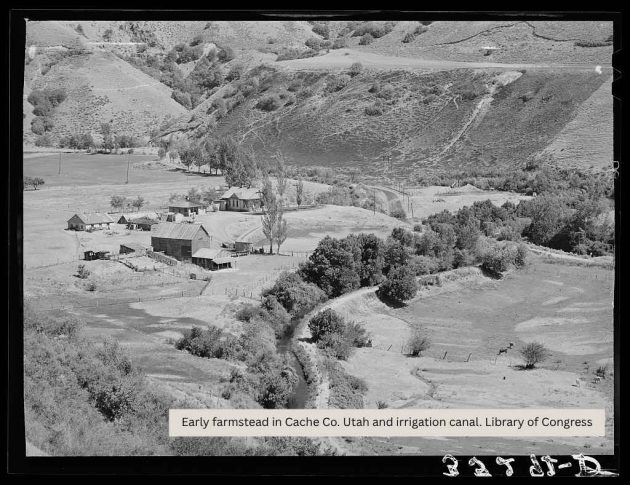
The conditions it was built for, however, are no longer here. The scale of diversion is no longer trivial relative to the lake; it is now the dominant reason the lake is shrinking, as a growing population and an expanding agricultural system consume the majority of the flow before it can ever reach the basin. And the entire system quietly assumed a stable climate that is now changing underneath it. The West is now more than two decades into what scientists describe as a megadrought, among the most severe in over a thousand years. Precipitation here is not only diminishing; it is arriving in a different form and at a different time. Water that once fell as winter snowpack, accumulating in the mountains and releasing slowly enough to be captured in reservoirs and carried to the lake, increasingly falls instead as spring rain that soaks into parched ground and never reaches the basin at all. The reservoirs, the diversions, the whole capture-and-store logic descended from 1847, were engineered for a world of dependable snow. That world is disappearing, and the infrastructure built to master it is being outrun by the same kind of change that outran the plover on its nest.
There is reason, even so, to believe that instinct can change, and some of the most encouraging evidence comes from the very institution that helped establish it. The Church of Jesus Christ of Latter-day Saints, one of the largest landholders in the state and the source of the settlement theology that first framed this desert as something to be made green, donated roughly 20,000 acre-feet of water rights to the lake in 2023 and added more than three billion gallons to that commitment in 2025. Meetinghouses that once devoted 80 to 90 percent of their grounds to lawn are now holding closer to 35 to 40 percent, watered by smart systems rather than the flood-and-forget habits of the past. In March of 2026, the governor of Utah publicly recognized the Church for the effort. An institution that helped write the state’s water ethic in 1847 is now among those working to revise it, which matters a great deal because it demonstrates that an adaptation outliving its conditions is not condemned to persist unchanged. Given enough evidence and enough will, it can still adapt again.
I wrote in this space last time about the pelicans of Gunnison Island, and the decade of clear warnings that went unheeded, and about how each generation quietly inherits a smaller lake as its baseline and calibrates its alarm to that diminished standard. What I did not say then, or at least not fully, was what this place means to me. For more than twenty years, Great Salt Lake has been the center of my working life. It gave me a career and a purpose. It provided a curriculum and training for my students and shaped the questions I have spent my career trying to answer. Through every season, it has simply been there, waiting for me to return to it. To watch it decline, to measure that decline in my own field notes across the length of my career, is a grief I feel in a place difficult to name. It has left me wrestling with a very hard question: what do I owe an ecosystem that has been the foundation of my career and my passion?
I haven’t completely answered that question. But what I do know is that, at the very least, I owe it honesty about what I am seeing. The coyote on that Snowy Plover nest never once looked down, and it did not need to, because the defense in front of it had been built for a threat that no longer mattered. We are at risk of making the same error at the scale of an entire ecosystem, defending a way of using water that was perfect for a world now slipping away, while the lake that gave so many of us our vocations quietly runs out of time. The camera does not lie, but it cannot show us what we never thought to look for. Learning to look before the thing we failed to notice is gone is still the work in front of us. For the sake of this magnificent and irreplaceable lake, I have to believe we are still capable of it.
[1] This is the traditional definition of successful nesting.
[2] Ellis, Cavitt & Larsen. 2015. Waterbirds 38:58-67.
[3] S. Zeveloff, 2002. Raccoons: A Natural History. Smithsonian Institution Press.
[4] For more information, see Pflug, 2025. The Chemistry of Birds (21): Feather Upkeep
[5] Reneerkens et al. 2002. Proc. R. Soc. B 269:2135–2139
[6] Isaiah 35:1 (KJV)- “The wilderness and the solitary place shall be glad for them; and the desert shall rejoice, and blossom as the rose.”







Fascinating food for thought!
Fascinating, intriguing and (sadly) ultimately depressing. However, a very well written and interesting article from which I learnt a lot.
Very interesting and enlightening article. My take-away? Even though we rely so much on sight, we are really quite blind.