

After sharing a few posts about birds in Colombo’s urban wetlands, it seems only fitting to turn attention to an even more familiar patch of habitat: my own garden. During the few years I lived in the city, I was surprised by how many of the birds found in nearby parks and wetlands—aside from the more wetland-specialised species—also made regular appearances among the two or three trees in our yard. The abundance of mature trees throughout the neighbourhood seems to allow a surprisingly rich bird community to persist in such a densely populated area.
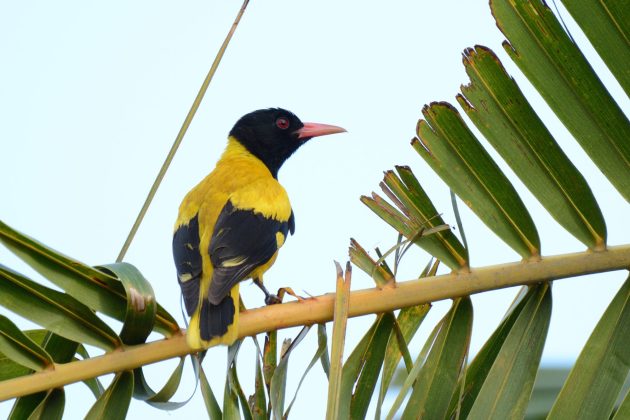
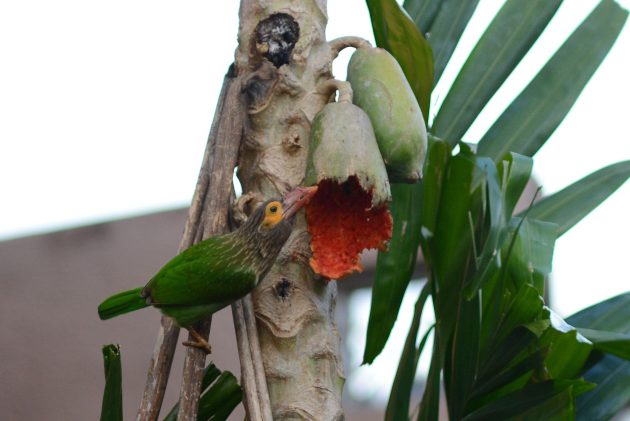
Three colourful species formed the most entertaining core of the avifauna I could watch from my room: White-throated Kingfisher, Black-hooded Oriole, and Brown-headed Barbet. A small papaya tree in our garden proved irresistible to the latter two, acting as a magnet whenever the fruit was ripe. While they did make short work of the papayas, the constant activity and flashes of colour more than compensated for the loss.
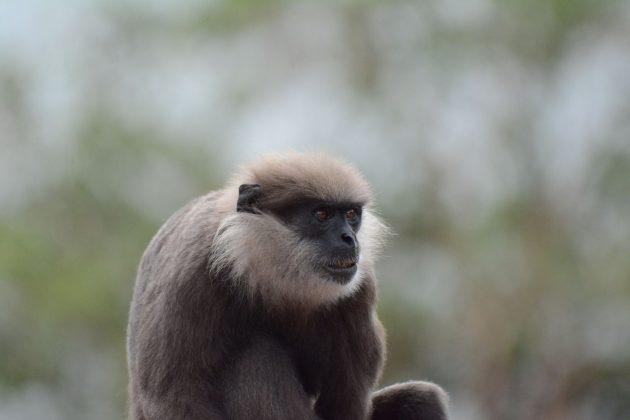
Equally fond of the papayas but not as colourful and also not a bird (or so they tell you) is the purple-faced langur. This Endangered and endemic primate has suffered significant population declines due to the loss of forest habitat. Although langurs seem to cope reasonably well in urban areas, these fragmented landscapes can only support a fraction of the populations that intact forests once did. Still, encountering such a charismatic species in a city garden was a reminder of how closely wildlife and people still coexist in Colombo.
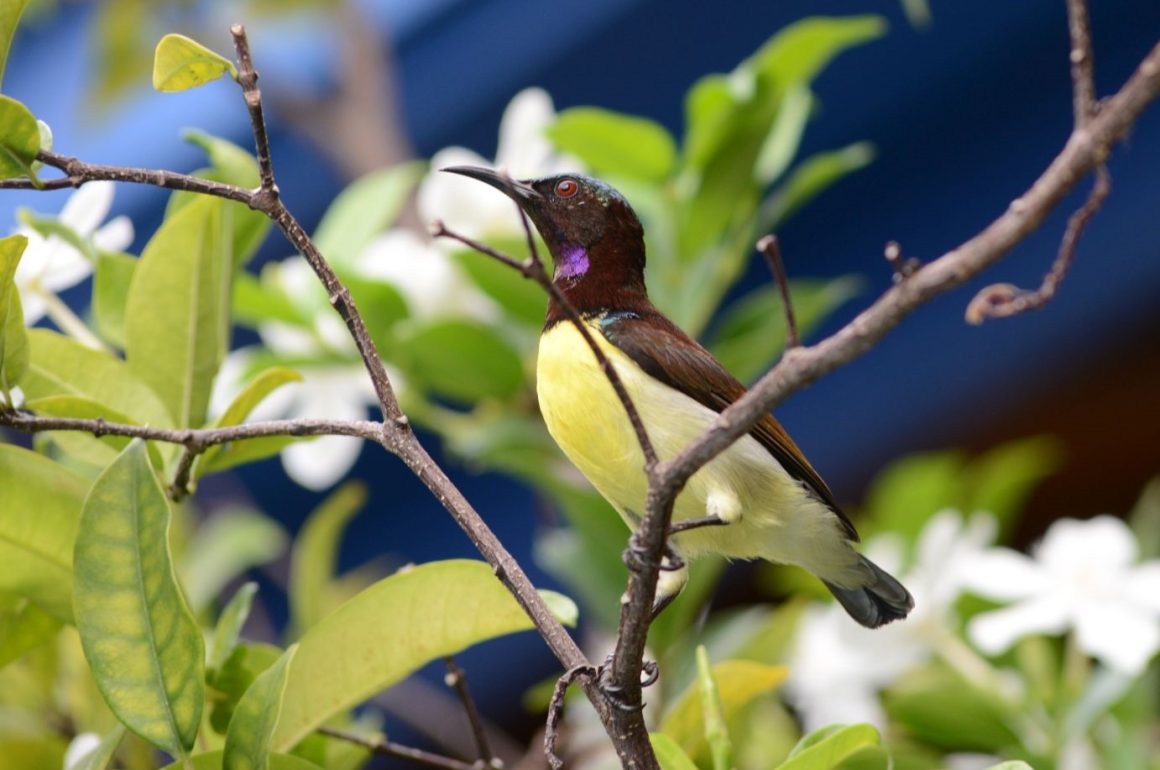
Among the smaller birds, the Purple-rumped Sunbird was one of the most visually stunning (see featured image). Despite being very common, it proved surprisingly difficult to photograph: endlessly energetic, rarely still, and always darting between flowers. Like many familiar garden birds, I kept telling myself I’d photograph it properly another day. Of course, by the time I moved out, I realised that “another day” never quite arrived.
I did occasionally make the effort after school to photograph a family of Yellow-billed Babblers that passed through every couple of days, methodically turning over leaves as they went. Babblers are endlessly entertaining, busy and vocal, with a permanently scruffy look that somehow suits them perfectly.
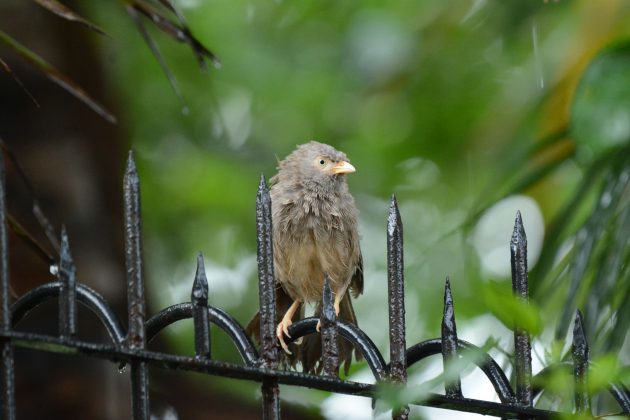
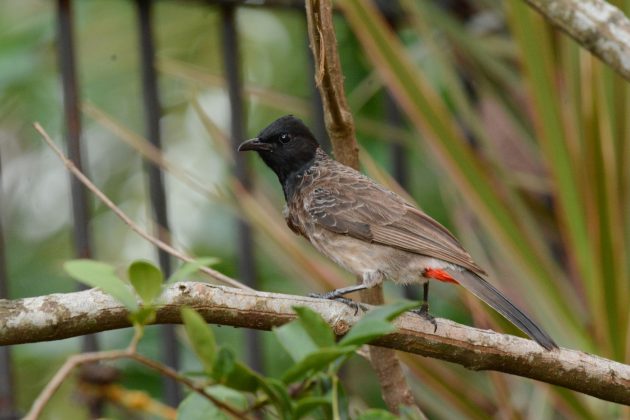
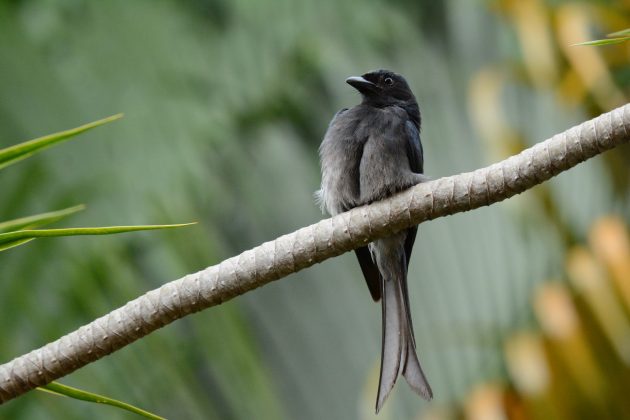
While waiting for the babblers to come out into the open, I also sometimes fired away at the Red-vented Bulbuls or White-bellied Drongos that preferred the upper strata compared to the more ground-dwelling babblers.
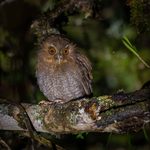
We were definitely blessed with a large number of birds, and over the year I added many other interesting birds such as Booted Eagle, Indian Scops Owl and Alpine Swift to our garden list. It’s always surprising to me how many birds managed to exploit the remaining niches within these urban environments. If you find yourself having a spare day in Colombo, I can highly recommend getting out into the streets (if you can bear the heat) to get a feel not only the birds but also how people and wildlife live side-by-side in these areas.








Oh, what a wonderful piece! It is so satisfying to bird right at home and how lucky you were with the Colombo birds. They remind me of the birds I saw in Bengaluru when I was lucky enough to spend a few days there at the National Centre for Biological Sciences.
I can imagine that there is quite an overlap with urban species found in Bengaluru!