

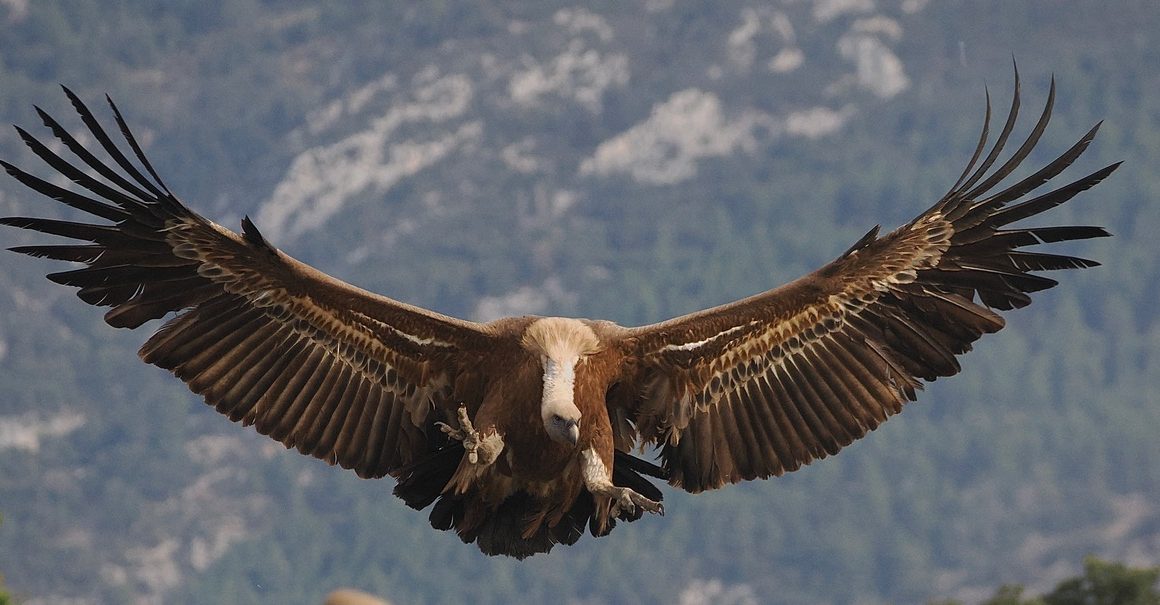
Bird watcher or bird photographer? For the last couple of days I’ve been doing some serious bird photography, but I’ve also been doing rather more actual birdwatching than I have for a long time. If you sit in a hide for an eight-hour session, waiting for your target bird to arrive, there’s plenty of opportunity to watch birds. I’m writing this on my iPad in a vulture hide in the Spanish Pyrenees where the target bird is Bearded Vulture (or what most of us still call Lammergeier). This morning, in just over four hours watching, the Lammergeier has come in twice, and both visits have been brief. (His mate is currently incubating, so he is visiting by himself.)
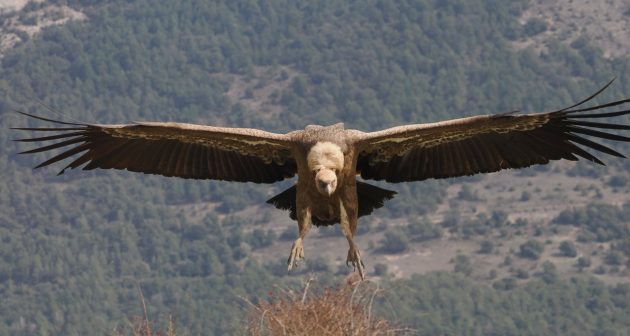
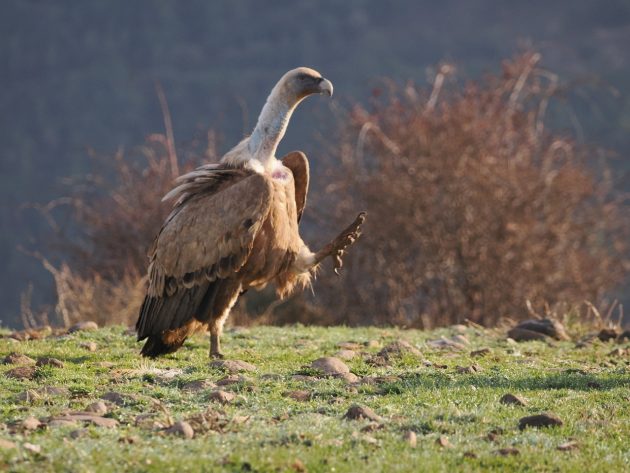
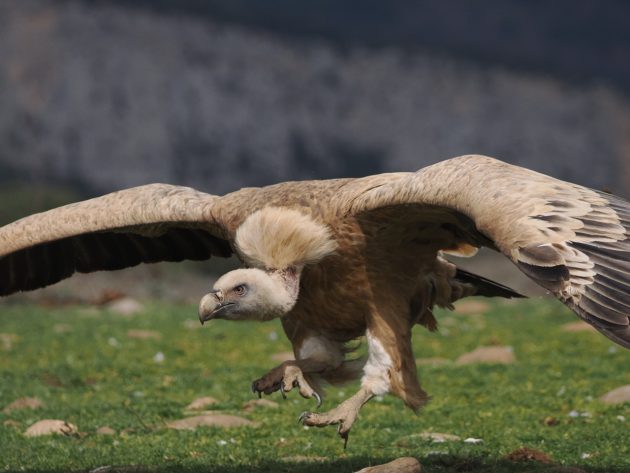
A Griffon Vulture coming in to land, and (below) a determined approach on foot. I always thought it was called goose stepping, but now I know better
However, though I haven’t spent a lot of time watching the Lammergeier, I’ve had plenty of opportunity to watch Griffon Vultures, along with Ravens, Carrion Crows and a solitary Egyptian Vulture. The Griffons are highly social, so when one arrives it’s usually joined by others of its kind. They are aggressive feeders, constantly scrapping and brawling. Griffons always want to eat the food that a fellow vulture is already eating. Today I watched a single vulture happily feeing on a dead rabbit. Another vulture flew in and instantly tried to grab the rabbit, despite the fact that there were other equally tempting morsels nearby.
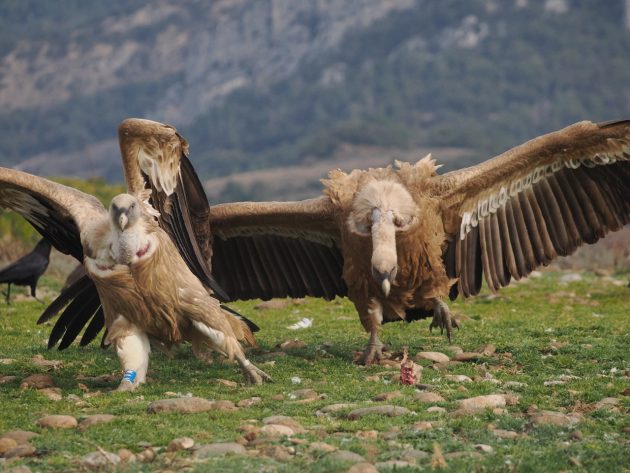
Disputes over food are frequent but seldom last long
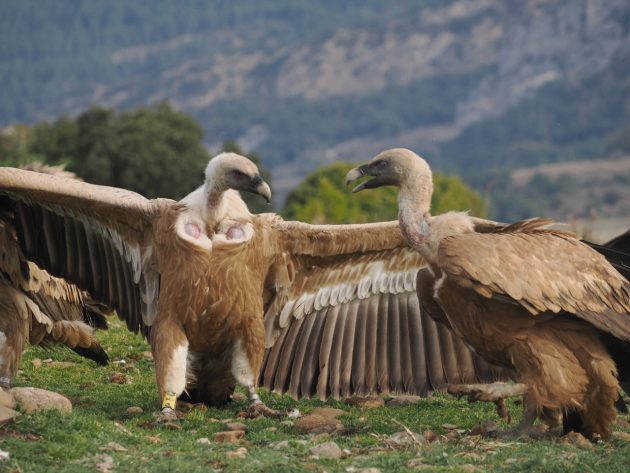
The fights over food are seldom serious, but there’s a great deal of threatening behaviour, characterised by the birds lunging at each other with open wings, accompanied by noisy hissing. The fights seldom last more than a few seconds, for as soon as one bird has grabbed the scrap that it’s after, the battle stops. No long-term grudges seem to be held, as when the food has been eaten (it doesn’t take long), the birds sit around peacefully for some time, digesting their meal and seemingly trying to decide what to do next.
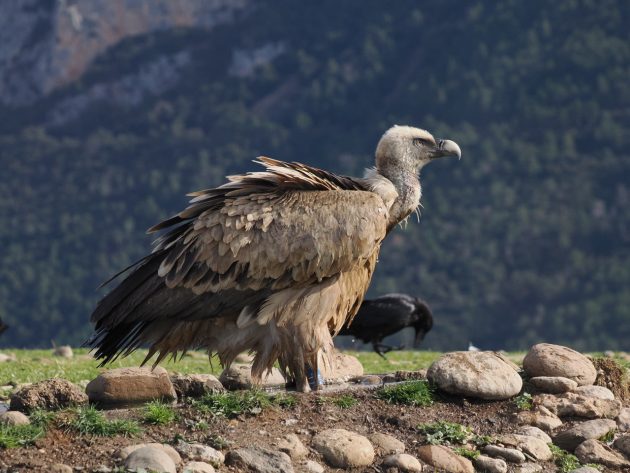
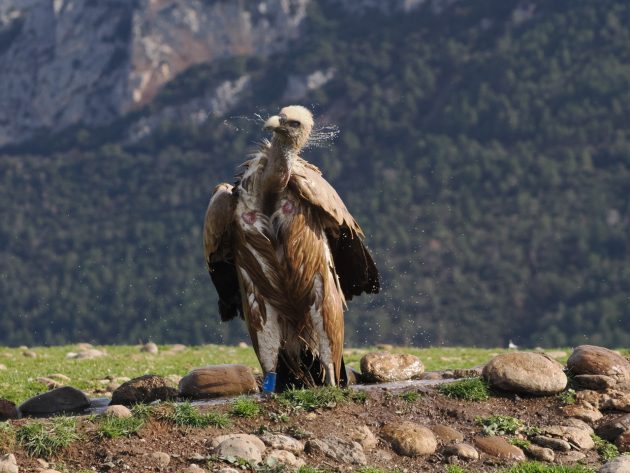
Bathtime… and (below) drying out afterwards
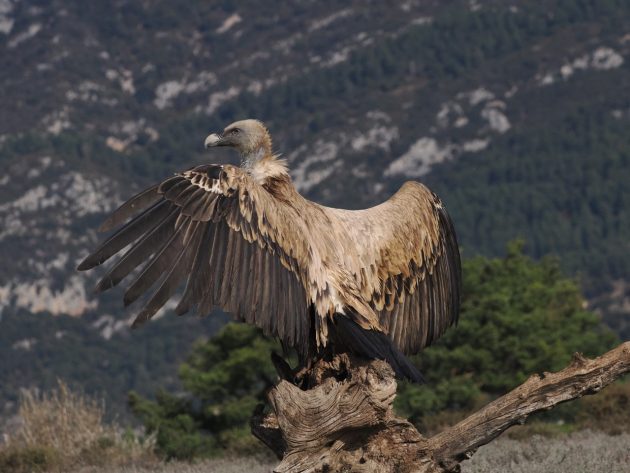
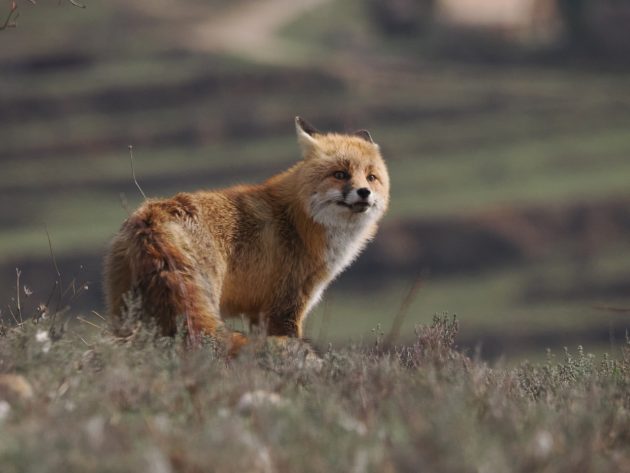
The appearance of this fox hastened the vulture’s departure
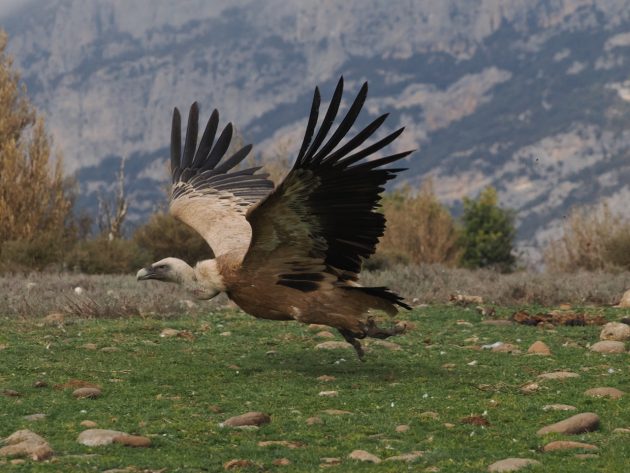
After 20 minutes, or perhaps half an hour, they start to get bored. One will take off, followed by the majority of its companions. Take off requires a lot of energy, for these are big, heavy birds. A brief run is required before the final thrust to get airborne. Griffons aren’t keen on flapping, so they start to glide as soon as they have enough speed.
Taking off requires a quick run to get airborne
Though the majority of birds will depart together, often one or two birds will remain behind. Yesterday I watched one bird that stayed to take a bath (there’s a small pool outside the hide). Bathing wasn’t easy, as it had to gently lower itself into the shallow pool, one side at a time, and it took several dunks before it was happy with how wet it was. It then shook the surplus water from its body and started preening. Eventually it decided it had spruced itself up sufficiently to fly up onto a low perch, where it spread its wings cormorant-fashion and dried itself in the sun. It was still happily sunning itself when a fox appeared, which was eyed warily by the vulture. The fox didn’t seem interested in the vulture, but the latter was taking no chances, taking to the air before it had completely dried out.
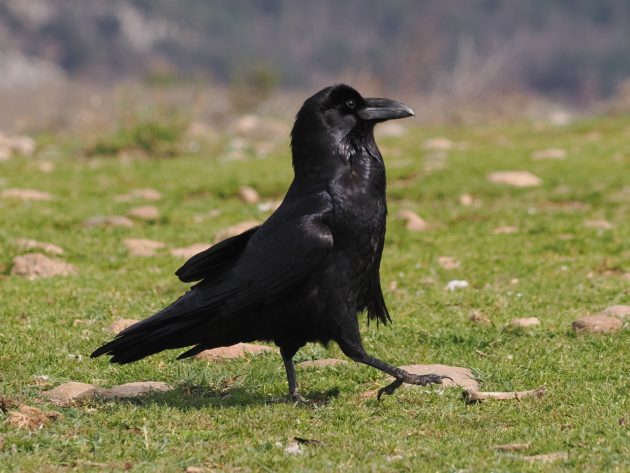
Few birds are as entertaining to watch as Ravens. This bird is typical of the Iberian race, hispanus: note the pronounced curve to the culmen (top of the beak). All Ravens seem to fly for pleasure
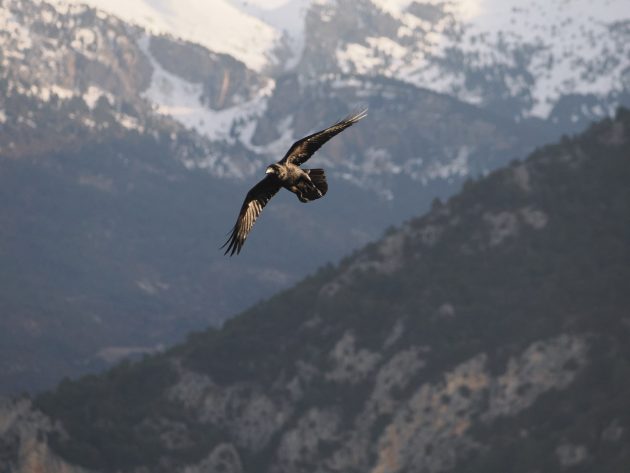
Ravens are also attracted to the vulture bait. They never come singly, but are usually in pairs or small gangs. Few birds are as entertaining to watch as these big crows, as they are always doing something interesting, whether it’s allo-preening their mate, or tweaking the tail of a griffon. It was difficult to see any reason for this tail pulling other than a sense of mischief by the Raven. The Griffons clearly don’t like being teased, but their reactions are generally passive, and there’s none of the aggression they use on their fellow kind.
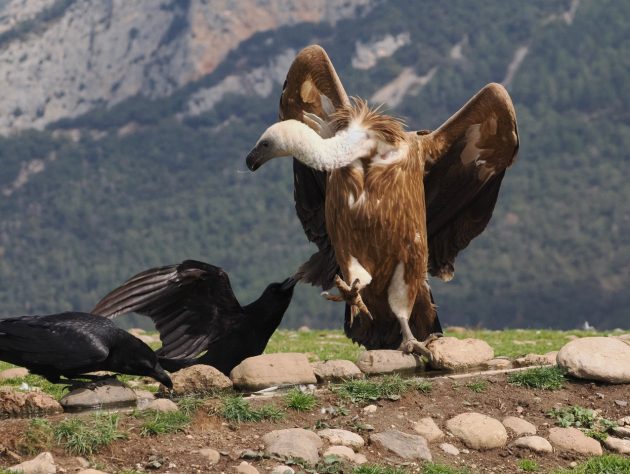
Time for a tail tweak. The vulture was not amused
I’ve long been convinced that Ravens fly for the fun of it, and these birds have certainly reinforced my theory. Every now and again a pair will fly off, chasing each other in high-speed flight, before coming back again. One bird seemed to be panting with what I assume was exertion from his aerial chase: he clearly had worked up a thirst, coming to the pond for a drink. He didn’t seem bothered by the fact he was drinking from a Griffon’s bath water.
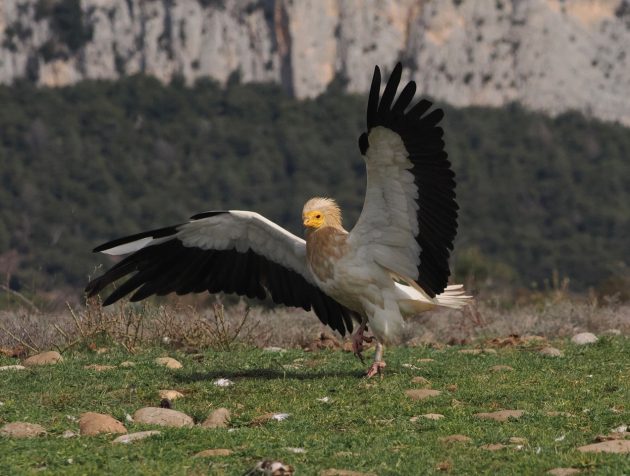
Egyptian Vulture, a lightweight and agile flier
The single Egyptian Vulture was intriguing. We were told it had only arrived back from its winter sojourn earlier in the week. Close inspection revealed it be not only ringed, but carrying a GPS transmitter complete with antennae on its back. It hung around for much of the day, doing little in the way of feeding, but every now and again undertaking a quick flight, before coming back to where it started. Unlike the much bigger and more ponderous Griffons, the Egyptian proved to be an agile flier, taking off with ease. In flight it looked a splendid white bird, but on the ground it looked (as do most Egyptian vultures) much more scruffy with its plumage stained and dirty, despite it spending plenty of time preening.
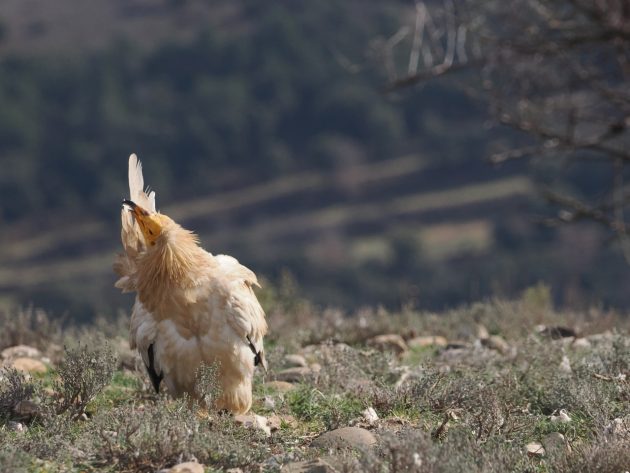
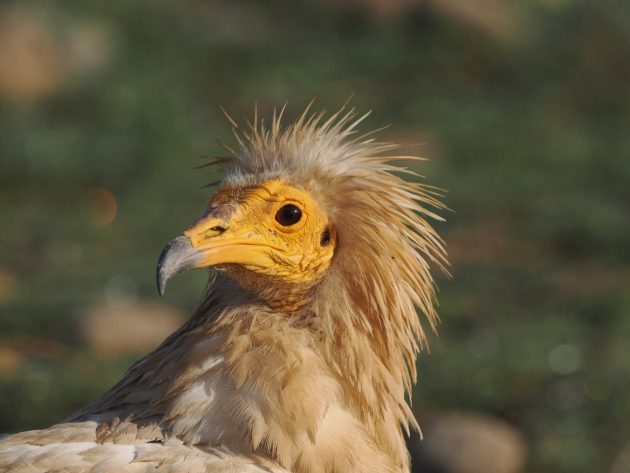
Despite plenty of time spent preening, the Egyptian Vulture still looked scruffy
Egyptian Vultures have wrinkled yellow faces, giving them the appearance of old men. This individual seemed to be waiting for something – if I am allowed to be anthropomorphic I would suggest that it had arranged a rendezvous with its mate, but the latter had yet to show up. These vultures are though to mate for life: they use the same nest site year after year, making it easier for the same pair to join up in successive seasons. In mainland Spain they are migratory, leaving for their wintering grounds in sub-Sahara west Africa in early September, returning in late February and March. It’s not thought that pairs winter together.
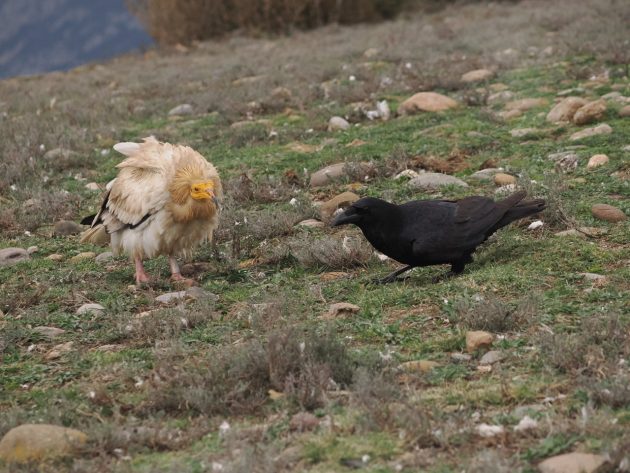
The Ravens deferred to the Egyptian Vulture
The Egyptian had a relaxed relationship with the Ravens, and it was notable that the latter were never as presumptuous to tease it, and they also deferred to it, which seems surprising as they have much more fearsome beaks than the Egyptian’s rather puny-looking bill. The vulture is, however, a considerably heavier bird.
And the Lammergeiers? I will write about them next week.
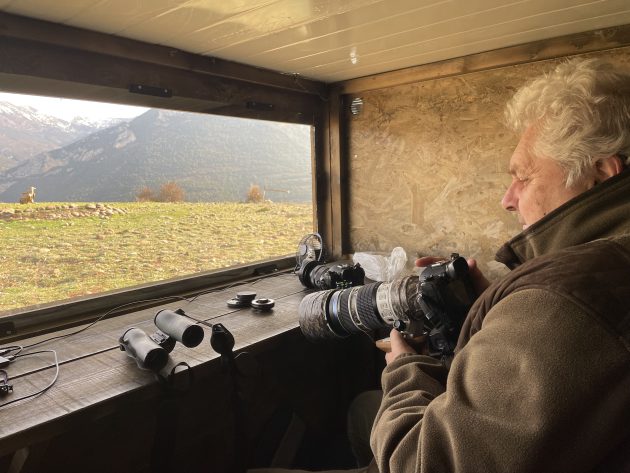
The hide I was using, in the foothills of the Pyrenees, is owned by Photo Logistics, and is one of over 90 hides the company manages throughout Spain. For further information, go to www.photo-logistics.com, or email info@photo-logistics.com.






A great piece, with wonderful photographs! When you spend time watching birds, you get to see more of their personalities and interesting behaviours. I look forward to your next post.
Great article and photos
Excellent article, David! Sometimes being forced to just immerse oneself in a bird’s life is the greatest thrill in birding.
Brilliant photos! Really enjoyed reading this, thank you