

Highlights
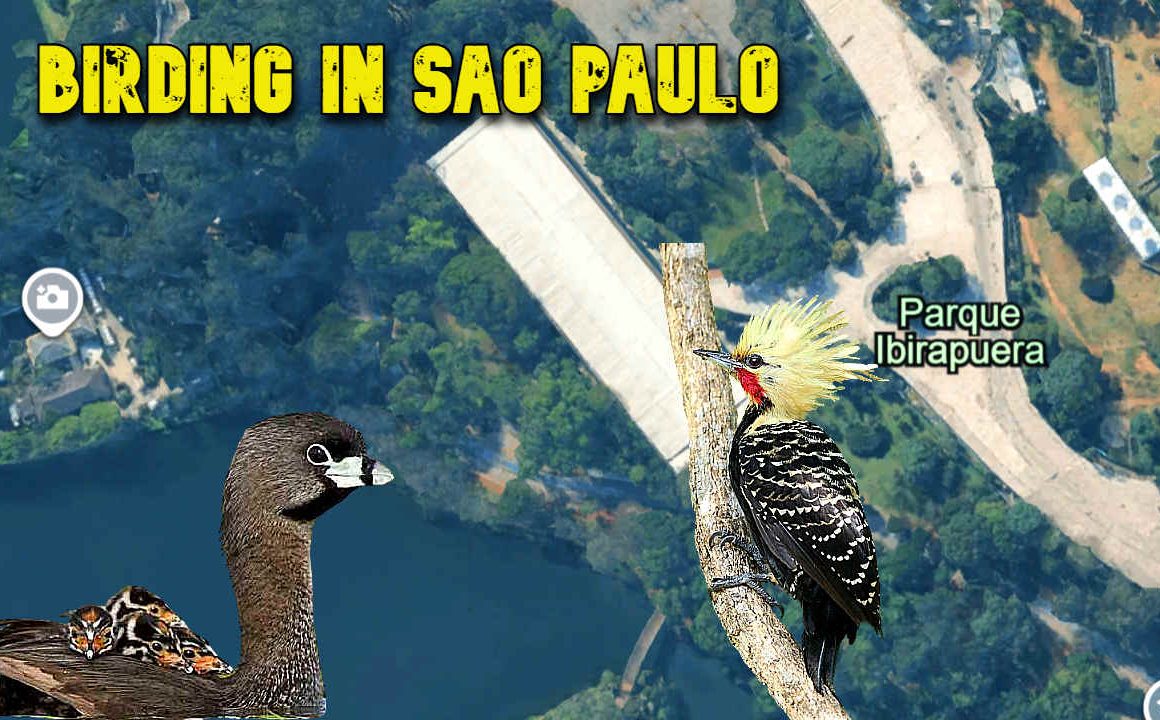
São Paulo is the largest city in South America! The State of São Paulo has a list of more than 700 species of birds! The city’s green areas around the capital have at least half of it. There are several options to bird the Atlantic Forest, and iconic species, such as the Blond-crested Woodpecker and the Red-breasted Toucan, can be spotted even within city limits. Many birds have adapted to urban life, using buildings and street trees as nesting sites, just like Plain Parakeets and Turquoise-fronted Parrots. Bird watching in São Paulo highlights the importance of urban biodiversity. This is perfect for people who come to São Paulo for business and want to spend some time looking for some lifers.
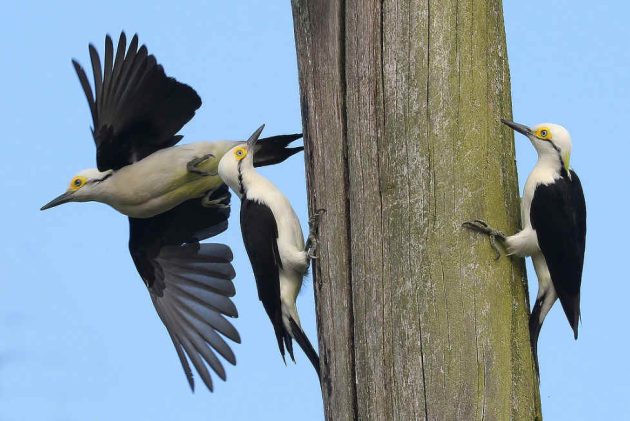
White Woodpecker (Photo Leonardo Casadei)
Key Bird Species and Families
- Rufou-bellied Thrush
- Dusky-legged Guan
- Pied-billed Grebe
- Brazilian Teal
- Turquoise-fronted Parrot
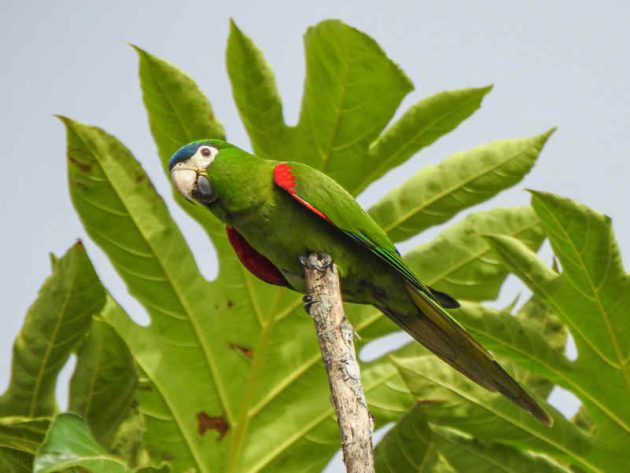
- Red-shouldered Macaw
- Blond-crested Woodpecker
- White Woodpecker
- Green-barred Woodpecker
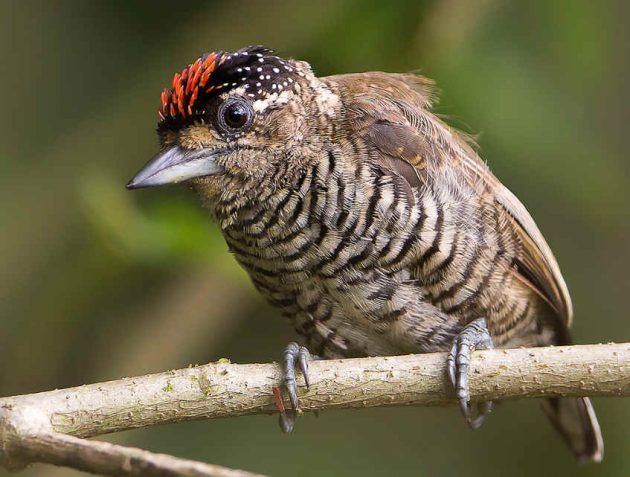
- White-barred Piculet
- Pallid Spinetail
- Planalto Hermit
- Purple-throated Euphonia
- Burnish-buff Tanager
- Sayaca Tanager
Red-shouldered Macaw (Photo João Abraão)
Best Regions for Birding
São Paulo is a very big city; therefore, there are plenty of options to bird in parks in the middle of the city, but the best and most preserved hotspots are located on the outskirts:
- “Ibirapuera Park” is one of the largest urban parks in Latin America, covering about 1.6 square kilometers. The park’s iconic buildings were designed by Oscar Niemeyer, Brazil’s most famous modernist architect. Located in the middle of the city, Ibirapuera is probably the best option for birders with little time. By the lakes, one can find birds like Green Ibis, Neotropical Cormorant, Pied-billed Grebe, Snowy Egret, Anhinga, Cocoi Heron, and Amazon Kingfisher, among some exotic species like the Black Swan. Walking around the many green spaces, the possible birds are Common Squirrel-cuckoo, Rufous-browed Peppershrike, Cliff Flycatcher, Masked Water-tyrant, White Woodpecker, and many other birds.
- The “Parque da Ciência Butantan” covers about 725,000 m² of green space, making it one of the largest urban green areas in São Paulo. The most preferred hotspot for local birders, no doubt. The birding sessions there can render Bare-faced Ibis, Blond-crested Woodpecker, White-barred Piculet, Red-breasted Toucan, White-eyed Parakeet, Variable Antshrike, Variegated Flycatcher, Chalk-browed Mockingbird, Saffron Finch, and many others.
- “Jardim Botânico de São Paulo” is part of the PEFI (Parque Estadual das Fontes do Ipiranga), a protected Atlantic Forest reserve. More than 250 bird species have been recorded there, making it one of the richest birdwatching sites in São Paulo. A true island of nature in the city, birds recorded there are: White-faced Whistling-duck, Short-tailed Nighthawk, Smooth-billed Ani, Rufescent Tiger-heron, Rufous Hornero, Chestnut-vented Conebill, Creamy-bellied Thrush, Curl-crested and Plush-crested Jays, among several other great birds. The area includes springs and lakes that feed the Ipiranga River, providing habitats for aquatic birds such as the Amazon Kingfisher and Anhinga.
- A true Oasis for birding close to Guarulhos International Airport is “Parque Estadual da Cantareira”. This is one of the largest urban forest reserves in the world, protecting a vast area of Atlantic Forest right next to São Paulo, and offering visitors unique biodiversity, scenic viewpoints, and historical trails. The park covers 7,916 hectares (79 km²), and was officially created in 1963 and recognized as a protected state park in 1968. For this one, it is highly recommended to hire a local guide. Birding there can be overwhelming for birders not used to the tropics. Targets are Surucua Trogon, Spot-winged Wood-quail, Ferruginous and Squammate Antbirds, Chestnut-bellied Euphonia, Southern Bristle-tyrant, and several others. This park is close to Guarulhos International Airport.
- Also close to the international airport of Guarulhos, the “Parque Ecológico do Tietê” is one of the largest urban ecological reserves in São Paulo, with over 14 million m² of protected area, rich biodiversity, and a key role in water management and environmental education. Equivalent to 5 Central Parks in New York or 11 Ibirapueras in São Paulo. At the lakes and marshy areas, one can find Southern Lapwing, Short-tailed Hawk, Guira Cuckoo, South American Snipe, Limpkin, Blackish Rail, and more. Walking on the trails, the possibilities are Sapphire-spangled Emerald, Swallow-tailed Hummingbird, Little and Lineated Woodpecker, Narrow-billed Woodcreeper, Brazilian Tanager, Double-collared Seedeater, and several others.
- “Parque Estadual da Serra do Mar”, “Curucutu Center”, located at the very South of the city’s limit, might be the most biodiverse hotspot in São Paulo. It is a unique natural area and is known for its rare “cloud fields,” preserved Atlantic Forest, and has recent sightings of jaguars! It plays a vital role in water supply and biodiversity conservation. It has an area of about 37,500 hectares and was created in 1977, originally from the old Curucutu farm, once used for charcoal production. Hire a local guide and prepare to be overwhelmed. Targets are: Ochre-collared Piculet, Yellow-fronted Woodpecker, Pileated and Scaly-headed Parrots, Marron-bellied Parakeet, Large-tailed Antshrike, Rufous Gnateater, White-breasted Tapaculo, and hundreds of other birds.
White-barred Piculet (Photo João Sérgio Barros)
Best Birding Season
From May to December is the best time of the year. July, August, and September are definitely the best months to go birding in São Paulo. That is when birds start to breed and become more active. But anytime of the year is feasible, especially at urban parks.
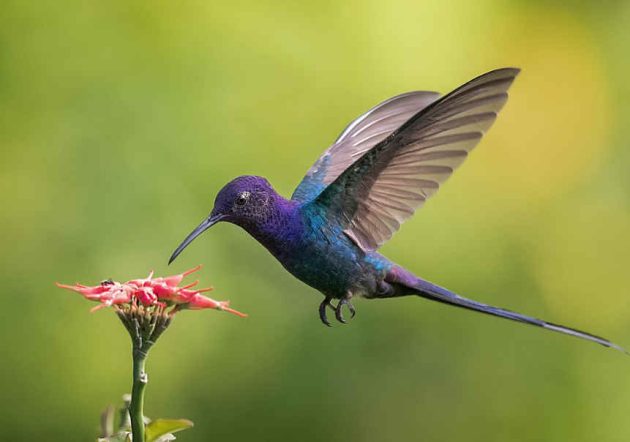
Swallow-tailed Hummingbird (Photo Ronaldo Oliveira)
Birding Trip Suggestion(s)
The urban parks in São Paulo are open everyday, but some won’t open very early, so check it in advance. Same regarding the larger parks on the outskirts of the city, like Cantareira and Serra do Mar, but those can be arranged for an early entrance; you just need to call them or send an email. Most of the parks have parking lots, but Uber in São Paulo works super well at any time of the day and night.
For all urban parks in the world, the advice is to not walk alone in the far corners and trails displaying expensive equipment like professional cameras.
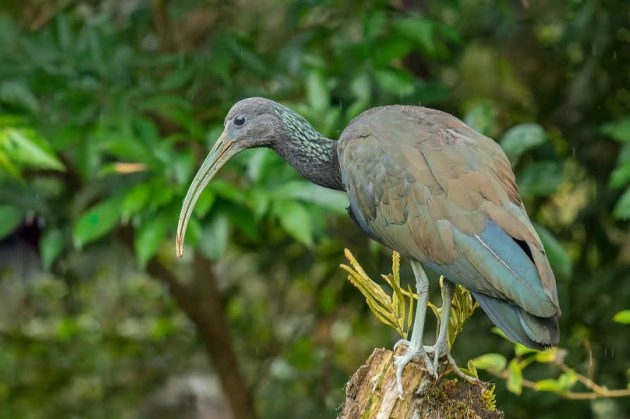
Green Ibis (Photo Marcelo Telles)
Practical Tips
Like always, the best bird watching sessions are early in the morning, but late afternoons will also work. Don’t forget to bring insect repellent, sunscreen, a bottle of water, a rain jacket, and/or a small umbrella, and of course, something to eat. A picnic is always a good call! Bring cash in case you want to buy snacks or hot dogs inside the parks.
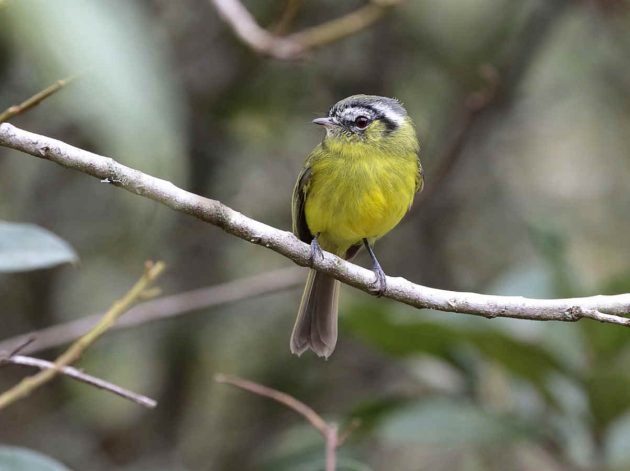
Southern Bristle-Tyrant (Photo Sergio Murilo)
Books
- Birds of Brazil: A Field Guide – Ber Van Perlo
- Birds of Brazil: The Atlantic Forest of Southeast Brazil – Martha Argel
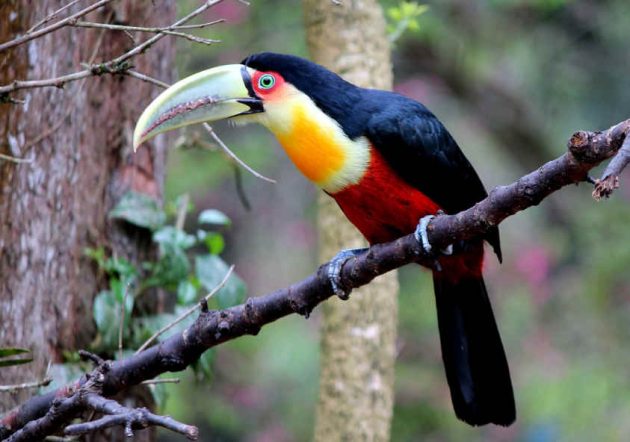
Red-breasted Toucan (Photo Vagner Abranches)
Links
- Parque Estadual da Serra do Mar, Curucutu Center – Parque Estadual Serra do Mar – Núcleo Curucutu
- Ibirapuera Park – https://www.parquedoibirapuera.org/
- Parque da Ciência Butantan – Home – Parque da Ciência
- Jardim Botânico de São Paulo – Jardim Botânico SP – Home
- Parque Estadual da Cantareira – Guia de Áreas Protegidas
- Parque Ecológico do Tietê – https://www.parqueecologicodotiete.com.br/
By René Santos
René Santos is a bird guide based in SaoPaolo, Brazil. René can be reached at renearara@gmail.com and has been profiled in our series on global bird guides. He is also present on YouTube.






Leave a Comment