
By Chris Lotz, founder of Birding Ecotours
Before starting a birding tour company, I was an academic ornithologist, researching nectar-feeding birds. Nectar is sugar water presented by flowers as a reward to birds or insects for pollinating them.
How do plants attract their preferred pollinators, insects versus birds?
Insects prefer different flower colors compared to birds. Red, pink, and white flowers are usually bird-pollinated. Insects are physiologically incapable of processing dilute nectar, whereas birds have no problem with it and, in fact, prefer nectar that is around 15-25 % sugar and the rest (75-85 %) water.
An unusual, watery diet.
Hummingbirds, sunbirds, sugarbirds, honeyeaters, and other birds that obtain their energy requirements exclusively from nectar are forced to drink large volumes of liquid food every day. When drinking dilute nectar on a cold day, they can sometimes use a quarter of the energy in their food just to warm the nectar to body temperature! Birds are hotter than humans, maintaining body temperatures of around 107°F / 42 °C, and their watery diet needs to be heated to this, which takes a lot of energy when the weather is cool; the plants don’t heat the food up for the birds!
Overnight “hibernation” – torpor.
Hummingbirds are the smallest birds in the world and therefore live near the lower size limit of endothermic (“warm-blooded”) animals. This is because the smaller an animal is, the more heat it loses, because smaller animals have relatively large surface area to volume ratios and therefore have lots of skin to lose heat from. The only way they can survive bad weather, and the only way some of them can migrate long distances (flight uses large amounts of energy), is by sometimes dramatically lowering their body temperatures (and therefore saving a huge amount of energy) overnight. This is short-term “hibernation”. Proper hibernation is when animals lower their body temperatures for weeks at a time, rather than just overnight.
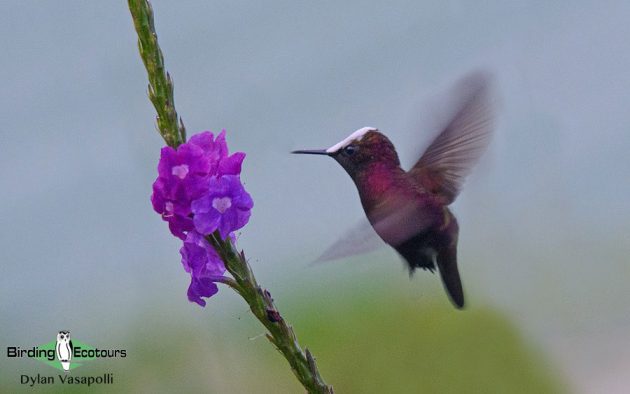
Snowcap, a small hummingbird found in Costa Rica
What sorts of sugars does nectar contain?
Some passerine (perching) birds have lost the enzyme sucrase, which splits sucrose (cane sugar or table sugar) into the smaller sugars glucose and fructose. When these birds (which include starlings) drink sucrose-dominant nectar by mistake, they suffer the same consequences as lactose-intolerant people consuming dairy products. Thankfully, all known nectar-feeding birds are able to very efficiently digest sucrose and then absorb the smaller sugars it is broken down into. A lot of nectars are also dominated by fructose and/or glucose, though (and these can be drunk by starlings without them getting ill). Strangely, sugarbird-pollinated Proteas in South Africa often contain wood sugar (xylose), which sugarbirds (which subsist mainly on these flowers’ nectar) can’t make use of at all (thankfully, these plants do contain other sugars the birds can use as an energy source).
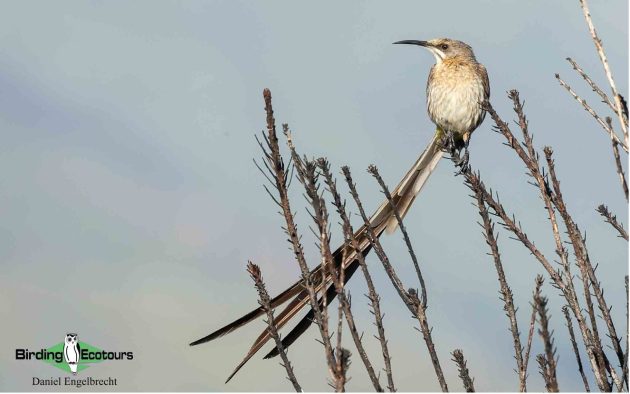
Cape Sugarbird
Are all nectar-feeding birds related?
No, hummingbirds are more closely related to swifts than they are to sunbirds, sugarbirds, or honeyeaters. The only thing that ties them together is their unusual diet.
Where can I find more detailed information about nectar-feeding birds?
Please see my more extensive article about these intriguing birds here.
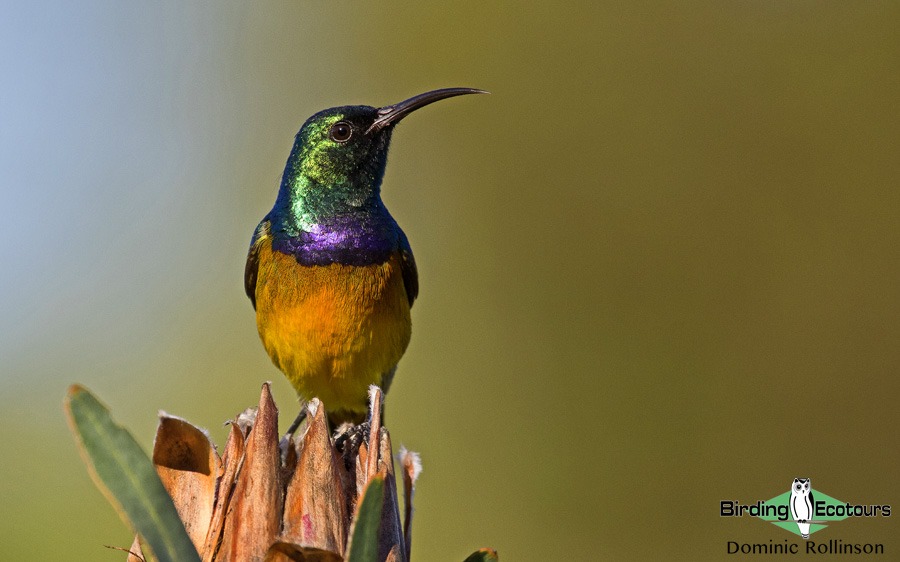
Cover photo: Orange-breasted Sunbird restricted to the area around Cape Town




Fascinating. It explains why we don’t have nectar-eating birds here in Northern Europe.
Fascinating article—both here and the longer version on the Ecotour site! I wondered about red-headed woodpeckers, which I have seen feeding occasionally at hummingbird feeders in Colorado, and whether they have the necessary enzymes to digest the sugars.
Thanks for your kind comments, David and Susan! Yes, I believe woodpeckers have sucrase and can therefore split sucrose (table sugar/cane sugar) into glucose and fructose. Glucose and fructose are smaller sugars which can then be absorbed without further digestion, into the bloodstream. It’s only certain passerine bird species (e.g. starlings and catbirds) that have strangely lost the enzyme sucrase.
Chiffchaffs feed on alien aloe species in Portugal, not sure it’s the nectar or the pollen they go for. I once thought I found a golden-headed warbler until I realised it was a chiffchaff covered in pollen.
Not only birds and insects feed on nectar. Bats do too.
And then there’s my 3 yo grandson while helping me fill our hummer feeders asked for and got a taste of “hummingbird water”, his mother called me several weeks later asking what hummingbird water was as Forrest was refusing to drink water saying “my body is telling me it needs only hummingbird water”. He got thirsty enough by bedtime to drink water!
He’d love to be a nectar only creature!