


Like many self-declared geniuses, Chairman Mao thought he could positively contribute to everything, whether inside or outside of his area of expertise.
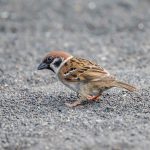
So, in 1958, he started the “Four Pests” campaign, one of the first campaigns of the Great Leap Forward in Maoist China. The four pests targeted were mosquitoes (carriers of malaria), rodents (plague), flies, and: sparrows, particularly Eurasian Tree Sparrows, as they stole the grain from the poor peasants.
The campaign was pursued against the advice of biologists who warned about the consequences of earlier eradication campaigns in places like Prussia. But stable geniuses can easily ignore such silly warnings.
And at least part of the population enjoyed the campaign – one schoolchild later remarked: “It was fun to ‘Wipe out the Four Pests’. The whole school went to kill sparrows. We made ladders to knock down their nests, and beat gongs in the evenings, when they were coming home to roost” (source). Thus, within two years, an estimated 2 billion sparrows were killed (source).
What the genius had not considered was that while sparrows eat corn, they also eat insects that, in turn, damage crops. So, with the sparrows gone, the population of these insects exploded, leading to massive harvest losses. And that in turn led to the death of an estimated 2 million people due to starvation.
What made this even worse was that the policy of centrally redistributing grains required regions with initially more sparrows to provide more grain – the logic, of course, being that these regions now had more grain to spare. In reality, they had less, and these areas were thus the worst affected by starvation.
Only after 2 years, the error of the policy was recognized, and the sparrows were replaced with bedbugs in the pest list. And China had to import hundreds of thousands of sparrows from Russia to restore some kind of ecological balance.
Footnote: The Wikipedia page on this has some particularly gruesome details: “Some sparrows found a refuge in the extraterritorial premises of various diplomatic missions in China. The personnel of the Polish embassy in Beijing denied the Chinese request of entering the premises of the embassy to scare away the sparrows who were hiding there, and as a result, the embassy was surrounded by people with drums. After two days of constant drumming, the Poles had to use shovels to clear the embassy of dead sparrows.”






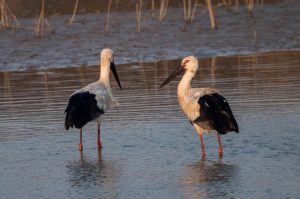




This is what often happens when humans try to change the balance of nature to suit humans. Thank you for writing this, Kai.
This is very interesting! Especially given that they are not endemic to China, or am I mistaken?
Sorry I meant native, not endemic – I had a brain fart!
Thank you Kai for writing this piece, especially now, when the world seems full of self-declared geniuses.