

Highlights
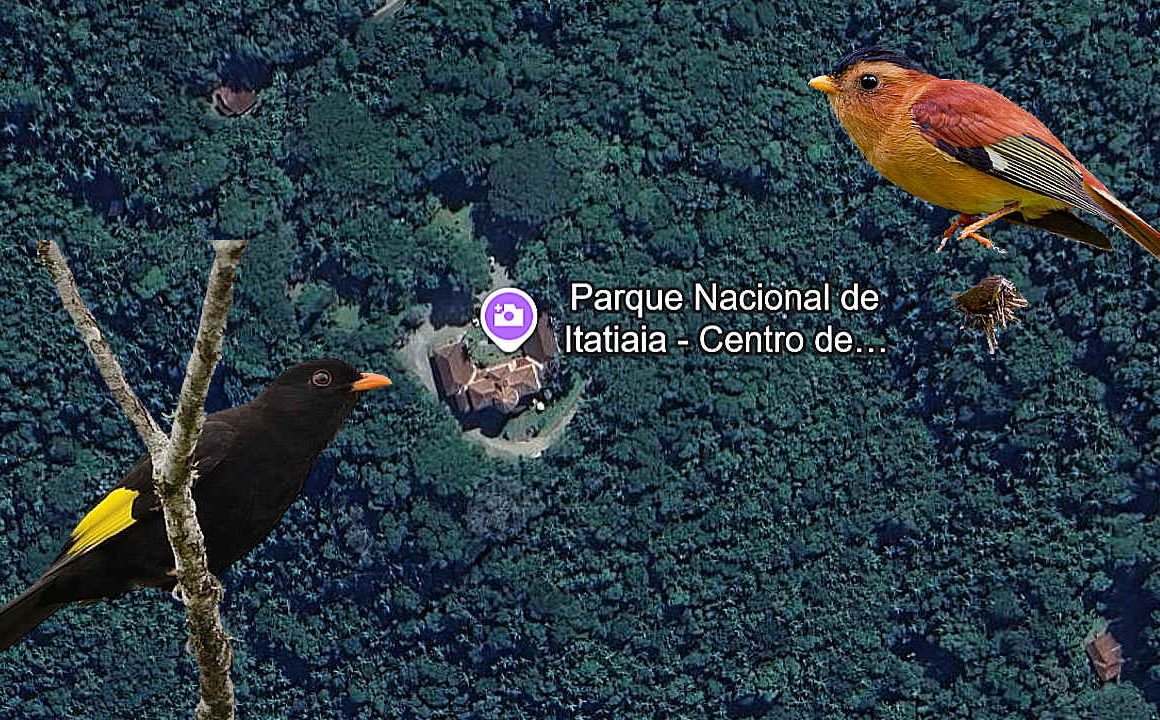
An emblematic place in Brazil! Our first national park! Founded in 1937, Itatiaia National Park was created to protect the unique ecosystems of the “Serra da Mantiqueira”—a chain of mountains with very high numbers of endemic flora and fauna species.
This national park spans both Rio de Janeiro and Minas Gerais States in SE Brazil. Offers landscapes that range from lush, humid Atlantic Forest to high-altitude rocky peaks. Elevations can vary a lot, from 600 meters to 2.791 meters. It has fast-flowing rocky rivers with many waterfalls to visit.
A true paradise for birdwatchers, as many endemic bird species can be found in a rich and breathtaking set of habitats. Several birds can be found only in this mountain chain. On eBird, the park has a list of around 500 bird species!
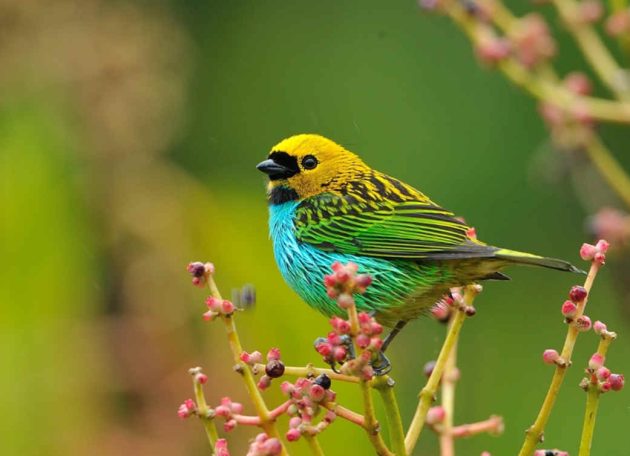
Gilt-edged Tanager (Photo: Luiz Ribenboim)
Key Bird Species and Families
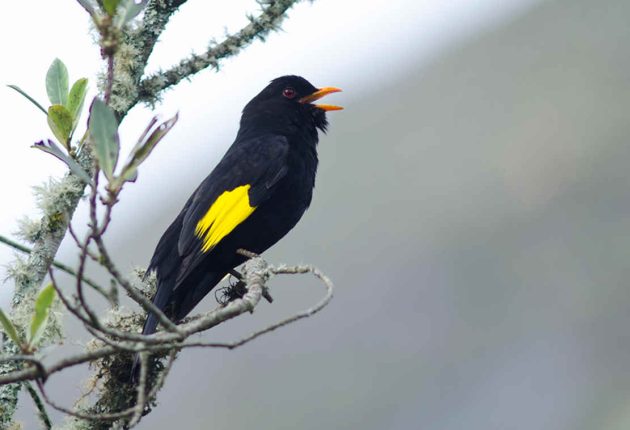
- Black-and-gold Cotinga
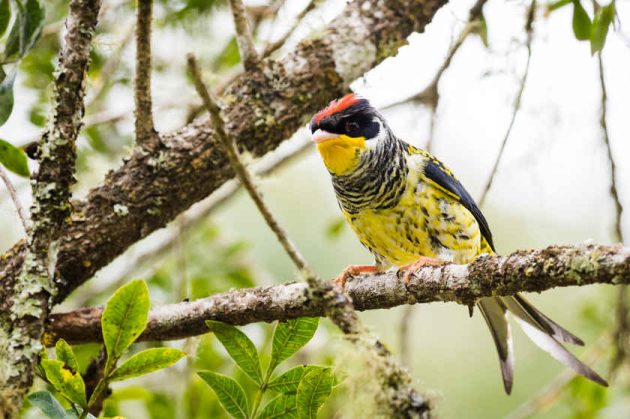
- Swallow-tailed Cotinga
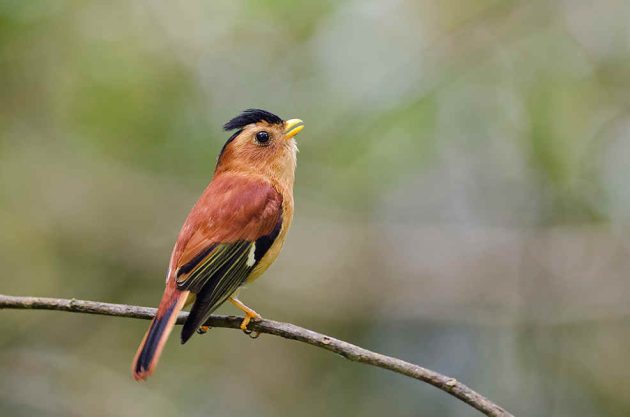
- Black-capped Piprites
- Rufous-tailed Antthrush
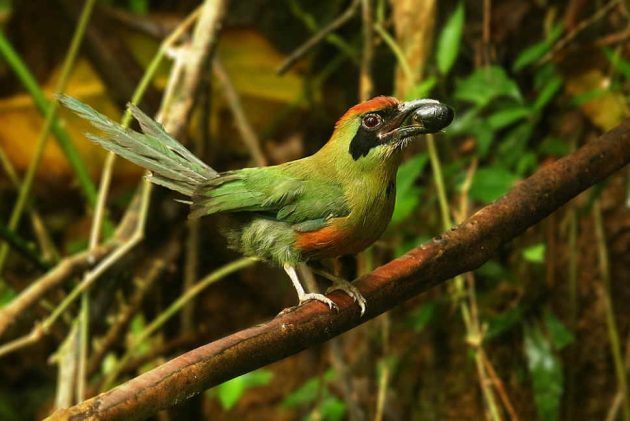
- Rufous-capped Motmot
- Serra-do-mar Tyrannulet
- Rufous-tailed Antbird
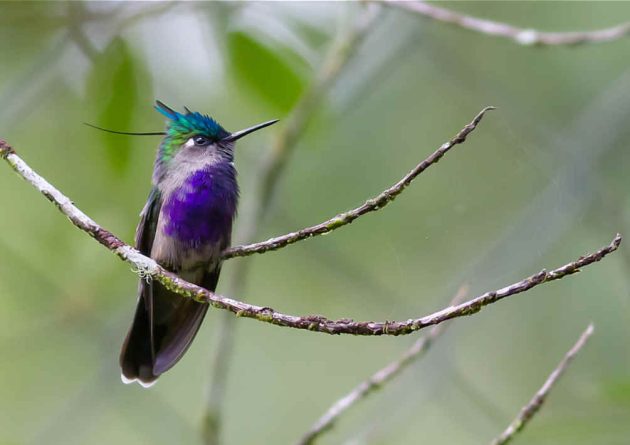
- Green-crowned Plovercrest
- Brassy-breasted Tanager
- Gilt-edged Tanager
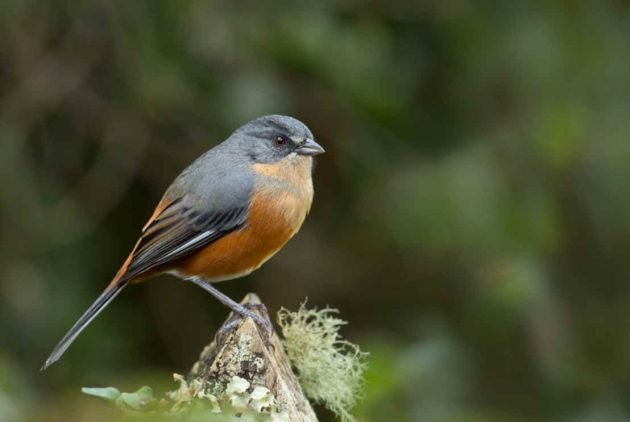
- Bay-chested Warbling-finch
- Buff-breasted Warbling-finch
- White-vented Violetear
- Large-tailed Antshrike
- Araucaria Tit-Spinetail
Rufous-capped Motmot (Photo: Leonardo Casadei)
Best Regions for Birding
For birders, the park is basically divided into lower and upper parts.
- The lower part starts from the park’s entrance at around 600 meters of altitude and goes till around 900 meters. You can walk the access road and have lots of lifers. Birds that are likely to be there are: Red-breasted Toucan, Black Hawk-eagle, Dusky-legged Guan, Blue Manakin, Green-headed Tanager, Ferruginous Antbird, Rufous Gnateater, and many others.
- The access road goes up, and you might find an abandoned hotel called “Simon”. This hotel couldn’t get permission to operate inside the park. It is a great place to bird as its garden has lots of good birds such as Black-and-white Hawk-eagle, Velvety Black-tyrant, Brassy-breasted Tanager, Surucua Trogon, Orange-eyed Thornbird, and Swallow-tailed Cotinga sometimes nest there.
- Hotel do Ype is the most visited by birders as it has some quite nice feeders and the view is spectacular. Many birds can be seen on the feeders and in the garden. Such as Red-rumped Cacique, Golden-winged Cacique, Olive-green Tanager, Green-headed Tanager, Blue Dacnis, Yellow-chevroned Tanager, Chestnut-bellied Euphonia, Black Jacobin, White-throated Hummingbird, and even the most wanted Frilled Coquette comes on the feeders sometimes.
- Hotel Donati is another good option for staying. The feeders are not so good, but they have a bigger garden that can provide good views of Slaty-breasted Wood-rail, Pin-tailed Manakin, Cliff Flycatcher, Scaly-headed Parrot, Black-eared Fairy, Magpie Tanager, Streamcreeper, White-collared Foliage-gleaner, Eared Pygmy-tyrant, and many others.
- “Tres Picos trail” starts close to the abandoned hotel “Simon”. It is an awesome trail for birding in a very preserved Atlantic Forest habitat. Although up hills, the hike is worth it as several species can be found there, such as Speckle-breasted Antpitta, Tufted Antshrike, White-bibbed Antbird, Gilt-edged Tanager, Slaty Bristlefront, Rufous-capped Motmot, Half-collared Sparrow, Greenish Schiffornis, Cryptic Antthrush, Atlantic Royal Flycatcher, and others.
- The higher parts of the park are basically the “Agulhas Negras Road” (Black Needles), which starts in Itamonte (one hour from Itatiaia by car) at 1.680 meters of altitude. This dirt road goes up for many kilometres till the forest becomes only altitudinal fields. Every time you stop the car, new birds can be found. At the lower levels, one might find Robust Woodpecker, White-rimmed Warbler, Scaled Woodcreeper, Sharp-billed Treehunter, Pallid Spinetail, and Ochre-faced Tody-Flycatcher. At mid and higher levels, targets are: Araucaria Tit-Spinetail, Itatiaia Spinetail, Black-capped Piprites, Black-and-gold Cotinga, and many others.
Swallow-tailed Cotinga (Photo: Claudia Brasileiro)
Best Birding Season
From May to November is the best time of the year. July, August, and September are the best, as birds are breeding and are very active. From November on, it will rain almost every day, especially in the afternoons.
Black-capped Piprites (Photo: Miguel Barrio)
Birding Trip Suggestion(s)
To visit Itatiaia National Park, you must travel to Itatiaia city, pay an entrance fee (per day) at the main gate; people over 65 are free. For Hotel do Ype, you must make reservations as soon as possible, especially if your dates are for July, August, or September. If you like to hike the beautiful trails of the park, Hotel Donati is your place to stay. Both hotels offer three meals, so you don’t need to leave the park every day.
To hike to Itatiaia summit, you must hire a local guide. This higher part is not recommended for bird watching.
Black-and-gold Cotinga (Photo: Cal Martins)
Practical Tips
Itatiaia Park is famous among Brazilians. In June and July, winter time, many people go after a little snow at the peaks. If you want to bird in peace, avoid weekends, national holidays, and vacation time in Brazil (January and July).
It is worth visiting the park’s visitor center. It has some very old pictures telling the story of the park. There are expositions of new and awesome pictures by various photographers. A small museum with stuffed animals and even a small theater is found there.
The higher parts day are a very long day, waking up at 5 am. Best is to prepare a packed lunch so you can stay longer enjoying this awesome part of the park. Or you can stay at the fancy “São Gotardo Hotel” at the entrance of “Agulhas Negras Road”. There are at this same spot, some little shops with very good coffee and some traditional cheese, honey, doce de leite…
The higher parts can be foggy, drizzling, windy, and quite cold sometimes. Be prepared and bring a jacket, a hood, gloves, an umbrella, and water.
Green-crowned Plovercrest (Photo: Daniel Mello)
Books
- Birds of Brazil: a Field Guide – Ber Van Perlo
- Birds of Brazil: The Atlantic Forest of Southeast Brazil – Martha Argel
Buff-throated Warbling-finch (Photo: Ester Ramirez)
Links
- Official park information – https://pnitatiaia.com.br/
- eBird Hotspot list – PARNA do Itatiaia–Apenas Listas Histórias, Itatiaia, Rio de Janeiro, Brazil – Hotspot do eBird
- Hotel do Ypê – Hotel do Ypê (@hoteldoypeitatiaia) • Fotos e vídeos do Instagram
- Hotel Donati – Hotel Donati
- Hotel São Gotardo – Hotel em Itamonte com Pensão Completa e Vista das Montanhas | Hotel São Gotardo
By René Santos
René Santos is a bird guide based in SaoPaolo, Brazil. René can be reached at renearara@gmail.com and has been profiled in our series on global bird guides. He is also present on YouTube.






Leave a Comment