

About the Interviewee
Anders Hundebøl is a birder and solo developer from Denmark. He came to birding only 5-6 years ago, and it took over quickly. Birdey began as a selfish little tool cause he kept spotting birds in the field without being able to ID them. So he set out to fix that for himself. There is no studio behind it, just one person who wanted the game to exist.
About Birdey
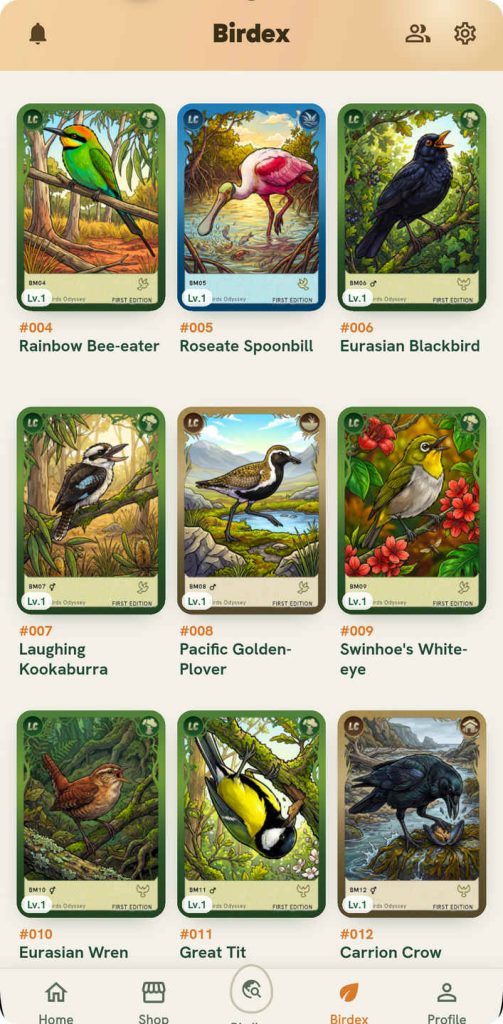
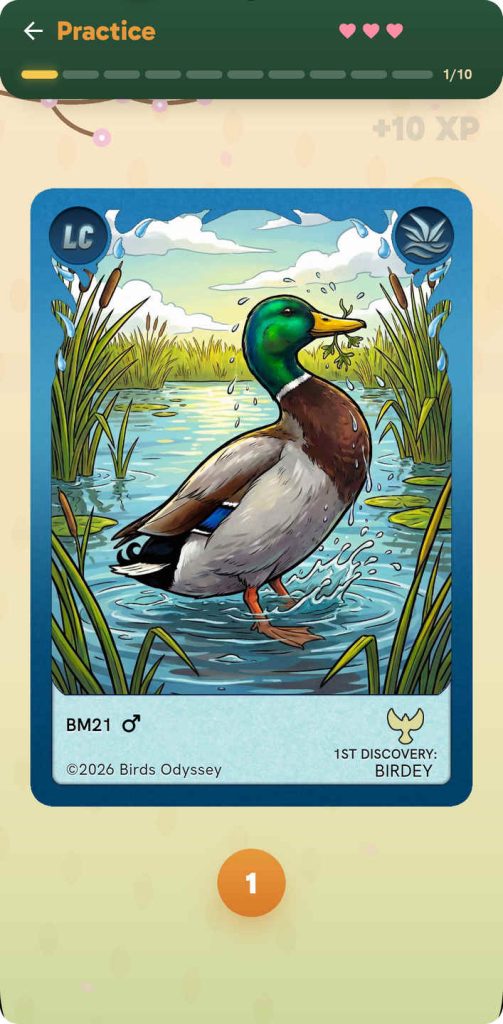
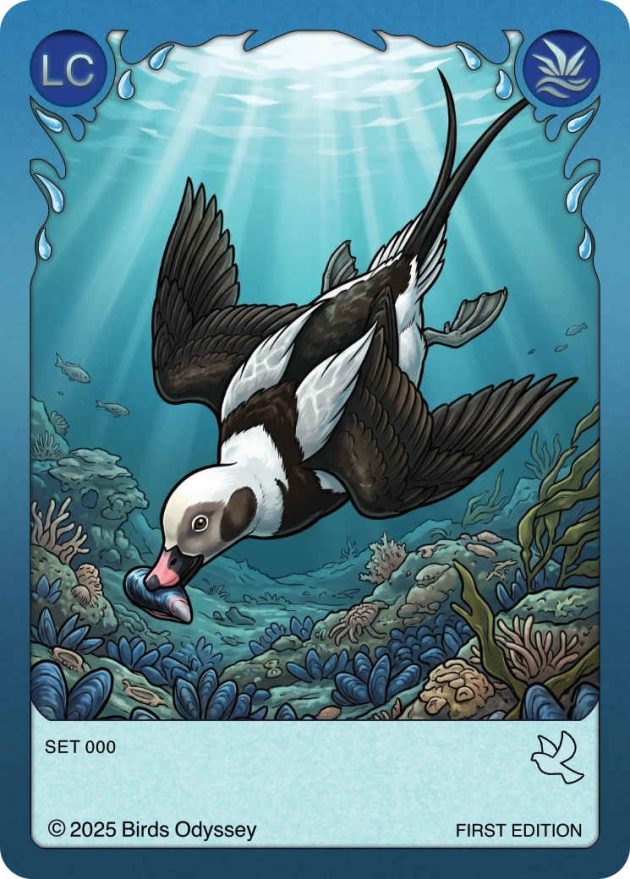
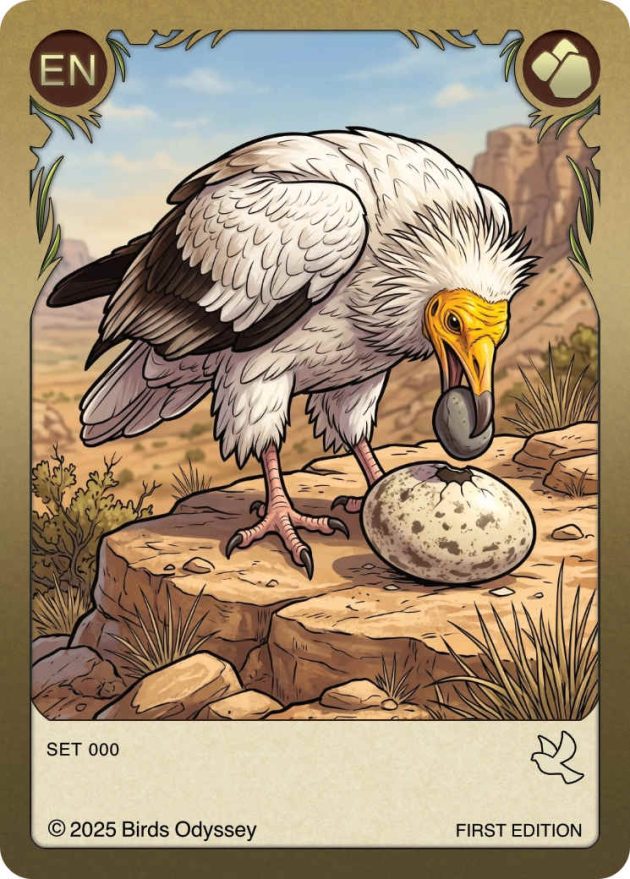
Birdey is a bird ID game. You study a bird for a few seconds, then identify it from memory, and the game keeps bringing back the species you confuse until you just know them. As you learn, you build a collection of bird cards, and the rarity of each card is not invented: it follows the species’ real conservation status on the IUCN Red List, so a Critically Endangered bird really is one of the hardest cards to find. Part of every subscription protects real habitat through World Land Trust. It runs on iOS and Android, and there is a kids’ mode that reads aloud for those who cannot read yet.
Interview with Anders
How did the idea for Birdey first come about?
So I started my birding journey by taking photos and wanting to know what species I actually saw. But at some point, I felt that taking the perfect photo was the main focus and overshadowed just enjoying and experiencing nature and birds in the moment. So I sold my camera. That resulted in my life list suddenly not growing much, cause when I was out in nature and saw a bird I was in doubt about I tried to remember the key markers, but when I got home and saw there was 2, 3, 4 lookalikes and saw the key markers I was supposed to have noticed to differentiate them, I realized I didn’t remember at all… and I’m the kinda person that don’t put down a bird on my life list unless I’m 99.9% sure it’s correct.
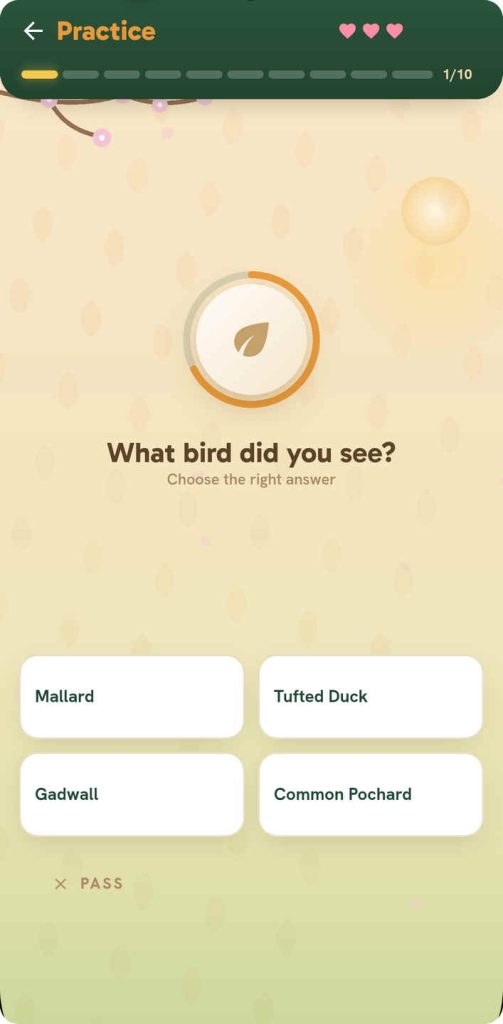
The problem was, when I then went out and spotted the same bird again a year later, maybe I totally forgot what the key markers to look for were… and THAT was when I started looking for a bird flashcard game or something like that. But there is literally none… the only one I found was eBird’s quiz that lives in a web interface looking quite bland and laggy on a phone screen, and some small other local web quizzes… but no polished app that could be my Duolingo for birds…
Were you a birder before becoming a game designer, or a game designer before becoming a birder
Birder first, for sure. I’ve birded for around 5-6 years now, and I had never made a game before in my life. Birdey is my first one.
What inspired you to combine birds and card-game mechanics?
I lived in Taiwan for 4 months when I was 17. And learning Chinese is really hard, but they use flashcards a lot for remembering, and that is what inspired me to combine the two.
Did you feel there was something missing in existing bird-related games?
Yeah, games that actually test you and help you remember birds were non-existent. There are games like Wingspan, which I like a lot, but they don’t train your recall or test your knowledge. They do expose you to the birds, which helps, just like Facebook groups help a lot cause you are constantly seeing them. But that is different from actually learning to ID them yourself.
Who are the people behind Birdey, and what are your individual backgrounds?
Birdey is just me. I’m 31 years old and a single father to a 9-year-old daughter. I have my hands full already, but the passion is strong, and even my daughter is starting to get really good at bird ID because Birdey has text-to-speech everywhere (made for her).
How long did it take to develop the game from the first idea to the finished product?
So it’s still in beta, so I can’t say it’s 100% complete, but I’m really close. But I started planning Birdey 13 months ago
What were the biggest challenges during development?
Realizing Birdey shouldn’t be a physical card game but a digital-only one. I realized having real flashcards in physical form would be both expensive to start up on only my salary, with no funding, and while supporting my daughter as well. And the educational content I could get across through an app was of much higher quality than a card with a bird on one side and a name on the other.
How did you decide on the gameplay mechanics?
So the core of it being a flashcard game was for sure, and since the first thought was to have the game as a physical one, I saw it as very important to put conservation into it to offset the impact of printing (even when using FSC and such). The other features and mechanics I implemented as I tested and realized it would be better with this and that, and over the last couple of months, a lot of the new stuff came from feedback from testers and family. For example, my parents are in their 60s, and I know a lot of birders are in that category, so making sure it was easy to understand for them was a good measure of how it should be.
Was it difficult to balance educational/conservation themes with making the game genuinely fun?
I felt it was pretty easy, honestly. I wrote down what I wanted people to learn: bird ID, of course, awareness of what birds are actually in trouble in the world, which meant IUCN status. I know a lot of birds that are very common here in Denmark but actually rare in other countries, so it can be quite hard to understand why we can’t just shoot this and that when they become a nuisance cause people see them everywhere, but in reality, if you look at the entire world that bird species might struggle.
So, getting that across, I felt, would be a priority. I then dabbled with food sources and threats, but as I made the data for the cards, I realized that food sources already have a big tell (the beak), so it would be very easy to learn just by looking at the bird. And the threats were almost all the same, and not something that would give anything of value to the individual birds.
Did the game mechanics change a lot during testing?
The core, no, but smaller stuff around the core concept has changed a lot, yes, and I feel like it’s finally in a really good place.
Which part of the game are you personally most proud of?
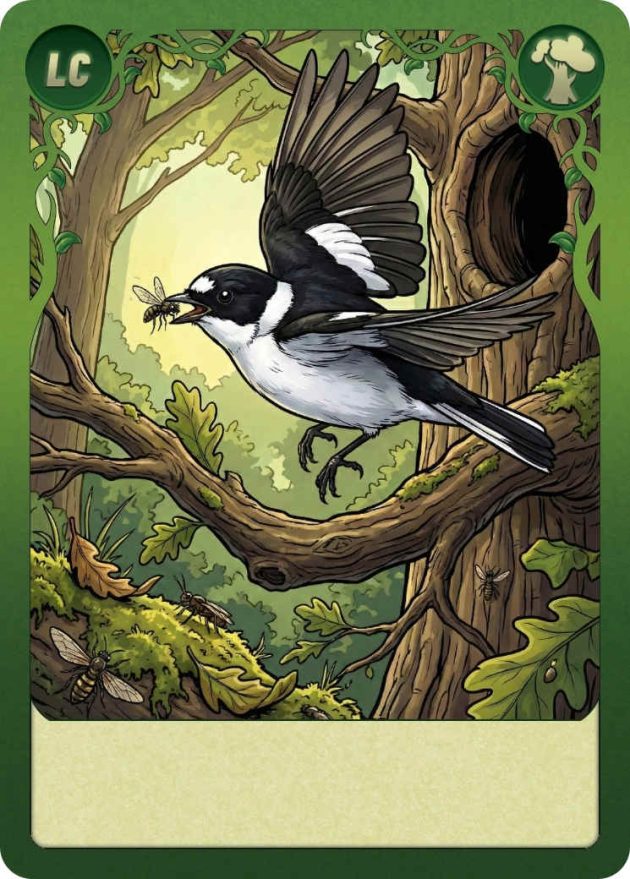
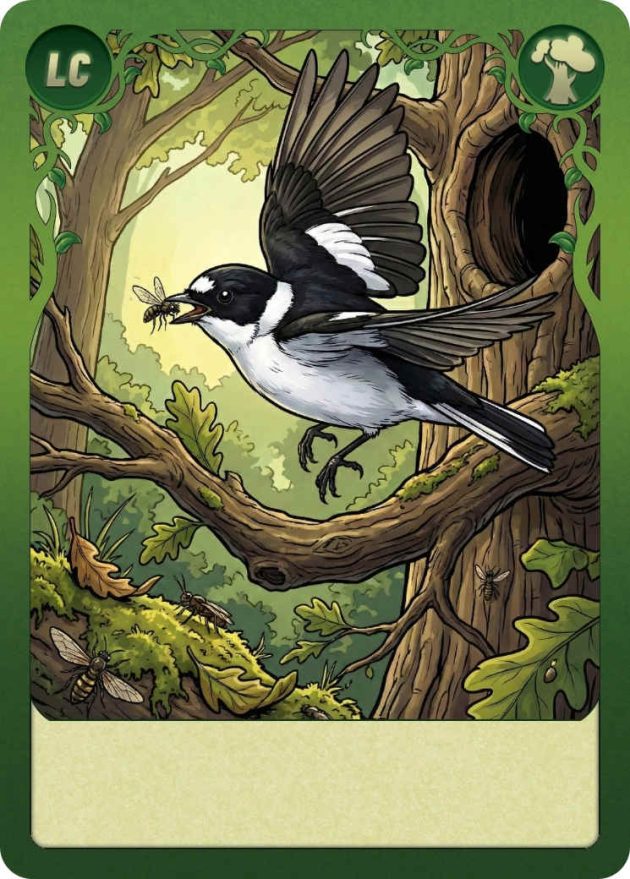
Hmm, I must say the fact that it works. I saw a Pied Flycatcher last month in a park close to my home, and I INSTANTLY knew to look for the white neck. I saw it wasn’t present and could write it down on my life list with confidence. Also, my daughter, who can’t read yet and ain’t as into birds as I am, still learned a lot of birds and how to differentiate them because of Birdey, so she’s a good proof of concept even for kids.
How did you choose which bird species to include?
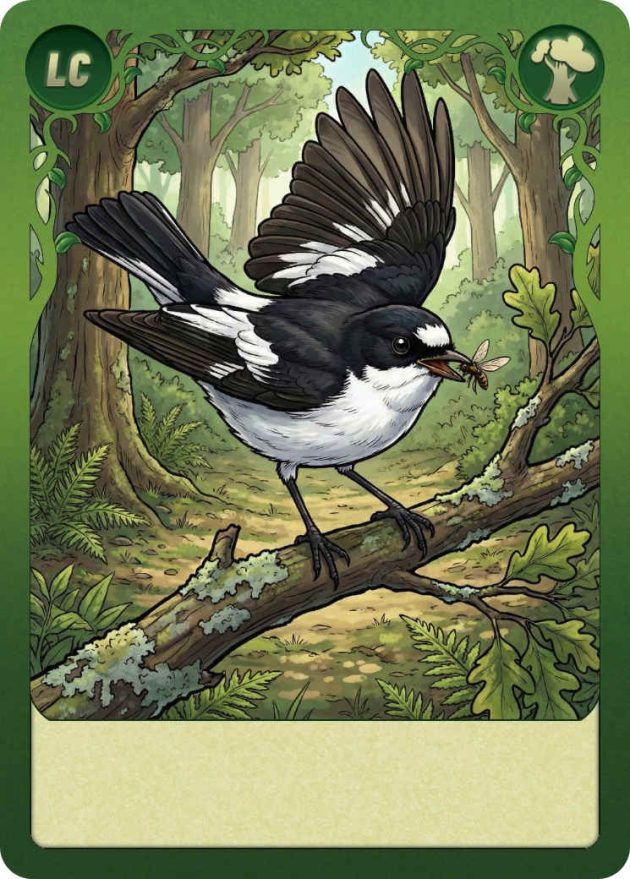
Easy… ALL 😀 I want them all with multiple variants, like female, juvenile, and eclipse. But the way I decided what to start with was that I wanted the most-seen birds first, and I wanted both US and EU covered. So at the moment, there are 100 recognizable birds from the EU and 100 from the US, and they all come in 2 variants. An easy mode where they are sitting in their habitats doing typical behaviour for their species, but also a hard variant where they always sit and look to the right with no background to give away what bird it is. So the total is over 400 at the moment, and when Birdey leaves beta, I will double that on launch day.
The artwork is clearly a major part of the game. How did you select the art?
I have no skills in illustrating and no funding to pay for them all, so the frames and assets I paid an illustrator to do, and the artwork itself, I knew the style I wanted to get across. I wanted to exaggerate the key field markers on birds. I know often species are not as black and white as I make them to be in Birdey, it is rarely a perfect breeding plumage in high sunlight at close range 😀
So the species I know overlap more often, but I saw it as a benefit I could really point out WHAT the difference is and what to look for, so at least when you see a bird in optimal conditions, you are able to identify it, which is better than getting home without a new bird on the life list. But all the images are generated with the use of AI out of necessity cause funding, and I wanted Birdey for myself, so the means to get there wasn’t as important. But if Birdey ever gets the support to pay for an illustrator, it is the first hire on the list.
Who do you see as the main audience for the game?
Anyone from small kids like my daughter who can’t read, to the tech-savvy 60s.. as you know, learning the names of birds opens up an entire new world around you, and I think anyone can benefit from that.
Do you expect the game to appeal mainly to birders, or also to people with little prior interest in birds?
It is mainly for birders, new and old alike. Old birders who know them all can turn on Latin mode and practice using only species names. Not for me haha, I’m not there at all, but some are 😀
Have you seen any surprising reactions from players?
Oh yeah, I didn’t expect them to play for hours a day. That was surprising to me. I expected it to be a little game you pick up on a daily basis and get your daily exposure to birds, learning a little new and remembering the old, so it’s always staying fresh in your mind when you get the chance to see those amazing creatures.
What kind of feedback have you received so far from birders versus non-birders?
We’re only at around 100 beta testers at the moment, so it’s limited how many have had the chance to say anything negative, but all feedback from players has been positive so far. But on social media, the AI backlash is real, and I understand it, and I just hope people can look past that and see the good Birdey can do, which, in my opinion, outweighs the negative, and it is only temporary if Birdey gets enough support.
Is there a particular age group the game works especially well for?
I suspect the younger generations probably have an easier time, so anyone from 10-40 will probably have the easiest time picking up Birdey cause they are very used to games like Duolingo and navigating games and understand general game concepts from other games.
Do you think games can help increase interest in birds and conservation?
Hmm, no, probably not that impactful. People are flocking to nature at the moment for good reason, with all the technical advancements happening in the world, so Birdey is not meant for bringing new people to nature – that is happening by itself. Birdey is for us who want to get better at bird ID and are so used to all the dopamine in the world that reading books is a real struggle, but we still want to get better and learn.
If you could collaborate with any bird artist, conservation organization, or birder, who would it be?
I’m working on making a partnership with World Land Trust, and even if it doesn’t happen, I will still give them 10 square meters of protected habitat (Buy an Acre program) for every single subscription, which is a big chunk of what I actually make on it. I researched all the conservation organizations, and I felt they had such a good way of looking at conservation, not a lot of lobbying or talk, more ACTION. That I can relate to, so that’s the one I chose. As for a bird artist, I really hope I get so lucky that I can start looking into who to hire, but I have no idea at the moment.
Are there plans for expansions?
11,000+ birds 😀 multiple variants, females + juveniles + eclipses + mutations as special editions. The game is almost done, and I can then focus on the cards themselves and expand. I will release new cards every single month after the release.
What would you most like Birdey to achieve over the next few years?
I would like the people who have a small interest in birds to learn to identify the birds they see, so it’s not just those hardcore bird nerds who can ID the birds, but all those who genuinely get excited for a new bird in their backyard also have the ability to.
What is your favorite bird species, and did it make it into the game?
That has to be the Bluethroat, and no, it’s not even in the game yet cause it’s not that common here yet, and I try to choose the most well-known birds first.
What bird best represents your personality?
Maybe a Blue Tit. Never still for a second, hangs upside down to check something, it’s fearless and curious, into all of it at once.
What do you hope players feel after finishing a game of Birdey?
Honestly, I hope they close the app and feel like getting outside 😀 That is the whole point for me. Birdey is not meant to keep you staring at a screen; it is meant to make that moment out in the field better. So the next time you spot a bird you are unsure about, you actually know what to look for and can put it on your list with confidence. And if they walk away caring just a little more about the birds that are struggling, and start seeing even a common backyard bird as something worth protecting, then I could not ask for more.











Leave a Comment