
Highlights
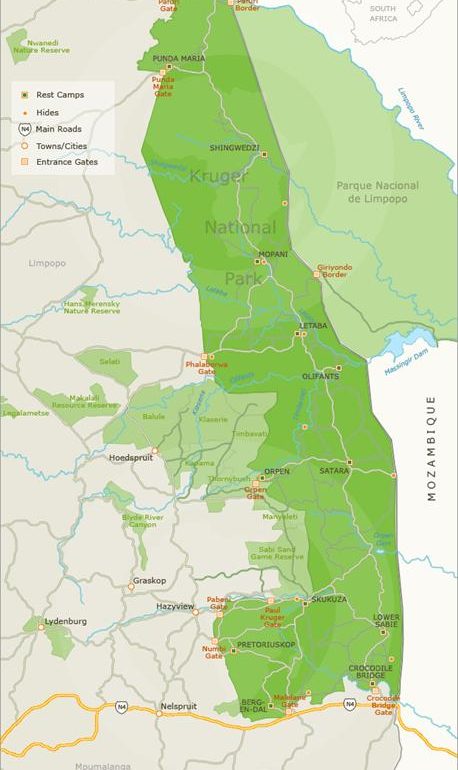
This iconic National Park is located in north-eastern South Africa, covering nearly 2 million hectares and stretching over 350 kilometres from north to south along the Mozambique border. It is widely regarded as one of Africa’s premier birding destinations, with over 540 recorded bird species supported by its vast scale and habitat diversity.
Kruger’s landscapes are defined by a mosaic of Lowveld savanna biomes, including thornveld in the south and extensive mopane woodland in the north, as well as riverine forests, wetlands, and open grasslands. This exceptional habitat diversity underpins a rich avifauna, ranging from large raptors and ground-dwelling species to specialized waterbirds and woodland endemics, making it a major conservation stronghold in southern Africa.
The park offers excellent accessibility, with an extensive network of roads, hides, and rest camps that provide outstanding birding opportunities throughout the year. With a bird list exceeding 500 species and seasonal variation bringing migratory species into the region, Kruger stands as a true birding hotspot, attracting enthusiasts from around the world.
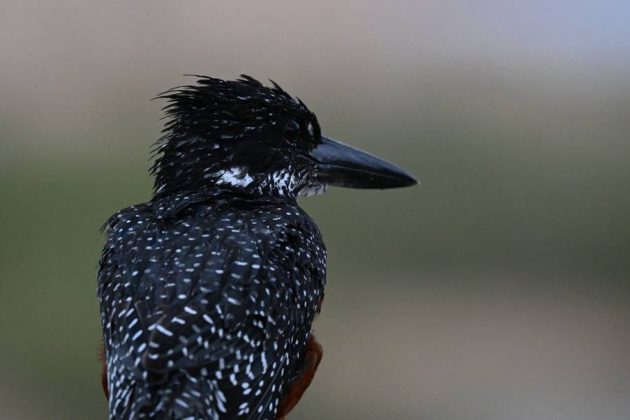
Giant Kingfisher
Birds of the far north of the Kruger National Park
- Southern Yellow White-eye
- Racket-tailed Roller
- Meves’s Starling
- African Golden Oriole
- Lemon-breasted Canary
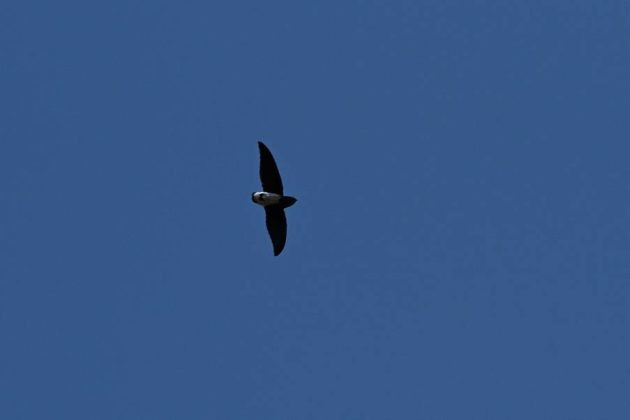
- Böhm’s Spinetail
- Mottled Spinetail
- Pel’s Fishing Owl (rare but possible)
- Dickinson’s Kestrel
- Three-banded Courser
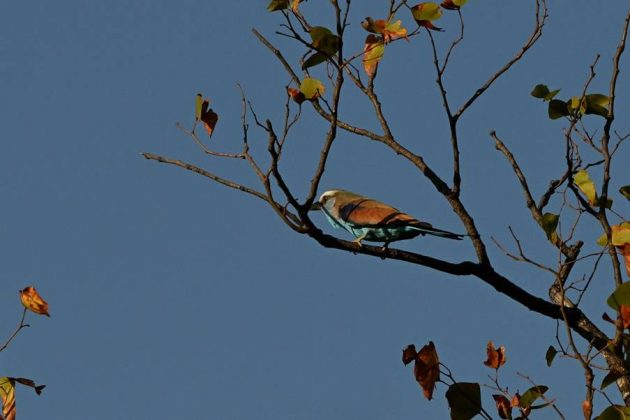
Racket-tailed Roller
Birds of the central region of the Kruger National Park
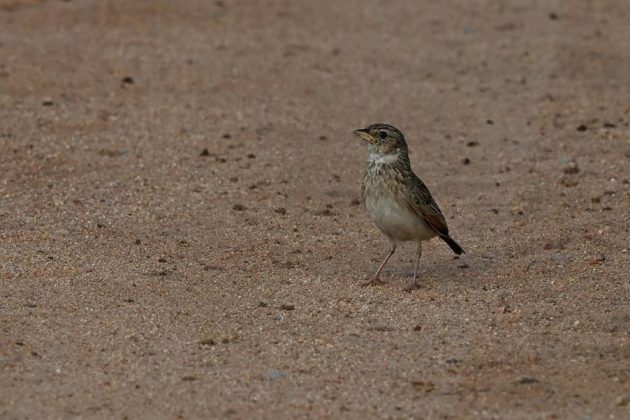
- Monotonous Lark
- Chestnut-backed Sparrow-Lark
- Black-bellied Bustard
- Kori Bustard
- Secretarybird
- Montagu’s Harrier
- Pallid Harrier
- Common Ostrich
- Temminck’s Courser
Monotonous Lark
Birds of the southern Kruger National Park
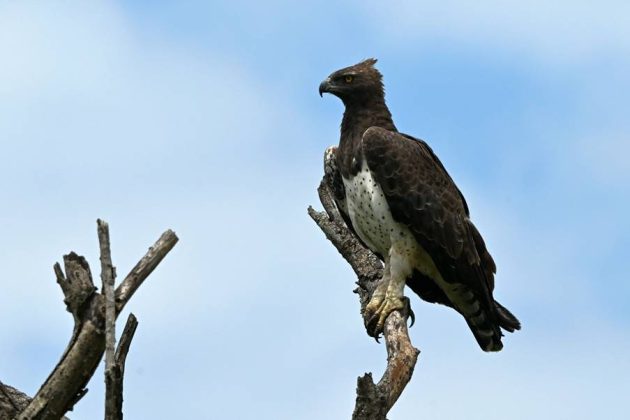
- Martial Eagle
- Tawny Eagle
- White-backed Vulture
- Lappet-faced Vulture (Leopard-faced Vulture)
- Hooded Vulture
- White-headed Vulture
- Lilac-breasted Roller
- Grey-headed Bushshrike
- Gorgeous Bushshrike
- African Green Pigeon
- Saddle-billed Stork
- Giant Kingfisher
- Purple-crested Turaco
- Hamerkop
Martial Eagle
Best Regions for Birding
Far North (Pafuri & Punda Maria)
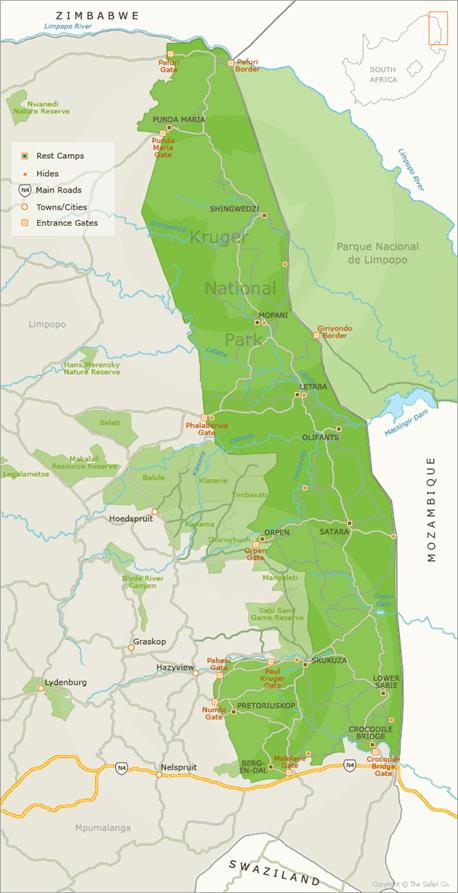
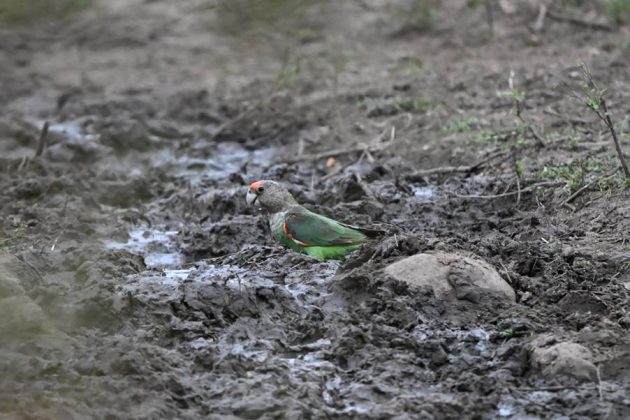
The far northern reaches of Kruger — including Punda Maria and the Pafuri region — are widely recognized as one of South Africa’s top birding hotspots, where the tropical Lowveld flora meets unique riverine and sandveld habitats that support species rarely found further south. Here, dense riverine woodland along the Luvuvhu and Limpopo rivers creates habitat corridors for forest-dependent birds, while the more open sandveld supports a mix of Afro-tropical and dry-country species at the edge of their southern range. This region regularly delivers southern range extensions for species such as Meves’s Starling, Tropical Boubou, Racket-tailed Roller and Grey-headed Parrot, and birders have recorded more than 260 species in a single 24-hour period here. The northern sector’s diversity and density make it a must-visit destination for serious birders in the park.
Grey-headed Parrot
Makuleke Wilderness Area
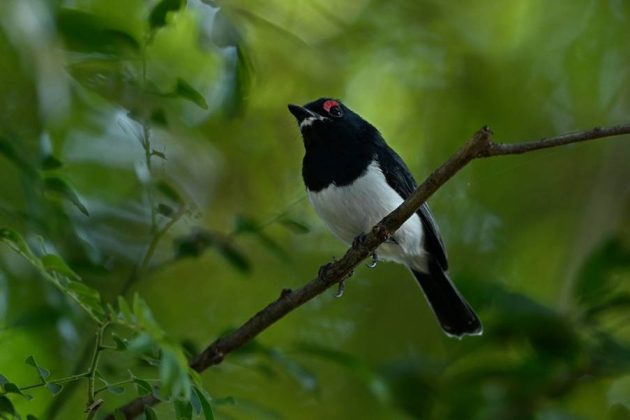
Nestled between the Limpopo and Luvuvhu rivers, the Makuleke Wilderness Area is a biologically rich and structurally diverse zone of tropical riverine forests, sandveld, floodplains and mopane woodland within the far north. This diversity of habitats supports a striking variety of birdlife, including several northern specials not easily seen elsewhere in South Africa. Birders here can target species such as Böhm’s and Mottled Spinetails, Lemon-breasted Canary, Black-throated Wattle-eye and Pel’s Fishing Owl, among other Afro-tropical species that reach their southern limits in the Makuleke landscape. Its position at the confluence of multiple habitat types and the ongoing increase in game and avian populations following conservation efforts make Makuleke a highly rewarding area for birding.
Black-throated Wattle-eye
Central Kruger (Satara)
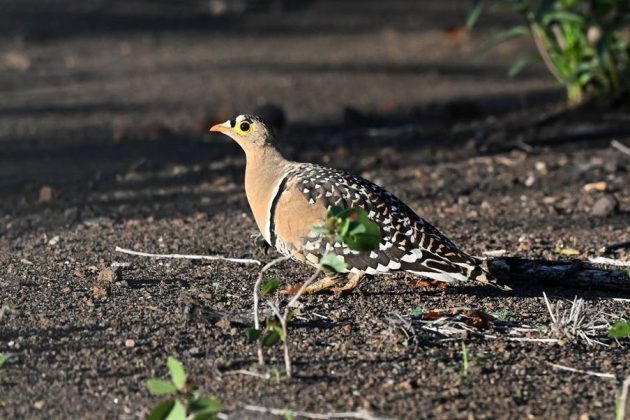
The central region around Satara lies in open savanna dominated by knob thorn and marula woodlands, interspersed with grasslands and seasonal water points that attract a wide range of bird species. This area is renowned for classic African bushveld birds and open-country species such as Kori Bustard, Southern Ground Hornbill, Secretarybird and Double-banded Sandgrouse. Around Satara Camp itself, birders can expect excellent birding, with species like Bennett’s Woodpecker, Red-billed Buffalo Weaver and Woodland Kingfisher commonly seen. Wetland areas such as the N’semani dam add waterbirds like Saddle-billed Stork and lapwings to the mix. Raptors are abundant, and summer brings migratory species overhead, making central Kruger both accessible and richly rewarding for birders of all levels.
Double-banded Sandgrouse
Southern Kruger (Skukuza & Sabie River)
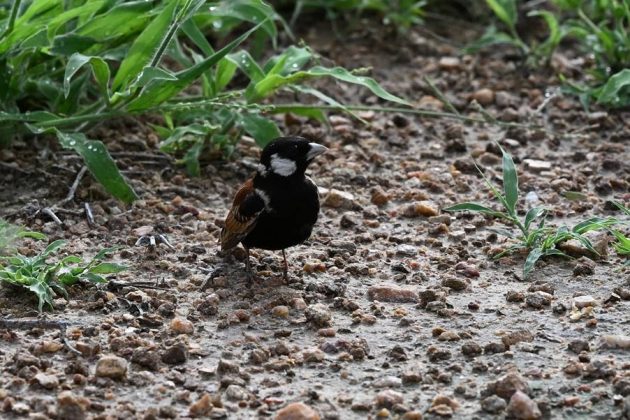
The southern section of Kruger, anchored by Skukuza, combines rich riparian habitats along the Sabie and its tributaries with dense thickets and mature riverine trees that attract a wide suite of resident and migrant birds. This region is famous for spectacular birdlife, including African Green Pigeon, Purple-crested Turaco, African Paradise Flycatcher and a suite of weaver species, while riverbanks host herons, storks and kingfishers — sometimes even African Finfoot. The birding here is varied and intense, with prime water-associated species at Lake Panic hide and many woodland and migratory species easily observed within camp and along nearby river trails. This structural complexity and high water availability make southern Kruger a perennial favourite among birders seeking both variety and quality sightings.
Chestnut-backed Sparrow-Lark
Best Birding Season
Birding in Kruger National Park is excellent all year round, thanks to its incredible diversity of habitats and resident species. The peak season is generally September to November, during the late dry spring months. Migratory species from the northern hemisphere, including many raptors, swallows, and flycatchers, arrive during the southern summer (roughly October to March), adding extra variety to the resident avifauna. Woodland and savanna species remain highly visible throughout the year, while the early summer rains bring bursts of flowering and insect activity that attract nectar-feeders and insectivorous birds. This combination of predictable dry-season concentrations and the seasonal arrival of migrants ensures that birding in Kruger is rewarding in every season.
Birding Trip Suggestion(s)
North to South in the Kruger National Park
- Punda Maria Camp (2 nights) – Ideal base for exploring the far north, with access to sandveld, mopane woodland, and the Pafuri region.
- Shingwedzi Camp (2 nights) – A quieter northern camp with excellent riverine birding along the Shingwedzi River.
- Letaba Camp (2 nights) – Set along the Letaba River, offering a productive mix of woodland and riparian habitats.
- Satara Camp (2 nights) – Located in central Kruger’s open savanna, excellent for grassland species, bustards, and raptors.
- Skukuza Camp (2 nights) – Strong birding in mature riverine woodland and along the Sabie River, with high species diversity.
- Berg-en-Dal Camp (2 nights) – A scenic southern camp in rocky hills and mixed woodland, adding a different habitat and bird suite to the itinerary.
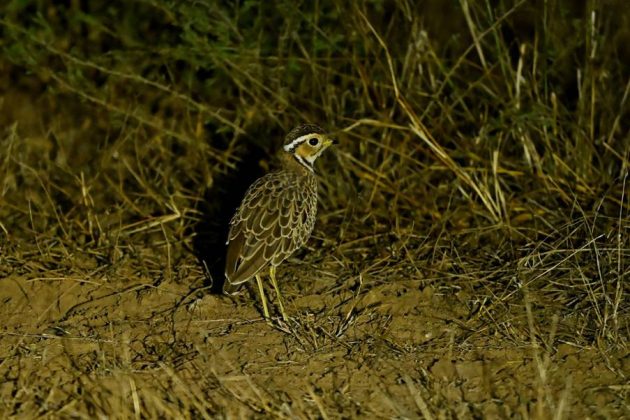
Three-banded Courser
Practical Tips
- Birding is generally best in the early mornings, when temperatures are cooler, birds are most active, and light conditions are ideal for spotting and photography. The midday heat can make birds less visible and more difficult to observe.
- Most birding in Kruger is done from the vehicle due to the presence of dangerous wildlife such as lions, elephants, and buffalo. Keeping binoculars and a spotting scope ready in the vehicle, driving slowly along roads, and stopping frequently near water sources or woodland edges will maximize your birding success.
- Early planning of routes between camps or key habitats can help cover both open savanna and riverine woodland, giving access to a broader range of species.
- Many of the rest camps themselves offer excellent birding opportunities, as they are generally well-wooded, attracting a variety of resident species right on the campgrounds. Camps are fenced for safety, allowing for some safe exploration on foot.
Böhm’s Spinetail
Books
https://www.robertsbirds.co.za/kruger-bird-guide-2.html
https://www.robertsbirds.co.za/bird-guide-2.html
Links
- https://naturetravelbirding.com/
- https://www.sanparks.org/parks/kruger
- https://www.sanparks.org/parks/kruger/what-to-do/activities/birding
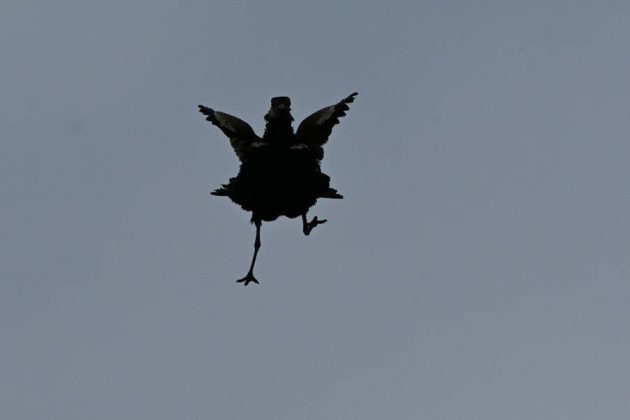
Red-crested Korhaan displaying
By Rene Rossouw
Rene Rossouw is a South African bird guide for Nature Travel Birding and also a travel content specialist focused on birding, wildlife, and conservation. She can be reached at info@naturetravelbirding.com and has been profiled on 10,000 Birds.





Kruger is one of my favourite national parks for sure. Most of my trips there have been in the pursuit of mammals but still a quarter of my SA species hail from the park. Some additional comments: the camps inside the park are great but do fill up in high season, so book early. I prefer the camps over the more luxurious accommodation just outside the park. The camps themselves are indeed great for birding. Every chalet comes with a braai (BBQ). I have always bought my supplies in the stores where the local people go and buy. These stores have rather big packaging so you can leave surplus flour, rice and such behind. The cleaning staff really appreciates the gesture.