
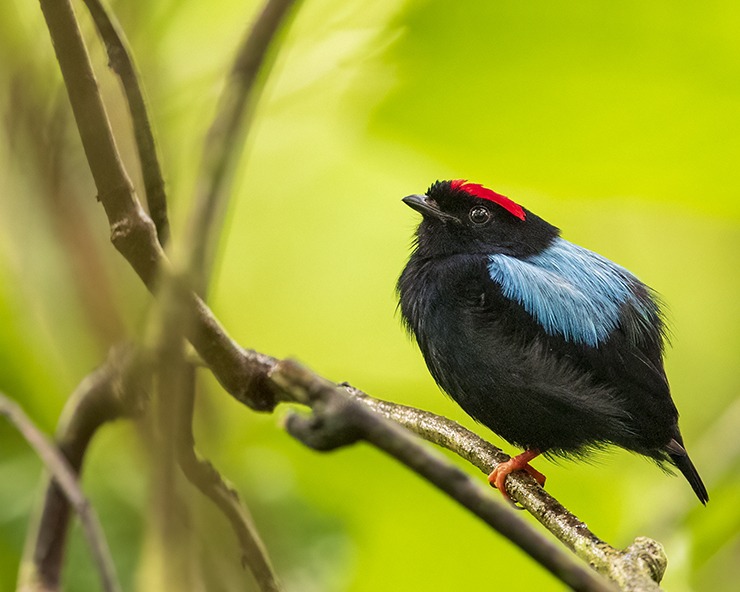
For those of you who have ever visited Trinidad & Tobago, I trust that you would have spent at least a few hours in the Main Ridge Forest Reserve. This unique habitat forms the rocky backbone of Tobago, its ecological impact reaching far and wide throughout not only the island, but the surrounding ocean. This coming Monday, April 13th, marks the 250th anniversary of the forest being declared a protected area – a landmark event for global conservation, the first of its kind in the western hemisphere, predating even the hundred-year old Migratory Bird Treaty Act.
To celebrate this, I am releasing a tribute of sorts to this magical rainforest. I’ll be sharing further details next week on my website, along with a link to order a copy of this:
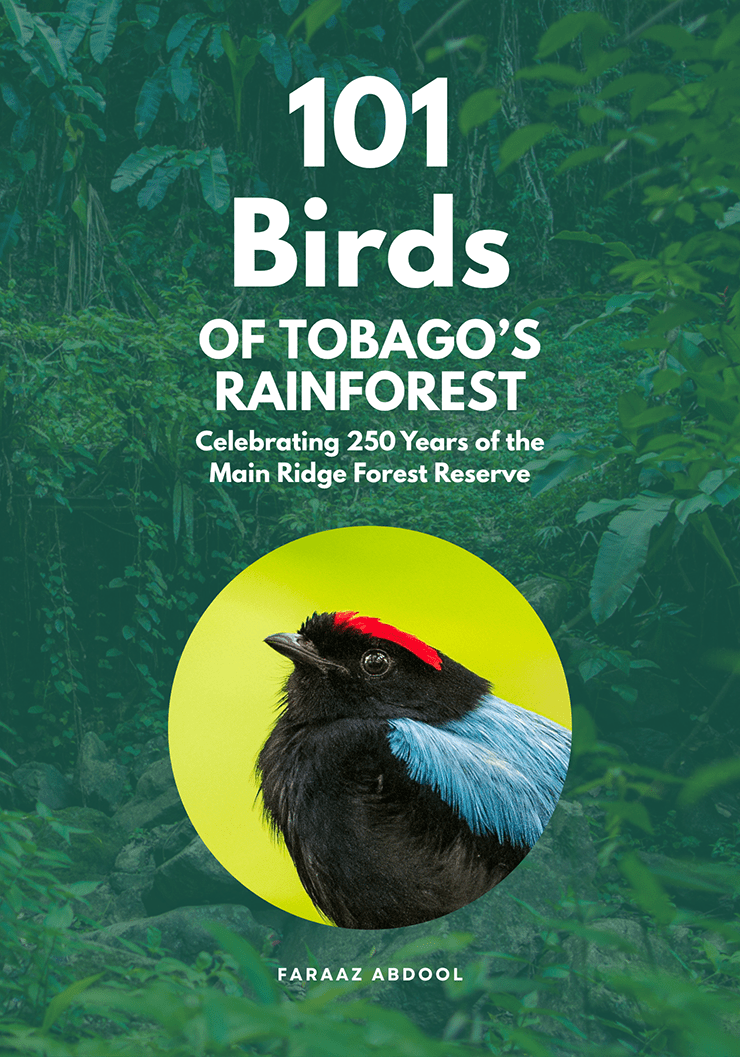
This book does not have much in the way of prose, but each of the 101 species documented here includes a photo as well as accompanying text. I will leave you with the introduction to the tome:
Tobago: an island comfortably nested in the southern Caribbean, almost inconspicuously so with the much larger Trinidad to the southwest and the volcanic Lesser Antilles rising from Grenada in the north. This cigar-shaped island is entirely different from its neighbours, however.
Each island in the arc of the southern Caribbean dances to the beat of its own emerald heart. Verdant, lush, and in every way spectacular, these thickly forested peaks and valleys leap skyward from the turquoise waters of the Caribbean Sea, with many a summit lost in the clouds. The upper slopes of these mountains are eternally moist and encrusted with evergreen forest. It is this intimate relationship with water which proved to be pivotal in the movement for the protection of Tobago’s Main Ridge, a movement which culminated with the declaration of the Main Ridge Forest Reserve as a wholly protected area on April 13th, 1776.
It had taken eleven years for British parliamentarians to be convinced by an argument which we now understand to be entirely true: the health of the surroundings depends on the health of the rainforest. This interconnectedness was a radical idea in western science 250 years ago, but was long understood and accepted by indigenous peoples throughout the world. Today, the Main Ridge Forest Reserve remains the lifeline of Tobago’s natural wealth – ensuring the bounty of the island and its surrounding waters.
Tobago’s continental origin and millions of years existing as an island means that its biodiversity is not only dense, but unique. Over a quarter of the island’s resident birds are of an endemic subspecies! Tobago is also home to several species of reptiles and amphibians that are found nowhere else on earth.
The birds of Tobago’s rainforest are visible ecological indicators of the state of the forest. For them, the forest is not just their home and pantry. To suggest this would imply that the forest provides for the birds, and the birds happily feed and roost as we purchase food and sleep in houses. It is my hope that we shift our perspective and begin to understand that the relationship between the birds and the rainforest is by no means unidirectional. The forest depends on the birds just as much as the birds depend on the forest – remove one and the system is sure to collapse.
The birds that are documented in these pages include all of Main Ridge’s resident species, as well as some commonly encountered migratory species. The list was compiled from eBird records for Main Ridge Forest Reserve, a feat that has only been made possible due to people recording their sightings on the platform. Therein lies one of the main virtues of citizen science. Nevertheless, all data must still be thoroughly checked. Some of these sightings were incorrectly geotagged as being from the rainforest – Red-billed Tropicbird being a prime example – and had to be stripped from the data. Once erroneous reports were removed, records of vagrants were next for the cull. In birding, a species is described as a vagrant when it is recorded outside of its known resident range or migratory pathway. It follows, therefore, that most vagrants are highly migratory species and may be seen in the area once every few years. To further whittle the list down to 101, some less common migratory species as well as a few resident species had to sadly be excluded. The species are all arranged and named according to the convention used by AviList, the first unified global checklist of all the birds of the world.
Tobago’s location just north of the equator along one of the planet’s main migratory pathways means that it remains possible throughout most of the year for one to encounter birds of far-flung destinations. Whether Fork-tailed Flycatchers from the open savannas of South America or warblers of the far north’s boreal forests, there are many reasons to keep our senses receptive.
As the climate continues to change, it is essential for us to continue observing the birds around us, as their movements are also shifting. Seeing more or less of certain species can be indicative of a greater issue, and we must remain vigilant.








Excited! But I need a book of your prose asap!