

HIGHLIGHTS
- Nearly 1,000 bird species (~10% of the world’s birds)
- Elevational gradient from ~4,000 m to ~300 m
- One of the most biodiverse protected areas on Earth
- Continuous ecosystems: Andes through the cloud forest and Amazon
- Part of a UNESCO World Heritage Site
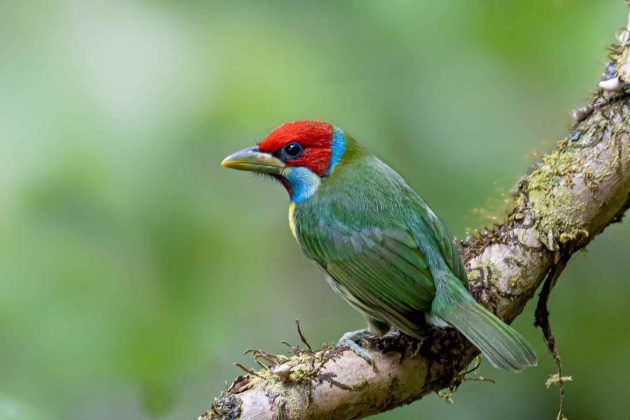
Versicolored Barbet
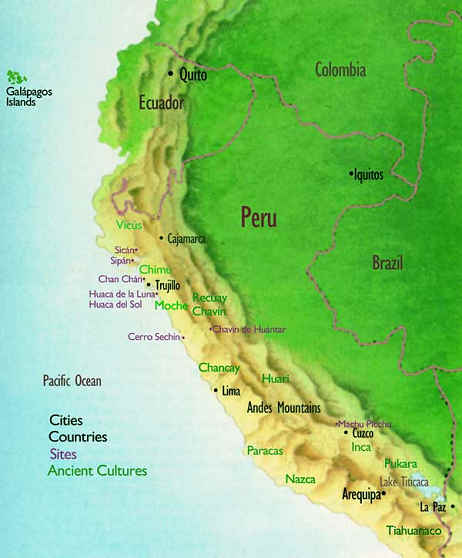
On the Pacific coast of South America, Peru stands as a country with a diversity as remarkable as its rich cultural history for which it has become known worldwide. It is one of the most megadiverse countries on Earth, with approximately 17% of its territory protected under 76 natural areas, positioning it as a nation with a strong commitment to conservation. Among these, Manu National Park stands as Peru’s most iconic and biologically significant protected area, widely regarded as a flagship of conservation in the country and a true jewel within the Amazon basin, where it remains one of the best-preserved regions.
Manu also holds one of the most complete and continuous ecological gradients on the planet, with minimal human intervention. Covering more than 1.7 million hectares and still harboring species yet to be described, it supports nearly 10% of the world’s bird species, making it a must-visit destination for any serious birder. However, such a vast and rugged landscape—featuring endless intact forests and dramatic elevation changes that begin above 4,200 meters and descend rapidly through deep valleys to just 300 meters—presents a significant challenge for organizing a comprehensive birding experience. This is especially true in a place with such a wide variety of habitats and transitions, where some of the most important birding opportunities occur.
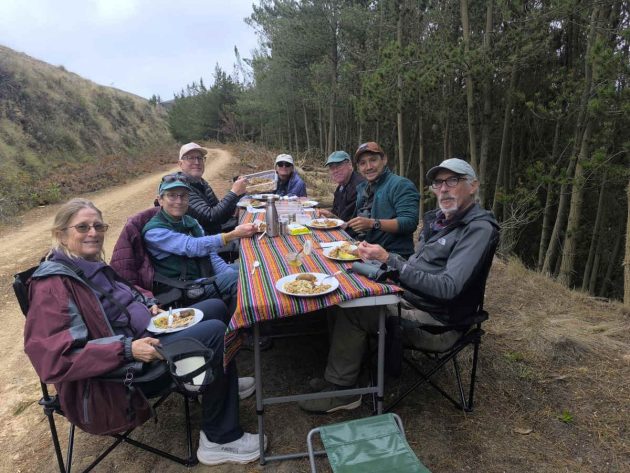
Despite this immense complexity, the region can be explored in an organized and highly effective way through a remarkably complete elevational transect along a single road known as Manu Road. Stretching roughly 200 kilometers, it begins in Cusco, the historic capital of the Inca Empire, and traverses high Andean lakes, puna grasslands, elfin forest, cloud forest, Andean foothills, and lowland Amazon rainforest. The road itself is partially paved, and some portions remain as a dirt road, yet generally comfortable, and it cuts through a largely unfragmented landscape. This results in exceptional ecological stability, with connected ecosystems that allow species to move naturally along the gradient. Along the route, strategically located lodges make it possible to cover all elevations efficiently and even in comfort, maximizing birding opportunities in one of the richest biological corridors on Earth—widely regarded as one of the finest, if not the best, birding roads in the world.
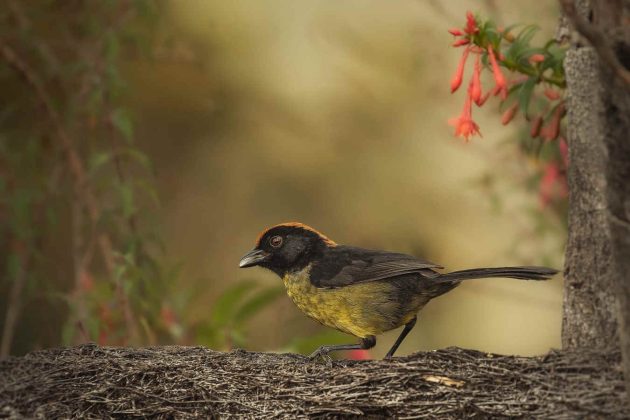
Black-faced Brush-finch
KEY BIRD SPECIES AND FAMILIES
- Rusty-fronted Canastero (E),
- Creamy-crested Spinetail (E),
- Chestnut-breasted Mountain-Finch (E),
- Puna Tapaculo
- Scribble-tailed Canastero,
- White-throated Screech-Owl
- Urubamba Antpitta (E)
- Red-and-white Antpitta (E)
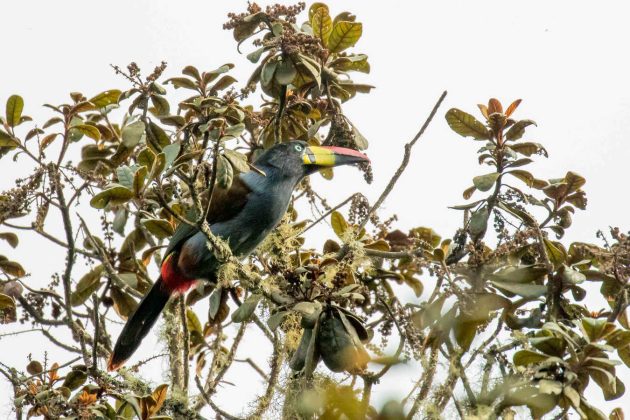
- Gray-breasted Mountain-Toucan,
- Andean Cock-of-the-rock
- Peruvian Piedtail (E)
- Cerulean-capped Manakin (E)
- Yungas Manakin
- Versicolores (Blue-moustached) Barbet
- Black-backed Tody-Tyrant (E)
- Fine-barred Piculet
- Scarlet-hooded Barbet
- Amazonian Antpitta
- Hoatzin
- Rufous-headed Woodpecker
- Manu Antbird
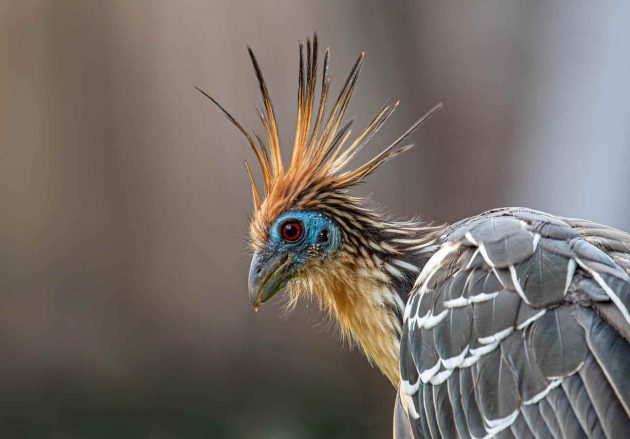
Hoatzin
BEST REGIONS FOR BIRDING
- High Andes (Cusco – Acjanaco – ~4,000 m): Specialized high Andean species occur in elfin forest habitats, where colorful mountain-tanagers often flock together alongside Gray-breasted Mountain Toucan and endemic antpittas that may visit feeders. Along the route, endemics such as Rusty-fronted Canastero, Bearded Mountaineer, and Chestnut-breasted Mountain Finch, as well as other species such as Scribble-tailed Canasteroare frequently encountered.
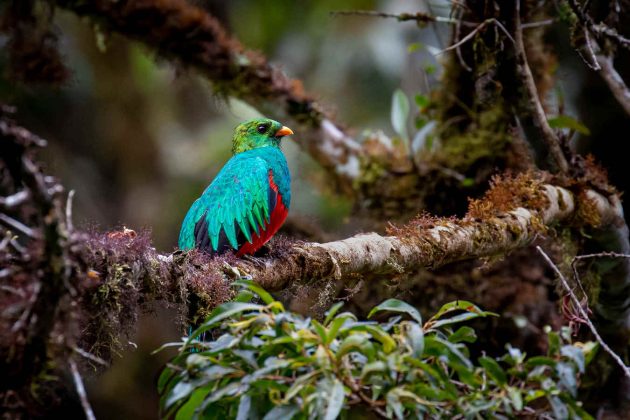
- Cloud Forest (Wayquecha / San Pedro): A true paradise for mixed flocks in montane cloud forest. Species such as Peruvian Piedtail, Cerulean-capped Manakin, Slaty Tanager, and Yungas Manakin are regularly observed. The Cock-of-the-rock lek here is one of the highlights, and raptors such as Black-and-chestnut Eagle are also possible. Other attractions include Golden-headed and Crested Quetzals, Amazonian Umbrellabird, Yellow-rumped Antwren, Rufous-booted Rackettail, and Solitary Eagle.
- Foothills (Villa Carmen): A key transition zone with high diversity and extensive bamboo stands of the genus Guadua. Notable species include Black-backed Tody-Flycatcher, Bamboo Antshrike, Manu Antbird, Rufous-headed Woodpecker, and White-cheeked Tody-Tyrant.
- Lowland Amazon (Amazonia Lodge / Manu lowlands): Maximum Amazonian diversity, with species such as Hoatzin, Fine-barred Piculet, Scarlet-hooded Barbet, Military Macaw, Blue-headed Macaw, and a vast array of additional lowland specialists.
Golden-headed-Quetzal
BEST BIRDING SEASON
It is difficult to define a single “best” season in Manu, as most species are resident and show different behavioral patterns throughout the year. During the dry season, conditions are more predictable and easier for planning, but strong sunlight in June and July often concentrates bird activity in the early morning, with a noticeable slowdown by mid-morning through the afternoon. In contrast, the wet season can bring heavy rains that occasionally limit birding activity for part of the day, yet bird activity often remains more prolonged. Rainy periods also tend to increase hummingbird activity at feeders, while during the dry season, tanagers are more commonly observed visiting them.
We generally suggest avoiding late January and February, which are the months of highest rainfall, although even during this period, we have had rewarding birding experiences.
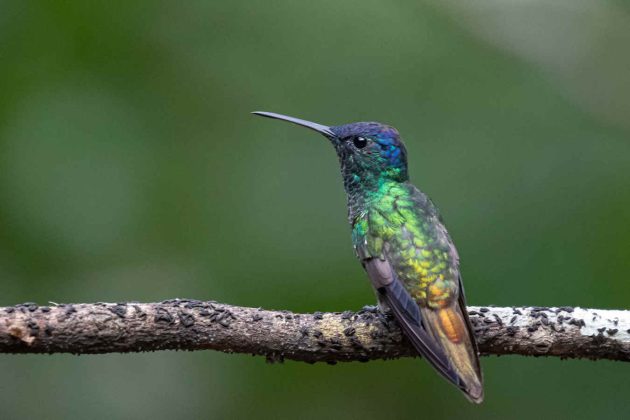
Golden-tailed-Sapphire
BIRDING TRIP SUGGESTION
- One of the most important things to understand when planning a Manu Road trip is the elevational gradient. In just a relatively short distance, the road takes you through high Andean grasslands (puna), elfin forest, cloud forest, and foothill forest before reaching the Amazon lowlands. Each of these habitats feels very different in the field, and each holds its own set of species.
- A useful pattern to keep in mind is that there is an inverse relationship between endemism and overall diversity. Higher elevations tend to produce more endemic and range-restricted species, often the ones many birders are specifically targeting. As you descend, species richness increases dramatically, but many birds are more widespread across the Amazon basin.
- In practical terms, a classic Manu Road itinerary usually works best over 6 to 8 days, allowing you to move gradually through the different elevations and spend enough time in each zone.
- If time is limited, 3 to 4-day programs can still be very rewarding by focusing on a particular section of the road—most commonly the cloud forest or foothills—especially if combined with other destinations in Peru.
- From experience, it’s worth planning your time carefully across elevations. The high Andes and the Wayqecha area—essentially the gateway into Manu—generally need at least 1 to 2 days, particularly considering the roughly four-hour drive from Cusco just to reach the area. The mid-elevation cloud forest can also be covered effectively in 2 days, while the foothills and lowland Amazon tend to benefit from 2 to 3 days, where bird activity and diversity are at their peak.
- For those with more time, extending the trip into additional lowland areas or nearby habitats can significantly increase the chances of encountering some of the more localized or difficult species.
Gray-breasted-Mountain-Toucan
PRACTICAL TIPS
- Acclimatization is required (start in Cusco ~3,300 m).
- Use layered clothing (cold high Andes to warm, humid Amazon).
- Waterproof gear is essential.
- High-quality binoculars are strongly recommended; avoid compact models. The variety of habitats includes open highland environments, low-light forest conditions, and dense vegetation where a short focusing distance is key. 8×42 binoculars are generally ideal due to their versatility, offering good close focus, sufficient magnification, and a wide field of view. However, with modern optics improving light transmission and field of view, some birders—including myself—prefer higher magnification such as 10×42 or even 10×32.
- Spotting scopes are recommended, particularly for highland lakes, distant canopy views in the cloud forest, and canopy birding in the lowlands. If traveling with a birding tour operator, scopes are typically provided for shared use.
Inca Flycatcher
LINKS
- https://manakinexpeditions.com/tours/birding-in-manu-road/
- https://www.facebook.com/groups/673902465987560 (active Peru birding community with frequent Manu Road records and updates)
- https://manakinexpeditions.com/birdwatching-in-manu-road/ (general overview of the route and experience)
- https://manakinexpeditions.com/wayquecha-lodge/ (birding perspective of Wayqecha, key high-elevation site)
- https://manakinexpeditions.com/cock-of-the-rock-lodge/ (cloud forest birding and lek experience)
- https://bdj.pensoft.net/article/22241/ (Study on the Manu gradient for bird ecology and pollination)
- https://www.researchgate.net/publication/41778570_Mammals_and_Birds_of_the_Manu_Biosphere_Reserve_Peru (documenting over 1,000 bird species along the Manu elevational gradient)
- https://psnp.info/psnp_/?p=1622 (Field experience of Manu Road, including elevational transitions from puna to Amazon lowlands)
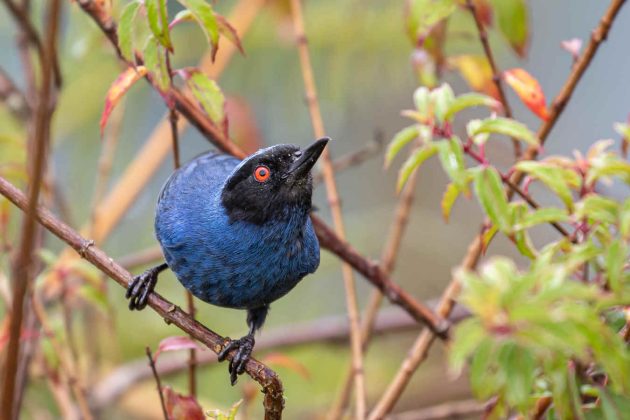
Masked Flowerpiercer
BOOKS
- Butterflies of Peru – Dio Chan & Pun (excellent reference for understanding Peru’s extraordinary butterfly diversity, especially in Amazonian regions)
- Birds of Peru – Schulenberg et al.(the most complete field guide, covering over 1,800 species recorded in Peru)
- Field Guide to the Birds of Peru – Clements & Shany (a practical alternative if the Schulenberg guide is not available; compact and useful in the field)
- Neotropical Companion (New Edition) – John Kricher (essential for understanding the wide range of habitats encountered along Manu Road, from high Andean ecosystems to Amazonian rainforest)
- Where to Watch Birds in Peru – Thomas Valqui (a classic site-based guide, still highly relevant for planning birding routes and understanding key locations across the country)
- Where to Watch Birds in South America – Nigel Wheatley (a continental perspective, useful for comparing Peru with other top birding destinations)
- Birds of Bolivia – Herzog et al.(particularly valuable as many bird populations in southern Peru show stronger affinities with Bolivian avifauna than with central and northern Peru)
- Neotropical Rainforest Mammals (4th Edition) – Louise H. Emmons & Feer (the most authoritative guide to rainforest mammals in South America, including species found in Manu)
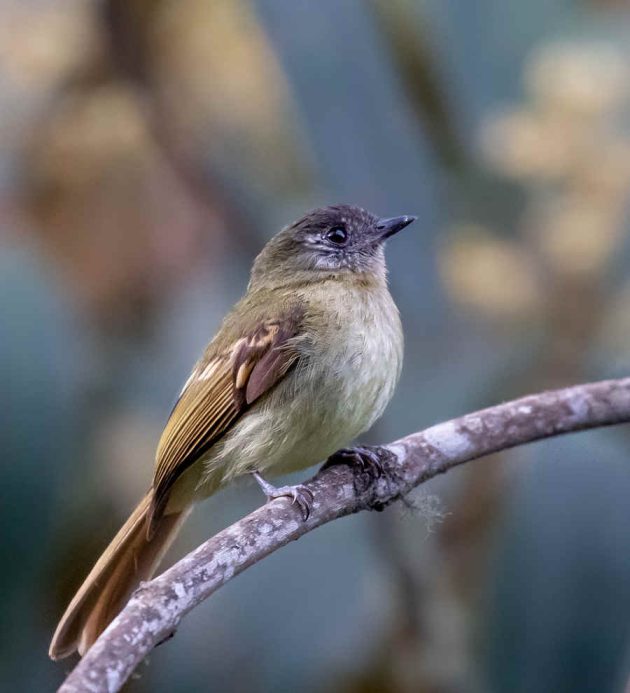
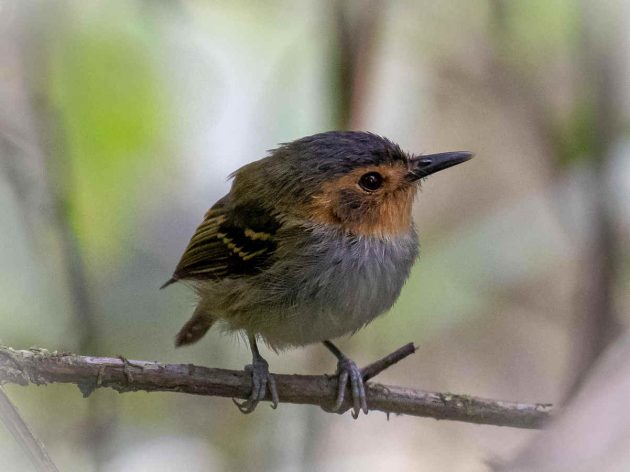
Ochre-faced Tody-flycatcher
Danny Vargas has a Bachelor’s degree in Tourism and a Master’s degree in “Ecology and Environmental Management”. He has worked as a Birding tour leader, Wildlife photographer, and External Consultant for the Peruvian Government for 15 years in Peru. He leads Birding and Cultural tours for Manakin Expeditions www.manakinexpeditions.com
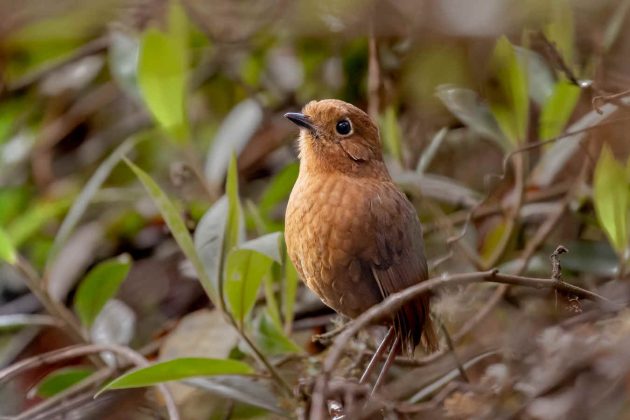
Urubamba Antpitta
“Mapa del Perú (Peru map)” by thejourney1972 (South America addicted) is licensed under CC BY 2.0.









Leave a Comment