

Highlights
The Western Cape of South Africa stands out as one of Africa’s richest biodiversity hotspots, offering an exceptional birding experience across an extraordinary range of habitats. From hundreds of kilometres of coastline and productive wetlands to rugged mountain ranges, Afromontane Forest patches, the arid Karoo and the globally significant fynbos of the Cape Floral Kingdom, the region supports a diverse and highly localized avifauna. It is a prime destination for endemic and near-endemic species, with up to 40 possible on a focused itinerary and an impressive 42 of South Africa’s 53 endemic bird species occurring here. Birding extends offshore as well, with Cape Town pelagic trips providing the chance to encounter seabirds such as albatrosses, petrels, shearwaters, Cape Gannets and thousands of Cape Cormorants in their natural marine environment. Birding is complemented by dramatic scenery, including the iconic Table Mountain, as well as a rich cultural landscape, historic sites, and world-renowned food and wine, making the Western Cape a uniquely rewarding destination for birders.
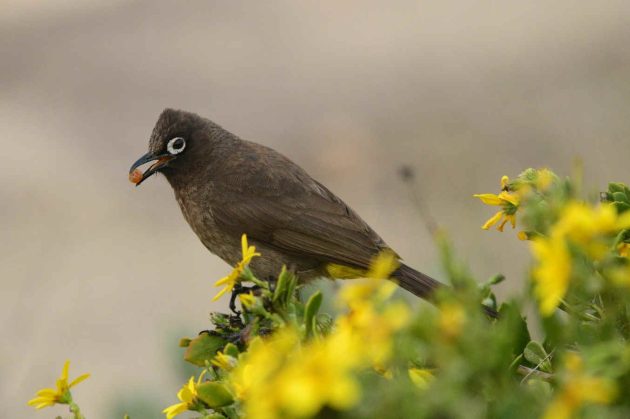
Cape Bulbul
Key Bird Species and Families
- Cape Rockjumper
- Cape Sugarbird
- Cape Bulbul
- Cape Siskin
- Cape Weaver
- Protea Canary
- Cape Canary
- Orange-breasted Sunbird
- African Penguin
- African Oystercatcher
- Southern Black Korhaan
- Grey-winged Francolin
- Blue Crane
- Knysna Woodpecker
- Ground Woodpecker
- Southern Tchagra
- Southern Boubou
- Knysna Warbler
- Victorin’s Warbler
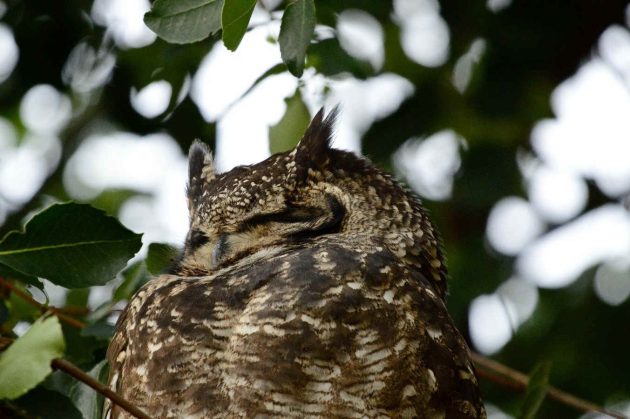
Spotted Eagle-Owl
Best Regions for Birding
- Cape Town, the “Mother City”: Set between mountains and ocean, Cape Town offers a remarkable blend of urban convenience and diverse birding habitats, from coastal shores and wetlands to mountain fynbos. The city provides access to a wide range of species in a compact area, making it an ideal base for exploring the Western Cape’s endemic-rich avifauna while enjoying iconic scenery and cultural landmarks.
Southern Double-collared Sunbird
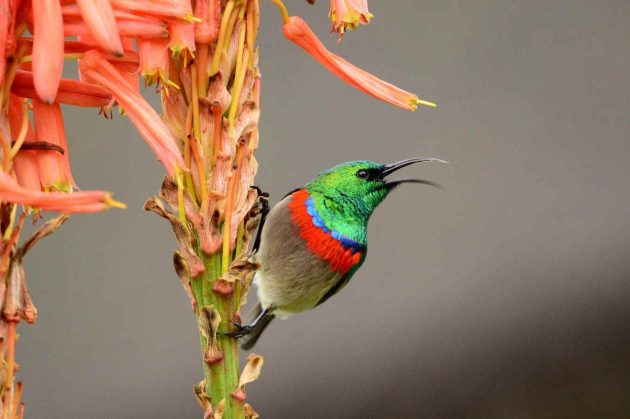
- Kirstenbosch National Botanical Gardens: Nestled on the eastern slopes of Table Mountain, Kirstenbosch National Botanical Gardens is a true birding gem, where indigenous forest and fynbos habitats attract a rich mix of nectar feeders, forest species, and regional endemics. Well-maintained paths allow for relaxed birding, with species such as Cape Sugarbird, Olive Thrush, Cape Robin-Chat, Cape Weaver, Swee Waxbill, Cape White-eye, Cape Batis, and Cape Bulbul regularly encountered. Sunbirds, including Malachite Sunbird and Southern Double-collared Sunbird, are frequent in flowering areas, while Cape Wagtail, Bokmakierie, Cape Canary and Forest Canary add to the diversity. With some luck, more elusive species such as Spotted Eagle-Owl or the endemic Forest Buzzard may also be seen, making this an exceptionally rewarding and accessible birding destination.
Cape Sugarbird
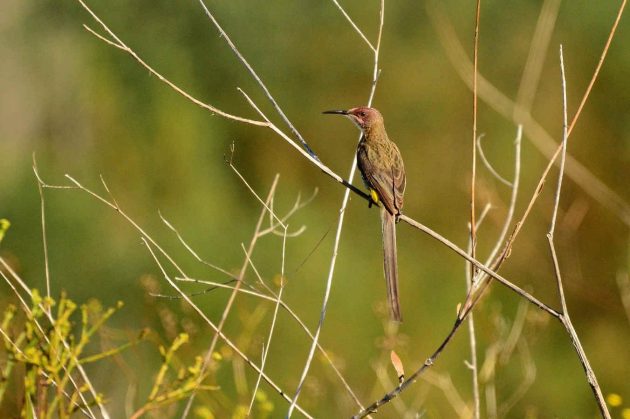
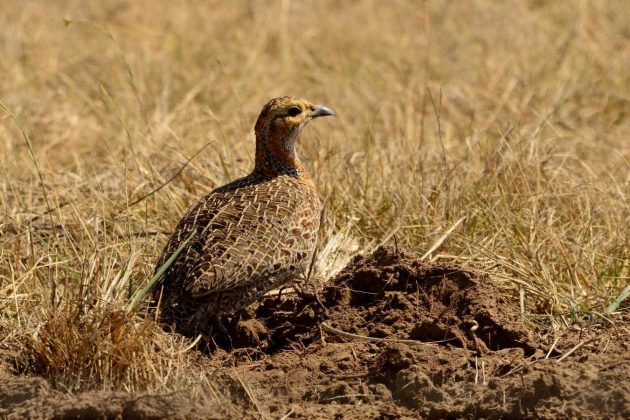
- Cape Point Nature Reserve: Located within Table Mountain National Park, Cape Point offers dramatic coastal cliffs, open fynbos and sweeping ocean views that support a unique mix of seabirds and terrestrial species. The rugged landscape is highly productive for birding, with species such as Cape Spurfowl, Cape Bulbul, Grey-backed Cisticola, Bokmakierie and the vocal Cape Grassbird found in the fynbos, alongside striking endemics like Cape Sugarbird, Orange-breasted Sunbird and Cape Siskin. Rocky slopes and open areas may reveal the unusual Ground Woodpecker, Sentinel Rock Thrush, and Cape Longclaw, while the skies are often busy with Rock Martin, Alpine Swift and Little Swift, as well as Common Buzzard and Jackal Buzzard. Along the shoreline, African Oystercatcher is a key target. The combination of diverse habitats and constant bird activity, together with the chance of encountering scarce mammals, makes this windswept reserve both visually striking and exceptionally rewarding for birding.
Orange-breasted Sunbird
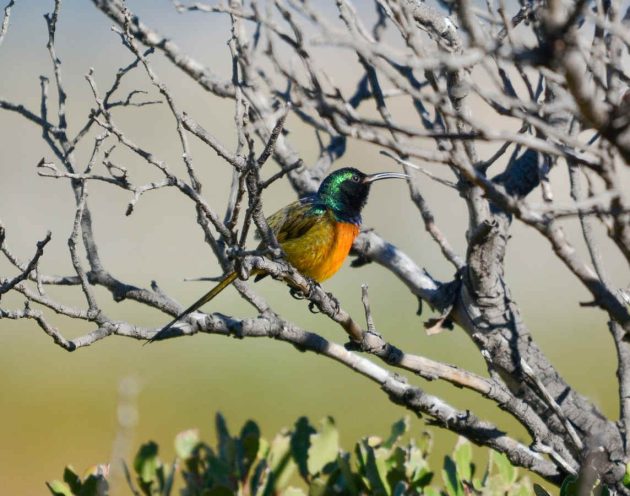
- Bontebok National Park: The park combines renosterveld and riverine habitats, creating ideal conditions for both specialized bird species and diverse plant life. This habitat mosaic supports a rich bird community, including Denham’s Bustard, Secretarybird, Blue Crane and Grey-winged Francolin in open areas, while Agulhas Long-billed Lark and Cape Clapper Lark are characteristic of the surrounding landscapes. Species such as Namaqua Dove, Olive Bushshrike, African Paradise Flycatcher and Southern Tchagra occur in bushy and riverine zones, with Malachite Sunbird, Southern Double-collared Sunbird and Greater Double-collared Sunbird frequenting flowering vegetation. Raptors, including Lesser Kestrel, Black Harrier and Rufous-breasted Sparrowhawk, add to the diversity, alongside ground-dwelling species like Capped Wheatear. The park is also a stronghold for the endemic Bontebok antelope, and its compact, accessible setting makes it a rewarding destination for both birding and wildlife viewing.
Blue Crane
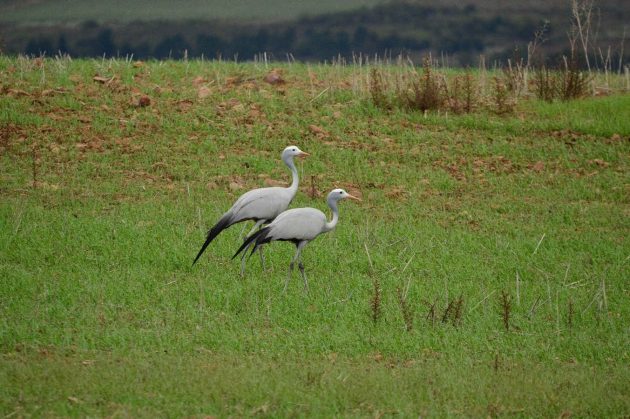
- De Hoop Nature Reserve: De Hoop Nature Reserve lies within the Agulhas Plain, a region renowned for its rich biodiversity and specialized birdlife. This land-and-marine reserve brings together coastal dunes, wetlands, and fynbos, supporting a wide range of species from waterbirds and waders to open-country specialists. The surrounding plains hold Agulhas Long-billed Lark and Cape Clapper Lark, alongside Red-capped Lark, Capped Wheatear and Southern Tchagra, while larger species such as Southern Black Korhaan, Karoo Korhaan, Common Ostrich, Blue Crane, and Denham’s Bustard are characteristic of the landscape. Raptors, including Lesser Kestrel and Black Harrier, patrol the skies, with White Stork and Black Crow also regularly recorded. The bays of De Hoop are important breeding grounds for Southern Right Whale, adding a marine dimension to the experience. The combination of diverse habitats, prolific birdlife and an unspoilt coastline makes this one of the Western Cape’s most scenic and productive birding destinations.
Southern Black Korhaan
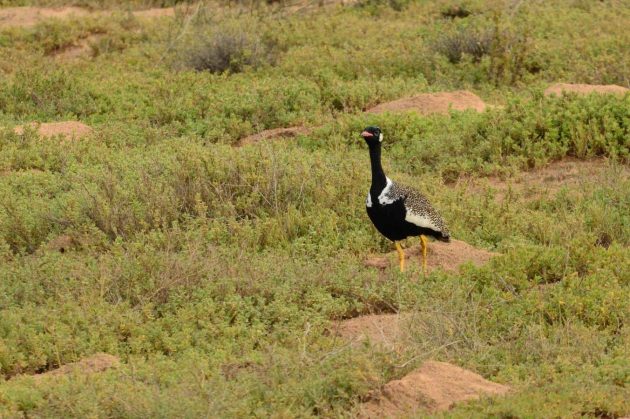
- Tankwa Karoo National Park: Remote and starkly beautiful, Tankwa Karoo National Park offers classic Karoo birding in a vast, open landscape. Despite its arid appearance, the park supports around 200 bird species, with hardy, desert-adapted birds thriving in this quiet and seldom-visited region. Birding here focuses on key Karoo specials, including Burchell’s Courser and Double-banded Courser, Karoo Long-billed Lark, Black-eared Sparrow-Lark, Namaqua Sandgrouse and Black-headed Canary. Larger species such as Karoo Korhaan, Kori Bustard and Ludwig’s Bustard are characteristic of the open plains, while rocky areas may hold Verreaux’s Eagle and the highly sought-after Cinnamon-breasted Warbler. Smaller endemics and near-endemics include Karoo Eremomela, Layard’s Warbler, Namaqua Warbler, Tractrac Chat, Karoo Chat and Fairy Flycatcher, making this one of the most rewarding regions for arid-zone birding in South Africa.
Namaqua Warbler
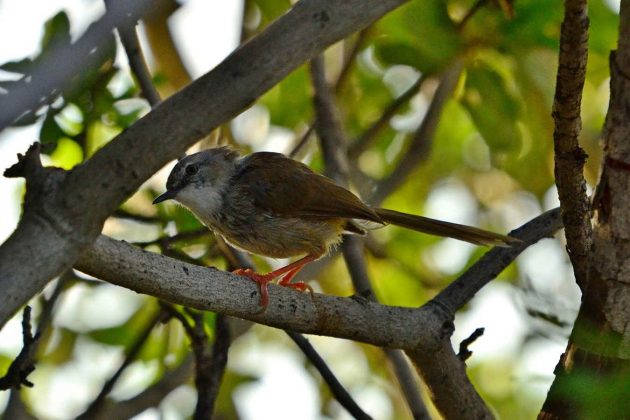
- West Coast National Park: The park brings together lagoon, shoreline, fynbos and strandveld habitats, resulting in exceptional bird diversity. Seasonal wetlands and the Langebaan Lagoon attract large numbers of waterbirds, including South African Shelduck, Greater Flamingo, Great White Pelican, Red Knot, Sanderling, Ruff, Marsh Sandpiper, Terek Sandpiper and Curlew Sandpiper, along with Ruddy Turnstone, Whimbrel, Common Greenshank, Eurasian Curlew, Bar-tailed Godwit, Chestnut-banded Plover and Kittlitz’s Plover, as well as a variety of cormorants, terns and gulls. In the coastal strandveld, birding focuses on species such as Southern Black Korhaan, Cape Spurfowl, Grey-winged Francolin, Cape Penduline Tit, Chestnut-vented Warbler, Layard’s Warbler, Bokmakierie, Karoo Scrub Robin, Karoo Lark, Large-billed Lark, and Cape Bunting. Raptors add further interest, with African Fish Eagle, Western Osprey, Black Harrier, Booted Eagle, and Eurasian Hobby all possible. The combination of rich wetland systems and productive terrestrial habitats makes this one of the most rewarding birding areas in the Western Cape, complemented by good opportunities for mammal sightings.
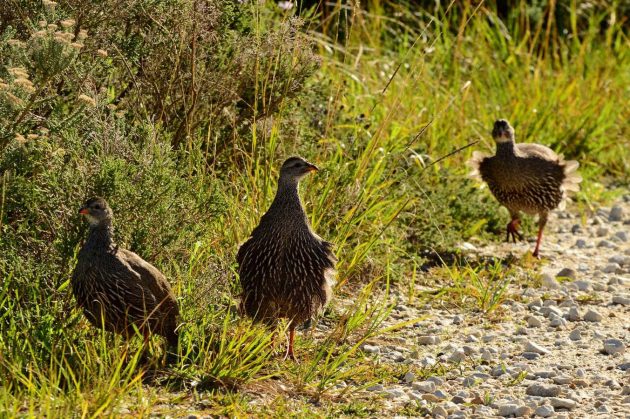
Grey-winged Francolin
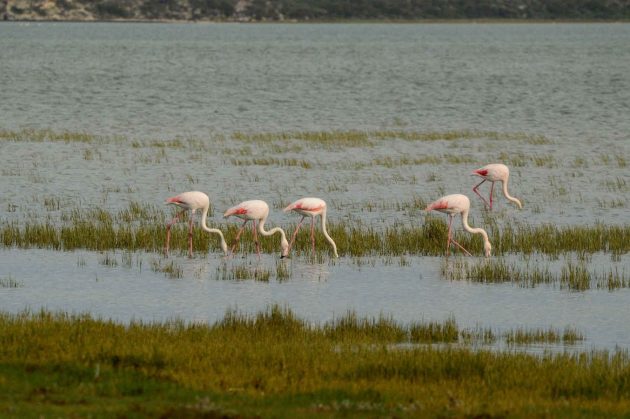
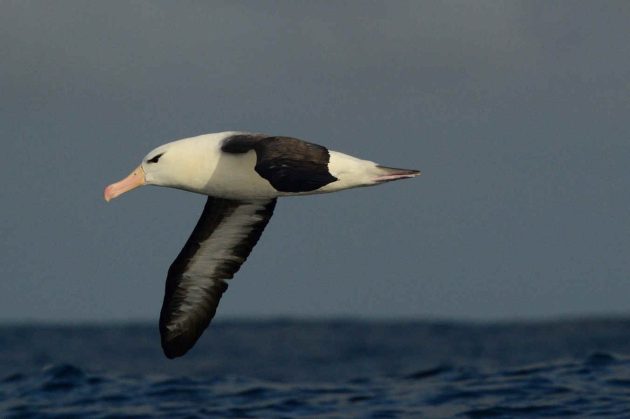
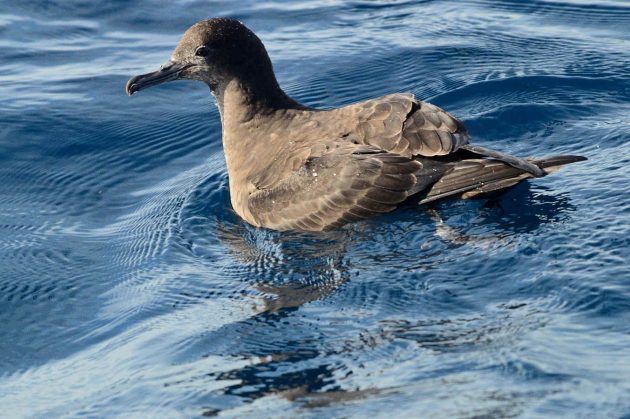
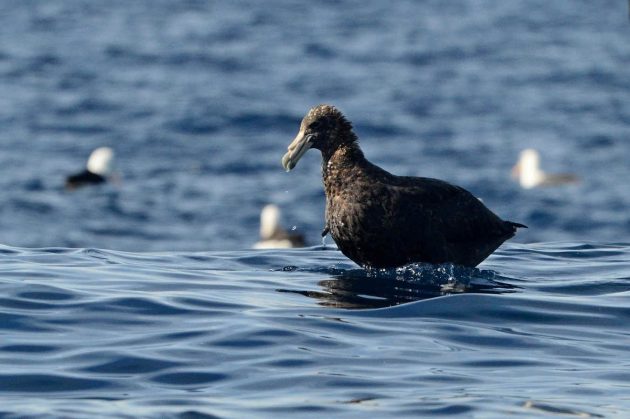
- Cape Town pelagic trip: A Cape Town pelagic trip offers an unforgettable opportunity to experience the rich seabird life off South Africa’s southwestern coast. Departing at sunrise from the jetty, the day begins with a safety and orientation briefing before a scenic cruise toward Cape Point. Along the rugged shoreline, rafts of African Penguins can be observed heading out to sea, while terns and cormorants roost on boulders. Cape Gannets plunge-dive in the distance, and Kelp Gulls glide past in loose flocks. Once offshore, the real highlights emerge, with White-chinned Petrel, Sooty Shearwater, Indian Yellow-nosed Albatross, Atlantic Yellow-nosed Albatross, Black-browed Albatross, Shy Albatross, Northern Giant Petrel and Southern Giant Petrel all possible, alongside Subantarctic Skuas and hundreds of low-flying Cape Cormorants. The combination of dramatic coastal scenery, abundant marine life, and world-class seabird diversity makes a pelagic trip from Cape Town a must for avid birders.
Greater Flamingo
Best Birding Season
The best birding season in the Western Cape generally falls between spring and early summer, from September to March, when conditions are most productive across the region’s diverse habitats. During this period, many species are actively breeding, making them more visible and vocal, while a range of Palearctic migrants are present in wetlands, coastal areas and open landscapes. Spring (September to November) is particularly rewarding, with mild weather, flowering fynbos and peak activity among endemic species, while summer months bring high numbers of waterbirds and waders to key sites such as coastal lagoons and reserves. Although birding remains good year-round, this spring–summer window offers the highest diversity and the best overall experience for a Western Cape birding tour.
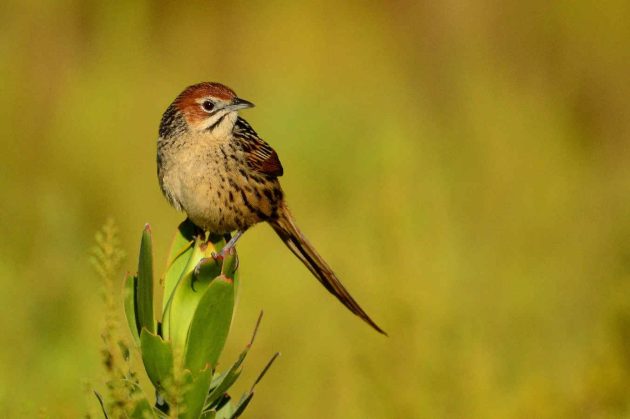
Cape Grassbird
Birding Trip Suggestion(s)
- Day 1 Arrival in Cape Town
- Day 2 The Cape Peninsula (Boulders Beach and Cape Point)
- Day 3 The Cape Peninsula (Kommetjie, Strandfontein, Rondevlei)
- Day 4 Cape Town to Bontebok National Park
- Day 5 De Hoop Nature Reserve
- Day 6 Grootvadersbosch and drive to Ceres Valley
- Day 7 Tankwa Karoo National Park
- Day 8 West Coast National Park
- Day 9 Return to Cape Town
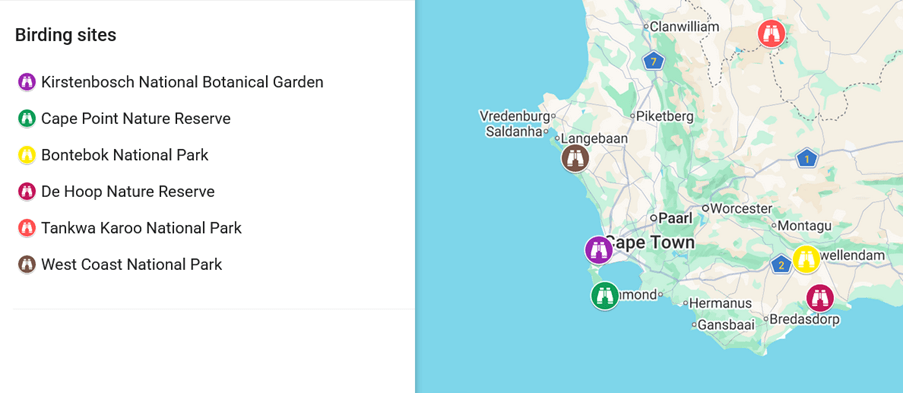
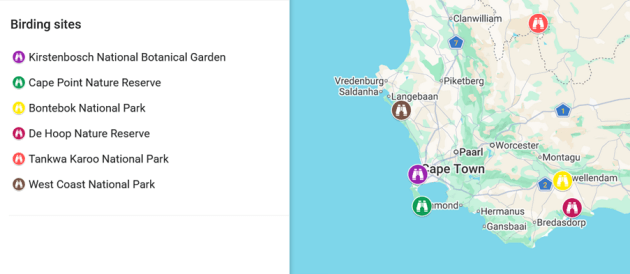
Map with key locations for birding
Grey-winged Francolin
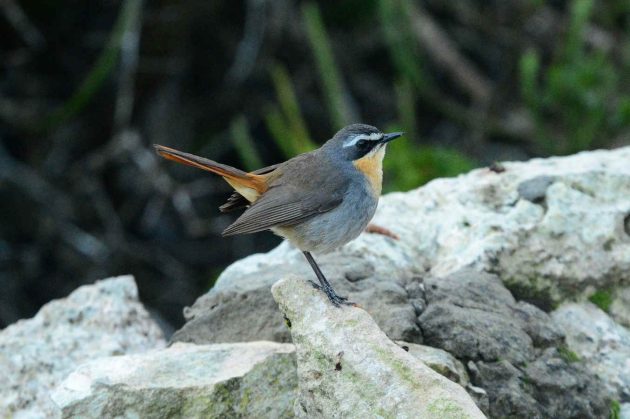
Practical Tips
- Bring binoculars and a field guide specific to South African birds.
- Wear layered clothing suitable for variable weather, including a warm jacket for early mornings and sun protection for the afternoon.
- Comfortable walking shoes are essential, especially for rocky fynbos paths and uneven trails in reserves.
- Carry plenty of water and snacks, particularly for longer drives or remote areas like Tankwa Karoo and De Hoop.
- A sun hat, sunglasses, and sunscreen are important, as open areas can be very exposed.
- Respect the habitats: avoid disturbing nests and keep to marked trails in protected areas.
- A camera with a zoom lens is recommended for photographing distant or skittish species.
Cape Robin Chat
Books
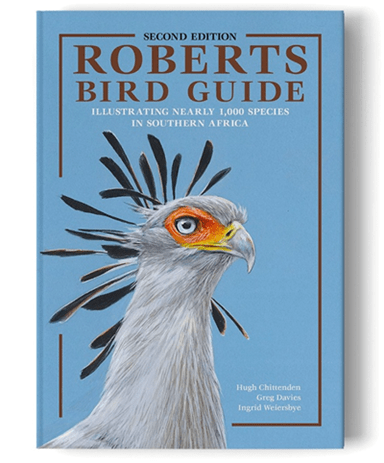
https://www.robertsbirds.co.za/bird-guide-2.html
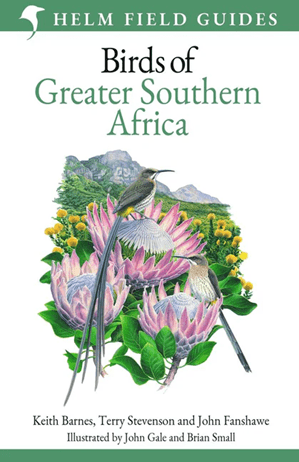
ISBN: 9781472984012, 1472984013
Black Browed Albatross
Links
- https://naturetravelbirding.com/western-cape/
- https://fatbirder.com/world-birding/africa/republic-of-south-africa/western-cape/
- https://gobirding.birdlife.org.za/
Sooty Shearwater
By Rene Rossouw
Rene Rossouw is a South African bird guide for Nature Travel Birding and also a travel content specialist focused on birding, wildlife, and conservation. She can be reached at info@naturetravelbirding.com and has been profiled on 10,000 Birds.
Southern Giant Petrel








As a frequent traveler to the Cape I’d say that the trip will become more enjoyable when allowing more time per location – allow yourself time to enjoy. I would also happily replace the Cape proper with a pelagic trip (more to see!)