

I like Christmas vacation. Church work doesn’t stop in December, of course, although now that I am no longer head pastor I do get to slow down some. And there are the two Christmas Bird Counts in our area to look forward to. But mostly, the Christmas break is when some of my Best Birding Buddies can come out to play.
December 15th was my first opportunity of the season to go birding with my friend Nacho. Nacho is a professor of botany at our local campus of Mexico’s national university, the UNAM. And I love plants, so it’s always a joy to go out with him as he patiently answers all my questions. (I was his first mentor in the art of birding, so our friendship is happily reciprocal.)
The night before, our friend Jonathan let us know that he would also be able to go. Jonathan is an ornithologist and birding guide. So it became clear that this would be a great outing, with lots of opportunities to learn new things.
Nacho and I arrived first, as Jonathan had to do a family errand on his way out. We had decided to go to El Temascal, a small tourist settlement with a path that climbs diagonally some 200 m (660 ft) up a steep ridge, with a sudden change in species at the path’s highest section. Usually, the activity begins as soon as one begins hiking the path. We passed a section of thick brush where a Colima Warbler can often be seen in winter, and… nothing. A nearby section hosted a fantastic Slaty Vireo last summer. But now, there wasn’t any birdsong at all to be heard. I was getting nervous, as it had been my idea to go to El Temascal this outing.
But then we got to the first section of mature oak trees. And suddenly, birds were everywhere. We found ourselves surrounded by a wonderful mixed flock. There were Wood Warblers from perhaps a half-dozen species, three kinds of Vireos, plus Kinglets, Gnatcatchers, and Flycatchers. Better yet, all five of our regular Tanagers were there. Bright red Summer Tanagers, brick-red Hepatic Tanagers, yellow Western Tanagers with black wings and orange faces, the Flame-colored Tanager which replaces the Western’s yellow with bright orange, and the charming smaller Red-headed Tanager with its olive body and orange-red head. With so many birds, we commentedd that we needed more eyes to see them all. I told Nacho that I wished Jonathan would arrive… just before we saw him climbing the path.
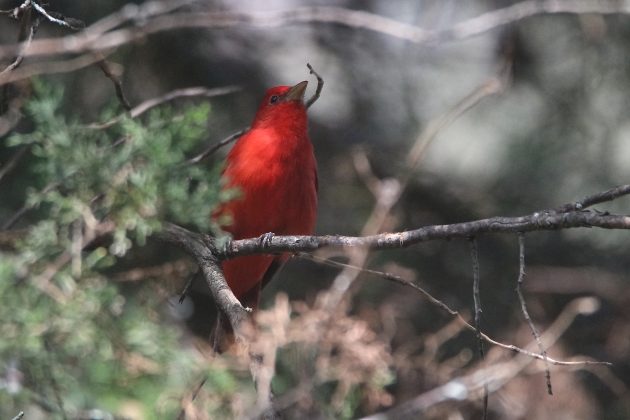
It’s hard to believe that this male Summer Tanager is not a tropical bird, but rather a migratory species from up north.
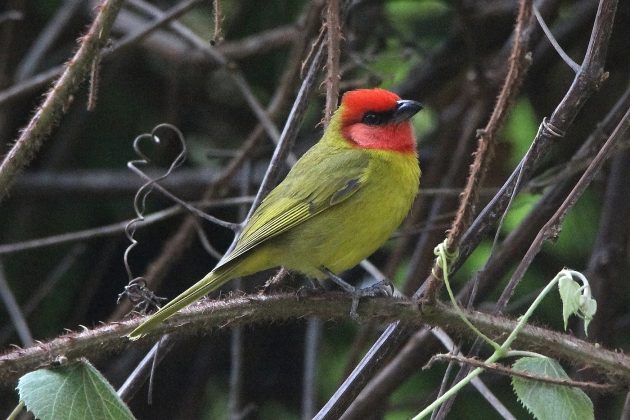
The Red-headed Tanager, however, is a strictly Mexican species. (Photo from another day and site.)
My most interesting birds were a pair of Rose-breasted Grosbeaks. According to range maps, this species should not be seen in the highlands of central Mexico. But I have been seeing them at el Temascal for years. Still, they always appeared in the spring, apparently moving through there during their northward migration. Seeing this couple there in earliest December suggests their presence may be all winter long, rather than only during migration.
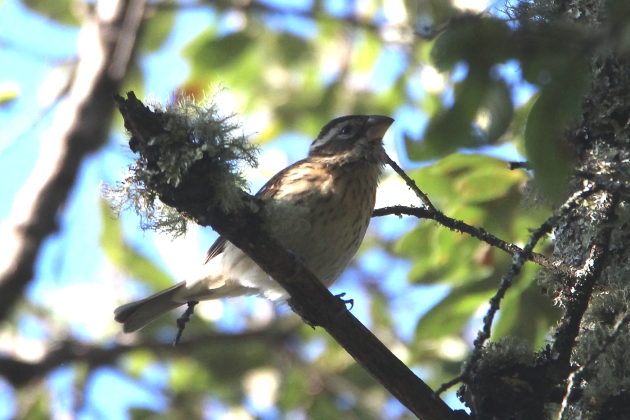
Female Rose-breasted Grosbeaks have patterned heads and streaked breasts.
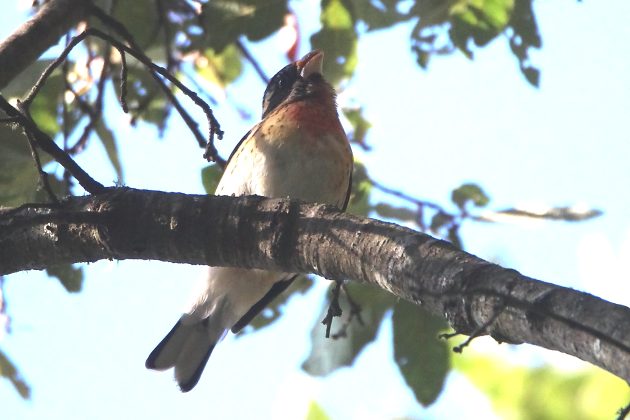
Males have black heads and, well, rose breasts.
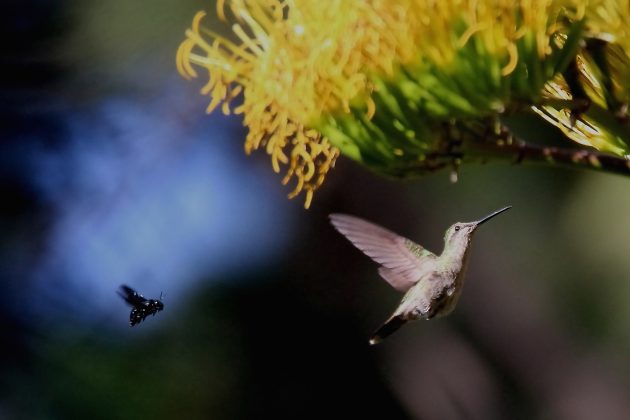
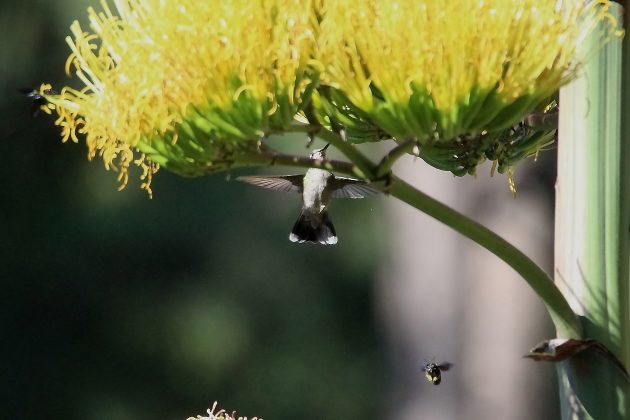
A few hundred meters higher up, we came upon an agave in full bloom. You’ll note from my photos that the insect activity was intense. But we also knew these massive plants can draw interesting birds. The one hummingbird that showed up kindly showed its bold white tail corners, revealing that this was a female Blue-throated Mountain-Gem, one of our less common hummers.
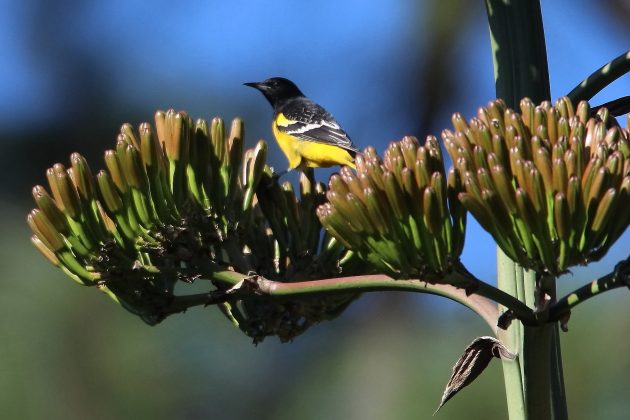
And then a Scott’s Oriole turned up. While all our orioles are brightly colored, the Scott’s is less common, which makes it a personal favorite. In Mexico these are called Calandrias Tuneras, indicating their love for prickly pear flowers and fruits. But they like agave flowers also.
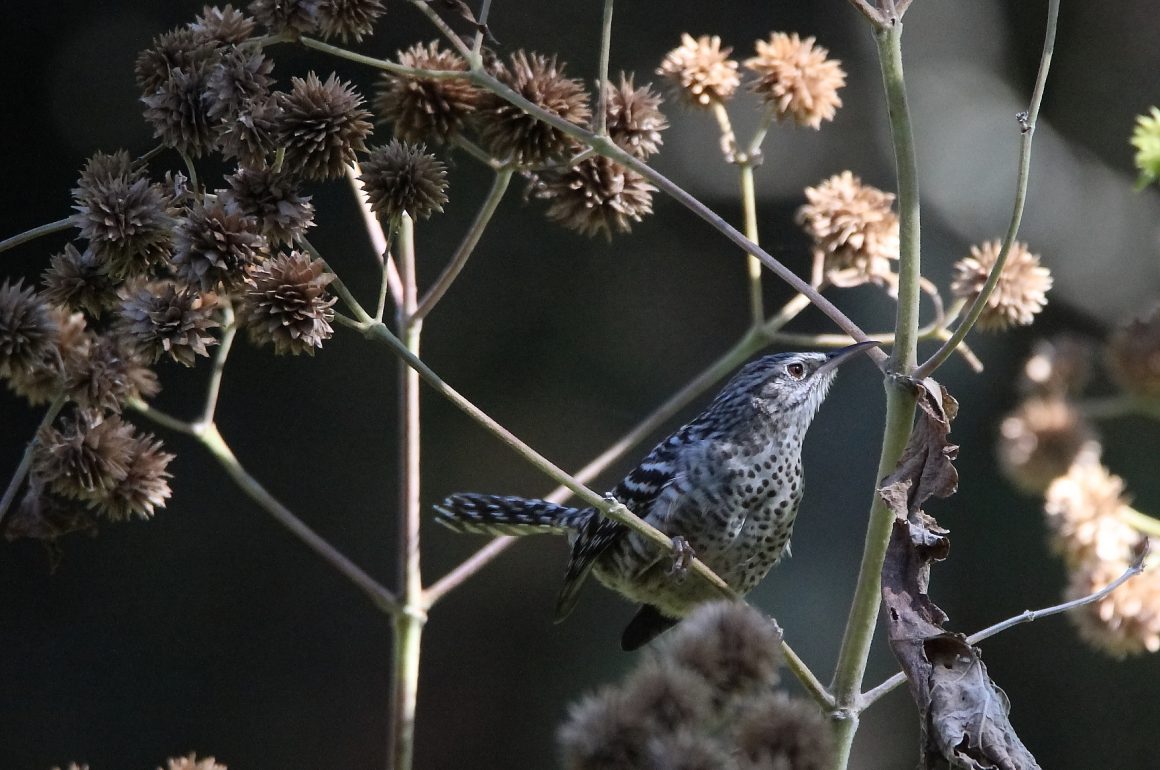
Once we reached our top elevation, we found ourselves in the midst of a group of Gray-barred Wrens. These wrens are very social, and extremely noisy. They are easy to see in the higher reaches of Michoacán, because they always seem to give their raucous chatter when they arrive. Ours seemed to have a lot to say about our presence, and certainly did not care if we heard it. Honestly, these birds can be almost deafening.
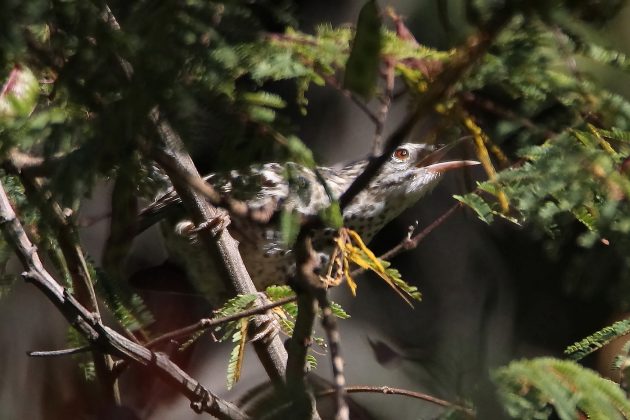
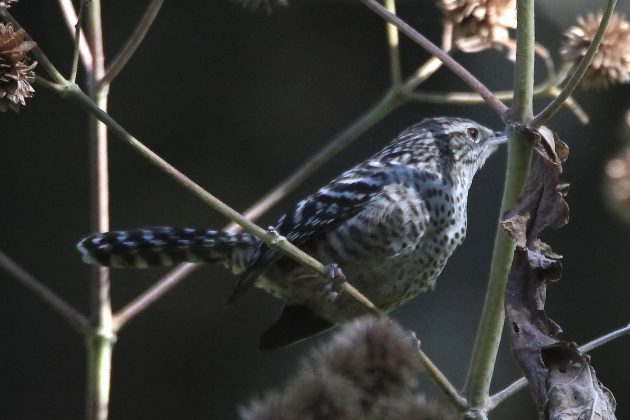
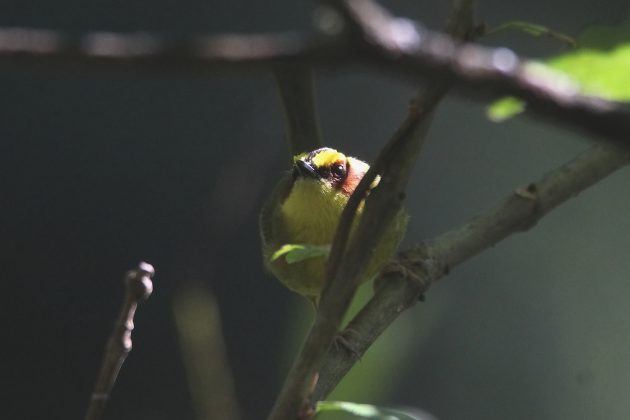
You know you’ve reached the higher reaches of El Temascal when you see Golden-browed Warblers. We also got a brief view of a Green-striped Brushfinch and one Red Warbler to make our climb complete.
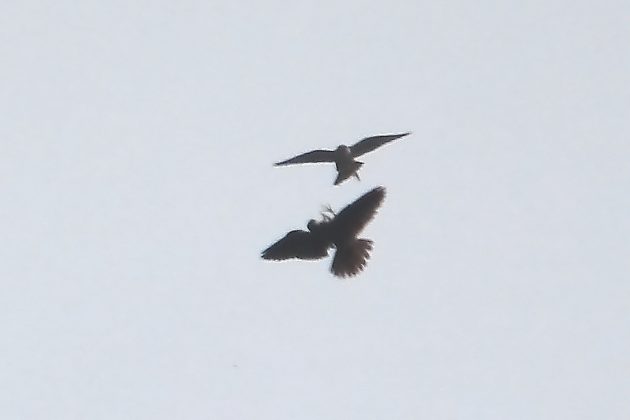
On our way downhill, the greatest spectacle was a pair of Peregrine Falcons wheeling overhead, who then took to what appeared to be play-fighting. Photographing the show proved beyond my capabilities, but they did just barely show what was happening above us.
With my last post, one letter expressed surprise that we had seen 67 species in one day. Well, our day at El Temascal yielded “only” 63 species. But my next post will take us to one of our very best sites, with a grand total of 93 species.












I always enjoy your writing, and hope to visit and bird Mexico one day!